MarketLens
Abbott's Dual-Analyte Bet Positions It to Outpace Dexcom in the Expanding CGM Market

Key Takeaways
- Abbott Laboratories, already the market share leader, is strategically targeting broader patient populations through affordability and pioneering dual glucose-ketone sensing.
- Dexcom, while a performance leader, faces a challenge in expanding beyond its core insulin-dependent user base and justifying its valuation premium.
- A recent global patent settlement between the two giants de-risks the competitive landscape for the next decade, allowing focus on innovation and market expansion.
The Shifting Battleground of Glucose Monitoring
The continuous glucose monitoring (CGM) market, valued at $13.4 billion in 2025, is poised for significant expansion, projected to reach $28.7 billion by 2030 at a 16.6% compound annual growth rate. This robust growth, driven by rising diabetes prevalence and technological advancements, has intensified the rivalry between the two dominant players: Abbott Laboratories (NYSE: ABT) and DexCom, Inc. (NASDAQ: DXCM). As of June 26, 2026, Abbott trades at $93.82 with a market capitalization of $163.42 billion, while Dexcom stands at $70.14 with a market cap of $27.07 billion.
The competitive landscape, historically marked by intense patent disputes, recently saw a significant de-escalation. In June 2026, Abbott and Dexcom announced a global settlement, cross-licensing their CGM patents royalty-free and agreeing not to litigate patent, trade dress, and design rights disputes for the next 10 years. This agreement, which involves no financial payments, allows both companies to fully focus on innovation rather than legal battles, a positive development for the sector. While Dexcom has often been perceived as the innovation leader, Abbott's strategic positioning and recent product pipeline suggest it is better equipped to capture the next wave of market growth.
Abbott's Accessibility Advantage and Dual-Analyte Bet
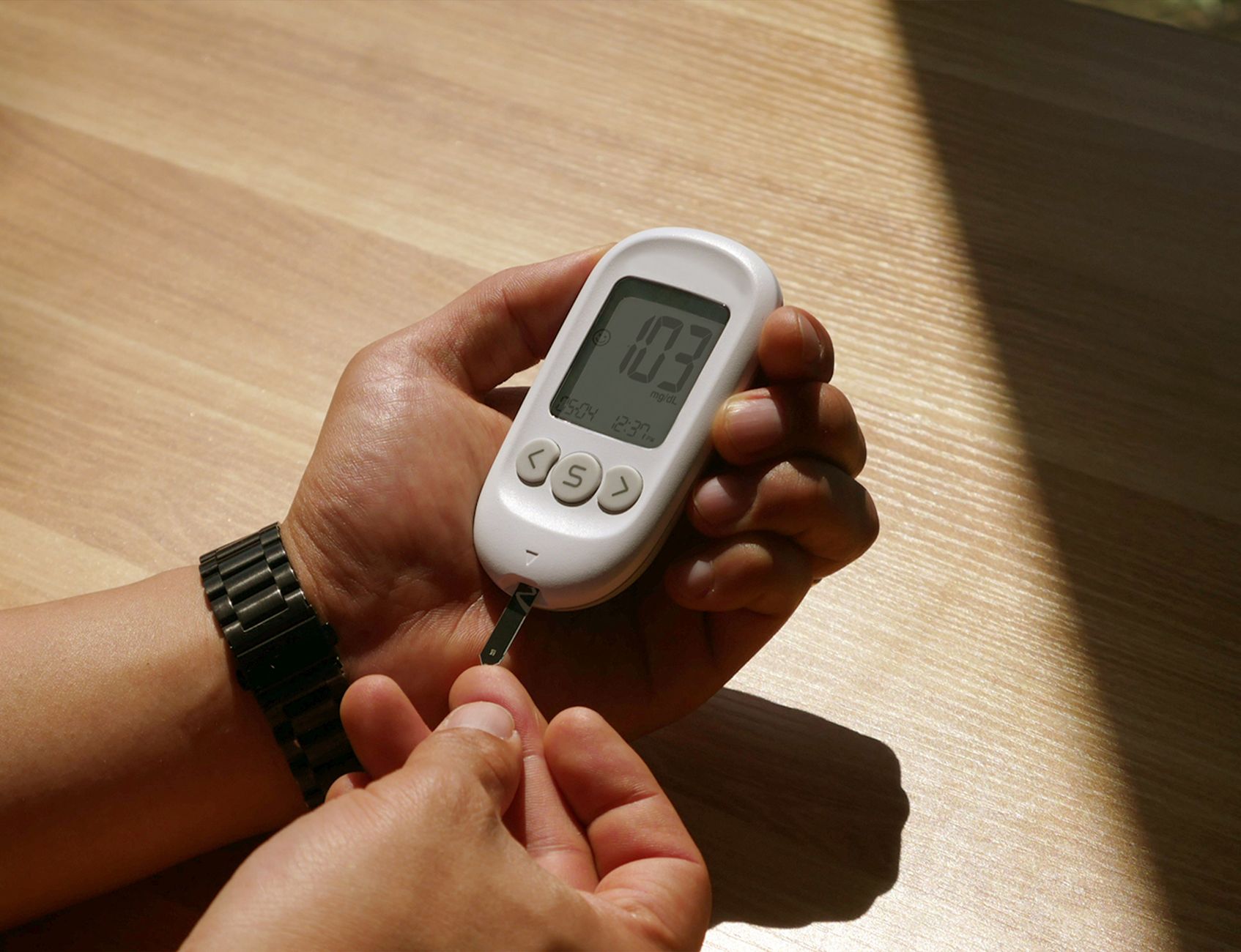
Abbott's strategy in the CGM market is built on accessibility and affordability, a stark contrast to Dexcom's performance-first approach. The company's flagship FreeStyle Libre system has established global leadership across both Type 1 and Type 2 diabetes, boasting over 6 million users worldwide as of Q2 2025. This broad reach is underpinned by aggressive partnerships with private insurers, Medicare, and veteran programs, making the system highly affordable for insured users, often costing as little as $0-25 per month.
Financially, Abbott's Diabetes Care segment remains a consistent top-line driver. In the first quarter of 2026, CGM sales reached $2 billion, representing a 7.5% year-over-year increase, with double-digit growth forecasted for the second quarter. This growth, despite a delay in an international tender renewal, underscores the strength of its market penetration. Looking ahead, Abbott's CEO estimates the long-term CGM opportunity at 70-80 million people globally, significantly higher than the current market of 10-12 million users, highlighting the company's ambition to expand the total addressable market.
Beyond affordability, Abbott is innovating with a focus on comprehensive metabolic health. In June 2025, the company announced the launch of its fourth-generation sensor with integrated ketone readings. More recently, Abbott secured CE Mark for the first-ever dual glucose-ketone sensing technology, branded as Libre Duo and Libre Duo 10 Day. These systems continuously measure both glucose and ketone levels, integrating with the Libre digital health ecosystem. This move, with FDA approval expected in the second half of 2026, positions Abbott to address diabetic ketoacidosis risk, a critical acute emergency, and redefine the category beyond just glucose monitoring.
Dexcom's Performance Prowess and Ecosystem Play
Dexcom has carved out its leadership through a relentless focus on performance, accuracy, and real-time data. Its product line, including the G6 and the more recent G7, is defined by precision, real-time alerts, data sharing capabilities, and deep software integration. The Dexcom G7, released in early 2023, is 60% smaller than its predecessor, offers a faster 30-minute warm-up time, and provides high accuracy with a MARD (Mean Absolute Relative Difference) of 8.2% for adults. This focus has cemented Dexcom's strong position among insulin-dependent patients and clinicians who prioritize precision.
The company is also actively expanding its reach into new segments. Its new Stelo Glucose Biosensor System, the first over-the-counter (OTC) CGM for Type 2 diabetes patients not on insulin, was launched with enhanced Smart Meal Logging features. Dexcom is also building a comprehensive ecosystem, evidenced by its partnerships with insulin delivery systems manufacturers, connecting over one million CGM users to automated insulin delivery (AID) systems worldwide. In June 2026, Dexcom announced the acquisition of Nutrisense, a move aimed at strengthening its ability to provide personalized nutrition education and coaching, further establishing CGM as a tool for preventative care.
Dexcom reported strong financial results for the first quarter of 2026, with worldwide revenue growing 15% year-over-year to $1.192 billion. U.S. revenue increased 11%, while international revenue surged 26%, driven by expanded access in markets like France and Canada. The company reiterated its 2026 revenue guidance of $5.16 billion to $5.25 billion, representing 11-13% growth. Despite this momentum, Dexcom's strategy of prioritizing performance and integration, while successful, has resulted in a higher price point ($99 for a 30-day sensor kit), which could limit its expansion into the broader, more price-sensitive Type 2 and prediabetes markets that Abbott is aggressively pursuing.
Market Share and Growth Trajectories
The continuous glucose monitoring market is highly concentrated, with Abbott and Dexcom collectively holding the lion's share. According to Mordor Intelligence, Abbott controlled 52.83% of 2025 CGM revenue, making it the clear market leader. Dexcom followed with 33.89%, while Medtronic accounted for 10.10%. Together, these three companies commanded 96.82% of 2025 shipments, leaving a minimal share for other players.
| Company | 2025 CGM Revenue Share | Q1 2026 Revenue (YoY Growth) | FY25 Active Customers | 2026 Revenue Guidance (YoY Growth) |
|---|---|---|---|---|
| Abbott | 52.83% | $2.0 billion (7.5%) | >6 million (Q2 2025) | 11-13% |
| Dexcom | 33.89% | $1.192 billion (15%) | 3.5 million | 11-13% |
Note: Abbott's Q1 2026 revenue figure is specific to its CGM sales, while Dexcom's is total company revenue, as it is a pure-play CGM company.
While Dexcom demonstrated stronger year-over-year revenue growth in Q1 2026 at 15% compared to Abbott's 7.5% in its CGM segment, Abbott's larger base and dominant market share provide a significant foundation. Dexcom's international revenue growth was particularly strong at 26% in Q1 2026, but overall, Abbott's sheer scale and established user base of over 6 million customers (compared to Dexcom's 3.5 million active customers in FY25) suggest a broader market penetration. Both companies are forecasting similar revenue growth rates of 11-13% for the full fiscal year 2026, indicating a competitive but stable growth outlook within their respective strategies.
The Bear Case: Emerging Threats and Valuation Discrepancies
Despite the duopoly's dominance, the CGM market is not without its risks and potential disruptors. While heavy regulatory barriers and clinical-evidence demands limit wide-scale competition, several emerging players are targeting technological white spaces. Senseonics, for instance, has secured CE-mark for a year-long implantable sensor, while Glucotrack is advancing a minimally invasive implantable device. The potential entry of tech giants like Apple into the wearable health monitoring space, though facing significant regulatory hurdles, remains a long-term threat that could reshape the market dynamics.
For Abbott, the bear case extends beyond CGM. The company faces ongoing volatility in its Diagnostics segment, particularly related to respiratory testing. There's also dilution risk following the Exact Sciences acquisition and persistent uncertainty in the China market, as highlighted by Zacks Investment Research. Abbott's stock has declined 25.6% year-to-date through June 26, 2026, reflecting these broader concerns.
Dexcom, while a pure-play CGM company, is not immune to challenges. The U.S. FDA issued a warning letter in February 2024 citing manufacturing deficiencies at its San Diego plant, prompting a quality-improvement roadmap. Furthermore, the market is seeing signs of price erosion, particularly as major players expand into broader segments like Type 2 diabetes patients not on insulin and even prediabetes. This could lead to significant sensor price drops within the next 1-2 years, potentially faster than historical trends in self-monitoring blood glucose (SMBG). Dexcom's current valuation, trading at a five-year Price/Sales (P/S) of 4.88x, while below its median of 9.93x, still represents a premium compared to Abbott's 2.99x P/S. This premium could be vulnerable if growth rates decelerate or if price competition intensifies.
Analyst Consensus and Forward Outlook
Wall Street analysts generally hold a positive outlook for both Abbott and Dexcom, though with differing degrees of conviction and implied upside.
For Abbott (ABT), the consensus price target stands at $126.00, with a median target of $123.50. This suggests a potential upside of approximately 31.6% from its current price of $93.82. Of 41 analysts, 31 rate ABT a "Buy" and 10 a "Hold," with no "Sell" ratings. Piper Sandler maintained an "Overweight" rating on June 22, 2026, and BTIG maintained a "Buy" rating on April 27, 2026. Analysts project Abbott's revenue to reach $63.4 billion in FY29 and $68.2 billion in FY30.
Dexcom (DXCM) also enjoys a strong analyst consensus, with a price target of $83.80 and a median of $85.50. This implies an upside of roughly 21.9% from its current price of $70.14. Among 52 analysts, 41 rate DXCM a "Buy," 8 a "Hold," and 2 a "Sell." Deutsche Bank maintained a "Buy" rating on June 23, 2026, and Piper Sandler maintained an "Overweight" rating on June 15, 2026. Dexcom's forward estimates for revenue are $7.3 billion in FY29 and $8.2 billion in FY30.
While both companies are viewed favorably, the higher implied upside for Abbott, combined with its lower P/S multiple, suggests a more compelling value proposition from a valuation perspective. Dexcom's year-to-date stock performance has been stronger, climbing 4.1% compared to Abbott's 25.6% decline, but this might also mean less room for immediate appreciation. Zacks Investment Research, however, holds a more cautious view, assigning DXCM a "Hold" (Rank #3) and ABT a "Sell" (Rank #4) as of June 26, 2026, citing Abbott's short-term operating visibility issues.
The Verdict: Abbott's Long-Term Edge in a Broadening Market
The continuous glucose monitoring market is undergoing a significant transformation, moving beyond its core insulin-dependent user base to embrace broader metabolic health applications. While Dexcom has established itself as a performance leader with its highly accurate G7 system and integrated ecosystem, Abbott's strategic focus on affordability, accessibility, and pioneering dual glucose-ketone sensing positions it for superior long-term growth in this expanding landscape. Abbott's dominant market share and aggressive push into new patient segments, coupled with its lower valuation, offer a more compelling investment thesis. The recent patent settlement further de-risks Abbott's ability to innovate and compete without legal distractions for the next decade.
For investors looking to capitalize on the secular growth of the CGM market, Abbott Laboratories presents a more robust long-term opportunity. Its product pipeline, particularly the dual glucose-ketone sensing technology, represents a significant moat by redefining the scope of metabolic monitoring.
- Entry Zone: Investors should consider accumulating ABT shares in the $90.00 - $95.00 range.
- 12-Month Target: A 12-month price target of $125.00 is justified, reflecting the analyst consensus and the company's market leadership and innovation.
- Invalidation Level: The thesis would be invalidated if ABT shares close below $85.00, signaling a breakdown in its market position or a failure of its strategic initiatives.
Abbott's blend of market dominance, strategic pricing, and forward-looking innovation in dual-analyte sensing makes it the stronger play in the evolving CGM market.
Want deeper research on any stock? Try Kavout Pro for AI-powered analysis, smart signals, and more. Already a member? Add credits to run more research.
Related Articles
Category
You may also like


Abbott vs. DexCom: Which CGM Stock Is the Better Option Right Now?

Abbott secures CE Mark for world's first dual glucose-ketone sensing technology for people with diabetes

Beta Bionics Touts Pharmacy Push, iLet Momentum and 2027 Mint Patch Pump Plans
Breaking News
View All →Featured Articles
Top Headlines

Rivian Just Raised Its 2026 Outlook While Tesla Stock Stumbled. Is the Electric Vehicle Underdog Finally a Buy?

ChatGPT-Maker OpenAI Is Headed for a $1 Trillion IPO. The Biggest Winner Could Be Microsoft Stock.

The Smartest Dividend Stock to Buy With $1,000 Right Now

Warren Buffett's Berkshire Hathaway Owns $41 Billion of Alphabet Stock: Here Are 3 Possible Reasons Why