MarketLens
Amazon's Supply Chain Services: The End of the Parcel Duopoly

Key Takeaways
- Amazon's new Supply Chain Services (ASCS) directly challenges FedEx and UPS by opening its vast logistics network to all businesses, leveraging aggressive pricing and integrated offerings.
- The launch has already triggered significant stock declines for FedEx and UPS, forcing them to accelerate strategic pivots away from low-margin parcel volumes and towards specialized, higher-value services.
- While Amazon's scale and integrated technology pose a formidable threat, the incumbents retain moats in international networks and long-standing enterprise relationships, making the outcome a redefinition of market roles rather than outright disruption.
The Fourth Integrator Arrives: Amazon's Logistics Gambit
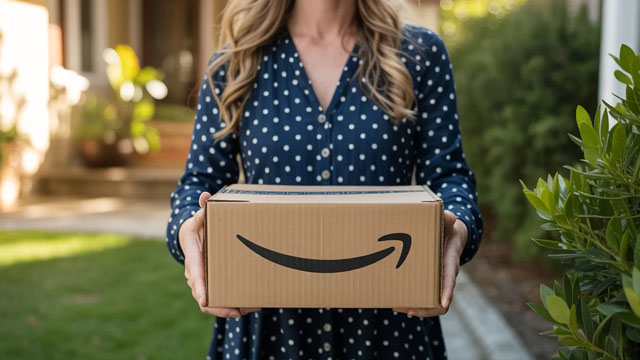
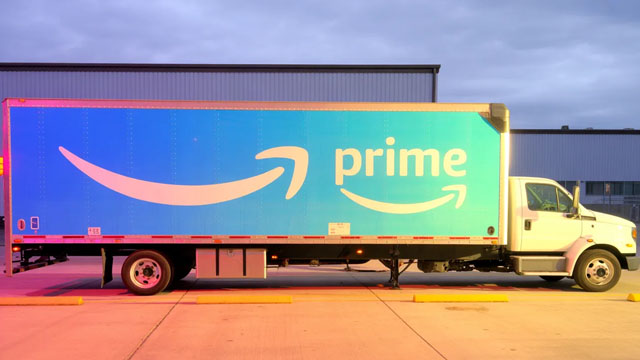
The logistics sector is undergoing a seismic shift, with Amazon.com, Inc. ($247.04) officially launching its Amazon Supply Chain Services (ASCS) as a unified enterprise offering. This move, which became fully operational with its Less-Than-Truckload (LTL) freight offering in June 2026, directly positions the e-commerce giant against the long-standing duopoly of FedEx Corporation ($310.84) and United Parcel Service, Inc. ($110.74). The market's initial reaction was swift and brutal for the incumbents: on May 4, 2026, FedEx shares slid 9%, while UPS stock plunged 10%, erasing weeks of progress for both companies. In contrast, Amazon's stock saw a 1% gain, building on a 27% April rally driven by Amazon Web Services (AWS) strength, signaling investor confidence in this new venture.
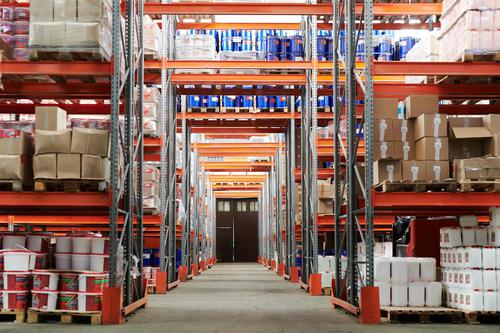
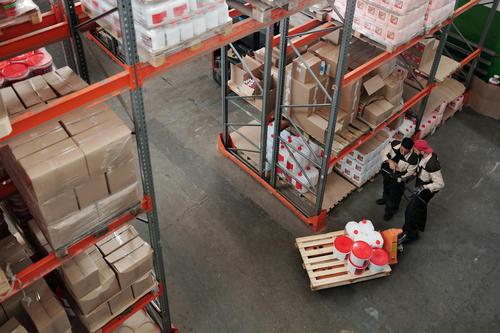
Amazon's strategic rationale is clear: monetize its massive, decade-long investment in logistics infrastructure. Since 2020, the company has poured over $30 billion into building a network that now boasts more than 200 fulfillment centers spanning over 200 million square feet, supported by over 200,000 operations staff and a fleet of more than 100 aircraft. Peter Larsen, vice president of Amazon Supply Chain Services, articulated this ambition, stating, "Amazon is bringing the infrastructure, intelligence, and scale of its supply chain services — proven over decades — to businesses everywhere, much like Amazon Web Services did for cloud computing." This isn't merely an expansion; it's an attempt to replicate the AWS playbook, turning an internal cost center into a formidable revenue engine by offering its "cost efficiency, reliability, and speed" to any business.
The Numbers: A Shifting Parcel Landscape
The entry of Amazon into the broader third-party logistics (3PL) market fundamentally alters the competitive dynamics, as reflected in the market valuations and operational statistics of the key players. Amazon, with its colossal market capitalization of $2.66 trillion, dwarfs FedEx's $74.17 billion and UPS's $82.68 billion, providing it with unparalleled financial muscle to invest and disrupt.
| Company | Ticker | Current Price | Market Cap | 52-Week Range |
|---|---|---|---|---|
| Amazon.com, Inc. | AMZN | $247.04 | $2.66 trillion | $196.00 – $278.56 |
| FedEx Corporation | FDX | $310.84 | $74.17 billion | $174.13 – $345.37 |
| United Parcel Service, Inc. | UPS | $110.74 | $82.68 billion | $82.00 – $122.41 |
Data as of 2026-07-09
The operational landscape reveals a complex picture. In 2024, Amazon Logistics already handled 6.1 billion packages annually, significantly outpacing FedEx's 3.4 billion packages. While Amazon's volume share in the U.S. parcel market stood at 15% in 2024, behind USPS (31%), UPS (24%), and FedEx (19%), its revenue share was 12%, trailing UPS's 37% and FedEx's 33%. This disparity highlights FedEx's premium service positioning, generating a higher revenue per package.
Recent financial performance from the incumbents shows divergent trends. FedEx reported robust Q3 FY2026 revenue of $24.0 billion, an 8% increase, with U.S. domestic package volume climbing 5%. The company also raised its FY2026 adjusted EPS guidance to a range of $16.05 to $16.85, and its total fiscal year 2026 revenue reached $94.7 billion, an 8% increase from the prior year. In contrast, UPS experienced "volatile performance," reporting a 4% net income margin for Q1 2026. Critically, its Q1 2026 U.S. domestic average daily volumes fell 8%, an intentional pullback from lower-margin Amazon work, as the company reduced its collaboration with its former major customer. This strategic shift by UPS, coupled with Amazon's aggressive entry, underscores the profound changes underway in the parcel delivery market, which is projected to reach $538 billion globally in 2026.
The Story Behind the Shift: From Customer to Competitor
Amazon's journey from being a primary customer for FedEx and UPS to becoming their direct competitor is a narrative years in the making. For over a decade, Amazon has gradually opened parts of its logistics network to third parties, starting with embedding logistics operations inside customer warehouses in 2013 and launching freight brokerage services in 2019. The ASCS launch in May 2026, with its LTL freight offering following in June, represents the culmination of this long-term strategy, bundling warehousing, freight forwarding, customs brokerage, transportation, and last-mile delivery into a single, comprehensive solution.
This integrated offering, backed by Amazon's vast technological capabilities in AI and machine learning for inventory management and demand forecasting, is designed to offer a compelling alternative to traditional carriers. Cathy Morrow Roberson, founder and head analyst at Logistics Trends & Insights, notes that Amazon will "bundle services and start offering them at a nice and attractive rate that UPS and FedEx are not able to offer," crucially adding that Amazon has "not nearly as many surcharges." This aggressive pricing strategy, reportedly offering savings of up to 30% on shipping costs, poses a direct threat to the incumbents' market share. Amazon has already demonstrated its capabilities by moving raw materials for Procter & Gamble to production facilities and shipping finished goods for 3M across their distribution networks, signaling its intent to capture enterprise-level business.
While the immediate market reaction has been dramatic, some analysts caution against overstating Amazon's novelty. Adrian Gonzalez, a prominent voice in logistics, argues that Amazon's entry is less about a new threat and more about exposing existing vulnerabilities. "Amazon isn’t the threat. Complacency is," Gonzalez wrote in a May 2026 LinkedIn post, suggesting that if 20% of 3PLs disappear by 2030, it will be due to their failure to innovate and adapt over the past decade, rather than Amazon's recent launch. This perspective highlights that Amazon's move is accelerating an inevitable evolution, forcing the industry to confront long-standing inefficiencies.
Incumbents' Response: Shedding Volume, Chasing Margins
The launch of Amazon Supply Chain Services has forced FedEx and UPS to accelerate their strategic pivots, fundamentally redefining their business models. UPS, in particular, has been proactive in shedding low-margin volume, especially its partnership with Amazon. CEO Carol Tomé stated that "upon completion of the Amazon glide-down, 2026 will be an inflection point." This strategic shift has involved significant operational adjustments, including the elimination of roughly 48,000 positions and the closure of 93 facilities in 2025. UPS is increasingly focusing on higher-margin segments like healthcare, a move also being pursued by FedEx.
FedEx, while maintaining a focus on volume growth with an expected 11% year-over-year increase in the next fiscal year, is also undergoing significant transformation. The company finalized the spin-off of its freight business into an independent public entity in June 2026, aiming to streamline operations and enhance shareholder value. FedEx is also making investments in fulfillment through partnerships like Nimble and developing digital solutions such as fdx, although some observers note that "trying is the operative word" for its digital efforts. The company's strength continues to lie in its premium express air services and extensive international coverage, spanning over 220 countries.
Nate Skiver, a logistics expert, summarized the broader trend in a LinkedIn post from late 2025, declaring, "The parcel duopoly is coming to an end." He posits that UPS and FedEx are "continuously raising rates" and "pricing themselves out of growing volume segments," effectively allowing "others to take low-margin ecomm volume" while they build higher-margin revenue streams. This suggests a strategic retreat from the commoditized last-mile delivery space, where Amazon's scale and aggressive pricing are most impactful. The global parcel delivery market is projected to reach around $538 billion in 2026, with the U.S. market alone valued at $110 billion in 2024, indicating ample opportunity for specialized players, but also intense competition for market share.
The Bear Case: Structural Headwinds Beyond Amazon
While Amazon's entry is a significant catalyst, the bear case for FedEx and UPS extends beyond this single competitive threat. As EndGame Macro noted on X in May 2026, "The Logistics Shock Is Bigger Than Amazon." The traditional parcel duopoly is being hit from multiple directions simultaneously, facing a deteriorating operating environment characterized by a cyclical slowdown, consumer exhaustion, and retailer caution. These macroeconomic pressures manifest as weakening volumes for packages, freight, and returns, directly impacting the top and bottom lines of logistics providers.
Adding to these woes is a persistent energy shock, exacerbated by events like the Strait of Hormuz crisis. Higher fuel costs flow directly into every aspect of logistics, from trucking and air freight to warehousing and delivery routes, squeezing margins already under pressure. This confluence of factors suggests that the highest risk window for FedEx and UPS is likely late 2026 into early 2027, when the full impact of these combined pressures becomes more visible as old contracts expire and companies adjust to a more expensive and uncertain supply chain.
Furthermore, a unique structural friction exists: many enterprise customers may hesitate to route their entire supply chain through a direct retail competitor like Amazon. This "structural friction" has limited Amazon Pharmacy's disruption of incumbents and could similarly slow Amazon's logistics grab, particularly for sensitive or proprietary shipments. While Amazon's network density allows it to underprice competitors, the massive capital required to duplicate FedEx Express and UPS Worldport air networks, along with the regulatory complexities of international logistics, represent durable moats for the incumbents. Finally, the significant institutional ownership, with BlackRock, Vanguard, and State Street collectively owning approximately 21% of both UPS and FedEx as of Q3 2025, could create a "one voting bloc" that influences strategic decisions, potentially prioritizing stability over aggressive market share battles.
Analyst View: A Redefined Competitive Landscape
The analyst community is actively re-evaluating the competitive landscape in light of Amazon's aggressive push into third-party logistics. Emily J. Thompson, a Senior Investment Analyst at Intellectia.AI, highlighted the contrasting performances of FedEx and UPS. She noted that FedEx has "consistently achieved revenue growth over the past eight quarters," reporting $94.7 billion for fiscal year 2026, an 8% increase from the previous year, demonstrating stable business expansion. This aligns with FedEx's strategic focus on volume growth, expecting approximately 11% year-over-year growth in the next fiscal year.
In contrast, Thompson pointed to UPS's "volatile performance" during the same period, with a net income margin of 4% for Q1 2026. This volatility is directly attributed to UPS's intentional reduction of its low-margin partnership with Amazon, which has impacted its revenue stability and overall profitability. Wall Street analysts currently forecast UPS stock price to fall, with a breakdown of 9 Buy, 9 Hold, and 1 Sell ratings, indicating a "Moderate Buy" consensus that is tempered by significant uncertainty. The average target price for UPS, at $109.94, is essentially flat with its current price of $110.74, suggesting limited upside potential in the near term as the company navigates its strategic shift.
Analysts generally agree that the market is undergoing a fundamental redefinition rather than a simple disruption. While Amazon's aggressive pricing and integrated offerings pose a significant threat, the established carriers' decades of contractual relationships, customized integrations, and robust international networks provide a substantial competitive moat. The key for investors will be to monitor how effectively FedEx and UPS can pivot towards higher-margin services and leverage their existing strengths, while Amazon demonstrates its ability to scale its enterprise logistics offering beyond its own ecosystem.
The Verdict: Navigating the New Logistics Order
Amazon's launch of Supply Chain Services is not merely a new entrant in the logistics market; it is the definitive end of the traditional parcel duopoly, forcing FedEx and UPS to fundamentally redefine their core businesses. Amazon, with its vast network built on over $30 billion in investments since 2020, is leveraging its internal efficiencies and aggressive pricing to capture enterprise customers, much like AWS reshaped cloud computing. This has already triggered significant stock declines for FedEx and UPS, reflecting the market's recognition of a structural shift.
For investors, the landscape demands a nuanced approach. Amazon ($247.04) is poised to continue its growth trajectory as it monetizes its logistics empire, but its stock is already priced for significant expansion. The real story lies in the incumbents' ability to adapt. UPS ($110.74) is actively shedding low-margin volume and cutting costs, aiming for an "inflection point" in 2026. FedEx ($310.84) is focusing on premium services and volume growth, leveraging its air freight dominance. Both face a multi-directional squeeze from macroeconomic headwinds, rising energy costs, and the need for substantial capital expenditure to defend their positions.
Given the ongoing redefinition of the market, a cautious stance on the incumbents is warranted until their strategic pivots yield clearer results.
Entry Zone:
- AMZN: $235 - $245 (awaiting further clarity on ASCS revenue contribution)
- FDX: $290 - $305 (after any further consolidation post-freight spin-off)
- UPS: $100 - $108 (after further clarity on margin stabilization from low-margin volume reduction)
12-Month Target:
- AMZN: $280 (driven by continued AWS growth and initial ASCS traction)
- FDX: $335 (assuming successful integration of freight spin-off and premium segment growth)
- UPS: $120 (contingent on successful margin expansion and diversified service offerings)
Invalidation Level:
- AMZN: Below $220 (if ASCS fails to gain significant enterprise traction or AWS growth slows)
- FDX: Below $270 (if market share erosion accelerates or macroeconomic headwinds severely impact premium volumes)
- UPS: Below $95 (if margin compression continues despite strategic pivots or volume declines persist)
The parcel duopoly is over; the new logistics order demands agility and a clear strategic vision from all players.
Want deeper research on any stock? Try Kavout Pro for AI-powered analysis, smart signals, and more. Already a member? Add credits to run more research.
Related Articles
Category
You may also like


Amazon's Mispriced Trifecta: Logistics, Ads, And The Capex Inversion

Amazon is taking on FedEx and UPS. That may not be so simple.

Amazon Built a Massive Supply Chain for Itself. Now It's for Hire.
Breaking News
View All →Featured Articles
Top Headlines

If I Had $10,000 to Invest Today, Here's the Trillion-Dollar Stock I'd Buy Instead of SpaceX

Nvidia Stock: What Investors Need to Know After Its Most Recent AI Deal

Amazon (AMZN) Laps the Stock Market: Here's Why

Everyone Is Watching Greg Abel. But Another Berkshire Hathaway Stock Picker Is Quietly Winning in 2026.