Stock News•1 week ago
I'm Buying ‘Fully Priced' AMD Because The Math Says I Should
AMD's trailing P/E of 207 suggests full valuation, but the author continues buying based on forward math that justifies the price.
Advanced Micro Devices (AMD) reported robust second-quarter results on 2026-08-04, delivering a beat on both top and bottom lines that initially met a mixed market reaction before closing up 7.0% on the day. The chipmaker announced total revenue of $11.536 billion, a significant 50% increase year-over-year, alongside non-GAAP diluted earnings per share of $1.66. These figures comfortably surpassed Wall Street’s consensus estimates of approximately $11.3 billion for revenue and $1.61 to $1.62 for EPS.
The standout performer was AMD’s Data Center segment, which recorded $6.718 billion in revenue, marking an impressive 107% surge compared to the prior year. This segment now constitutes 58% of AMD's total revenue, underscoring its pivotal role in the company's growth narrative. For the third quarter of 2026, AMD issued guidance for revenue of approximately $13.0 billion, plus or minus $0.3 billion, which also came in ahead of Street consensus around $12.6 billion.
However, the market’s initial response was more nuanced than the headline beats suggested. News outlets immediately following the release on 2026-08-04 highlighted that AMD shares "slipped" or were "down after hours," emphasizing that revenue forecasts were "narrowly" beaten and guidance was "upbeat but not explosive." This early negative sentiment, despite a strong report, points to the extremely elevated expectations embedded in AMD's valuation. While the stock ultimately reversed course to close up a substantial 7.0% at $518.58, the intraday volatility served as a clear reminder that merely "good" numbers are often not enough for a stock priced for perfection in the hyper-competitive AI sector.
AMD’s second-quarter financials solidify the Data Center segment as the company’s primary growth engine. Total revenue climbed 12.5% sequentially from Q1 2026, reaching $11.536 billion. Non-GAAP gross margin widened 100 basis points quarter-over-quarter to 56%, aligning with the company’s guidance and reflecting the positive shift in product mix.
The Data Center segment's growth was particularly striking, with revenue increasing 15.8% sequentially from $5.8 billion in Q1 2026 to $6.718 billion in Q2 2026. This aggressive expansion lifted the Data Center's contribution to total revenue from 56% in Q1 2026 to 58% in Q2 2026. Non-GAAP operating income for the Data Center segment was approximately $2.103 billion in Q2 2026, implying it contributed over two-thirds of the company's total non-GAAP operating income of $3.094 billion. This highlights the segment’s profitability alongside its revenue dominance.
The Q3 2026 guidance calls for total revenue of $13.0 billion, a further sequential increase of 12.7% from Q2, with non-GAAP gross margin holding steady at 56%. This implies continued operational efficiency despite rapid scaling. While impressive, these growth rates face scrutiny against the backdrop of highly ambitious long-term forecasts and stiff competition in the AI accelerator market.
| Quarter (End Date) | Total Revenue ($M) | Non-GAAP Gross Margin | Non-GAAP Diluted EPS | Data Center Revenue ($M) | Data Center % of Total |
|---|---|---|---|---|---|
| Q2 2026 (2026-06-27) | 11,536 | 56% | 1.66 | 6,718 | 58% |
| Q1 2026 (2026-03-28) | 10,253 | 55% | 1.37 | 5,775 | 56% |
| Q4 2025 (2025-12-27) | 10,270 | 57% | 1.53 | 5,380 | 52% |
| Q3 2025 (2025-09-27) | 9,246 | 54% | 1.20 | 4,341 | 47% |
| Q2 2025 (2025-06-28) | 7,685 | 43% | 0.48 | 3,240 | 42% |
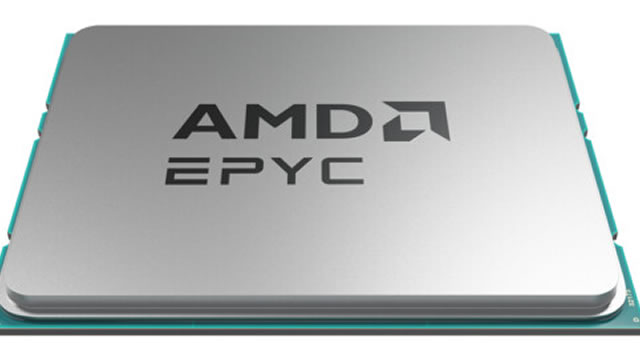
AMD's recent performance is overwhelmingly a story of Data Center dominance, with this segment’s revenue soaring 107% year-over-year. This growth is driven by accelerating demand for EPYC CPUs and the ramp-up of Instinct AI GPUs and Helios rack-scale systems. As Chair and CEO Dr. Lisa Su stated in the Q2 2026 earnings release, "AI is driving a significant expansion in demand for compute across all of our markets, and our leadership portfolio and growing customer visibility position us exceptionally well to capture this expanding opportunity and deliver substantial revenue and earnings growth in the years ahead." Key partnerships with Anthropic and Microsoft Azure for large-scale deployments of MI450 GPUs in Helios racks further underscore the strong demand.
The impressive mix shift, with Data Center revenue rising from 42% in Q2 2025 to 58% in Q2 2026, typically signals margin expansion due to the higher profitability of these advanced products. Indeed, AMD's non-GAAP gross margin has climbed from 55% in Q1 2026 to 56% in Q2 2026. However, the company’s guidance for Q3 2026 indicates that gross margin is expected to remain flat at 56%. This suggests that while Data Center revenue is growing rapidly, the full margin leverage from this richer mix may be partially offset by factors such as competitive pricing pressures in strategic deals, the initial costs associated with ramping new platforms like Helios, or rising input costs like HBM memory. The narrative here is one of robust volume-driven growth in the most critical segment, but with a more constrained margin profile than some investors might hope for.
The continued, rapid expansion of AMD’s Data Center segment is unequivocally bullish for its long-term prospects in AI. With Data Center revenue more than doubling year-over-year and now accounting for nearly 60% of the company’s total sales, it has become AMD's undisputed primary driver of revenue and earnings growth. As CFO Jean Hu highlighted, "Data Center sales are expected to accelerate in the second half of 2026, driving stronger overall revenue growth and continued earnings expansion." This speaks to both the increasing scale of deployments and management's confidence in the product roadmap, including the Instinct MI350 and MI450 Series GPUs and the Helios platform.
However, this reliance on Data Center growth also introduces a trade-off: a stock trading at AMD’s premium valuation, near 37x forward earnings based on FY2027 estimates, demands not just strong growth, but exceptional and sustained market share gains in the highly competitive AI accelerator market. Current estimates suggest AMD holds a relatively modest 5-7% share of the AI accelerator market, in contrast to Nvidia's dominant ~80%. While AMD is clearly gaining traction with hyperscalers diversifying their AI infrastructure, the sheer scale of Nvidia's installed base and ecosystem creates a formidable challenge. The market is effectively pricing in a rapid, multi-year acceleration in AMD's share that is not yet fully visible in the incremental quarterly data, placing the onus on AMD to deliver consistently impressive beats and clear evidence of meaningful market capture to justify its current multiple.
Despite AMD's strong performance, a substantial bear case persists, rooted in its premium valuation and the relentless competitive landscape. At a current price of $518.58, AMD trades at approximately 37x its consensus FY2027 EPS estimate of $13.92. This is more than twice the typical forward price-to-earnings multiple of roughly 15x-20x for many semiconductor peers and significantly higher than Nvidia's ~20x forward P/E, despite Nvidia’s vastly larger Data Center scale. If AMD's multiple were to compress towards 25x FY2027 EPS, implying a deceleration in its AI growth trajectory, the stock could see a downside of roughly 33% from current levels.
A significant risk also lies in AMD's current 5-7% estimated share of the AI accelerator market, dwarfed by Nvidia's approximately 80% dominance. While AMD’s Data Center revenue is robust, the company does not explicitly break out its AI GPU revenue, leaving investors to infer its penetration. This opacity can fuel skepticism if the actual AI GPU contribution is lower than implied by optimistic models. Furthermore, geopolitical risks, as evidenced by the $800 million inventory charge in Q2 2025 due to U.S. export restrictions on MI308 GPUs, could resurface with newer Instinct parts (MI350/MI450), potentially impacting margins by over 10 percentage points in a single quarter. Any perceived slowdown in the ramp of AMD's MI350/MI400 series or challenges in ROCm software adoption could easily trigger a significant re-rating given the aggressive growth already priced into the stock.
Wall Street analysts broadly maintain a positive outlook on Advanced Micro Devices, yet their price targets reveal a wide divergence in conviction about the company's long-term AI trajectory. Of the 70 analysts covering AMD, 50 recommend a Buy rating, with 20 issuing a Hold, and not a single analyst recommending a Sell. This consensus rating of "Buy" underscores a shared belief in AMD's fundamental strength and its position in the AI infrastructure build-out.
However, the specific price targets paint a more complex picture. The consensus target price for AMD stands at $575.29, with a median target of $607.50. This implies a modest upside of 10.9% and 17.1%, respectively, from the current price of $518.58. More strikingly, the targets range from a low of $260.00 to an ambitious high of $1,250.00, representing a potential downside of 50% and an upside of 141% from the current price. This enormous spread highlights the profound uncertainty among analysts regarding AMD's ultimate market share gains against Nvidia and the sustainability of its triple-digit Data Center growth. While most are optimistic, the range suggests that only a few truly believe in a "hyper-growth" scenario that would dramatically close the gap with the market leader, leaving others to value AMD more conservatively despite its strong AI narrative.
| Analyst Firm | Rating | Price Target | Date (latest) |
|---|---|---|---|
| Susquehanna | Buy | $500 | 2026-07-30 |
| Wedbush | Outperform | $600 | 2026-07-27 |
| Jefferies | Buy | $640 | 2026-07-27 |
| Stifel Nicolaus | Buy | $635 | 2026-07-24 |
| KeyBanc | Buy | $725 | 2026-07-24 |
| Robert W. Baird | Buy | $1,250 | 2026-07-24 |
| UBS | Buy | $730 | 2026-07-24 |
| RBC Capital | Hold | $540 | 2026-07-24 |
| Morgan Stanley | Hold | $410 | 2026-08-03 |
The strongest objection to a bullish stance on AMD is that its current valuation, with a forward P/E near 37x on FY2027 estimates, already prices in an aggressive AI growth trajectory. Bears argue that even stellar results like Q2’s doubling of Data Center revenue are merely validating existing expectations, rather than exceeding them enough to justify further multiple expansion. This viewpoint posits that the market has already factored in AMD becoming a strong number two in AI and now demands evidence of a dramatic acceleration in market share capture or profitability to reward the stock further.
While Q2’s 107% Data Center growth and Q3’s strong revenue guide are robust, they did not necessarily offer explicit clarity on AI GPU revenue or market share gains that would dramatically alter AMD’s long-term competitive positioning against Nvidia. The objection holds in that AMD needs more than just "good" numbers; it needs "transformative" numbers to significantly expand its multiple from these already elevated levels. However, the initial market "cold shoulder" followed by a strong 7.0% positive close suggests that while the bar is high, the underlying fundamentals are indeed compelling enough to attract buyers. The core AI thesis is not broken, but rather, it is in a "prove-it" phase where validation, not just acceleration, is key. What would prove this objection wrong, triggering further upside? A material overshoot in Q3 Data Center revenue, exceeding, for example, $7.5 billion, combined with explicit commentary on increasing AI GPU market share or sustained gross margin expansion above 56%, would indicate a clearer inflection point for AMD’s AI trajectory.
AMD's second-quarter performance validates its robust execution in the burgeoning AI infrastructure market, particularly within its Data Center segment. The doubling of Data Center revenue and strong forward guidance underscore the company's compelling product roadmap and strategic partnerships. However, the stock’s current valuation, trading at approximately 37x FY2027 earnings and 17x FY2026 sales, largely incorporates a highly optimistic, multi-year AI growth scenario. This leaves limited room for error and implies that only consistently outsized beats on AI GPU revenue and market share gains against Nvidia will drive sustained multiple expansion.
Our stance on Advanced Micro Devices (AMD) is Neutral with a positive bias, acknowledging strong fundamentals alongside a demanding valuation. We suggest an entry zone for new capital between $480 and $500, aligning with the implied support from recent trading and the immediate post-earnings re-evaluation. Our 12-month price target is $600, reflecting a slight discount to the median analyst target of $607.50, balancing growth potential with valuation realities. This thesis would be invalidated by a sustained break below $450, or if AMD's Q3 2026 Data Center revenue fails to show continued strong sequential growth, particularly falling below $7.0 billion, which would signal a critical crack in its AI growth narrative. AMD's AI story is compelling, but for investors, patience and a disciplined entry remain paramount as the market weighs execution against extreme expectations.
Want deeper research on any stock? Try Kavout Pro for AI-powered analysis, smart signals, and more. Already a member? Add credits to run more research.