Kavout

MarketLens

Log in

Archer Aviation vs. Joby Aviation: Which eVTOL Stock is the Better Bet?

Mar 12, 2025
SHARE THIS ON:

evtol.jpg

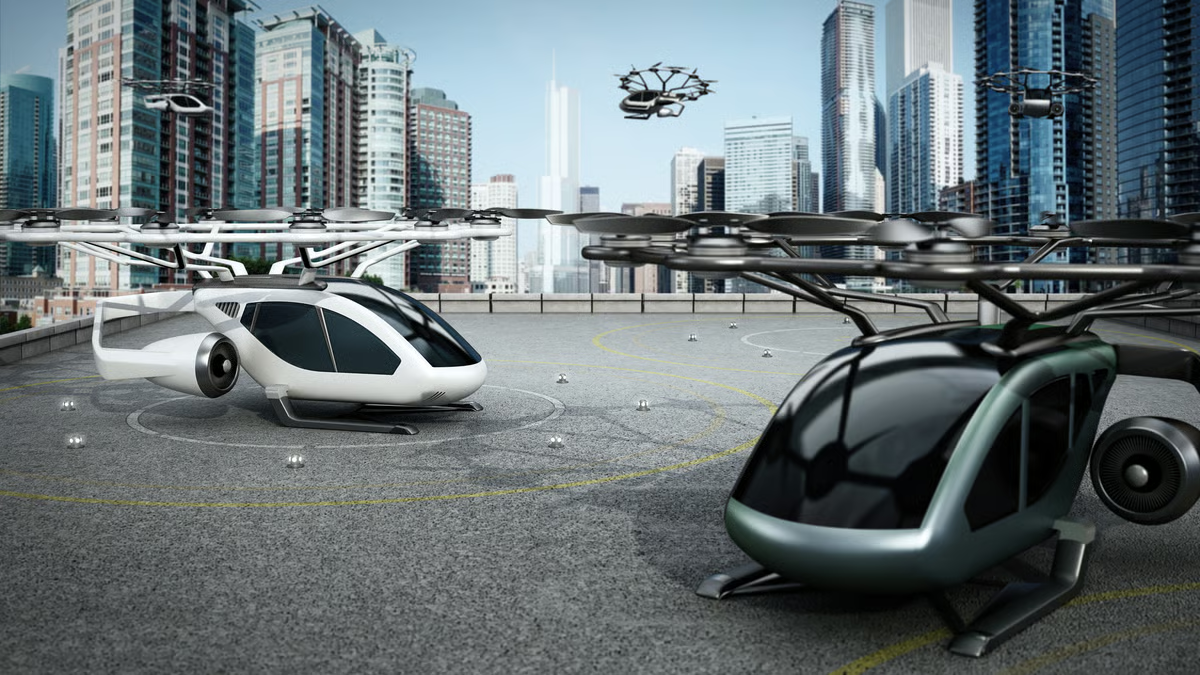
In the competitive electric vertical take-off and landing (eVTOL) space, two companies have emerged as frontrunners: Archer Aviation and Joby Aviation. Both are pioneering the future of urban air mobility, but which one offers a better investment opportunity? This March 2025 analysis examines their recent developments, compares their competitive positions, and evaluates the broader sector dynamics to guide your investment decision.

Understanding the eVTOL Sector

Before diving into the specifics of Archer and Joby, it's essential to understand the eVTOL sector. This burgeoning industry is set to revolutionize urban transportation by offering a sustainable, efficient, and fast alternative to traditional ground-based travel. eVTOL aircraft are designed to take off and land vertically, much like helicopters, but with the added benefits of electric propulsion, which reduces noise and emissions.

The eVTOL market is projected to reach a staggering $1 trillion by 2040, driven by increasing urbanization, technological advancements, and a growing demand for sustainable transportation solutions. As cities become more congested, the need for innovative mobility solutions like eVTOLs becomes increasingly apparent.

Archer Aviation: A Promising Contender

Recent Developments

Archer Aviation has been making significant strides in the eVTOL sector. As of March 2025, its stock has rebounded impressively, surging 360% from its all-time low in December 2022. The company's flagship eVTOL aircraft, Midnight, is nearing FAA certification, with plans to launch air taxi services in Abu Dhabi later this year. This initiative is part of Archer's "Launch Edition" program, which aims to monetize its aircraft even before full FAA certification is achieved.

Archer has also secured substantial orders, including 200 units from United Airlines and 116 from Future Flight Global. The U.S. Department of Defense has awarded contracts worth up to $142 million, further solidifying Archer's position in the market. Additionally, strategic partnerships with Stellantis and Anduril highlight Archer's commitment to high-volume manufacturing and defense applications.

Financial Position

Despite reporting a net loss of $198.1 million in Q4 2024, Archer maintains a strong cash position, bolstered by a $301.8 million capital raise in early 2025. Analysts project Archer's revenue to grow from $29 million in 2025 to $471 million by 2027, indicating a promising growth trajectory.

Strengths and Challenges

  • Strengths:

    • Strong strategic partnerships and substantial order book.
    • Favorable regulatory environment with supportive comments from the Secretary of Transportation.
    • Positive insider confidence, with insiders purchasing shares despite an increase in outstanding shares.
  • Challenges:

    • Ongoing financial losses and the need for operational adjustments.
    • Delays in FAA certification could impact timelines for commercial operations.

Joby Aviation: A Strong Competitor

Recent Developments

Joby Aviation, another key player in the eVTOL market, has also been making headlines. The company is in the final stages of FAA certification for its S4 2.0 aircraft, which boasts a range of over 100 miles and a top speed of 200 mph. Joby has secured a $131 million contract with the U.S. Department of Defense and plans to deliver aircraft to Dubai for passenger service by mid-2025.

Joby's strategic partnerships with Toyota and Delta Air Lines, along with a collaboration with NASA for acoustic testing, underscore its strong market position. The company has also raised over $1 billion in funding, showcasing robust investor confidence.

Financial Position

Joby ended Q4 FY 2024 with a cash balance of $933 million and a low debt profile, minimizing financial risk. However, the company has faced challenges, including a decline in stock price since its public debut and ongoing financial losses.

Strengths and Challenges

  • Strengths:

    • Advanced stage of FAA certification and strong financial backing.
    • Strategic partnerships with major industry players like Toyota and Delta Air Lines.
    • Active development of infrastructure, including vertiports in Dubai.
  • Challenges:

    • High valuation, with an enterprise value of $4.7 billion, translating to 522 times projected sales.
    • Missed targets and minimal revenue generation have raised concerns among investors.

Archer vs. Joby: A Comparative Analysis

Aircraft Design and Technology

  • Archer Aviation:

    • Configuration: 12-rotor with fixed wings.
    • Range: 60 miles.
    • Speed: 150 mph.
    • Noise Level: 45 dBA at 2,000 feet during flyover.
  • Joby Aviation:

    • Configuration: Six-rotor with tilting propellers.
    • Range: 150 miles.
    • Speed: 200 mph.
    • Noise Level: 65 dBA at 100 meters during takeoff.

While Joby's aircraft offers a longer range and higher speed, Archer's design focuses on noise reduction, which could be a significant advantage in urban environments.

Financial Metrics

  • Archer Aviation:

    • Market Capitalization: $1.2 billion.
    • Revenue (TTM): $0.45 million.
    • Net Income (TTM): -$317.3 million.
    • Cash on Hand: $600 million.
  • Joby Aviation:

    • Market Capitalization: $2.5 billion.
    • Revenue (TTM): $0.27 million.
    • Net Income (TTM): -$502.23 million.
    • Cash on Hand: $1.1 billion.

Archer's lower market capitalization and more favorable sales multiple make it a potentially more attractive investment compared to Joby's higher valuation.

Strategic Partnerships and Market Position

Both companies have secured significant partnerships, but Archer's collaboration with United Airlines and Stellantis, along with its defense interest through Anduril, positions it favorably for future growth. Joby's partnerships with Toyota and Delta Air Lines, along with its collaboration with NASA, highlight its strong market presence.

Regulatory Progress and Commercialization Outlook

Both Archer and Joby are targeting commercial launches in 2025, with Archer focusing on international markets like Abu Dhabi and Joby exploring opportunities in the UAE. However, Archer's more favorable path to commercialization, as per Wall Street forecasts, gives it an edge over Joby.

The Verdict: Which eVTOL Stock is Better?

In the battle between Archer Aviation and Joby Aviation, both companies present compelling investment opportunities in the eVTOL sector. However, Archer's stronger revenue projections, reasonable valuation, and strategic positioning in international markets make it a more attractive option for investors seeking exposure to the burgeoning urban air mobility market.

While Joby Aviation boasts advanced technology and strong partnerships, its high valuation and ongoing financial challenges may deter some investors. Ultimately, the choice between Archer and Joby will depend on individual investment preferences and risk tolerance.

Looking Ahead: The Future of eVTOL

As the eVTOL sector continues to evolve, both Archer and Joby are well-positioned to capitalize on the growing demand for sustainable urban transportation solutions. With advancements in technology, regulatory support, and strategic partnerships, the future of eVTOL looks promising.

Investors should keep a close eye on developments in FAA certification, commercialization timelines, and strategic partnerships to make informed decisions. As the industry matures, the potential for significant returns in the eVTOL market remains high, making it an exciting space to watch in the coming years.

In conclusion, while both Archer Aviation and Joby Aviation offer unique strengths and opportunities, Archer's strategic positioning and favorable market outlook make it a more compelling choice for investors looking to ride the wave of urban air mobility.

SHARE THIS ON:

Related Articles

Category

You may also like

No related articles available

Breaking News

View All →

No topics available at the moment