MarketLens

Log in

Are Defense Stocks a Safe Haven Amidst Geopolitical Turmoil

2 hours ago
SHARE THIS ON:

Are Defense Stocks a Safe Haven Amidst Geopolitical Turmoil

Key Takeaways

  • Defense giants Lockheed Martin and RTX Corporation have seen significant rallies, with LMT up 3.37% and RTX up 4.71% on March 2, 2026, driven by escalating Middle East conflicts and increased global defense spending.
  • Both companies benefit from substantial government contracts and robust order backlogs, positioning them as perceived safe havens amidst broader market volatility and a projected $1.5 trillion U.S. defense budget for 2027.
  • While geopolitical tensions provide immediate catalysts, investors should scrutinize valuation metrics, long-term growth prospects, and the sustainability of elevated defense spending to assess the durability of these gains.

Are Defense Stocks a Safe Haven Amidst Geopolitical Turmoil?

Defense stocks, particularly industry behemoths like Lockheed Martin Corp. (LMT) and RTX Corporation (RTX), have once again proven their resilience, surging significantly on March 2, 2026, amidst heightened geopolitical tensions in the Middle East. As the U.S. and Israel launched strikes against Iran, sending shockwaves across global markets, these defense contractors became a clear flight-to-safety trade. Lockheed Martin saw its shares climb by 3.37% to $676.70, while RTX Corporation rallied an impressive 4.71% to $212.16, both challenging their 52-week highs.

This recent surge underscores a recurring theme: in times of global instability, defense companies often act as a perceived safe haven. While the broader market, including the S&P 500 futures, experienced a selloff, defense contractors benefited from expectations of increased military spending and demand for advanced defense systems. This isn't merely a speculative bounce; it reflects a fundamental shift in investor sentiment towards sectors with predictable government contracts and long-term strategic importance.

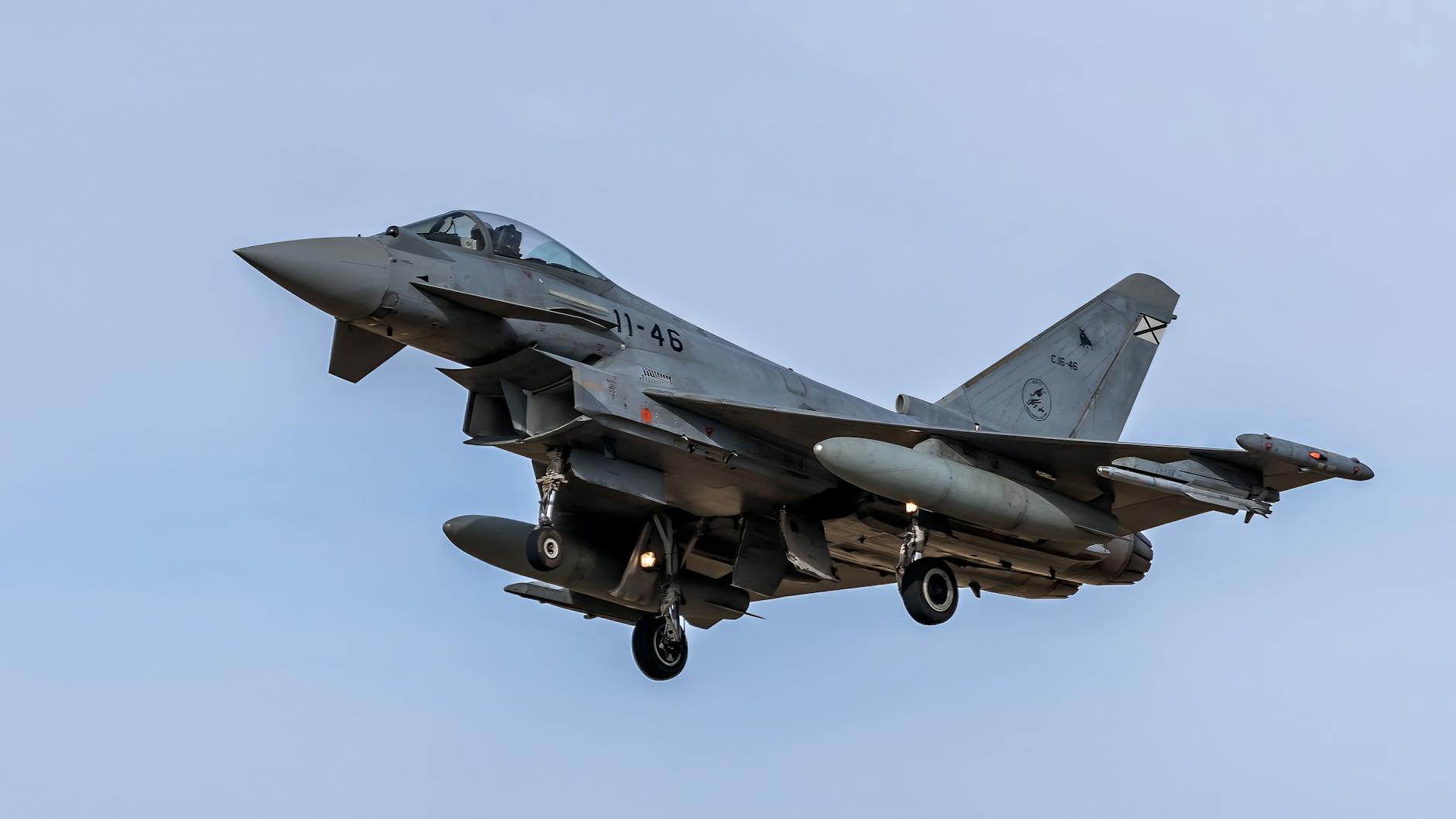
The immediate catalyst for this rally was the U.S. military action in Iran, dubbed "Operation Epic Fury," which involved F-35 fighter jets – a key Lockheed Martin product – and highlighted the critical need for air and missile defense systems. This operational relevance directly ties the core products of these companies to ongoing military campaigns, justifying the rush into their shares. Analysts are noting that defense spending, already set to surge in 2026, will become "more urgent and less controversial" in the face of a protracted conflict.

However, the question for investors remains whether this is a tactical response to a shock or a signal of sustained, long-term growth. The market is clearly reacting to the immediate geopolitical event, but the sustainability of this rally hinges on whether the current conflict leads to a permanent shift in defense budgets and a lasting increase in perceived global risk. This dynamic makes a deeper dive into the fundamentals of LMT and RTX crucial for informed investment decisions.

What's Fueling Lockheed Martin's Recent Surge?

Lockheed Martin's recent ascent to $676.70, nearing its $692.00 52-week high, is a direct consequence of its unparalleled position in critical defense technologies and a supportive geopolitical environment. The company, known for its F-35 fighter jets, missile defense systems, and precision strike capabilities, is a primary beneficiary of increased government spending on military modernization. Its F-35 program alone accounts for 26% of the defense contractor's net sales, making it central to U.S. and allied air power.

The company's financial health, despite a recent EPS miss, remains robust, supported by a massive order backlog and consistent cash flow generation. Lockheed Martin reported a TTM EPS of $21.73 and a TTM revenue of $325.06 per share. While its net income saw a -6.0% YoY decline in FY2025, operating cash flow grew by 22.7% and free cash flow by 30.7%, indicating strong underlying operational efficiency. The company's dividend yield of 2.0%, with a payout ratio of 62.4%, also appeals to income-focused investors seeking stability.

Valuation-wise, LMT trades at a P/E ratio of 31.14, a P/S of 2.09, and an EV/EBITDA of 19.96. These metrics suggest a premium valuation, reflecting its market dominance and perceived safety. Wall Street analysts maintain a "Buy" consensus rating for LMT, with a median price target of $654.00 and a high of $695.00. This implies a potential upside from current levels, though the stock is currently trading above the consensus target.

Lockheed's strategic positioning extends beyond immediate conflicts. The U.S. government's emphasis on next-generation aircraft programs, missile systems, and technological innovation ensures continued demand for LMT's products and services. Its involvement in Foreign Military Sales, including JAGM missiles for the UK and HELLFIRE systems for several European nations, also diversifies its revenue streams and deepens global military collaborations, reinforcing its long-term growth prospects.

How is RTX Corporation Positioned for Continued Growth?

RTX Corporation, formerly Raytheon Technologies, has also demonstrated significant strength, with its shares climbing to $212.16 and hitting a new 52-week high of $212.80 on March 2, 2026. This performance is underpinned by its diversified portfolio across defense and commercial aerospace, which provides a strategic hedge during global crises. The company's 2023 reorganization into three efficient business divisions – Collins Aerospace, Pratt & Whitney, and Raytheon – has streamlined operations and enhanced focus on key growth areas.

The defense segment, particularly Raytheon, is a major beneficiary of heightened geopolitical tensions. This division develops critical defense systems, including guided missiles, air defense networks, and cybersecurity solutions. RTX has recently secured five framework agreements with the U.S. Department of Defense to significantly boost production capacity for Tomahawk and AMRAAM missiles, with annual production targets exceeding 1,000 Tomahawks and at least 1,900 AMRAAMs. These contracts directly address the growing global demand for precision munitions, ensuring robust revenue streams.

Financially, RTX shows impressive growth, with FY2025 YoY revenue up 9.7%, net income up 41.0%, and EPS up 39.7%. Its operating cash flow surged by 47.6% and free cash flow by 75.1%, indicating strong operational leverage and efficient capital deployment. The company's TTM EPS stands at $5.01 on TTM revenue of $65.88 per share. While its P/E ratio of 42.38 and EV/EBITDA of 23.89 are higher than LMT's, reflecting its strong growth trajectory, its dividend yield is 1.3% with a payout ratio of 53.1%.

Analysts maintain a "Buy" consensus for RTX, with a median price target of $225.00 and a high of $235.00. This suggests continued confidence in its ability to capitalize on increased defense spending and technological advancements. RTX's recent wins in advanced weapons and autonomy software, such as the Navy's approval of Raytheon's StormBreaker smart weapon and Collins Aerospace's autonomous mission software, reinforce its pivotal role in next-generation defense technology, positioning it for sustained long-term growth.

What are the Long-Term Tailwinds and Headwinds for the Defense Sector?

The defense sector is currently riding a powerful wave of long-term tailwinds, primarily driven by persistent global instability and a renewed focus on military modernization. Geopolitical tensions, particularly in the Middle East and Eastern Europe, have made defense spending "more urgent and less controversial," as noted by Stifel analyst Jonathan Siegmann. This environment is translating into significant budget increases, with President Trump proposing a $1.5 trillion defense budget for 2027, a substantial jump from the $901 billion approved for fiscal 2026.

This increased spending isn't just about expanding existing forces; it's a strategic emphasis on technological innovation and upgrading capabilities. Governments are channeling funds into next-generation aircraft programs, enhancing missile and defense systems, and improving overall combat preparedness. This trend directly benefits established contractors like Lockheed Martin and RTX, whose portfolios are aligned with these long-term military priorities, from advanced aviation systems to precision strike capabilities and cybersecurity solutions.

Moreover, defense firms often operate in oligopolistic markets, backed by long-term government contracts and multiyear procurement programs. This structure provides relatively stable revenue streams, making the sector resilient during economic downturns when federal spending tends to be more predictable than consumer demand. International exposure, through Foreign Military Sales, further diversifies revenue and mitigates single-country risk, as seen with Lockheed's contracts for HELLFIRE systems in multiple European nations.

However, the sector is not without its headwinds. The sustainability of elevated defense spending is always subject to political shifts and the eventual de-escalation of conflicts. A rapid reduction in global tensions could pressure valuations, especially if the current rally is primarily sentiment-driven rather than based on fundamental re-ratings. Furthermore, the defense industry faces intense scrutiny regarding cost overruns, project delays, and the ethical implications of profiting from conflict, which can influence public opinion and policy decisions.

What Key Metrics Should Investors Watch for LMT and RTX?

For investors evaluating Lockheed Martin and RTX, a close examination of key financial metrics and forward-looking indicators is essential to gauge the sustainability of their recent gains. Beyond the immediate geopolitical catalysts, understanding their underlying financial health and growth trajectories will be paramount.

Valuation Multiples: Lockheed Martin trades at a P/E of 31.14, a P/S of 2.09, and an EV/EBITDA of 19.96. RTX, reflecting its higher growth, commands a P/E of 42.38, a P/S of 3.21, and an EV/EBITDA of 23.89. While these are elevated, investors should compare them to historical averages and industry peers. A widening gap between current valuations and underlying earnings power, especially for LMT which recently missed Q4 EPS estimates, could signal a tactical trade rather than a fundamental re-rating.

Growth Rates: RTX demonstrates stronger recent growth, with FY2025 YoY revenue up 9.7% and EPS up 39.7%. LMT's FY2025 YoY revenue grew 5.7%, but net income declined -6.0% and EPS -3.7%. However, LMT's free cash flow growth of 30.7% is robust. For long-term investors, consistent revenue and earnings growth, supported by robust order backlogs, will be critical. RTX's 5-year cumulative net income growth of 293.6% highlights its significant expansion.

Dividends and Yields: Both companies offer attractive dividends. LMT provides a 2.0% dividend yield with a payout ratio of 62.4%, while RTX offers a 1.3% yield with a 53.1% payout. These consistent payouts, with LMT's dividend record dating back to 1936, signal operational maturity and consistent cash flow generation, appealing to income-focused investors.

Analyst Sentiment and Price Targets: Wall Street maintains a "Buy" consensus for both. LMT's median price target is $654.00, while RTX's is $225.00. It's important to note that LMT is currently trading above its consensus target, suggesting that some of the recent upside might already be priced in. RTX, however, still shows potential upside to its median target. Investors should also monitor any shifts in analyst ratings, such as Citigroup maintaining "Neutral" on LMT and "Buy" on RTX in February 2026.

Operational Efficiency and Leverage: LMT boasts a higher ROE of 80.5% and ROIC of 17.4% compared to RTX's 10.6% ROE and 6.2% ROIC. However, LMT's debt-to-equity ratio of 3.23 is significantly higher than RTX's 0.61, indicating greater leverage. While LMT's asset turnover of 1.25 is higher than RTX's 0.52, both companies maintain current ratios just above 1.0, suggesting adequate short-term liquidity.

The Road Ahead for Defense Sector Investors

The recent surge in Lockheed Martin and RTX stock prices, driven by escalating global conflicts, highlights the defense sector's role as a critical, albeit complex, investment. While immediate geopolitical catalysts provide strong tailwinds, investors must balance the allure of safe-haven status with a meticulous analysis of valuation, growth prospects, and the inherent risks of a sector tied to global instability. The long-term outlook for defense remains robust, fueled by modernization initiatives and persistent geopolitical tensions, but careful due diligence is essential to navigate this volatile landscape.


Want deeper research on any stock? Try Kavout Pro for AI-powered analysis, smart signals, and more. Already a member? Add credits to run more research.

SHARE THIS ON:

Related Articles

Category

You may also like

Stock News10 hours ago

Is This The Safest Stock During A War?

Markets dropped at the start of Russia's invasion of Ukraine, mirroring current market declines. This historical context suggests potential volatility during geopolitical conflict.
Stock News2 days ago

What are HALO Stocks and Should You Invest in Them This Year?

Investors are actively seeking HALO stocks, which are defined as equities less vulnerable to disruption from artificial intelligence technologies.
Stock News3 days ago

Defense Spending Outlook Could Propel This Thrilling ETF

Aerospace and defense stocks show leadership due to global governments pledging increased capital allocation toward national security initiatives.
Stock News1 week ago

Could Quality Stocks Be the Key to Unlocking the 2026 Equities Outlook?

Investment uncertainty remains evergreen, but 2026 is already characterized by significant geopolitical and policy twists and turns.

Breaking News

View All →

Top Headlines

View More →
Stock News17 minutes ago

Palantir Stock Rises on Iran Conflict—But Here's the Real Story

Stock News1 hour ago

Why ExxonMobil Group Stock Bumped Higher Today

Stock News1 hour ago

Stock Market Today, March 2: Palantir Technologies Jumps After Strong Q4 Results Last Month and AI Defense Demand

Stock News1 hour ago

Forget D-Wave Quantum: This Subscription Software Giant Offers a Far More Reliable Quantum-and-AI Growth Story

Stock News2 hours ago

Why Optoelectronics Stocks Soared Today