MarketLens

Log in

Broadcom's Q1 Earnings: Is the AI Hype Justified

4 days ago
SHARE THIS ON:

Broadcom's Q1 Earnings: Is the AI Hype Justified

Key Takeaways

  • Broadcom's Q1 earnings on March 4th are expected to showcase robust AI-driven growth, with revenue projected at $19.27 billion and EPS at $2.03.
  • The company's ambitious target to sell 1 million 3D stacked AI chips by 2027 highlights its innovative edge in custom silicon and infrastructure.
  • Despite strong AI tailwinds, investors must weigh risks like VMware customer churn and high customer concentration against a compelling valuation and significant analyst upside.

Broadcom's Q1 Earnings: Is the AI Hype Justified?

All eyes are on Broadcom (NASDAQ: AVGO) as the semiconductor and infrastructure software giant prepares to report its fiscal first-quarter 2026 financial results on March 4th. Wall Street is largely optimistic, anticipating a significant year-over-year increase in both earnings and revenue, driven primarily by the insatiable demand for artificial intelligence infrastructure. This report isn't just about numbers; it's a critical barometer for the broader AI sector and Broadcom's strategic pivot.

Analysts are forecasting quarterly earnings of $2.03 per share, representing a robust 26.9% increase from the prior year. Revenue is expected to climb to $19.27 billion, a substantial 29.2% jump year-over-year. These figures underscore Broadcom's position as a structural architect of the AI revolution, supplying the custom silicon and high-speed networking essential for hyperscale data centers. The company has a strong track record of beating EPS estimates, having done so in the last four consecutive quarters, including a 4.28% surprise in Q4 FY2025.

However, the Zacks Earnings ESP, which compares the Most Accurate Estimate to the Zacks Consensus Estimate, currently stands at -0.84%. While a negative ESP doesn't definitively predict a miss, it suggests that some analysts have recently become slightly more bearish on the immediate earnings prospects. Despite this, the stock currently carries a Zacks Rank of #2 (Buy), indicating overall analyst confidence. Investors will be scrutinizing management's commentary on business conditions and future guidance, as these often dictate post-earnings stock movements more than the headline numbers alone.

Broadcom shares have seen a period of consolidation, currently trading around $319.55, down slightly from their 52-week high of $414.61. This pullback has led some to view the valuation as more attractive, especially compared to some of its AI peers. The upcoming earnings call will be crucial in determining if the underlying fundamentals can re-ignite the stock's upward trajectory and validate its premium as a "Blue Chip Tech" holding in the AI era.

How is Broadcom Powering the AI Revolution?

Broadcom isn't just participating in the AI boom; it's building the foundational "plumbing" that makes it possible. The company's custom AI accelerators (ASICs) and high-performance networking solutions are proving indispensable for hyperscalers and major AI firms looking to optimize their massive data centers. This bespoke compute trend, moving away from off-the-shelf GPUs, is a significant tailwind for Broadcom, positioning it as a critical partner for companies like Google and OpenAI.

The numbers speak volumes about this momentum. In Q4 FY2025, Broadcom's AI semiconductor business achieved a remarkable 74% year-over-year growth, reaching $6.5 billion and constituting roughly one-third of the company's total revenue. Management anticipates this segment will continue its ascent, projecting $8.2 billion in AI semiconductor revenue for Q1 FY2026. This acceleration is driven by expanding XPU adoption, with the custom accelerator business more than doubling year-over-year.

Beyond custom chips, Broadcom's AI networking demand has been even stronger. Customers are aggressively building out data center infrastructure in anticipation of accelerator deployments. The company's backlog for AI switches, including its record-breaking Tomahawk 6 switch, now exceeds $10 billion. When combined with XPUs and related components, Broadcom's total AI order backlog has swelled to over $73 billion, representing nearly half of its consolidated backlog of $162 billion. This substantial backlog is expected to be delivered over the next 18 months, providing clear revenue visibility.

Major design wins and orders further solidify this narrative. Broadcom secured a $10 billion order in Q3 FY2025 from Anthropic for TPU Ironwood racks, followed by an additional $11 billion order in Q4 for delivery in late 2026. The company also added a fifth XPU customer with a $1 billion order scheduled for late 2026. These commitments highlight Broadcom's deep integration into the AI supply chain and its pivotal role in enabling the next generation of AI compute.

What's the Game-Changer in Broadcom's 3D Stacking Technology?

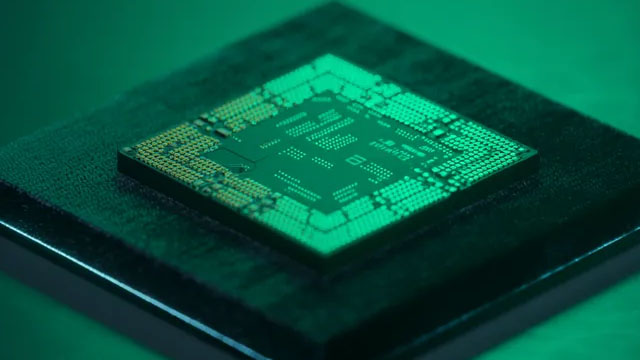
Broadcom is making a significant bet on the future of AI hardware with its innovative 3D stacking technology, aiming to sell at least 1 million chips based on this advanced design by 2027. This isn't just an incremental improvement; it's a fundamental shift in chip architecture designed to address the escalating computing requirements and data transfer bottlenecks presented by AI software. The company's 3.5D XDSiP platform stacks two chips on top of one another, tightly binding distinct silicon pieces to dramatically improve data flow speed and energy efficiency.

This technology offers critical advantages, including a reported 7x signal density and a 10x power reduction for inference workloads, directly tackling the cost and power constraints that define large-scale AI deployments. The first customer, Fujitsu, is already making engineering samples for a data center chip and plans to move to volume production later this year. Taiwan Semiconductor Manufacturing Co. (TSM) is fabricating these chips using its cutting-edge 2-nanometer process for the top chip, fused with a 5-nanometer chip, showcasing the complexity and advanced manufacturing involved.

Broadcom has several more designs in the pipeline, expecting to ship two additional products based on this stacking tech in the second half of this year and sample three more in 2027. This aggressive roadmap underscores the company's commitment to leading in custom silicon innovation. The ability to mix and match manufacturing processes for different chip layers offers customers unprecedented flexibility and performance optimization, further cementing Broadcom's competitive edge in the custom ASIC market.

However, this ambitious target comes with inherent risks. Manufacturing complexity, thermal management, and the universal adoption of standards like UCIe are critical hurdles. Nvidia's upcoming Vera Rubin system, which promises 10 times more efficiency than its predecessor, sets a high bar for performance per watt. Broadcom's success will depend not only on the elegance of its technology but also on its ability to flawlessly scale production, secure additional hyperscaler design wins, and maintain its efficiency lead against fierce competition.

Is VMware a Hidden Gem or a Potential Headwind?

Beyond its booming AI semiconductor business, Broadcom's infrastructure software segment, significantly bolstered by the $69 billion acquisition of VMware, represents another crucial pillar of its growth strategy. This segment focuses on "high-value" enterprise software, shifting customers towards the VMware Cloud Foundation (VCF) subscription model. By targeting the top 10,000 global enterprises, Broadcom aims to ensure stable, recurring revenue streams with exceptionally high margins, often exceeding 90% gross margin in software.

The strategic rationale behind the VMware acquisition was to create a vertically integrated powerhouse, offering comprehensive solutions for hybrid and private cloud deployments. Demand for VCF continues to expand as organizations modernize their IT environments, supporting recurring revenue growth and deeper enterprise integration. The trend toward "Private AI," where companies run AI models on their own infrastructure rather than solely relying on public clouds, is a major tailwind for the VMware segment, as it provides the secure, on-premise foundation for these advanced workloads.

However, the integration of VMware is not without its challenges and potential headwinds. UBS has warned that VMware customer churn could rise in 2026 and 2027 as contracts renew, with Forrester forecasting that 20% of enterprise VMware customers may begin migrating away from the platform this year. While Broadcom's "stickiness" among large enterprises is high, any significant churn could pressure the enterprise software business and weigh on the stock's multiple, creating a dual headwind alongside potential margin pressure from the AI hardware mix.

Management commentary on the VMware transition will be a key focus during the upcoming earnings call. Investors will be looking for updates on customer retention rates, the pace of subscription conversions, and the overall health of the infrastructure software segment. While AI is expected to remain the primary growth engine, with the software segment growing at a low double-digit rate in fiscal 2026, the successful integration and retention of VMware customers are vital for Broadcom to fully realize its vision of becoming the indispensable "plumbing" for both hyperscale AI and secure private clouds.

Valuation, Analyst Sentiment, and Key Risks to Watch

Broadcom's current valuation reflects a company in transition, balancing its traditional semiconductor business with aggressive expansion into AI and enterprise software. Trading at a P/E ratio of 65.39, a P/S of 23.71, and an EV/EBITDA of 45.54 (TTM), the stock is priced for significant growth, though it has pulled back from its 52-week high of $414.61. This recent consolidation, with shares down 3.9% over the past 7 days and 4.1% over the past 30 days, presents a more attractive entry point for some investors compared to its peak.

Wall Street analysts remain overwhelmingly bullish on AVGO, with a consensus "Buy" rating from 57 analysts (53 Buy, 4 Hold). The average price target stands at $443.72, with a median of $450.00 and a high of $510.00. This implies a substantial upside from the current price of $319.55. UBS, for instance, reiterated a "Buy" rating with a $475 price target, citing accelerating demand for custom AI chips and projecting AI revenue to surge from an estimated $60 billion in FY2026 to $150 billion by FY2028.

However, several risks warrant close attention. Customer concentration is a significant concern, as large portions of Broadcom's AI revenue come from a handful of hyperscalers like Google, Meta, and OpenAI. Any reduction in their capital expenditure or a shift in their internal chip development strategies could severely impact Broadcom. Competition from Nvidia's InfiniBand in networking and Marvell Technology in custom ASICs also remains fierce, potentially influencing pricing and margins. Geopolitical factors, particularly export controls to China, also pose a persistent threat given Broadcom's global footprint.

Furthermore, while AI sales are high-growth, they can sometimes come with lower gross margins compared to Broadcom's traditional software business. The company's TTM gross margin is 67.8%, with operating margin at 39.9% and net margin at 36.2%. Investors will need to monitor if the mix shift towards hardware impacts overall profitability. The upcoming earnings call will be crucial for management to address these risks and provide clarity on the durability of AI demand and the final stages of the VMware transition.

Investor Outlook: Navigating the AI Crossroads

Broadcom stands at a pivotal juncture, poised to capitalize on the relentless demand for AI infrastructure while navigating complex market dynamics. The upcoming Q1 earnings report on March 4th will be a critical test, offering insights into the company's ability to convert its massive AI backlog into sustained revenue and profit growth. Investors should focus not just on the headline numbers, but on management's guidance for fiscal 2026 and beyond.

The bull case hinges on Broadcom's indispensable role as the "plumbing" for the AI revolution, its innovative 3D stacking technology, and the sticky, high-margin revenue from its infrastructure software. The bear case points to customer concentration risks, intense competition, and potential churn from the VMware integration. Ultimately, Broadcom's long-term success will be measured by its execution in scaling its advanced technologies and maintaining its competitive edge in a rapidly evolving landscape.


Broadcom remains a compelling play for investors seeking exposure to the core infrastructure of the AI boom. While the stock has seen some consolidation, its strategic positioning and innovation pipeline suggest significant upside potential. Watch for clarity on AI order momentum and the VMware integration to gauge its trajectory.


Want deeper research on any stock? Try Kavout Pro for AI-powered analysis, smart signals, and more. Already a member? Add credits to run more research.

SHARE THIS ON:

Related Articles

Category

You may also like

Stock News1 day ago

Will Higher Semiconductor Revenues Help AVGO Stock Beat Q1 Earnings?

Broadcom prepares for fiscal Q1 results, expecting revenue growth driven by AI chip demand and VMware integration, though margin pressure persists.
Stock News5 days ago

NVIDIA vs. Broadcom: The Smarter AI Stock to Buy for March 2026

NVIDIA and Broadcom both reported strong AI-driven quarterly results, but differing metrics in growth, debt, and valuation suggest one stock is the superior investment choice for March 2026.
Stock News1 week ago

Software earnings vs. AI disruption

Software sector performance faces scrutiny following reports detailing the impact of ongoing artificial intelligence disruption.
Stock News1 months ago

CLS Stock Before Q4 Earnings: A Smart Buy or Risky Investment?

CLS stock faces caution ahead of Q4 earnings due to weakness in the ATS segment, despite launching AI-focused storage and 1.6TbE switches.

Breaking News

View All →

Top Headlines

View More →
Stock News1 hour ago

CrowdStrike and Schwarz Digits Partner to Deliver AI-Native and Sovereign Cybersecurity Platform on STACKIT

Stock News1 hour ago

Indonesia gives Meta 'stern warning' over disinformation

Stock News2 hours ago

Stock-Split Watch: Is Nvidia Next?

Stock News3 hours ago

Nvidia refocuses TSMC capacity as export controls stall China sales, FT reports

Stock News5 hours ago

TSLY: Tesla's Uncertainty Is Fueling This Income Machine