Key Takeaways
- China's June 2026 procurement ban on Lockheed Martin (LMT) and RTX Corporation (RTX) carries a limited direct financial impact on their core defense operations due to existing US export controls.
- RTX, with its diversified commercial aerospace segments, faces a greater potential for indirect supply chain disruption and the "choosing sides" dilemma in an increasingly fractured global economy.
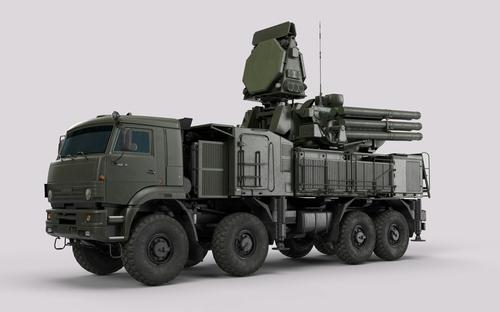
- Despite these targeted sanctions, both companies are poised to benefit from a "skyrocketing" global defense budget, with LMT's F-35 sales and RTX's Patriot missile contracts driving substantial backlogs.
Geopolitical Crosshairs: Defense Giants Face Beijing's Latest Retaliation
Today, July 21, 2026, the global aerospace and defense sector finds itself navigating a complex geopolitical landscape, with US-China tensions at a boiling point. In June 2026, Beijing escalated its economic statecraft by imposing a procurement ban on 46 US companies, including defense behemoths Lockheed Martin and RTX Corporation, citing their involvement in arms sales to Taiwan. This move, which also saw the Ministry of Commerce add 10 US companies to its Export Control Entity List, is China's latest response to what it perceives as US efforts to contain its technological and military ambitions.
Lockheed Martin, trading at $507.09 with a market capitalization of $116.92 billion, and RTX Corporation, at $193.67 with a market cap of $260.81 billion, are central figures in this escalating economic rivalry. While the immediate financial impact of these sanctions on their primary defense businesses is widely considered limited, the broader implications for global supply chains and the strategic choices facing multinational corporations are significant. The sanctions arrive amidst a period of robust demand for defense contractors, fueled by a projected $1 trillion US defense budget for 2026 alone, with forecasts exceeding $1.5 trillion for 2027.
The Numbers: A Tale of Two Defense Giants
Lockheed Martin and RTX Corporation, while both pillars of the US defense industrial base, exhibit distinct financial profiles and business models that inform their exposure to geopolitical risks. Lockheed Martin, primarily a pure-play defense contractor, generated $326.73 per share in revenue over the trailing twelve months (TTM), with a net margin of 6.4%. Its valuation stands at a P/E ratio of 24.46 and an EV/EBITDA of 16.03. The company boasts an impressive ROE of 74.5% and a ROIC of 16.8%, reflecting strong capital efficiency within its specialized domain. In FY2025, LMT's revenue grew 5.7%, though net income saw a slight decline of 6.0%.
RTX Corporation, by contrast, presents a more diversified business model, combining defense capabilities with significant commercial aerospace segments like Pratt & Whitney engines and Collins Aerospace avionics. This diversification is reflected in its higher TTM revenue per share of $67.04 and a stronger net margin of 8.0%. RTX trades at a higher valuation, with a P/E of 35.80 and an EV/EBITDA of 18.98. While its returns on equity (ROE 11.2%) and invested capital (ROIC 6.9%) are lower than Lockheed Martin's, its FY2025 growth figures are more robust: revenue surged 9.7%, and net income jumped 41.0%. Over the past five years, RTX has demonstrated a cumulative net income growth per share of 293.6%, significantly outpacing LMT's -11.0% decline over the same period.
| Metric (TTM) | Lockheed Martin (LMT) | RTX Corporation (RTX) |
|---|
| Market Cap | $116.92 billion | $260.81 billion |
| Current Price | $507.09 | $193.67 |
| P/E Ratio | 24.46 | 35.80 |
| P/S Ratio | 1.56 | 2.89 |
| Net Margin | 6.4% | 8.0% |
| ROE | 74.5% | 11.2% |
| ROIC | 16.8% | 6.9% |
| Revenue Growth (FY25 YoY) | 5.7% | 9.7% |
| Net Income Growth (FY25 YoY) | -6.0% | 41.0% |
| Dividend Yield | 2.7% | 1.4% |
RTX's higher valuation multiples, such as its P/E of 35.80 compared to LMT's 24.46, can be attributed to its stronger recent growth trajectory and the perceived stability offered by its commercial segments, which mitigate some of the direct budget dependence inherent in pure-play defense. However, this diversification also exposes RTX to a broader range of international trade policies, including the recent Chinese sanctions, which could impact its non-defense operations or supply chains more directly than Lockheed Martin's.
China's Sanctions: More Symbolic Than Substantive (Direct Impact)
China's June 2026 sanctions against Lockheed Martin and RTX are comprehensive in their stated scope, aiming to restrict their activities within the Chinese market. The Ministry of Commerce announced five main areas of impact: a ban on importing and exporting to or from China, prohibition of new investments in China, denial of entry to senior management personnel, revocation of work permits for those already in China, and a fine equivalent to double the amount of each company's sales to Taiwan. These measures are a direct response to the companies' role in supplying weapons to Taiwan, which Beijing claims as part of its territory.
However, the practical significance of these restrictions on the core defense operations of LMT and RTX is largely limited. As noted by DW.com, "The US bars the sale of most weapons-related technologies to China, meaning their core operations should not be affected very much." Both companies have historically had minimal direct business with the Chinese government for defense-related products. Lockheed Martin and Raytheon's missile-defense unit, specifically, "had little business in China to lose," according to a July 16, 2026, Kharon brief. Lockheed Martin's civilian exposure in China has included air traffic control equipment and commercial helicopters, while RTX's commercial aerospace components are certified by the Federal Aviation Administration, often making it the sole certified source. While these civilian segments could theoretically be impacted, the overall revenue contribution from China for these specific products is not publicly detailed as a significant portion of their global sales.
The sanctions are not entirely new; China has previously announced sanctions against these firms in February 2022 and October 2020. The June 2026 action appears to be an intensification and formalization of existing prohibitions, rather than a sudden disruption of substantial revenue streams. The procurement ban "reaffirms a posture already in place rather than breaking new ground," as highlighted in a June 2026 analysis by Squire Patton Boggs. This suggests that while the political message is strong, the immediate financial hit to their primary defense businesses is likely to be negligible.
The Broader Strategic Implications: A Supply Chain Nightmare
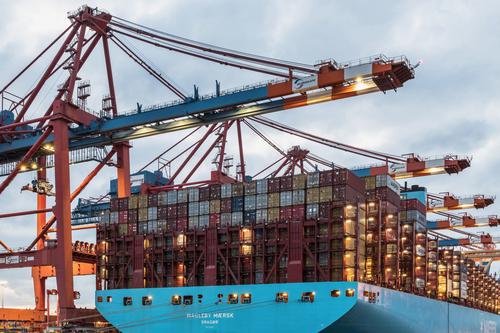
While the direct financial impact of China's sanctions on Lockheed Martin and RTX's defense segments may be limited, the broader strategic implications for global supply chains and multinational corporations are profound. The June 2026 procurement ban is part of an accelerating trend where "trade policy became the dominant disruption" for supply chains, according to a July 7, 2026, nShift blog post. A Thomson Reuters survey cited in the same report found that 72% of trade professionals named US tariff volatility as the most impactful regulatory change of the year, a significant jump from 41% a year prior. This indicates a shift from traditional climate or physical disruptions to policy-driven shocks.
China's "unreliable entity list" and expanding export controls are creating a "dueling lists" scenario, where companies are increasingly forced to "choose sides" between the legal regimes of the US and China. Audrye Wong, a senior fellow at the American Enterprise Institute, articulated this dilemma, stating that "Companies increasingly face operational dilemmas where they may have to choose sides" between the legal regimes of the U.S. and China, creating a "genuine Catch-22." This environment is particularly challenging for companies like RTX, with its diversified commercial aerospace business that relies on complex global supply chains for components and manufacturing. Even if direct sales to China are minimal, indirect exposure through suppliers or partners could create unforeseen disruptions.
The US, through initiatives like the Supply Chain Resiliency Initiative (SCRI), is actively working to decrease reliance on China for critical minerals and other materials, further fragmenting global supply chains. This push for "nearshoring or reshoring," cited by 51% of trade professionals in the nShift survey, means that companies must build "layered flexibility" into their operations. For LMT and RTX, this translates into a need for robust supplier diversification and the ability to quickly re-route logistics, even for components not directly tied to defense. The June 2026 sanctions, therefore, serve as a stark reminder that geopolitical tensions are transforming supply chain resilience from a cost-saving measure into a fundamental design requirement, impacting everything from sourcing patterns to customs data management.
The Bear Case: Escalation and Diversification Risks
Despite the current assessment of limited direct financial impact, a significant bear case for Lockheed Martin and RTX centers on the potential for escalating US-China tensions and the broadening scope of sanctions. While their core defense businesses are largely insulated by existing US export controls, the "largely symbolic" nature of the June 2026 procurement ban could evolve into more substantive measures. China's "increasingly sophisticated toolkit" for economic retaliation, as described by Leland Miller, a commissioner at the U.S.-China Economic and Security Review Commission, suggests Beijing is building enforcement capacity to implement controls on a global scale. This could lead to secondary sanctions or pressure on international partners, indirectly affecting LMT and RTX.
For RTX, its diversification into commercial aerospace, while generally a strength, becomes a vulnerability in this context. While Lockheed Martin is a pure-play defense contractor, RTX's Collins Aerospace and Pratt & Whitney segments operate in a more globally interconnected commercial market. Should China broaden its "unreliable entity list" to include more dual-use items or target specific technologies crucial for commercial aviation, RTX could face more tangible disruptions to its supply chain or market access in other regions. The threat of "fines double the amount of each company's sales to Taiwan" also remains a potential, albeit currently unclear, financial risk, even if difficult for China to enforce directly.
Furthermore, the broader trend of supply chain fragmentation and the imperative to "choose sides" could lead to increased operational costs for both companies. Re-routing supply chains, diversifying suppliers, and adapting to new customs regulations, as highlighted by the nShift blog, are not cost-neutral endeavors. These efforts, while building resilience, could compress margins or require significant capital expenditure, potentially impacting profitability even if direct revenue from China is minimal. The risk of a "nightmare scenario" for multinational companies, as described by Sam Goodman, where they may have to separate their China and non-China businesses, represents a long-term structural headwind.
Analyst View: Defense Sector Resilience Amidst Geopolitical Headwinds
Despite the geopolitical friction stemming from China's June 2026 sanctions, the broader analyst consensus remains constructive on the defense sector, viewing Lockheed Martin and RTX as beneficiaries of a sustained global rearmament drive. The Motley Fool, in an April 5, 2026, article, highlighted that "Legislators are ramping up defense spending, fueling a significant rearmament drive that's reshaping the national security landscape." The US defense budget is projected to reach $1 trillion in 2026 and exceed $1.5 trillion by 2027, creating a robust demand environment for defense contractors.
Lockheed Martin's strong aeronautics segment, anchored by sales of its F-35 stealth combat aircraft, provides a high-margin revenue stream with earnings visibility "for decades to come" due to ongoing maintenance and upgrade requirements. The company also benefits from a surge in demand for its missiles and fire control business, driven by products like HIMARS and PAC-3 interceptors. Lockheed's record backlog of $194 billion — more than 2.5 times its annual sales — underscores its strong positioning.
RTX, while diversified, also benefits significantly from defense spending. The company was awarded a $50 billion umbrella contract by the US Department of Defense last August for the Patriot missile defense system, a 20-year commitment that includes manufacturing, maintenance, and supply chain management. This contributed to RTX's substantial backlog of $268 billion, with defense making up about 40% of this total. Courtney Carlsen of The Motley Fool, in an April 5, 2026, note, gave RTX a "slight edge due to its more diversified business model," suggesting that its commercial segments offer additional stability beyond defense cycles. Analysts generally view both LMT and RTX as "high-quality defense stocks" that offer stability through reliable business models and consistent government contracts, largely insulating them from the direct financial impact of China's targeted sanctions.
The Verdict: Navigating a Fractured Global Economy
China's June 2026 procurement ban on Lockheed Martin and RTX, while a significant geopolitical statement, is unlikely to inflict substantial direct financial damage on their core defense operations. The existing US prohibition on weapons-related technology sales to China, coupled with the minimal historical business exposure of these defense giants to the Chinese government, renders the immediate impact largely symbolic. However, this action is a critical signal in a deepening "supply chain war," forcing multinational corporations to confront the reality of a fractured global economy.
RTX, with its diversified commercial aerospace segments, faces a more nuanced challenge than pure-play defense contractor Lockheed Martin. While its defense backlog of $268 billion and strong growth in FY2025 are compelling, its broader commercial footprint could expose it to indirect supply chain disruptions or the increasing pressure to "choose sides" between competing regulatory regimes. Lockheed Martin, with its $194 billion backlog and focus on high-margin defense platforms like the F-35, appears more insulated from these specific China-related trade policy shifts. Both companies, however, will need to proactively build "layered flexibility" into their supply chains to mitigate future policy-driven shocks.
For investors, the long-term tailwinds of increasing global defense spending, projected to exceed $1.5 trillion by 2027, largely overshadow the direct financial consequences of these targeted Chinese sanctions. The stability offered by consistent government contracts and robust backlogs makes both LMT and RTX compelling in the current environment.
Entry Zone: For investors seeking exposure to the resilient defense sector, a prudent entry for LMT would be in the $480-$495 range, capitalizing on any short-term market jitters. For RTX, given its diversification and growth, an entry between $185-$190 would offer a more attractive risk-reward profile.
12-Month Target: Based on strong demand and order backlogs, we set a 12-month price target of $560 for Lockheed Martin and $220 for RTX Corporation.
Invalidation Level: A sustained close below $450 for LMT or $170 for RTX would invalidate this thesis, signaling a more significant deterioration in defense spending or an unforeseen escalation of trade tensions impacting their core operations. The geopolitical landscape is complex, but the defense sector's fundamentals remain robust.
Want deeper research on any stock? Try Kavout Pro for AI-powered analysis, smart signals, and more. Already a member? Add credits to run more research.