Key Takeaways
- Eli Lilly's GLP-1 franchise is poised for significant expansion as Medicare's new Bridge program, effective July 1, 2026, opens access to Zepbound and Foundayo for eligible beneficiaries at a $50 monthly copay.
- Despite robust financial performance and a dominant position in the burgeoning GLP-1 market, Lilly's premium valuation of 42.93x TTM P/E faces scrutiny against persistent manufacturing bottlenecks and a nuanced long-term Medicare payment model.
- While analysts project further upside, the company's heavy insider selling and the critical need to scale production for its oral GLP-1, Foundayo, will determine if Lilly can sustain its growth trajectory beyond initial demand surges.
Eli Lilly and Company (LLY), already a titan in the pharmaceutical industry with a $1.14 trillion market capitalization, stands at a pivotal juncture. The Centers for Medicare & Medicaid Services (CMS) launched its GLP-1 Bridge program on July 1, 2026, a move expected to dramatically expand access to Lilly's blockbuster obesity treatments, Zepbound and Foundayo. This development, which saw Lilly shares jump 5.8% on June 26, 2026, injects fresh optimism into the company's already high-flying growth story. However, beneath the surface of this expanded market opportunity lie critical questions regarding Lilly's ability to meet surging demand, the sustainability of its premium valuation, and the long-term implications of evolving Medicare coverage.
The Medicare Bridge: Opening the Floodgates for GLP-1s
The immediate catalyst for Eli Lilly's recent market enthusiasm is the Medicare GLP-1 Bridge program, which officially began on July 1, 2026. This short-term demonstration, set to run through December 31, 2027, provides eligible Medicare Part D beneficiaries with access to certain GLP-1 drugs, including Lilly's Zepbound (KwikPen only) and its newly launched oral GLP-1, Foundayo. Beneficiaries will face a $50 monthly copay, a significant reduction that bypasses traditional Part D deductibles and out-of-pocket limits.
This initiative is a game-changer for market penetration. As Quiver Quantitative reported on June 26, 2026, "CMS has described the Bridge as a short-term demonstration that expands access to certain GLP-1 drugs for eligible beneficiaries, which could improve demand visibility for Lilly’s obesity portfolio." Leerink Partners analyst David Risinger echoed this sentiment, stating in a CNBC report that he "expects volume growth of the companies' obesity drug prescriptions to start picking up in July, with 'rapid adoption' over the second half of the year." This direct access to a vast Medicare population, previously underserved for obesity treatments, represents a substantial new revenue stream and a clear runway for volume growth for Lilly's leading GLP-1 assets.
Lilly's Financial Engine: Fueling the Growth Narrative
Eli Lilly's financial performance has been nothing short of spectacular, driven largely by the insatiable demand for its GLP-1 drugs. The company reported robust Q1 FY26 revenue of $19.8 billion and an EPS of $8.55, significantly beating expectations. Over the trailing twelve months (TTM), Lilly has generated approximately $72.24 billion in revenue, translating to an impressive TTM EPS of $28.26.
The company's growth rates underscore its market dominance. For fiscal year 2025, Lilly posted a 44.7% year-over-year revenue growth and an even more striking 94.9% increase in net income. These figures reflect the rapid adoption of drugs like Mounjaro for diabetes and Zepbound for weight loss, which have quickly captured significant market share. Lilly's operational efficiency is also evident in its TTM margins: a gross margin of 83.5%, an operating margin of 45.9%, and a net margin of 35.0%, showcasing its ability to translate top-line growth into substantial profitability.
| Metric (TTM) | Value |
| :------------------ | :------------- |
| Market Cap | \$1.14 Trillion |
| Revenue | \$72.24 Billion |
| EPS | \$28.26 |
| P/E Ratio | 42.93x |
| Gross Margin | 83.5% |
| Operating Margin | 45.9% |
| Net Margin | 35.0% |
| Revenue Growth (FY25 YoY) | 44.7% |
| Net Income Growth (FY25 YoY) | 94.9% |
*Table: Eli Lilly Key Financial Fundamentals (Trailing Twelve Months, as of 2026-07-02)*
The company's return on equity (ROE) stands at an exceptional 101.3%, while return on invested capital (ROIC) is a healthy 32.1%, indicating highly effective capital deployment. These metrics paint a picture of a company firing on all cylinders, leveraging its innovative pipeline and market leadership to deliver outsized financial results. However, the market has priced in much of this success, with Lilly trading at a TTM P/E of 42.93x, significantly above the broader market and many of its pharmaceutical peers.
The Story Behind the GLP-1 Surge
The narrative driving Eli Lilly's valuation is its commanding position in the GLP-1 market, a duopoly shared primarily with Novo Nordisk. Lilly's tirzepatide, marketed as Mounjaro for diabetes and Zepbound for weight loss, has rapidly gained traction. For the diabetes indication, Mounjaro holds a 27% market share, steadily winning ground from older GLP-1 agonists. In the weight loss segment, Zepbound commands a 45% market share, closely trailing Novo Nordisk's Wegovy.
A significant part of Lilly's strategy, and a key factor in its future growth, is its push into oral GLP-1 treatments. The company's oral drug, orforglipron (marketed as Foundayo), is currently in Phase 3 trials for obesity and Type 2 Diabetes and was launched in April 2026. This oral option could be a major differentiator, appealing to patients who prefer not to inject themselves and expanding access in regions lacking cold chain infrastructure for injectables. As Jamey Millar, Novo Nordisk's executive vice president of U.S. operations, noted in a CNBC report, "Novo's market research found that 75% of seniors prefer a daily pill over a weekly injection." This preference among the senior demographic, a key target for the Medicare Bridge program, positions Foundayo for substantial uptake. Recent clinical updates, including Phase 3 results showing orforglipron outperforming oral semaglutide on blood sugar control and weight loss, further bolster its commercial narrative.
The Manufacturing Bottleneck: A Constraint on Ambition
Despite the immense demand and market opportunity, both Eli Lilly and Novo Nordisk have been grappling with significant manufacturing constraints, which have limited the volume of sellable GLP-1 doses. This bottleneck is not merely an operational challenge but a strategic determinant of market capture, as highlighted by Drug Discovery News: "With class sales projected to run into the hundreds of billions, manufacturing capacity is not a back-office concern but a determinant of who captures the market."
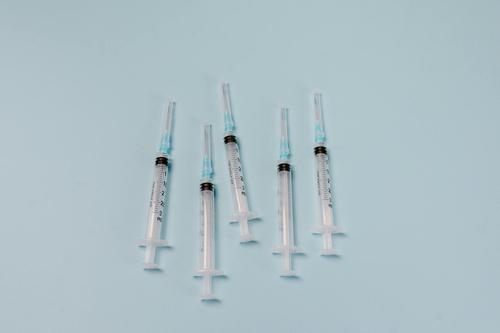
Lilly has been investing heavily to increase its manufacturing capacity for both the active pharmaceutical ingredient (API) and the crucial auto-injectors, which represent a significant bottleneck in the supply chain. The "fill-finish" process—the final step of sterilizing containers and adding drugs—is particularly challenging, with sterile lines taking years to build and validate. This means supply cannot react quickly to demand surges, a critical issue as Medicare access expands. While Lilly expects demand to continue outstripping supply in 2024, the long lead times for ramping up manufacturing contribute to a substantial competitive moat for incumbents, but also a constraint on their own growth. The shift towards oral small molecules like Foundayo could eventually ease some of these pressures, as conventional chemical synthesis is generally cheaper and more scalable than the solid-phase peptide synthesis required for injectable GLP-1s.
The Oral Advantage and Competitive Landscape
Eli Lilly's Foundayo, its oral GLP-1, represents a significant strategic advantage in the evolving obesity and diabetes market. While injectable GLP-1s like Zepbound and Mounjaro have established Lilly as a market leader, an effective oral option could unlock new patient populations and geographies. The convenience of a daily pill over a weekly injection is a powerful draw, particularly for the senior demographic now gaining Medicare access.
The broader GLP-1 market remains a duopoly, but competition is brewing. While Lilly and Novo Nordisk currently dominate, other players like Zealand Pharma, Altimmune, and Viking Therapeutics are developing dual agonists, though they are at least two years away from regulatory approval. Pfizer also made a significant move in 2025, acquiring Metsera for $10 billion to develop incretin assets after discontinuing its own internal GLP-1 program. This competitive landscape underscores the importance of Lilly's head start in both injectable and oral formulations, as well as its ongoing investments in manufacturing capacity to maintain its lead. The ability to offer both injectable and oral options provides Lilly with a comprehensive portfolio to address diverse patient needs and preferences, solidifying its competitive moat.
The Bear Case: Cracks in the Trillion-Dollar Edifice
Despite the overwhelming bullish sentiment, several risk vectors could challenge Eli Lilly's premium valuation and growth trajectory. The most immediate concern is the persistent manufacturing bottleneck. While the Medicare Bridge program will undoubtedly boost demand, if Lilly cannot adequately scale production, it risks frustrating patients and ceding market share to competitors or even to compounding pharmacies if shortages re-emerge. The capital intensity of building new plants, with a single facility potentially exceeding $500 million, creates a high barrier to entry but also a significant operational hurdle for incumbents.
Another nuanced risk lies in the long-term Medicare payment model. While the GLP-1 Bridge program offers a clear $50 copay, Lilly itself warned in March 2026 that under the broader BALANCE model, set to start for Medicare Part D in January 2027, "certain Medicare patients might have to pay more than the proposed $50 limit for its obesity and weight-loss medications each month." This potential for higher out-of-pocket costs could dampen long-term adoption rates for some beneficiaries, complicating demand forecasts.
Furthermore, insider activity raises a yellow flag. Over the past six months, Lilly insiders have engaged in 32 sales and zero purchases of LLY stock. Notably, ENDOWMENT INC LILLY sold 295,741 shares for an estimated $326.3 million, and Ilya Yuffa, EVP & President, sold 2,500 shares for $2.88 million. While insider selling can be for various reasons, such a lopsided ratio of sales to purchases, especially from large institutional holders and executives, warrants scrutiny for a stock trading at a high multiple. The approaching patent cliff for semaglutide (Novo Nordisk's GLP-1) around 2031 also signals future generic competition, which could eventually impact pricing and market dynamics for the entire class of drugs, including Lilly's.
Analyst View: Consensus Remains Bullish, But Upside Narrows
Wall Street analysts largely maintain a bullish stance on Eli Lilly, with a consensus "Buy" rating derived from 33 Buy, 9 Hold, and 3 Sell recommendations among 45 analysts. The median price target for LLY stands at $1270.00, with a high target of $1400.00 and a low of $1135.00.
Based on the current price of $1210.50, the median price target implies an upside of approximately 4.91% over the next 12 months. Recent rating changes include Leerink Partners maintaining an "Outperform" rating on June 25, 2026, and Jefferies maintaining a "Buy" rating on June 9, 2026. While the consensus remains positive, the implied upside from current levels is relatively modest for a stock with such high growth expectations, suggesting that much of the future potential is already factored into its valuation. Analysts are forecasting substantial revenue growth to $119.2 billion by FY2029 and $129.3 billion by FY2030, with EPS reaching $57.15 and $62.76, respectively, reflecting continued confidence in the GLP-1 franchise's long-term trajectory.
The Verdict: Navigating the GLP-1 Gold Rush
Eli Lilly stands at the precipice of an unprecedented expansion in its GLP-1 franchise, driven by the immediate impact of Medicare's GLP-1 Bridge program. This initiative, offering Zepbound and Foundayo at a flat $50 copay for eligible beneficiaries, is a powerful catalyst for volume growth and market penetration. The company's robust financial performance, marked by exceptional revenue and net income growth, underscores its leadership in a market poised for hundreds of billions in annual sales. However, Lilly's premium valuation, currently at 42.93x TTM P/E, demands flawless execution and a clear path to overcoming persistent manufacturing bottlenecks.
For investors, the current environment presents a nuanced opportunity. The immediate tailwind from Medicare access is undeniable, but the long-term picture is complicated by supply constraints and the potential for higher patient costs under future Medicare models. Eli Lilly's ability to scale production, particularly for its oral GLP-1 Foundayo, will be critical in translating demand into sustained revenue.
Entry Zone: Investors looking to initiate or add to positions might consider an entry zone between $1150 and $1180, which would offer a slightly more attractive risk-reward profile, closer to the lower end of recent analyst targets and providing a buffer against any short-term manufacturing or regulatory hiccups.
12-Month Target: Our 12-month target for Eli Lilly is $1320.00, reflecting continued market dominance, successful scaling of production, and the full realization of the Medicare Bridge program's impact, while acknowledging the high valuation.
Invalidation Level: A close below $1090.00 would invalidate this thesis, signaling either deeper manufacturing issues, unexpected competitive pressures, or a significant shift in the Medicare coverage landscape that materially impacts Lilly's addressable market.
Lilly's journey through the GLP-1 gold rush will be defined not just by its groundbreaking drugs, but by its capacity to deliver them at scale to an ever-expanding patient population.
Want deeper research on any stock? Try Kavout Pro for AI-powered analysis, smart signals, and more. Already a member? Add credits to run more research.