MarketLens

Log in

Europe's Energy Storage Battle: AlphaESS's Ecosystem Push Challenges Tesla's Dominance

3 hours ago
SHARE THIS ON:

Europe's Energy Storage Battle: AlphaESS's Ecosystem Push Challenges Tesla's Dominance

Key Takeaways

  • AlphaESS is aggressively expanding its European footprint with a software and ecosystem-focused strategy, moving beyond traditional hardware manufacturing.
  • Tesla remains a global leader in energy storage deployments, but faces increasing pressure from Chinese competitors, particularly in the rapidly growing European market.
  • The global energy storage market, valued at US$ 72.8 billion in 2026, is shifting towards integrated, digitally-enabled solutions, intensifying competitive dynamics.

The Shifting Sands of European Energy Storage

The European utility-scale energy storage market is undergoing a profound transformation, driven by escalating energy costs, grid modernization pressures, and complex tariff structures. Against this backdrop, companies are vying for leadership, moving beyond standalone battery hardware to embrace integrated, software-defined solutions. This strategic pivot was on full display at Intersolar Europe 2026, where AlphaESS, a prominent Chinese energy storage provider, unveiled an expanded ecosystem designed specifically for the European market.

This move by AlphaESS signals a broader trend where agile, localized players are challenging the established dominance of global giants like Tesla. The global energy storage systems market is projected to reach **US72.8billionin2026,withforecastsindicatingasurgetoUS 72.8 billion in 2026**, with forecasts indicating a surge to US 330.1 billion by 2033, growing at a compound annual growth rate of 24.6%. Europe is a critical battleground within this expansion, as Chinese integrators have already seen a 67% year-over-year increase in their European market share in 2024, with four of the top ten vendors now based in China. The stakes are clear: market leadership will hinge on the ability to adapt to regional needs and deliver comprehensive, digitally integrated solutions.

AlphaESS's Ecosystem Play: Beyond the Battery

AlphaESS concluded Intersolar Europe 2026 with a clear message: its European strategy is deepening beyond product manufacturing towards software, connectivity, and ecosystem value. After more than a decade of localization efforts, the company is now emphasizing full-scenario product lines and digital integration. This strategy is embodied by its AlphaConnect platform, a connectivity layer designed to link batteries, partners, and energy markets.

The AlphaConnect platform provides open APIs for virtual power plant (VPP) operators, energy aggregators, and third-party systems, fostering interoperability across devices and applications. In the UK, this includes deep integration with Octopus Energy, a leading smart energy platform, supporting intelligent charge and discharge scheduling and remote asset management. AlphaConnect aims to connect over 100 energy partners and platforms, more than 100,000 systems, and 12 countries, enabling users to capture value from software, tariffs, and energy markets. AlphaESS’s commitment to Europe is further underscored by the opening of its Spain subsidiary, expansion in Benelux, and significant project progress in the Czech Republic.

At Intersolar, AlphaESS showcased key products like the STORION-LC-TB150 for commercial and industrial (C&I) applications, a liquid-cooled all-in-one system rated at 150 kW / 313 kWh. For utility-scale deployment, the company highlighted the Aster 6260, a 3.13 MW / 6.26 MWh liquid-cooled platform designed for high-density deployment, integrated safety, and AI-enabled operations and maintenance. The company's delivery capability is demonstrated by its 320 MWh Czech project across Chvaletice and Kladno, a milestone secured in December 2025, with the final 230 MWh shipment completed in April 2026. This project, utilizing 46 units of Aster 5000 for Chvaletice and 18 units for Kladno, will provide crucial frequency regulation and ancillary services for the Czech grid. AlphaESS was also recognized as a BloombergNEF Tier 1 certified manufacturer in Q4 2025, reinforcing its position as a reliable provider for large-scale projects globally.

Tesla's Megapack Momentum: Scale and Integration

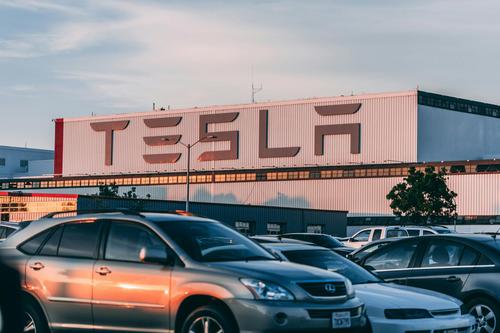
While AlphaESS focuses on its European ecosystem, Tesla's energy division continues to be a colossal industrial force, leveraging its vertical integration and scale to maintain global leadership. Tesla Energy held the top position in the global battery energy storage system (BESS) integrator market for the second consecutive year in 2024, capturing 15% of global market share, according to Wood Mackenzie. The company's energy storage deployments surged by 81% in 2025, demonstrating robust growth even as its automotive sector faces volatility.

Tesla's strategy centers on its Megapack and Powerwall systems, with the introduction of Megapack 3 and the aggregated Megablock system revolutionizing utility-scale installations by reducing on-site complexity and construction time. The company's manufacturing prowess is significant, with a dedicated factory in Lathrop, California, and a new facility ramping up in Shanghai. Tesla plans to double its energy storage production capacity to 130 GWh by the end of 2026, driven by surging demand from AI data centers, grid modernization projects, and utility-scale renewable integration. This expansion is supported by a $4.3 billion partnership with LG Energy Solution to build an LFP battery cell plant in Michigan, slated for production in 2027, which will reduce reliance on Chinese suppliers.

The financial implications of this growth are substantial. In 2025, Tesla's energy storage deployments reached 46.7 GWh, a 49% year-over-year increase, generating $12.7 billion in revenue. This segment delivered approximately $3.8 billion in gross profit at margins around 30%, making energy Tesla's most lucrative business by margin. In Q1 2025, the energy division contributed 23% of Tesla's total profit, despite representing only 13% of total revenue. CEO Elon Musk has been bullish on the segment, stating, "It won't be long before we're shipping 100 GWh per year of stationary storage at Tesla," characterizing the opportunity as "gigantic." Projections indicate Tesla could deploy 81.4 GWh in 2026 and potentially reach 1,016.5 GWh (1 TWh) annually by 2030, fundamentally reshaping its business portfolio.

The European Battleground: Chinese Ascent vs. Western Fortitude

The competitive landscape in Europe is intensifying, with Chinese integrators rapidly expanding their footprint. While Tesla maintains its global leadership, its lead over Chinese rivals like Sungrow is narrowing. In 2024, Tesla's global lead over Sungrow shrank from four points to just one, indicating fierce competition. Chinese companies saw a 67% year-over-year increase in European market share in 2024, with four of the top ten BESS vendors in Europe now based in China. This surge contrasts with a more than 30% drop in Chinese companies' market share in North America, where Tesla's momentum and past US administration policies have created headwinds.

Companies like Sungrow, which reported a staggering 105% revenue increase in its energy storage division in 2025 and surpassed 50 GW of shipments, are leveraging decades of expertise in power electronics. Their PowerTitan liquid-cooled system sets industry benchmarks for thermal management, enabling higher density and longer battery life. BYD, another Chinese powerhouse, controls every aspect of its supply chain, from lithium mining to battery assembly, allowing it to offer highly competitive pricing. Despite trade barriers in Western markets, BYD's dominance in Asia, South America, and parts of Europe remains strong.

Fluence Energy (FLNC), a publicly traded player with a market capitalization of $3.56 billion, represents a Western-based competitor in this evolving market. While specific deployment figures for Fluence were not provided, it operates in a market where CATL, the undisputed king of the battery world with over 36% global market share in 2025, is a primary technology provider for many major integrators, including Fluence and Tesla. The ability to adapt to divergent regulations, local market requirements, and maintain competitive cost structures across multiple regions will be crucial for success, as noted by Wood Mackenzie analyst Kevin Shang.

The Bear Case: Geopolitical Headwinds and Supply Chain Risks

Despite the bullish outlook for energy storage, significant headwinds could disrupt growth trajectories for all players. Geopolitical tensions and regional trade policies are reshaping competitive dynamics, particularly impacting Chinese integrators in Western markets. While Chinese firms are surging in Europe, they have faltered in the U.S., highlighting the challenge of navigating diverse regulatory environments. Trade barriers, such as those faced by BYD in Western markets, could impede market access and profitability.

For Tesla, while demand for its energy storage solutions is robust, production capacity remains a key constraint. The moderation in growth rate in 2025, from 114-125% to 38%, suggests that the company is racing to expand manufacturing. Although Tesla's three Megapack manufacturing facilities in Nevada and Shanghai have a combined annual production capacity of approximately 83 GWh, trailing twelve-month deployments of 37.9 GWh indicate factory utilization around 45%. The Shanghai Megafactory, which only began production in Q1 2025, is still scaling towards its designed 40 GWh annual capacity. Any delays in these ramp-ups or the new Michigan LFP plant could limit Tesla's ability to meet surging demand and capitalize on the market's exponential growth.

Furthermore, the industry faces broader supply chain risks. While lithium-ion battery pack costs have fallen nearly 84% since 2013, the supply chains for critical materials like lithium are growing more complicated. This complexity is driving increased investment and interest in non-lithium technologies, including sodium-ion, flow batteries, and iron-air systems. Should these alternative technologies emerge at scale and offer significant cost or performance advantages, they could disrupt the dominance of current lithium-ion solutions, posing a risk to companies heavily invested in existing battery chemistries.

Analyst View: A Market Poised for Exponential Growth

Analysts are largely optimistic about the energy storage market's trajectory, viewing it as a critical component of the global energy transition. The rapid deployment of utility-scale battery storage, evidenced by a 66% expansion in U.S. utility-scale battery capacity in 2024, surpassing 26 GW, underscores the market's structural momentum. Landmark international commitments, such as tripling renewable capacity by 2030 at COP28, are fundamentally reshaping power infrastructure investment priorities worldwide.

Electrochemical energy storage, primarily battery energy storage systems (BESS), is expected to command a dominant position, likely registering approximately a 47% share in 2026. This leadership is anchored in the versatility of lithium-ion chemistry, particularly Lithium Iron Phosphate (LFP), which accounted for over 99% of installed power capacity in China's user-side market as of 2025. Continued cost reductions across all innovation scenarios through 2050, as confirmed by the U.S. Department of Energy's Annual Technology Baseline (ATB) 2024, make BESS systems increasingly attractive across various applications, from residential to utility-scale frequency regulation.

The shift towards integrated storage assets, combining local experience, product capability, and digital integration, is seen as essential for solar integration, flexibility, and energy optimization. This trend favors companies like AlphaESS that are actively building out software and connectivity platforms. For Tesla, Morgan Stanley estimates its energy business could add $20-50 billion ($6-14 per share) of equity value at full capacity, arguing that vertical integration of solar and storage creates growth opportunities and prevents energy bottlenecks. The overall consensus points to a market ripe for sustained, significant expansion, with success hinging on strategic positioning and adaptability.

The Verdict: Navigating a Fragmented but Lucrative Future

The European utility-scale energy storage market is a dynamic arena where established giants and agile challengers are defining the future of grid stability and renewable integration. AlphaESS's strategic pivot towards a localized, software-driven ecosystem in Europe, as showcased at Intersolar 2026, represents a potent competitive force. This approach directly challenges the global scale and vertical integration of Tesla, whose energy storage deployments continue to grow exponentially but face intensifying competition, particularly from Chinese players in Europe.

For investors seeking exposure to this burgeoning sector, the focus should be on companies demonstrating both robust hardware capabilities and sophisticated software integration. The market's projected growth from **US72.8billionin2026toUS 72.8 billion in 2026** to US 330.1 billion by 2033 offers substantial upside.

Entry Zone: Investors should consider companies with proven localization strategies and advanced software platforms in key European markets, or those with strong vertical integration and clear production ramp-up plans like Tesla (TSLA), currently trading at $379.71. 12-Month Target: A realistic 12-month outlook for the energy storage sector suggests continued robust growth, with market leaders leveraging their scale while agile ecosystem players capture regional opportunities. The market is poised for significant expansion as grid demands intensify. Invalidation Level: This bullish outlook would be invalidated by significant policy reversals in major European economies, a sharp increase in raw material costs that erode project economics, or a failure of key players to scale production to meet demand.

The future of energy storage will be won not just by the biggest battery, but by the smartest, most connected ecosystem.


Want deeper research on any stock? Try Kavout Pro for AI-powered analysis, smart signals, and more. Already a member? Add credits to run more research.

SHARE THIS ON:

Related Articles

Category

You may also like

Stock News1 day ago

Společnost AlphaESS představila na veletrhu Intersolar 2026 rozšířený ekosystém pro ukládání energie v Evropě

AlphaESS deepened its European localization strategy after a decade at Intersolar Europe 2026, unveiling an expanded energy storage ecosystem for the region.
Stock News1 day ago

HiTHIUM y Turbo Energy implementan una plataforma de infraestructura energética basada en IA

HiTHIUM and Turbo Energy launched the first project of their alliance, an AI-based energy infrastructure platform. The platform aims to optimize energy storage and management.
Stock News4 days ago

Tesla, NatPower launch first phase of battery storage partnership in Europe

Tesla and NatPower signed a multi-year deal for over 25 GWh of battery storage across Italy and the UK, marking the first phase of a broader European rollout.
Stock News3 weeks ago

MARSTEK Unveils the New VENUS Family, Expanding Plug-in Batteries into a New Era of Home Energy Storage

MARSTEK launched its new VENUS family of plug-in home energy storage batteries to expand its market presence. The company introduced the product line to over 100 distributors and partners, signaling a...

Breaking News

View All →

Top Headlines

View More →
Stock News6 hours ago

Where Will Nvidia Stock Be in 2030?

Stock News6 hours ago

Tech Corner: TSLA A.I. Ambitions Drive Growth Story

Stock News7 hours ago

Apple Vision Pro exec is reportedly leaving for OpenAI

Stock News7 hours ago

Apple Just Did Something It Wouldn't Even Do During COVID, and Wall Street Is Freaking Out

Stock News8 hours ago

Michael Burry Just Bet Big Microsoft Will More Than Double by 2028