MarketLens
Has Carrier Global (CARR) Shaken Off Its Recent Dip

Key Takeaways
- Carrier Global (CARR) recently beat Q1 2026 earnings expectations, driven by a remarkable surge in data center cooling orders.
- Wall Street analysts maintain a "Buy" consensus, with price targets suggesting significant upside potential from current levels.
- While data center demand is a powerful tailwind, investors should monitor residential HVAC recovery and macroeconomic pressures.
Has Carrier Global (CARR) Shaken Off Its Recent Dip?
Carrier Global Corporation (CARR) has been on a rollercoaster ride for investors recently, experiencing an 8% dip over the past 30 days before a strong Q1 2026 earnings beat helped stabilize the stock. Trading at $66.83 as of May 8th, the company's shares are navigating a complex landscape of cyclical headwinds and secular growth opportunities. This recent volatility underscores the importance of understanding the underlying drivers shaping Carrier's future.
The Q1 2026 results were a clear beat across the board, with revenue hitting $5.34 billion against analyst estimates of $5 billion, representing a 6.8% beat. Adjusted EPS came in at $0.57, significantly surpassing the $0.51 consensus, a 12.1% beat. This strong performance, particularly the surge in data center orders, has reignited investor interest and prompted several analysts to raise their price targets.
Despite the recent dip, the broader Wall Street sentiment remains optimistic. The stock's 52-week range of $50.24 to $81.09 highlights its potential for significant upward movement. With a current market capitalization of $55.51 billion, Carrier is a substantial player in the intelligent climate and energy solutions sector, making its strategic shifts and growth drivers critical for investors to evaluate.
The narrative for Carrier is increasingly bifurcated: on one hand, robust demand from the burgeoning data center market, and on the other, persistent challenges in traditional residential and light commercial HVAC segments. This dynamic creates both compelling upside and notable risks, making a deeper dive into these factors essential for any investor considering CARR. The company's ability to leverage its strengths while mitigating weaknesses will dictate its trajectory in the coming quarters.
How is AI-Driven Demand Fueling Carrier's Growth?
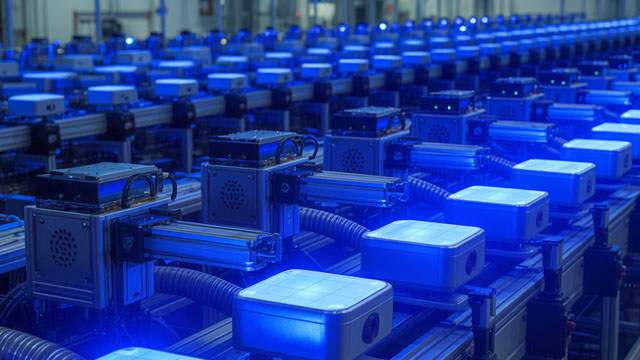
The most compelling growth story for Carrier Global right now is undoubtedly the insatiable demand from the data center industry, particularly for advanced cooling solutions. In Q1 2026, Carrier reported an astounding 500% surge in data center orders, a figure that fully covers the company's $1.5 billion sales target for this segment in 2026. This isn't just a temporary spike; it reflects a fundamental shift driven by the exponential growth of AI and high-performance computing, which require precise temperature control to operate efficiently.
Carrier's CEO, David Gitlin, highlighted at the JPMorgan Industrials Conference that the company entered 2026 with approximately $1 billion in data center backlog, underscoring the sustained nature of this demand. The company is "really well positioned" to deliver on this ramp, with second-half growth expected to be significantly driven by data center shipments. This positioning is not accidental; Carrier has been strategically investing in and developing solutions tailored for this high-growth market.
A key part of Carrier's strategy involves its "QuantumLeap" integrated offering, which combines chillers, Coolant Distribution Units (CDUs), and digital twin capabilities into a holistic system. Furthermore, Carrier's expanded investment in ZutaCore, a provider of direct-to-chip, waterless liquid cooling, is particularly relevant. This technology addresses the increasing rack densities in AI data centers, where traditional air cooling becomes insufficient. Management anticipates an industry-wide migration toward 2-phase cooling, like ZutaCore's technology, within a five-year horizon.
This data center boom extends beyond just the tech sector, creating a windfall for various industries. As Jim Cramer noted, companies like Quanta Services are benefiting from soaring electricity demand, and industrial firms like Caterpillar are seeing strong demand for their turbines. Carrier's role in providing the critical infrastructure for these digital powerhouses positions it as a diverse winner in the AI revolution, transforming what was once a traditional HVAC business into a key enabler of future technology.
What Challenges Does Carrier Face Beyond Data Centers?
While the data center narrative is undeniably strong, Carrier Global is not immune to broader macroeconomic headwinds and cyclical pressures affecting its more traditional segments. The stock's 8% decline over the past 30 days prior to the Q1 beat was primarily attributed to weaker residential and light commercial HVAC demand, exacerbated by higher interest rates. These factors are delaying construction activity and reducing near-term earnings visibility across the entire HVAC and building solutions sector, impacting peers like Trane Technologies and Johnson Controls as well.
Geographically, the outlook for the China residential market remains uncertain. CEO David Gitlin acknowledged ongoing challenges in housing within China, stating that a recovery is not yet clear, despite pockets of strength in commercial segments like data centers. This bifurcated market dynamic means that while high-tech verticals are thriving, the broader consumer-driven segments face significant hurdles, requiring careful navigation and diversification of revenue streams.
Moreover, Carrier is grappling with the impact of new tariffs and foreign exchange shifts. CFO Patrick Goris clarified that most price increases implemented are tariff-driven and are expected to be margin-neutral by year-end. However, passing on these price increases to customers amid tariff uncertainty can be a delicate balance. Management expressed confidence in maintaining market share through product differentiation and ongoing investment, but distributor concerns highlight the competitive pressures at play.
In response to these challenges, Carrier is strategically shifting towards higher-value segments like heat pumps and aftermarket services. These segments generate more recurring revenue and typically carry higher margins, as they require less capital investment. European heat pump demand, particularly in Germany, is showing signs of inflection, with management expecting margins to recover by 100 basis points for the full year through productivity gains and price surcharges. This strategic pivot aims to reduce reliance on new construction volumes and enhance the quality and resilience of Carrier's revenue streams.
Is Wall Street Bullish on Carrier's Future?
Wall Street analysts are largely bullish on Carrier Global, with a consensus "Buy" rating reflecting optimism about the company's strategic direction and growth prospects, particularly its exposure to the data center boom. Out of 26 analysts covering CARR, 14 rate it a Buy, 11 a Hold, and only 1 a Sell. This strong lean towards positive ratings underscores a belief that the company's long-term drivers outweigh its near-term cyclical pressures.
The analyst community has recently reiterated and even raised price targets following the strong Q1 2026 earnings. Mizuho, for instance, maintained an Outperform rating and increased its price target from $67 to $75. Similarly, Baird also maintained an Outperform rating, raising its target from $70 to $75, citing a good start to the year and updated models. The consensus price target for CARR stands at $67.50, with a median of $68.50, a high of $79.00, and a low of $55.00. At the current price of $66.83, the median target suggests a modest upside, but the higher targets point to more significant potential.
Beyond price targets, analysts are forecasting robust financial growth for Carrier. The consensus revenue estimate for FY 2028 is $24.5 billion, growing to $26.6 billion by FY 2029. EPS is projected to reach $3.63 in FY 2028 and $4.13 in FY 2029. These estimates reflect a belief in Carrier's ability to execute its strategy of shifting towards higher-value segments and capitalizing on electrification trends and energy-efficient HVAC systems.
Institutional ownership remains high at approximately 91%, indicating continued long-term conviction from major investors despite recent stock pressure. Firms like Ameriprise boosted their stake by over 500% to about 4.19 million shares valued near $250 million, and California Public Employees’ Retirement System increased its position to about 1.4 million shares worth roughly $82 million. While some, like AllianceBernstein and Swiss Life Asset Management, trimmed holdings, the overall institutional support suggests a belief in Carrier's long-term value proposition.
What Does This Mean for Investors?
For investors, Carrier Global presents a compelling, albeit nuanced, investment thesis. The company's strong Q1 2026 performance, particularly the exponential growth in data center orders, positions it as a key beneficiary of the AI infrastructure buildout. This secular tailwind provides a powerful growth engine that can help offset the cyclical softness in residential and light commercial HVAC markets. The strategic pivot towards higher-margin, recurring revenue streams like aftermarket services and heat pumps further strengthens its business model.
However, investors must remain cognizant of the lingering challenges. The residential housing market, both domestically and in key international markets like China, faces headwinds from high interest rates and construction delays. Tariffs and foreign exchange fluctuations also introduce an element of uncertainty regarding margin expansion. While management is actively addressing these issues through pricing actions and operational efficiencies, the pace of recovery in these segments will be crucial to overall performance.
The current valuation, with the stock trading near $66.83, appears to offer a reasonable entry point, especially when considering the analyst consensus price targets that suggest upside potential. The company's commitment to shareholder returns, demonstrated by approximately $500 million returned through dividends and share buybacks in Q1, adds another layer of appeal. Carrier's quarterly dividend of $0.24 per share, yielding 1.41%, provides a steady income stream.
Looking ahead, the next earnings call on August 4th will be critical for updates on data center order backlog, organic growth rates, and the trajectory of residential HVAC recovery. Investors should also monitor macroeconomic shifts, particularly interest rate decisions, and any strategic developments like partnerships in sustainable technology or M&A activity. Carrier's ability to continue diversifying its revenue base and expanding margins will be key to unlocking its full potential.
The Road Ahead: Key Catalysts and Risks
Carrier Global's future performance hinges on several key catalysts and risks that investors should closely monitor. On the catalyst front, the continued explosion in AI-driven data center demand is paramount. The company's proactive investments in advanced cooling technologies, including liquid cooling solutions like ZutaCore, position it to capture a significant share of this rapidly expanding market. Further strong order growth and backlog expansion in this segment could drive significant upside.
Another crucial catalyst is the ongoing shift towards electrification and energy-efficient HVAC systems. Demand for heat pumps, particularly in Europe, is showing promising signs of inflection, supported by favorable energy price ratios. As global sustainability initiatives accelerate, Carrier's portfolio of high-efficiency products and smart building solutions stands to benefit from increased adoption, driving both revenue growth and margin expansion through higher-value offerings.
However, risks persist. A slowdown in large hyperscaler data center projects, while not currently anticipated, could impact the pace of growth in Carrier's most dynamic segment. The recovery in residential and light commercial HVAC remains uncertain, tied closely to interest rate movements and broader construction activity. Any prolonged weakness here could temper overall revenue growth and put pressure on traditional margins, despite the strength in data centers.
Furthermore, supply chain disruptions and competitive pricing pressures are ongoing concerns in the industrials sector. While Carrier has demonstrated an ability to manage these, any significant unforeseen challenges could impact profitability. Investors should watch for management's ability to maintain cost discipline and pass on price increases effectively, especially in light of tariff uncertainties.
Carrier Global's strategic focus on high-growth segments and recurring revenue streams, coupled with robust institutional support, paints a promising picture. However, the company operates within a dynamic macroeconomic environment, requiring investors to carefully weigh the compelling growth opportunities against the cyclical headwinds. The next few quarters will be instrumental in demonstrating Carrier's ability to execute its strategy and deliver sustained shareholder value.
Want deeper research on any stock? Try Kavout Pro for AI-powered analysis, smart signals, and more. Already a member? Add credits to run more research.
Related Articles
Category
You may also like


Wall Street Bulls Look Optimistic About Carnival (CCL): Should You Buy?

Carrier Global (CARR) Q1 Earnings and Revenues Beat Estimates

Should Value Investors Buy Carter's (CRI) Stock?
Breaking News
View All →Featured Articles
Top Headlines

AI predicts Nvidia stock's next record high date

Nvidia has already committed $40B to equity AI deals this year

Microsoft: The Best Time To Buy Is When Others Continue To Ignore

Why Meta's Pullback Looks Bullish