MarketLens

Log in

Has Raspberry Pi Finally Broken Out of Its "Toy Maker" Image

5 hours ago
SHARE THIS ON:

Has Raspberry Pi Finally Broken Out of Its "Toy Maker" Image

Key Takeaways

  • Raspberry Pi Holdings (LSE:RPI) delivered a stellar 2025 performance, with adjusted EBITDA up 25% and profit before tax soaring 63%, driven by robust demand across both OEM and reseller channels.
  • The company is successfully transitioning into a "two-franchise business," with semiconductor unit volumes exceeding boards and modules for the first time, signaling a deeper industrial penetration.
  • Despite a high forward P/E of 47, Raspberry Pi's unique market position, strategic execution, and strong growth trajectory in IoT, industrial automation, and edge AI make it a compelling, albeit speculative, long-term play.

Has Raspberry Pi Finally Broken Out of Its "Toy Maker" Image?

Raspberry Pi Holdings (LSE:RPI) just delivered a set of 2025 full-year results that sent its shares rocketing, surging by as much as 35% in a single day. This impressive performance, headlined by a 25% jump in adjusted EBITDA to $46.4 million on 25% revenue growth to $323.2 million, has investors buzzing. After a somewhat muted post-IPO period since its June 2024 debut, these results suggest the company is shedding its "toy maker" perception and solidifying its position as a serious player in the specialized hardware and semiconductor markets.

The market reaction wasn't just about the headline numbers; it was about the underlying strength and strategic execution. Profit before tax climbed a remarkable 63% to $26.5 million, while adjusted earnings per share increased 35% to 14.48 cents. This beat expectations and demonstrated the company's ability to not only grow its top line but also significantly expand its profitability, even in the face of persistent supply chain challenges and rising memory costs.

What truly stands out is the sustained demand across both original equipment manufacturer (OEM) customers and resellers, with particularly strong growth noted in the US and China. This broad-based demand indicates that Raspberry Pi's products are finding increasingly diverse and critical applications beyond its traditional educational roots. The company's ability to manage higher DRAM memory costs through supplier diversification and pricing adjustments further underscores its operational resilience and strategic agility in a volatile market.

This pivotal moment suggests that Raspberry Pi is successfully navigating the complexities of scaling a niche hardware business. The strong momentum has continued into the opening months of 2026, providing a compelling narrative for investors looking for growth in the specialized tech sector. The question now is whether this breakout performance is sustainable and what it means for the company's long-term trajectory.

How is Raspberry Pi Evolving Beyond Its Educational Roots?

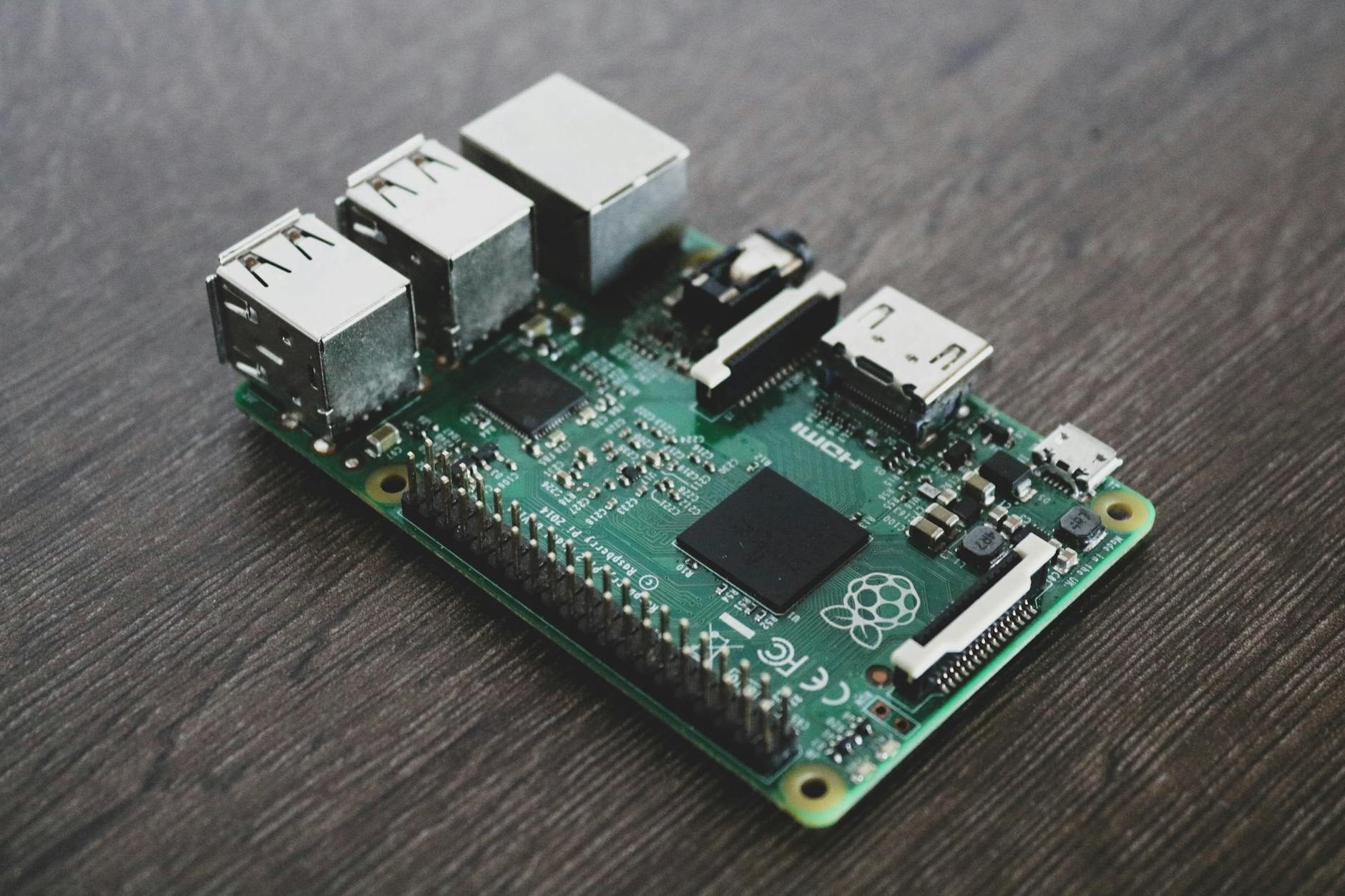
Raspberry Pi's journey from a simple educational tool to a significant industrial player is a testament to its inherent versatility and strategic evolution. Initially conceived to teach basic computer science, its affordability, compact size, and robust features like USB and HDMI ports, along with built-in Wi-Fi, quickly propelled it into a myriad of applications far beyond the classroom. This transformation is not just anecdotal; it's now a core driver of the company's financial success.

A key milestone highlighted in the 2025 results is that semiconductor unit volumes, at 8.4 million units sold, exceeded board and module shipments for the first time. This shift reflects a deliberate strategy towards a "two-franchise business," where Raspberry Pi is not just selling complete single-board computers (SBCs) but also providing its underlying semiconductor technology to other manufacturers. This deeper integration into the supply chain positions the company as a critical component supplier, not merely a finished product vendor.

The Compute Module series, first introduced in 2014, exemplifies this industrial pivot. These tougher, more compact versions of the Raspberry Pi are designed for deep embedded applications in commercial and industrial product designs. They offer a cost-effective, low-power, and high-performance solution for everything from industrial automation and IoT monitoring to smart home functionalities and even data recording on the International Space Station. This broad adoption showcases the platform's reliability and scalability in demanding environments.

This evolution has allowed Raspberry Pi to create a whole new class of computing devices, transforming how engineers design control systems and becoming a standard component of intelligent interfacing. Its adaptability and stability are crucial for industrial applications, where longevity and consistent performance are paramount. The company's success in this arena challenges legacy embedded systems by offering flexible, Linux-based alternatives, enabling smaller companies to innovate without massive hardware investments.

What Strategic Moves Are Fueling Raspberry Pi's Growth?

Raspberry Pi's impressive financial performance isn't accidental; it's the result of shrewd strategic execution in a highly competitive hardware market. One of the most critical aspects has been the company's ability to manage supply chain complexities, particularly concerning DRAM memory chips. Despite global demand leading to supply bottlenecks and higher costs, Raspberry Pi maintained a broadly stable gross margin of 24.1% in 2025. This was achieved by diversifying suppliers and making timely pricing adjustments, demonstrating a proactive approach to cost control.

The strategic shift towards a "two-franchise business" model, where semiconductor sales now outpace boards and modules, is another pivotal move. This isn't just about selling more chips; it's about embedding Raspberry Pi's technology deeper into industrial and commercial products. By offering its core semiconductor components, the company expands its market reach significantly, moving beyond direct end-user sales to become a vital supplier for other tech manufacturers. This strategy leverages its intellectual property and design expertise more broadly.

Furthermore, Raspberry Pi has consistently focused on product innovation and expansion. The continuous release of new and more powerful models, such as the Raspberry Pi 5 with its faster 2.4GHz Broadcom BCM2712 ARM Cortex-A76 CPU, ensures the platform remains at the cutting edge. This commitment to upgrading specifications, while maintaining a low-cost philosophy, allows it to serve both ends of the market spectrum – from hobbyists to sophisticated industrial clients.

The company's strong direct customer engagements and strategic hiring also play a crucial role in its growth trajectory. CEO Eben Upton emphasized "rapid uptake of new products" and a "channel whose capabilities are well aligned with the opportunities ahead." This indicates a well-oiled sales and distribution network that can effectively capitalize on growing demand. By fostering a robust ecosystem and maintaining tight control over its chip designs, Raspberry Pi has built a defensible position against competitors seeking to replicate its success.

What Does the Competitive Landscape Look Like for Raspberry Pi?

Raspberry Pi operates in a dynamic and increasingly competitive market, spanning single-board computers (SBCs), embedded systems, and specialized semiconductors. While its unique blend of affordability, open-source ethos, and robust community support has carved out a significant niche, it faces formidable rivals ranging from established semiconductor giants to agile startups. Understanding this landscape is crucial for assessing its long-term potential.

On one hand, Raspberry Pi competes with major players like Intel (NASDAQ: INTC) and NVIDIA (NASDAQ: NVDA), which offer their own powerful SBCs for AI and IoT applications, such as Intel NUC and NVIDIA Jetson Nano. Qualcomm (NASDAQ: QCOM) also provides Snapdragon processors and DragonBoards for mobile and IoT devices. These companies often have vast R&D budgets, extensive distribution networks, and established ecosystems, posing a challenge to Raspberry Pi's market share, especially in high-performance or enterprise-grade applications.

However, Raspberry Pi's competitive edge lies in its cost-effectiveness, versatility, and the strong community around its open-source platform. Its ability to run full-fledged operating systems like Raspberry Pi OS and support various programming languages makes it a flexible alternative to traditional microcontrollers or more expensive embedded systems. This has allowed smaller companies and innovators to enter markets without the prohibitive hardware investments typically required. The company's tight control over its chips also helps prevent direct piracy and maintains its unique value proposition.

The market for Raspberry Pi development kits is highly competitive, particularly for standard and starter kits where differentiation can be minimal, leading to price-driven competition. Yet, Raspberry Pi continues to innovate by adding unique value through bundled sensors, AI accelerators, or specialized software stacks in its more advanced and customizable kits. This strategy, combined with strategic alliances with educational institutions and industry partners, helps expand its market reach and solidify its position against rivals like Dfrobot, Piface, and Adafruit.

Ultimately, while the perception of being a "toy maker" still lingers in some corporate circles, Raspberry Pi's well-engineered products and growing industrial adoption are steadily changing this view. Its longevity and backward compatibility, ensuring older models work with current operating systems, are also significant advantages for industrial clients seeking reliable, long-term solutions.

What Are Raspberry Pi's Key Growth Drivers and Future Opportunities?

Raspberry Pi is strategically positioned to capitalize on several powerful macro trends, suggesting a robust growth trajectory for the foreseeable future. The increasing adoption of Industry 4.0 technologies is a significant tailwind, as factories and businesses seek cost-effective, flexible solutions for automation, real-time data gathering, and control systems. Raspberry Pi's compact size, low power consumption, and ability to connect to the internet make it ideal for retrofitting factory machinery, IoT monitoring, and developing custom automation systems.

The burgeoning demand for STEM education tools globally continues to be a foundational driver. While the company has expanded its industrial footprint, its core mission of promoting computer science education ensures a steady pipeline of new users and developers. Individuals raised on Raspberry Pi hardware are likely to gravitate towards it as engineers, creating a self-reinforcing ecosystem of talent and demand. This long-term strategy, akin to Apple's approach with educational hardware, builds brand loyalty and market presence from the ground up.

Furthermore, the continuous release of new and more powerful Raspberry Pi models and accessories, coupled with strategic partnerships, will be crucial for sustained growth. The integration of AI and machine learning capabilities at the edge represents a significant future opportunity. As more processing moves closer to the data source, Raspberry Pi's small form factor, low power, and increasing processing power make it an attractive platform for edge AI applications in vehicles, robots, and other smart devices.

Geographically, strong growth in the US and China, as reported in 2025, indicates successful market penetration in key global economies. Expanding direct customer engagements and aligning its channel capabilities with these opportunities will be vital. The company's ability to diversify its product offerings, moving beyond just boards to include semiconductors, also opens up new revenue streams and reduces reliance on a single product category. This multifaceted approach to growth, combining educational, industrial, and technological innovation, paints a promising picture for Raspberry Pi's future.

Is Raspberry Pi a Buy at Its Current Valuation?

Assessing Raspberry Pi's investment potential requires a careful look at its financial health and valuation metrics, especially after its recent share surge. The company's 2025 results showcased strong financial performance, with revenue up 25% to $323.2 million and adjusted EBITDA increasing 25% to $46.4 million. Profitability also saw a significant boost, with profit before tax climbing 63% to $26.5 million and adjusted EPS rising 35% to 14.48 cents. These are robust growth figures for a specialized hardware company.

However, valuation is where the picture becomes more nuanced. Following the share price jump, Raspberry Pi's forecast price-to-earnings (P/E) ratio stands at around 47. This is notably higher than some tech giants, for instance, NVIDIA (NASDAQ: NVDA), which, despite its recent share price decline, had a forward P/E ratio of around 20. This disparity highlights that the market is pricing in significant future growth expectations for Raspberry Pi, reflecting its early-stage growth and unique market position.

Net cash ended 2025 at $28.1 million, down from $45.8 million a year prior, but this was better than expected after paying down $52.2 million of extended supplier payables. This indicates prudent financial management and a focus on strengthening its balance sheet. While the cash position is lower, the context of supplier payments suggests a healthy operational cash flow management.

For long-term growth investors, a high P/E ratio in early-stage, high-growth tech companies isn't necessarily a deterrent. The potential for continued expansion into industrial IoT, edge AI, and the semiconductor market could justify this premium. However, investors must weigh this against risks such as ongoing supply constraints in memory markets, which limit second-half 2026 visibility, and intense competition from larger, more established players. The "DRAM environment limits second-half visibility," a key concern for the company, underscores the inherent volatility in its supply chain.

Ultimately, Raspberry Pi presents a compelling growth story driven by strategic execution and market tailwinds. Its ability to command strong demand despite price rises, coupled with its successful pivot into industrial applications, paints a picture of a company with significant potential. However, its premium valuation demands sustained high growth and flawless execution to deliver shareholder value.

Raspberry Pi's recent performance signals a company hitting its stride, transitioning from a niche player to a critical component supplier in the evolving tech landscape. While supply chain visibility remains a concern, its strategic moves and robust demand underscore a promising future. Investors should monitor its continued penetration into industrial markets and its ability to manage supply dynamics to sustain this impressive growth trajectory.


Want deeper research on any stock? Try Kavout Pro for AI-powered analysis, smart signals, and more. Already a member? Add credits to run more research.

SHARE THIS ON:

Related Articles

Category

You may also like

Crypto News1 week ago

Is Blockchain Gaming Over? Industry Reacts to Solana President's Bold Claim

Solana President Lily Liu declared crypto gaming "dead," sparking industry debate amid community pushback and metaverse failures. This claim challenges the sector's near-term viability.
Stock News3 weeks ago

The Trade Desk Is Reinventing Itself, but Will It Be Enough?

The Trade Desk is shifting its focus from being a high-growth challenger to a scaled platform company. This evolution centers on integrating Kokai from an experiment into the core foundation.
Stock News1 months ago

Is Palantir's Latest U.S. Government Win a Game Changer?

Palantir Federal Cloud Service (PFCS) Forward received a Defense Information Systems Agency authorization, enabling existing DoD users to expand use cases by removing red tape.
Crypto News1 months ago

Is Pi Coin's Stellar Roots Enough To Push PI Back To $0.46?

Pi Network's eligibility for the ISO 20022 standard is currently contested because the core team is prioritizing MiCa compliance.

Breaking News

View All →

Top Headlines

View More →
Stock News23 minutes ago

Meta Deploys AI to Accelerate and Enhance Risk Review During Product Development

Stock News58 minutes ago

AI Data Centers Are Choking on Memory: Is Micron a Buy After Its Monster Run?

Stock News1 hour ago

BQool: Bringing Enterprise-Level Amazon AI Advertising Solutions to Growing Brands

Stock News1 hour ago

Microsoft, Chevron and Engine No. 1 sign exclusive deal for power supply

Stock News2 hours ago

Stock Market Today, March 31: Nvidia Rises on $2 Billion Marvell AI Infrastructure Partnership