MarketLens
Has Rivian Finally Found Its Turnaround Catalyst with the R2

Key Takeaways
- Rivian's R2 SUV, priced at $45,000, is its make-or-break bet for mass-market penetration, targeting 62,000 to 67,000 deliveries in 2026.
- The company is aggressively investing in advanced software, including a custom Rivian Autonomy Processor and steer-by-wire technology, to differentiate itself from competitors like Tesla.
- Despite projected $1.8 billion to $2.1 billion in adjusted pre-tax losses for 2026, Rivian's $6.59 billion liquidity and Volkswagen partnership provide a crucial runway for its ambitious growth plans.
Has Rivian Finally Found Its Turnaround Catalyst with the R2?
Rivian Automotive (NASDAQ: RIVN) has been a rollercoaster for investors since its high-flying IPO in 2021, often battling production delays, cash burn, and a fiercely competitive EV landscape. However, recent developments, particularly the unveiling of its mid-sized R2 SUV and robust 2026 delivery guidance, have sparked a dramatic shift in market sentiment. The stock surged by as much as 27% in intraday trading following its Q4 2025 earnings report, signaling a renewed optimism that the company might finally be on a sustainable path to scale and, eventually, profitability.
The Q4 2025 results themselves offered a glimmer of hope. Rivian reported adjusted losses of $0.54 per share, significantly narrower than the $0.68 loss analysts had anticipated. Revenue also topped expectations, coming in at $1.29 billion against a $1.26 billion consensus. More critically, the company achieved its first-ever annual gross profit of $144 million in 2025, a substantial improvement from a $1.2 billion net loss in 2024. This milestone, while aided by a software and services joint venture with Volkswagen, suggests that Rivian is making strides in cost control and operational efficiency.
The real excitement, however, revolves around the future. Rivian’s 2026 guidance projects vehicle deliveries between 62,000 and 67,000 units, a remarkable 47% to 59% jump over the 42,247 units delivered in 2025. This ambitious target hinges almost entirely on the successful launch and ramp-up of the R2 SUV, slated for Q2 2026. CEO RJ Scaringe has explicitly stated that the R2 is expected to represent the "majority of the volume" by the end of 2027, transforming 2026 into an "inflection point" for the company. Investors are clearly buying into this narrative, hoping the R2 will be the volume engine Rivian desperately needs to escape its niche as a premium EV maker.
Can the R2 SUV Deliver Mass-Market Dominance for Rivian?
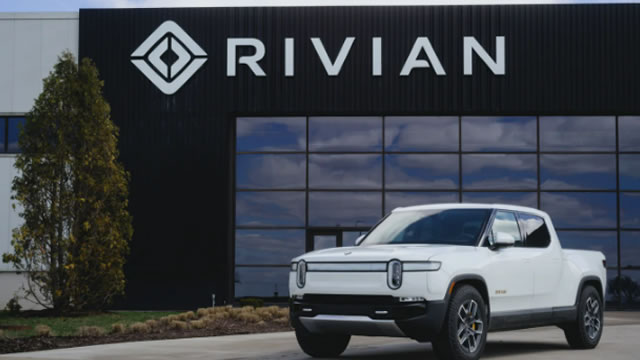
Rivian's entire 2026 growth strategy is a high-stakes bet on the R2 SUV. This new model is not just another vehicle; it’s designed to be the company's entry into the mass market, directly challenging established players like Tesla's best-selling Model Y. Priced at approximately $45,000, the R2 aims to attract a much broader customer base than Rivian's current R1 lineup, which has seen demand soften, partly due to the expiration of federal tax credits. The strategic pricing is critical, positioning the R2 as a compelling alternative in a segment hungry for more affordable, yet capable, electric SUVs.
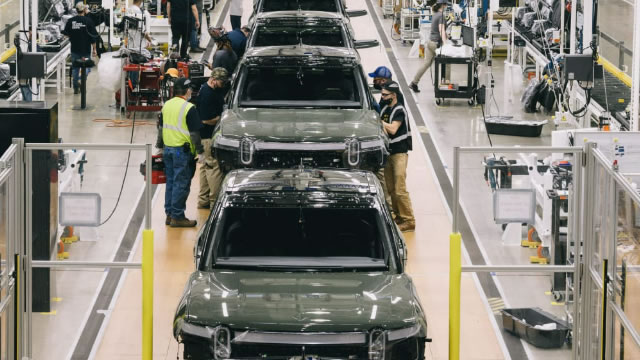
Beyond its price point, the R2 is engineered for financial scalability. Rivian expects the R2 to cut bill-of-materials costs in half compared to the R1 platform and significantly reduce manufacturing complexity. This focus on cost efficiency is paramount for a company that has grappled with high production costs and negative margins. The early manufacturing validation builds for the R2 have already rolled off the assembly line at Rivian's Normal, Illinois plant, indicating that the company is moving from planning to execution. This progress is crucial for investor confidence, demonstrating that the R2 launch remains on schedule for Q2 2026.
The success of the R2 will be a decisive test of Rivian's ability to rapidly scale its delivery volume and climb the sales rankings. The company plans to start with one production shift for the R2, adding a second by year-end, underscoring the aggressive ramp-up strategy. However, this path comes with significant financial implications. Preparing for the R2 launch will be capital-intensive, with capital expenditures expected to nearly double to between $1.95 billion and $2.05 billion in 2026. Rivian also anticipates continued adjusted pre-tax losses of $1.8 billion to $2.1 billion for the year, highlighting the trade-off between massive upfront investment and the potential for long-term market dominance.
How is Rivian Leveraging Advanced Tech to Outmaneuver Competitors?
Rivian isn't just building vehicles; it's aggressively pushing the boundaries of automotive technology, particularly in software and advanced driving systems, to carve out a distinct competitive edge. The company recently unveiled its custom self-driving chip, the Rivian Autonomy Processor, manufactured by TSMC. This in-house chip is designed to process data from cameras, LiDAR sensors, and other critical components, enabling higher levels of autonomous driving. This strategic move mirrors Tesla's own vertical integration efforts and, while capital-intensive at low production levels, is expected to provide a significant cost advantage and performance optimization at scale by eliminating supplier margins.
Complementing its custom silicon, Rivian introduced the Autonomy+ driver-assistance package, priced at $2,500 as a one-time payment or $49.99 per month. This offering significantly undercuts Tesla's Full Self-Driving system, which costs $8,000 outright or $99 per month. Autonomy+ expands hands-free assisted driving coverage from 135,000 miles to over 3.5 million miles of roads across the U.S. and Canada, allowing drivers to operate hands-free on any road with clearly marked lanes. Rivian's long-term goal is Level 4 autonomy with "eyes-off" functionality by 2026, along with an AI assistant for its next-gen models, including the R2.
Beyond autonomy, Rivian is quietly advancing toward the adoption of steer-by-wire (SBW) technology in its upcoming models, including the R2 and R3. This innovative system replaces the physical steering column with an electronic control system, decoupling the steering wheel from the wheels. SBW allows for adaptive, intelligent adjustment of the steering ratio in real-time, enhancing precision at high speeds and maneuverability at lower speeds. While the Tesla Cybertruck is currently the only vehicle on sale in the U.S. with this technology, Rivian's job postings for a "Staff Technical Program Manager, Steering Actuator System" confirm its commitment to this "critical technology that will define the future of our vehicles." This focus on cutting-edge, software-defined vehicle architecture positions Rivian to offer a differentiated driving experience, crucial in a crowded EV market.
What's the Financial Outlook for Rivian Amidst Heavy Investment?
Rivian's financial trajectory for 2026 presents a classic growth-versus-profitability dilemma. While the company achieved its first annual gross profit of $144 million in 2025, driven by software and services and improved cost controls, the path ahead involves substantial investment. Management has guided for adjusted pre-tax losses between $1.8 billion and $2.1 billion for 2026, alongside capital expenditures of $1.95 billion to $2.05 billion. These figures underscore the heavy financial commitment required to launch and scale the R2, a critical step in Rivian's journey toward mass-market relevance.
Despite these projected losses, Rivian's balance sheet provides a meaningful runway. The company ended Q4 2025 with $6.59 billion in total liquidity, including nearly $6.1 billion in cash and short-term investments. This cash buffer is essential for funding the R2 ramp-up and other technological advancements without immediate pressure to raise additional capital. Furthermore, Rivian's $5.8 billion joint venture with Volkswagen, with $1 billion already transferred in June 2025, significantly bolsters its financial position, providing both capital and a strategic partnership for future software and services development.
The financial model for 2026 is a clear illustration of Rivian explicitly sacrificing near-term earnings to fund critical infrastructure. CFO Claire McDonough has cautioned that 2026 will be a "transition year" for gross profitability, meaning the $144 million gross profit milestone from 2025 may not be repeated as R2 production scales up. Investors are focusing on the trajectory toward positive automotive gross profit by the final quarter of 2026, rather than the absolute loss figures. This indicates a market willingness to tolerate short-term losses for the potential of dominant volume and market share in the years ahead, provided Rivian executes flawlessly on its R2 launch and cost reduction targets.
How Does Rivian Stack Up Against Tesla and the Broader EV Market?
The EV market is a battlefield, and Rivian is fighting for its share against formidable opponents, from the established dominance of Tesla to the rapid ascent of Chinese manufacturers and the pivot of legacy automakers. Tesla, despite its recent market share declines, remains the benchmark for EV innovation and scale. Rivian's R2 is a direct shot across the bow at Tesla's Model Y, aiming to undercut it on price while matching or exceeding features. However, Tesla's Full Self-Driving (FSD) system, while controversial, has a significant head start in terms of real-world data and deployment, even if Rivian's Autonomy+ offers a more affordable entry point.
Chinese EV makers like BYD, Nio, and Xpeng are also intensifying competition, particularly in the mid-market segment. BYD, for instance, has rapidly expanded globally with a diverse portfolio of affordable EVs, posing a threat to all Western manufacturers. Nio's flagship ET9 sedan already utilizes steer-by-wire technology, supplied by ZF, demonstrating that Rivian isn't alone in pursuing advanced steering systems. This global competition means Rivian must not only innovate but also scale efficiently and quickly to capture market share before it's saturated.
Meanwhile, legacy automakers like Ford and GM are pouring billions into their own EV transitions, leveraging their vast manufacturing capabilities and existing dealer networks. Ford, an early investor in Rivian, has its own electric truck, the F-150 Lightning, directly competing with Rivian's R1T. The broader EV market is also facing headwinds: waning consumer excitement, the expiration of federal tax credits, and economic uncertainties are collectively dampening demand for premium EVs. Rivian's 42,247 deliveries in 2025 represented an 18% decline from the previous year, a stark reminder of these challenges. The R2's success is therefore not just about Rivian's internal execution, but also its ability to navigate a rapidly evolving and increasingly challenging external environment.
What Does This Mean for Investors Considering Rivian?
Rivian's recent surge and ambitious 2026 outlook have undeniably reset its growth narrative, positioning the R2 as the pivotal catalyst for its future. For investors, this creates a compelling, albeit high-risk, opportunity. The company's strong liquidity of $6.59 billion and the strategic Volkswagen partnership provide a crucial financial cushion as it embarks on its most capital-intensive phase. If Rivian can successfully launch the R2 on schedule in Q2 2026, achieve its cost reduction targets, and ramp up production to 62,000-67,000 units, it could indeed mark the "inflection point" CEO Scaringe envisions.
However, the path is fraught with challenges. The projected $1.8 billion to $2.1 billion in adjusted pre-tax losses for 2026 highlight the significant cash burn that will continue. Execution risks remain high, particularly in scaling production of a new vehicle platform and integrating advanced technologies like steer-by-wire. The competitive landscape is unforgiving, with Tesla, Chinese rivals, and legacy automakers all vying for EV market share amidst softening demand.
Ultimately, Rivian remains a speculative buy, best suited for risk-tolerant investors who believe in its long-term vision and ability to execute. The R2's success is paramount, but the company's commitment to in-house technology and cost efficiency offers a glimpse of a sustainable future. Watch closely for R2 production updates, margin improvements, and how Rivian navigates the broader EV market's evolving dynamics.
Want deeper research on any stock? Try Kavout Pro for AI-powered analysis, smart signals, and more. Already a member? Add credits to run more research.
Related Articles
Category
You may also like
No related articles available
Breaking News
View All →No topics available at the moment