MarketLens
Is American Airlines' Free Wi-Fi a Game Changer for AAL Stock

Key Takeaways
- American Airlines' recent rollout of free, high-speed Wi-Fi, sponsored by AT&T, is a critical move to enhance passenger experience and boost its AAdvantage loyalty program, positioning the airline competitively within the evolving industry.
- While the initiative covers a vast portion of its fleet with Viasat and Intelsat technology, American Airlines' decision not to adopt SpaceX's Starlink could lead to a performance gap compared to rivals already deploying the faster low-Earth orbit (LEO) satellite service.
- Despite potential speed disparities, the sheer scale of American's Wi-Fi deployment and the financial backing from AT&T represent a significant investment in customer satisfaction and loyalty, which could translate into long-term operational benefits for the carrier.
Is American Airlines' Free Wi-Fi a Game Changer for AAL Stock?
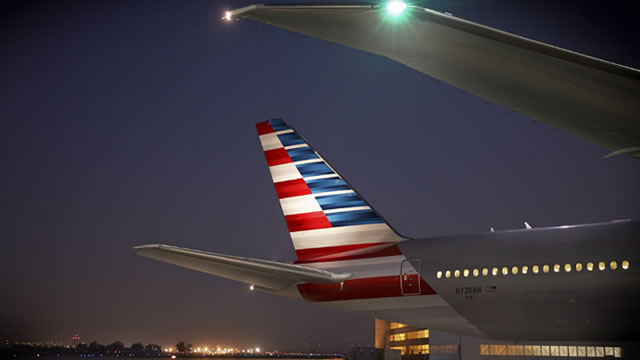
American Airlines Group Inc. (NASDAQ: AAL) is making a bold play for passenger loyalty with its recent announcement on January 6, 2026, to roll out free, high-speed, satellite-based Wi-Fi across the majority of its fleet. This strategic move, sponsored by AT&T, aims to redefine the inflight experience for AAdvantage members and could be a significant differentiator in the fiercely competitive airline industry. With shares currently trading at $14.81, up 6.97% today, and a market capitalization of $9.80 billion, the market appears to be reacting positively to initiatives that promise to enhance customer value and operational efficiency.
The airline's Chief Customer Officer, Heather Garboden, emphasized that free high-speed Wi-Fi is no longer just a perk but an essential service for modern travelers. This sentiment reflects a broader industry trend where connectivity has become a key battleground for market share. American Airlines' commitment to equip 100% of its narrowbody and dual-class regional fleets, and nearly every flight by early spring 2026, underscores the scale of this investment. The partnership with AT&T not only provides financial sponsorship but also leverages AT&T's brand recognition and network expertise, potentially strengthening American's appeal to business and leisure travelers alike.
However, the question remains whether this initiative will translate into sustained shareholder value for AAL. While the immediate market reaction is favorable, the long-term impact will depend on the actual performance of the Wi-Fi service and how it stacks up against competing offerings. The airline's focus on its loyalty program members for access is a clear strategy to deepen customer engagement, a critical factor for an airline that serves over 200 million customers annually and operates more than 6,000 daily flights to over 350 destinations. This move could bolster AAdvantage enrollment and retention, driving repeat business and potentially increasing ancillary revenue streams over time.
How Does American Airlines' Wi-Fi Strategy Compare to Rivals?
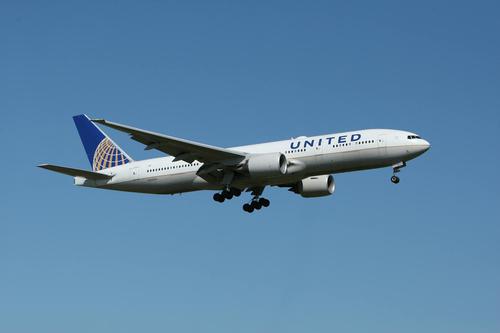
American Airlines' approach to inflight connectivity, while ambitious, diverges from some key competitors, particularly regarding technology providers. The airline has opted for high-speed satellite Wi-Fi powered by Viasat and Intelsat, with over 900 mainline aircraft already equipped. This contrasts with United Airlines, which is actively outfitting its fleet with SpaceX's Starlink satellite Wi-Fi, also free for its MileagePlus loyalty program members. Delta Air Lines has offered free service to SkyMiles members since 2023, and JetBlue Airways has provided complimentary internet for years.
A critical point of comparison lies in the performance metrics. A June 30, 2025, Ookla report, based on Q1 2025 data, highlighted significant differences in inflight Wi-Fi speeds. Starlink-powered flights, such as those on Hawaiian Airlines and Qatar Airways, demonstrated median download speeds of 152.37 Megabits per second (Mbps), upload speeds of 24.16 Mbps, and latency of 44 milliseconds. In contrast, flights served by Intelsat, including some on American Airlines, Air Canada, and Alaska Airlines, received a median download speed of 61.61 Mbps. This suggests that while American's Wi-Fi is "very usable," it may not match the raw speed and low latency offered by Starlink.
The partnership with AT&T is a key differentiator for American, providing a strong brand sponsor and potentially offsetting operational costs. Jenifer Robertson, AT&T’s EVP and GM for Mass Markets, emphasized that the collaboration aims to make it easier for people to stay productive and entertained. However, the underlying technology choice could be a double-edged sword. While Viasat and Intelsat are established providers, the "dense LEO constellation" advantage of Starlink, as noted by Ookla, might set a new benchmark for passenger expectations. This competitive landscape means American Airlines must ensure its Viasat and Intelsat-powered service consistently meets or exceeds passenger expectations, even if it doesn't boast the absolute highest speeds.
What are the Operational and Financial Implications for American Airlines?
The rollout of free, high-speed Wi-Fi carries substantial operational and financial implications for American Airlines. From an operational standpoint, the phased implementation, starting with narrowbody and dual-class regional fleets in January 2026 and expanding to nearly the entire fleet by early spring 2026, demonstrates a rapid and comprehensive deployment strategy. This scale, encompassing more than 2 million American Airlines flights a year, is touted by the company as offering free Wi-Fi on more aircraft than any other carrier globally, which could be a powerful marketing tool.
Financially, the sponsorship by AT&T is a crucial component. While the exact terms of the sponsorship are not disclosed, it likely significantly offsets the costs associated with hardware installation, maintenance, and ongoing satellite bandwidth. This cost mitigation allows American to offer a premium service without directly impacting its fare structure or significantly eroding its profit margins, which is vital for an airline operating in a high-fixed-cost environment. The ability to provide a "free" service, rather than a paid one that routinely topped $20 per flight previously, removes a friction point for customers and aligns with the broader industry trend towards complimentary connectivity.
Furthermore, the requirement for passengers to be AAdvantage members to access the free Wi-Fi is a strategic move to boost loyalty program enrollment and engagement. This could lead to a larger, more active customer base for American, providing valuable data for personalized marketing and potentially increasing ancillary revenue through targeted offers for upgrades, vacation packages, or co-branded credit cards. A stronger loyalty program can also enhance customer stickiness, making passengers less likely to switch to competing airlines. The airline's new Boeing 787-9 and 787-8 aircraft will also feature free Wi-Fi, ensuring that even new additions to the fleet are equipped with this essential service.
What are the Risks and Challenges for AAL's Connectivity Play?
Despite the strategic advantages, American Airlines' Wi-Fi initiative faces several risks and challenges that investors should consider. The primary concern revolves around the performance gap highlighted by the Ookla report. While American's Viasat and Intelsat-powered Wi-Fi offers "very usable" speeds, Starlink's median download speed of 152.37 Mbps significantly outpaces Intelsat's 61.61 Mbps. In an era where passengers are accustomed to terrestrial gigabit internet speeds, a noticeable difference in inflight performance, especially for streaming or demanding applications, could lead to customer dissatisfaction, despite the service being free.
Another challenge is the rapid evolution of inflight connectivity technology. While American has invested for over a decade in its network, the emergence of LEO satellite constellations like Starlink represents a generational leap. If Starlink continues to gain market share and improve performance, American Airlines might face pressure to upgrade its existing infrastructure or even consider a future transition to LEO providers, which could entail significant capital expenditure. The airline's current setup, relying on geostationary satellites (Viasat) and multi-orbit/hybrid networks (Intelsat), may struggle to keep pace with the lower latency and higher speeds of pure LEO systems.
Moreover, the competitive landscape is dynamic. While American is making a strong push, other major carriers are not standing still. United Airlines' Starlink rollout, coupled with similar moves by international carriers like British Airways, Qatar Airways, and Hawaiian Airlines, means that "free Wi-Fi" alone may not be enough if the quality of the experience lags. Customer expectations are constantly rising, and a free but slow connection could be perceived as less valuable than a slightly more expensive but consistently fast one. American must continuously monitor customer feedback and technological advancements to ensure its offering remains competitive and relevant.
Is AAL's Valuation Reflecting This Strategic Investment?
American Airlines' current stock price of $14.81 and market capitalization of $9.80 billion reflect a complex interplay of factors, including its recent strategic investment in free Wi-Fi. The 6.97% jump today suggests an immediate positive market reaction to the news, indicating that investors view enhanced customer experience as a potential driver for future revenue and loyalty. However, the airline sector is notoriously volatile, as evidenced by AAL's 52-week range of $10.09 to $16.50. This wide range indicates that while positive catalysts can provide a boost, broader economic conditions and industry-specific challenges heavily influence valuation.
The long-term impact of the Wi-Fi strategy on AAL's valuation will depend on its ability to translate improved customer satisfaction into tangible financial benefits. This includes increased AAdvantage enrollment, higher load factors, and potentially a premium positioning that allows for stronger pricing power in certain segments. The sponsorship by AT&T helps mitigate direct costs, but the indirect benefits, such as enhanced brand perception and customer retention, are harder to quantify immediately. Investors will be looking for evidence of these benefits in future earnings reports, such as growth in loyalty program revenue or improved passenger yields.
Compared to its peers, American Airlines' valuation will also be scrutinized in the context of its Wi-Fi technology choice. If the Viasat/Intelsat solution proves robust and reliable, the market may reward American for its extensive coverage and AT&T partnership. However, if Starlink-equipped rivals consistently deliver a superior experience, AAL's valuation could face headwinds as investors factor in potential competitive disadvantages. The airline's CEO, Robert D. Isom Jr., with a total compensation of $13,871,825 in 2025, including $12,489,000 in stock, has a vested interest in these strategic initiatives driving long-term shareholder value. The success of this Wi-Fi rollout will be a key metric in evaluating management's ability to navigate the evolving airline landscape.
American Airlines' commitment to free, high-speed Wi-Fi is a significant step in enhancing its customer offering and solidifying its loyalty program. While the choice of Viasat and Intelsat over Starlink presents a potential speed differential, the sheer scale of deployment and AT&T's sponsorship provide a strong foundation. Investors should monitor AAdvantage membership growth and customer satisfaction metrics closely, as these will be key indicators of whether this strategic investment translates into sustained competitive advantage and long-term value for AAL.
Want deeper research on any stock? Try Kavout Pro for AI-powered analysis, smart signals, and more. Already a member? Add credits to run more research.
Related Articles
Category
You may also like


Is FAA Certification Enough to Make Archer Aviation Stock a Buy?

Will Airline ETFs Shield Your Portfolio Against Rising Jet Fuel Prices?

Does Marriott's Massive Rally Mean It's Time to Check Out?
Breaking News
View All →Featured Articles
Top Headlines

Why Microsoft's Split With OpenAI May Be Great for the Stock in the Long Run

EU plans to fine Google high triple-digit million euro sum as part of antitrust investigation: report

The Anatomy of a Disconnect: How $4.35 Trillion in Corporate Profits Cleared the Way for Record Highs

Google I/O Key Takeaways: Gemini's Growth, Smart Glasses & Ties to Space Economy