MarketLens

Log in

Is Anduril Industries the Next Defense Titan

1 week ago
SHARE THIS ON:

Is Anduril Industries the Next Defense Titan

Key Takeaways

  • Anduril Industries is rapidly disrupting the traditional defense sector, with its valuation surging from $30.5 billion in June 2025 to over $60 billion in early 2026, driven by a software-first approach to modern warfare.
  • The company's core strength lies in its AI-powered Lattice operating system, which integrates autonomous drones, sensors, and other military assets, offering a significant technological advantage over legacy hardware-centric contractors.
  • While massive growth potential exists from escalating global defense spending and the shift towards autonomous systems, investors must weigh execution risks, intense competition, and the complexities of government procurement against Anduril's ambitious valuation.

Is Anduril Industries the Next Defense Titan?

Anduril Industries, a defense technology startup founded less than a decade ago, is rapidly reshaping the landscape of military innovation, with its valuation soaring to unprecedented levels in private markets. The company, established in 2017 by Oculus VR founder Palmer Luckey, has become a Silicon Valley darling, attracting billions in funding and challenging the long-standing dominance of traditional defense contractors. This meteoric rise culminated in a $30.5 billion valuation following a $2.5 billion Series G funding round in June 2025, a round that was reportedly 8x oversubscribed and saw Founders Fund contribute its largest check ever at $1 billion.

Fast forward to early 2026, and Anduril is reportedly in talks to raise new funding at a valuation of at least $60 billion, potentially doubling its value in less than a year. This aggressive growth trajectory places Anduril in rare company, positioning it as one of the most valuable private defense technology firms globally. The proposed funding round, with Thrive Capital and Andreessen Horowitz reportedly co-leading a $4 billion raise, signals immense investor confidence in Anduril's vision for software-defined warfare and autonomous systems.

This valuation leap isn't just about capital; it reflects a profound shift in how investors perceive the future of defense. Anduril is not merely building hardware; it's constructing an integrated defense stack where software and AI are the primary drivers of capability. This approach, which prioritizes rapid iteration and intelligent autonomy, stands in stark contrast to the decades-long development cycles and hardware-centric focus of legacy defense primes. The market is clearly betting that the future battlefield will be defined by code, not just steel.

The company's success is rooted in its ability to develop cutting-edge solutions, including a wide range of sensors and drones, that address the increasing demand for low-cost, autonomous defense products. As global tensions escalate and nations like the U.S. push for technological superiority against rivals such as China, Anduril's focus on AI and autonomy positions it at the forefront of a critical industry transformation. This makes Anduril a compelling, albeit private, case study for investors tracking the intersection of technology and national security.

How is Anduril Challenging Legacy Defense Primes?

Anduril's disruptive power stems from its fundamental departure from the traditional defense contractor model, which has long been characterized by slow, hardware-heavy procurement cycles. Unlike industrial titans such as Lockheed Martin or RTX, which specialize in designing and manufacturing multi-billion-dollar fighter jets and missile systems over decades, Anduril operates with the agility and software-first mindset of a Silicon Valley tech company. This allows it to iterate products in months, not years, a radical tempo for the defense sector.

At the core of Anduril's strategy is its Lattice operating system, an AI-powered command and control platform designed to integrate and orchestrate autonomous systems across air, land, and sea. Lattice acts as the connective tissue, fusing disparate sensors, drones, and weapons into one cognitive network, creating a real-time operational picture that older, siloed systems simply cannot replicate. This software leverage means hardware becomes a delivery vehicle for ongoing software subscriptions, maintenance, and data services, flipping the unit economics of defense from hardware margins to high-margin recurring software revenue.

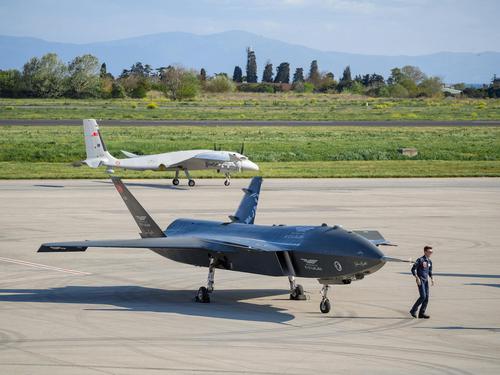
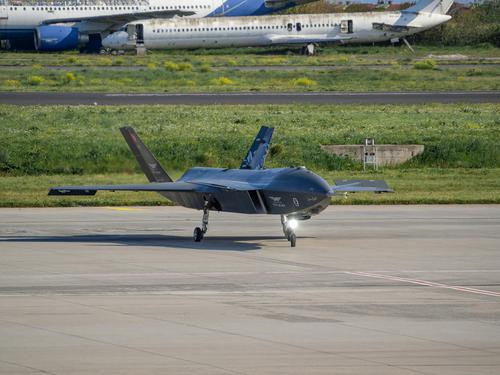
Anduril's product suite, including its Ghost, Altius, and Anvil drones, as well as its Sentry Towers, exemplifies this integrated approach. These systems are not standalone units but nodes within the Lattice network, constantly improving through data and network effects. A significant win for Anduril was its takeover of Microsoft's $22 billion Integrated Visual Augmentation System (IVAS) augmented reality headset program for the U.S. Army in February 2025, further demonstrating its ability to assume and innovate on major defense initiatives. This move, along with a partnership with Meta Platforms for AR/VR systems, highlights its unique position at the intersection of consumer tech innovation and military application.

The company's financial performance underscores its rapid market penetration. Anduril doubled its revenue to approximately $1 billion in 2024, a substantial increase from $420 million in 2023, representing a 138% year-over-year growth rate. It also secured new contracts exceeding $1.5 billion in 2024, driven by major wins like the Marine Corps Bolt-M contract and the Pentagon's Replicator program. This robust growth, coupled with an expected doubling of revenue to $2 billion in 2025, showcases its ability to secure transformational contracts and scale rapidly in a sector traditionally dominated by incumbents.

What's Driving Investor Confidence in Anduril?

Investor confidence in Anduril is fueled by a confluence of powerful macro trends and the company's distinct competitive advantages. Globally, military spending is on an upward trajectory, reaching $2.4 trillion in 2023, driven by deteriorating security environments and the urgent need for advanced defense technologies. NATO members are increasingly meeting their 2% GDP defense-spending targets, unlocking billions in additional investment. Anduril is perfectly positioned to capture a significant share of this expanding pie, especially as defense budgets shift towards AI, autonomy, and software-defined systems.

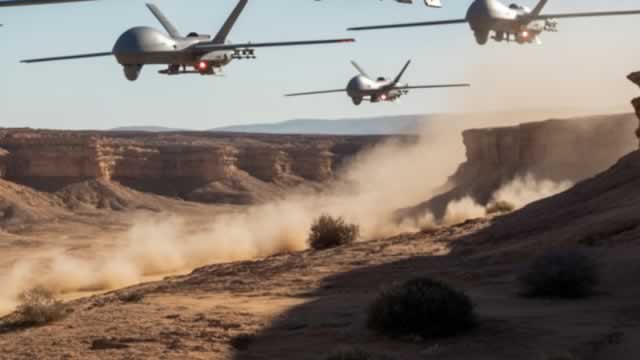
The U.S. Department of Defense's (DoD) investment in AI alone surged 63.6% to $1.8 billion in FY2024, with an additional $9.3 billion allocated for advanced technologies. This strategic pivot validates Anduril's core thesis that software and AI are becoming central to military capability. The war in Ukraine has further underscored the strategic importance of drones and unmanned systems, accelerating the shift away from expensive, static platforms towards cheaper, faster-to-produce, and scalable autonomous solutions. Anduril's offerings directly address these evolving battlefield realities.

Anduril has also cultivated a formidable set of competitive "moats." Its technological moat, centered on the Lattice OS, creates high switching costs for defense agencies once integrated, as operational systems and personnel training become intertwined with its software fabric. Each new deployment expands the dataset that improves Lattice's performance, creating a powerful network effect where more data leads to smarter autonomy and further adoption. Furthermore, Anduril's brand as a "Silicon Valley insurgent" attracts elite engineering talent who might otherwise shun traditional defense contractors, fostering a culture of rapid innovation.

The company's strategic patience is another key factor. Founder Palmer Luckey and CEO Brian Schimpf understand that defense adoption curves can be slow, designing a company that can outlast cycles and maintain conviction through long sales lead times. They are "playing long games in slow industries with fast tools." This long-term vision, combined with a focus on hyperscale manufacturing facilities like Arsenal-1 in Ohio and a new solid rocket motor complex in Mississippi, demonstrates a commitment to building the infrastructure necessary to meet national security needs at scale, further solidifying investor belief in its future dominance.

What are the Risks and Challenges Facing Anduril?

Despite its impressive growth and ambitious valuation, Anduril faces significant risks and challenges inherent in the defense technology sector. The primary concern for investors is execution risk. Scaling manufacturing for physical systems, even autonomous ones, demands substantial capital, operational discipline, and a robust supply chain. Anduril reportedly expects to burn $800 million to $900 million in cash during 2025 to fund major programs, and while it had roughly $750 million in cash on its balance sheet as of Q1 2024, this highlights the intense capital requirements for its aggressive expansion plans.

Another major hurdle is the complexity of defense procurement. While Anduril has successfully navigated this landscape, securing transformational contracts, the government contracting process is notoriously slow, bureaucratic, and subject to political shifts and budget constraints. Legacy contractors retain significant advantages in established production facilities, long-standing government relationships, and experience managing complex, multi-decade programs. Anduril's ability to consistently win and execute on large-scale government contracts against these entrenched players will be crucial for sustaining its growth trajectory.

Competition in the defense technology space is also intensifying. While Anduril is a leader, established players are ramping up their innovation efforts, and new entrants are emerging. The future landscape of defense will likely be dominated by entities that can effectively integrate AI and other advanced technologies, forcing Anduril to continuously innovate to maintain its edge. Regulatory risk, particularly concerning the ethical implications and safety of autonomous systems without human oversight, could also pose challenges, potentially leading to restrictions or slower adoption of certain technologies.

Finally, Anduril's current valuation of over $60 billion means expectations are sky-high. To justify this price tag long-term, the company would need to continue doubling revenue annually while expanding from niche systems into major platforms, such as fighter jet programs or naval vessels. While its rumored interest in next-generation fighter aircraft and partnerships with traditional contractors suggest this is the plan, achieving such scale and market penetration in highly complex and capital-intensive domains presents a formidable challenge. Any potential IPO would also expose Anduril to the scrutiny and quarterly expectations of public markets, a different beast entirely from private funding rounds.

What Does This Mean for Investors?

For investors, Anduril represents a unique opportunity to gain exposure to the convergence of artificial intelligence, autonomy, and defense spending, a sector poised for significant growth in the coming years. The company's software-first approach and rapid innovation cycle position it as a formidable challenger to legacy defense primes, offering a compelling narrative of disruption and technological superiority. The projected U.S. defense market expansion to $382.56 billion by 2030 provides a robust tailwind for companies like Anduril, which are at the forefront of modern military capabilities.

However, Anduril is currently a private company, meaning direct investment opportunities are limited to institutional investors and those in the secondary private markets. While an IPO is anticipated by many, Executive Chairman Trae Stephens stated in June 2025 that the company is not on a "rapid path" but is preparing for such an event in the "medium term." This means retail investors will need to exercise patience and closely monitor any announcements regarding a public offering. When it does materialize, an IPO would likely be evaluated as a high-growth technology company operating within the defense sector, rather than a traditional contractor.

Investors considering indirect exposure might look at venture capital firms like Founders Fund, Andreessen Horowitz, and Thrive Capital, which have significant stakes in Anduril. These firms are betting on the long-term shift towards software-defined warfare and the increasing militarization of AI. The broader defense and aerospace sector, particularly companies innovating in AI, cybersecurity, and autonomous systems, could also see benefits from the trends Anduril is capitalizing on, as highlighted by Morgan Stanley's outlook on downstream beneficiaries.

Ultimately, Anduril's story is a high-stakes bet on the future of warfare. Its ability to execute on ambitious projects, manage significant cash burn, and navigate the complex geopolitical and procurement landscapes will determine if it can truly become the next defense titan. The company's rapid valuation growth reflects a market eager for innovation in a critical sector, but investors must remain cognizant of the inherent risks that accompany such aggressive expansion and lofty expectations.

Anduril's journey from a startup to a multi-billion-dollar defense tech powerhouse underscores a fundamental shift in military strategy. Its future success hinges on continued innovation, strategic execution, and the ability to scale its software-defined solutions globally. For those tracking the defense sector, Anduril is undoubtedly a company to watch closely as it aims to redefine national security in the 21st century.


Want deeper research on any stock? Try Kavout Pro for AI-powered analysis, smart signals, and more. Already a member? Add credits to run more research.

SHARE THIS ON:

Related Articles

Category

You may also like

Stock News1 day ago

Can BigBear.ai's Strategic Partnerships Expand Its Defense Reach?

BigBear.ai Holdings (BBAI) is expanding defense technology capabilities via strategic partnerships and targeted technology collaborations. The company focuses on delivering mission-ready artificial in...
Stock News1 week ago

Is Oracle Stock The New King Of Cloud Growth?

Oracle's aggressive pivot toward Oracle Cloud Infrastructure (OCI) sparks debate regarding its status as a rising cloud growth titan or an overextended underdog.
Stock News2 weeks ago

Pentagon asks Boeing, Lockheed Martin about their exposure to Anthropic, Axios reports

The Pentagon requested Boeing and Lockheed Martin assess reliance on Anthropic's Claude AI model, initiating a review for potential "supply chain risk" designation.
Stock News3 weeks ago

Is NuScale Power the Next Nuclear Millionaire Maker and Future Dividend Giant?

NuScale Power, a start-up focused on small modular reactors (SMRs), is attempting to bring its technology to the mainstream energy sector.

Breaking News

View All →

Top Headlines

View More →
Stock News1 hour ago

IT Spending Will Exceed $6 Trillion for the First Time in 2026 Thanks to Artificial Intelligence (AI). Here's How to Invest.

Stock News2 hours ago

The Best Stocks to Invest $1,000 In Right Now -- and One of Them Is Nvidia

Stock News5 hours ago

1 Unbelievable Stat That Makes Me Bullish on AI Stocks

Stock News8 hours ago

Meta Stock Plummets As Massive 20% Layoffs Loom: What Investors Need To Know

Stock News8 hours ago

Meta Platforms Stock Dips on AI Model Worries. Time to Buy?