MarketLens

Log in

Is AST SpaceMobile's $30 Million SDA Contract a Game Changer

4 days ago
SHARE THIS ON:

Is AST SpaceMobile's $30 Million SDA Contract a Game Changer

Key Takeaways

  • AST SpaceMobile's recent $30 million contract with the U.S. Space Development Agency (SDA) signals growing government confidence in its direct-to-device satellite technology.
  • Despite a 248.6% surge over the past year, ASTS remains a highly speculative investment, grappling with significant losses and ambitious launch targets.
  • The company's unique BlueBird satellite technology offers a compelling long-term vision, but execution risks, intense competition, and high capital expenditures present substantial headwinds.

Is AST SpaceMobile's $30 Million SDA Contract a Game Changer?

AST SpaceMobile (NASDAQ: ASTS) recently made headlines with the announcement of a $30 million prime contract from the U.S. Space Development Agency (SDA) for its HALO Europa program. This agreement, executed under the Hybrid Acquisition for proliferated Low-earth Orbit (HALO) initiative, marks a significant milestone for the company, which is pioneering a space-based cellular broadband network designed to connect directly with unmodified smartphones. The news sent shares climbing, reflecting investor enthusiasm for this validation from a critical government entity.

This isn't AST SpaceMobile's first foray into the defense sector. The company secured a previous $43 million contract in February 2025, also in support of the SDA, following successful testing of its BlueWalker-3 satellite. These contracts underscore the U.S. Space Force's interest in AST SpaceMobile's technology for specialized government applications, particularly for the Proliferated Warfighter Space Architecture (PWSA) which aims to deliver resilient space-based capabilities to the joint warfighter. The ability to provide robust and resilient communications solutions, even in contested environments, is a strategic imperative for national security.

The HALO Europa program specifically focuses on the Europa Track 2 Commercial Solutions, indicating the SDA's strategy to leverage commercial innovation for its defense objectives. For AST SpaceMobile, these government contracts provide not only a direct revenue stream but also invaluable validation of its technology's reliability and security. Such endorsements can be pivotal in attracting further commercial partnerships and demonstrating the dual-use advantages of its patented technology for both civilian and military applications. It positions ASTS as a key player in the evolving landscape of satellite communications, where secure and ubiquitous connectivity is paramount.

What Does This Mean for ASTS's Revenue and Financial Outlook?

The $30 million SDA contract, while substantial, needs to be viewed in the context of AST SpaceMobile's current financial profile and ambitious growth trajectory. The company is in a heavy investment phase, building out its constellation of satellites and ground infrastructure. For the trailing twelve months (TTM), ASTS reported a mere $0.07 in revenue, highlighting that its business model is still largely pre-revenue as it scales up operations. This new contract, combined with the earlier $43 million SDA award, represents a significant portion of near-term revenue visibility for a company still in its developmental stages.

However, the path to profitability remains distant. AST SpaceMobile's TTM financials reveal stark figures: a gross margin of -76.5%, an operating margin of -1433.8%, and a net margin of -1639.6%. The company posted an EPS of $-1.11 for the TTM period, and its net income declined by -242.7% year-over-year in FY2024. These numbers reflect the immense capital expenditures required to build a global satellite network from scratch. While the SDA contracts provide a much-needed cash infusion, they are unlikely to immediately offset the massive operational costs associated with satellite manufacturing, launches, and network deployment.

Investors should also consider the company's valuation metrics, which reflect its growth potential rather than current fundamentals. With a market capitalization of $25.32 billion and an enterprise value (EV) of $34.00 billion, ASTS trades at a staggering price-to-sales (P/S) ratio of 1861.34. This indicates that the market is pricing in substantial future revenue growth, with analysts projecting revenues of $1.9 billion by FY2028 and $3.1 billion by FY2029. The SDA contracts are crucial steps towards realizing these long-term revenue targets, demonstrating early traction in a high-value segment, but the journey to scale remains capital-intensive and fraught with execution risk.

How Does ASTS's Technology Stack Up Against Competitors?

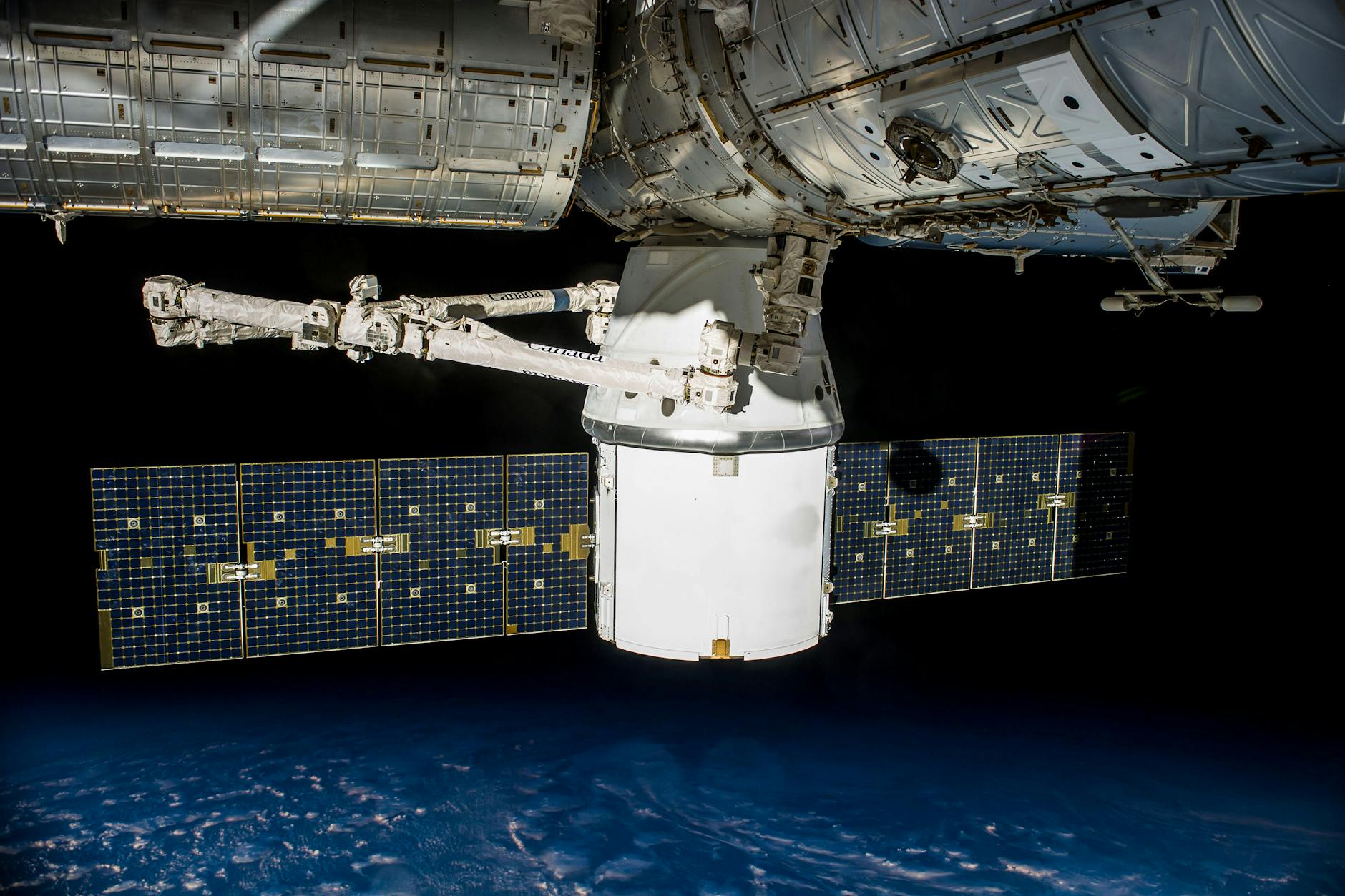
AST SpaceMobile's core differentiator lies in its "space-based cellular broadband network accessible directly by everyday smartphones." This means users don't need specialized satellite phones or bulky terminals; their existing mobile devices can connect directly to ASTS satellites. This capability is enabled by its next-generation Block 2 BlueBird satellites, which feature the largest commercial phased array antennas ever deployed in low Earth orbit (LEO), spanning an unprecedented 2,400 square feet. This massive antenna size is critical for establishing a strong enough link with standard handsets on the ground, setting a new standard for advanced connectivity and performance.

This direct-to-device approach positions AST SpaceMobile uniquely against established satellite communication players and emerging LEO constellations. Competitors like SpaceX's Starlink and Globalstar primarily offer satellite internet services that require dedicated user terminals or specialized devices. While Starlink has achieved significant scale, its model is different, focusing on high-speed internet for fixed locations or specialized mobile units. ASTS aims to fill the "connectivity gaps" for the five billion mobile subscribers who currently experience dead zones, and to bring broadband to billions more who remain unconnected, directly through their existing phones.

The company's technology, backed by over 3,500 patent and patent-pending claims, offers robust, resilient, and scalable solutions. This extensive intellectual property portfolio is a significant competitive moat, protecting its innovative architecture. The dual-use nature of its technology, serving both commercial mobile network operators and government entities like the SDA, further diversifies its market potential. By eliminating the need for new hardware, ASTS aims to seamlessly integrate with existing mobile networks, enhancing current services and enabling new use cases for ubiquitous connectivity, from remote emergency services to defense applications.

What Are the Key Risks and Opportunities for ASTS Investors?

Investing in AST SpaceMobile presents a compelling blend of high-reward potential and significant risks. On the opportunity side, the addressable market is enormous. The vision of eliminating cellular dead zones globally and connecting billions of currently unserved populations directly through their smartphones is transformative. Government contracts, such as the recent $30 million SDA award and the prior $43 million contract, validate the technology's strategic importance and provide early revenue. Analysts have taken note, with a consensus price target of $94.90 and a median of $98.50, suggesting substantial upside from the current $84.77 share price. Institutional ownership has also been bullish, injecting $2.04 billion over the past 12 months.

However, the risks are equally substantial. AST SpaceMobile is still in its early commercialization phase, evidenced by its minimal TTM revenue of $0.07 and deep operating losses. The company's ambitious goal of deploying 45-60 satellites in orbit by the end of 2026 faces considerable execution challenges, including potential launch delays and the sheer complexity of manufacturing and deploying such a sophisticated constellation. Recent reports suggest the company is at risk of missing its Q1 launch targets, which could impact investor confidence and further delay revenue generation.

Financing remains a critical concern. The company recently issued approximately $1.0 billion of convertible notes, which, while extending its cash runway, introduces potential dilution risk for existing shareholders upon conversion. Furthermore, ASTS operates in a highly competitive environment, facing off against well-capitalized rivals like SpaceX's Starlink and Globalstar. Macroeconomic headwinds, including rising interest rates and capital market volatility, could also impact its ability to secure future funding or increase the cost of capital. The company's stock has experienced significant volatility, with multiple double-digit pullbacks even amidst its impressive 248.6% surge over the past year.

Is ASTS a Buy, Hold, or Sell Given Recent Developments?

The recent $30 million SDA contract, while positive, doesn't fundamentally alter the highly speculative nature of AST SpaceMobile as an investment. The company's stock, currently trading at $84.77, has seen a remarkable 248.6% increase over the past year, reflecting the market's excitement about its long-term potential. However, this enthusiasm must be tempered by a realistic assessment of its financial health and operational hurdles. The TTM P/S ratio of 1861.34 clearly indicates that investors are betting heavily on future growth, not current performance.

Wall Street analysts hold a mixed-to-positive view, with a consensus rating of "Buy" from 7 analysts, but this includes 2 "Hold" and 2 "Sell" ratings, reflecting diverse opinions. The average price target of $94.90 suggests some upside, but the wide range from $45.60 to $137.00 highlights the uncertainty surrounding its valuation. Recent analyst downgrades, such as B. Riley Securities moving from "Buy" to "Neutral" in January 2026, indicate a cautious stance as the company navigates its launch schedule and capital needs.

For investors with a high-risk tolerance and a long-term horizon, AST SpaceMobile could be a speculative "Buy" based on its disruptive technology and massive market opportunity. The government contracts provide a crucial layer of validation and early revenue, signaling confidence in its capabilities. However, for those seeking profitability or less volatility, a "Hold" or even "Sell" might be more appropriate. The company's significant losses, high capital requirements, and intense competition mean that any investment carries substantial risk. Monitoring its progress on satellite launches, securing additional commercial partnerships, and managing its cash burn will be critical in the coming quarters.

AST SpaceMobile remains a high-stakes bet on the future of global connectivity. Its innovative technology and government validation are strong tailwinds, but the path to sustained profitability is long and capital-intensive. Investors should approach ASTS with a clear understanding of the risks and a readiness for continued volatility as the company strives to transform its ambitious vision into a commercial reality.


Want deeper research on any stock? Try Kavout Pro for AI-powered analysis, smart signals, and more. Already a member? Add credits to run more research.

SHARE THIS ON:

Related Articles

Category

You may also like

Stock News3 days ago

Can AST SpaceMobile's HALO Contract Strengthen Its Defense Footprint?

AST SpaceMobile secured a $30 million Space Development Agency contract to deploy BlueBird LEO satellites, advancing direct-to-device defense communications capabilities.
Stock News1 week ago

Is Palantir's Latest U.S. Government Win a Game Changer?

Palantir Federal Cloud Service (PFCS) Forward received a Defense Information Systems Agency authorization, enabling existing DoD users to expand use cases by removing red tape.
Stock News1 week ago

Is IonQ Stock Your Ticket to Becoming a Millionaire?

IonQ, a quantum computing company, is highlighted as an intriguing investment due to its reported lead in accuracy within the emerging sector.
Stock News2 months ago

How Transformative Is Innodata's Expansion Into Pretraining Data?

Innodata's new focus on pretraining data is reshaping its corporate strategy, leading to the acquisition of tens of millions in new contracts by addressing core AI model builder requirements.

Breaking News

View All →

Top Headlines

View More →
Stock News1 hour ago

Oddity Tech: Contrarian 'Buy' After Meta's Shock Craters Investors' Sentiment

Stock News2 hours ago

Prediction: The AI Capex War Will Create a Clear Winner by the End of 2026

Stock News2 hours ago

All the Ways Netflix Actually Won Even Though It Lost Warner

Stock News2 hours ago

Got $5,000? 1 Tech Stock to Buy and Hold for the Long Term.

Stock News2 hours ago

NVIDIA: I'm Buying Post Earnings