




MarketLens
Is Bionano Genomics' Optical Genome Mapping a Game-Changer for Genetic Diagnostics

Key Takeaways
- Bionano Genomics' Optical Genome Mapping (OGM) technology is gaining significant clinical traction, evidenced by a two-fold increase in studies presented at ACMG 2026 and a 56% surge in Q1 2026 publications on rare diseases.
- New Category I CPT codes, effective January 1, 2026, have substantially boosted OGM reimbursement rates for hematologic malignancies by 47% to $1,853.22, removing a major barrier to broader clinical adoption.
- Despite promising technological advancements and market growth projections, Bionano faces considerable financial challenges, including negative margins and declining revenue, making execution on commercialization crucial for long-term viability.
Is Bionano Genomics' Optical Genome Mapping a Game-Changer for Genetic Diagnostics?
Bionano Genomics (NASDAQ: BNGO) is positioning its Optical Genome Mapping (OGM) technology as a transformative solution in genetic diagnostics, capable of detecting structural variants (SVs) that often elude traditional methods. Recent clinical study results, particularly those highlighted at the 2026 American College of Medical Genetics and Genomics (ACMG) Annual Meeting, underscore OGM's superior detection rates for complex genetic disorders. This growing body of evidence, coupled with critical advancements in reimbursement, suggests OGM is moving from a research tool to a potential standard-of-care in clinical laboratories.
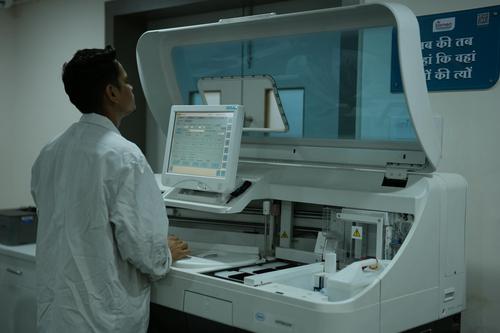
The company's OGM solutions, including the Saphyr and Stratys systems, address a significant gap in genomic analysis by providing high-resolution, whole-genome structural variant detection. Traditional methods like karyotyping, FISH, and chromosomal microarrays (CMA) often lack the digital precision and efficiency needed to resolve SVs at scale, while next-generation sequencing (NGS) struggles with larger structural variants and highly repetitive genomic regions. OGM fills this void, offering a single platform that combines the diagnostic capacity of these legacy methods, detecting alterations larger than 500 base pairs.
The clinical community is increasingly recognizing OGM's utility. Bionano recently announced a two-fold increase in OGM studies presented at the 2026 ACMG Annual Meeting compared to the previous year, with 12 studies illustrating its power across cancer genomics and constitutional genetic disorders. This surge in validation is not isolated, as the company also reported a 56% increase in publications describing OGM's utility in rare diseases in Q1 2026 versus Q1 2025. Such robust scientific endorsement is critical for driving adoption in diagnostic labs, as it builds confidence in OGM's accuracy and comprehensive capabilities.
This scientific momentum is further bolstered by strategic partnerships and infrastructure developments. Bionano expanded its manufacturing capabilities with a new U.S. facility in January 2025 to meet growing global demand, particularly from clinical and academic research sectors. Moreover, collaborations like the one with a global contract research organization to offer genome mapping as a service for pharma trials are broadening OGM's reach into drug development pipelines, expanding its market beyond direct instrument sales to a more integrated service model.
How Are Reimbursement Changes Impacting OGM Adoption?
The landscape for Optical Genome Mapping (OGM) adoption is undergoing a significant transformation, largely driven by crucial changes in reimbursement policies. Effective January 1, 2026, new Category I CPT codes for OGM have gone live, unlocking routine reimbursement pathways for structural variant analysis in both postnatal and prenatal whole genome applications. This is a monumental shift, as the lack of standardized reimbursement has historically been a major barrier preventing OGM from widespread integration into clinical diagnostic workflows.
Specifically, the payment determination for CPT code 81195, used for OGM in hematologic malignancy analysis, saw a substantial 47% increase to $1,853.22 for 2026. This repricing, following a unanimous vote by the clinical diagnostic laboratory test (CDLT) committee, reflects a recognition of the comprehensive data collection, interpretation, and reporting required for OGM-based blood cancer diagnostics. Such a significant boost in payment makes it considerably easier for labs, including Bionano Laboratories, to offer OGM-based laboratory developed tests (LDTs) as alternatives to legacy cytogenetics methods like karyotyping and FISH.
The impact of these codes extends beyond just financial viability; they also serve to raise awareness and support for OGM within the broader oncology and clinical genetic testing communities. As Bionano's Chief Medical Officer, Alka Chaubey, noted, the new payment level is appropriate for the additional data and insights OGM provides. This institutional validation is crucial for accelerating OGM's acceptance as a standard-of-care, not only in the United States but potentially globally as other regions observe these developments.
Beyond the U.S., health policy reforms in the EU and Canada have also introduced reimbursement frameworks for advanced genomic diagnostics, further lowering adoption barriers for OGM tools. These international shifts, combined with increased genomic funding in regions like Asia-Pacific (e.g., China’s 14th Five-Year Plan and India’s national genomics initiative), create a fertile ground for OGM market expansion. The convergence of these favorable reimbursement and funding trends is a powerful catalyst, moving OGM from a niche research tool to a more accessible and financially viable clinical diagnostic option.
What Does the Market Opportunity Look Like for Bionano Genomics?
The market for Optical Genome Mapping (OGM) is poised for substantial growth, presenting a compelling opportunity for Bionano Genomics, a key player in this evolving space. The global OGM market is projected to expand from $129.3 million in 2024 to over $536.4 million by 2030, representing a robust compound annual growth rate (CAGR) of nearly 27%. Another analysis estimates the market at $203.4 million in 2026, growing to $290 million by 2030 at a 5.7% CAGR between 2026 and 2033. This growth is driven by the limitations of next-generation sequencing (NGS) in detecting large structural variants, increased funding for genomic research, and the rising prevalence of genetic disorders.
Bionano's strategic positioning within this expanding market is critical. The company has been actively increasing its installed base of OGM systems, reporting a 9% increase to 379 units by the end of Q1 2025. This growing footprint indicates expanding adoption in both clinical and research settings. The fastest-growing applications for OGM are seen in clinical laboratories and biotechnology, with increasing revenue contributions as OGM technologies become integral to genomics. This shift towards more precise and efficient genomic analysis is fueling market expansion, fulfilling a rising demand for innovative genetic solutions.
The clinical diagnostics segment is expected to account for a substantial share of the OGM market, driven by its increasing implementation in genetic testing, oncology screening, and rare disease diagnosis. OGM's ability to detect large-scale structural variations and complex genomic rearrangements more accurately than traditional methods makes it a critical tool for comprehensive genomic analysis. As healthcare systems pivot towards precision medicine, the emphasis on early and accurate diagnosis, particularly for hereditary disorders and hematological malignancies, further solidifies OGM's market relevance.
Moreover, the adoption of cloud-based analysis solutions is significantly impacting the OGM market. These solutions allow researchers and healthcare organizations to access advanced genome mapping and analysis technologies without large upfront investments in infrastructure. This increased accessibility, coupled with powerful computing capabilities for large genomic datasets, is driving more organizations, especially smaller labs and research facilities, to utilize OGM technologies, thereby expanding the total addressable market for companies like Bionano.
What Are Bionano's Financial Health and Operational Challenges?
Despite the promising market opportunity and technological advancements, Bionano Genomics faces significant financial and operational hurdles that warrant careful consideration from investors. The company's current market capitalization stands at a modest $4.2 million, with its stock trading at $1.29, down 3.01% from its previous close of $1.33. This price is near the lower end of its 52-week range of $1.06 to $5.50, reflecting considerable volatility and investor uncertainty.
Bionano's financial fundamentals reveal a company still in its early growth and investment phase, characterized by negative profitability metrics. The trailing twelve months (TTM) show a P/E ratio of -0.27, a P/S ratio of 0.15, and a P/FCF of -0.26, indicating that the company is not yet generating consistent profits or positive free cash flow. Gross margins are relatively low at 22.0%, while operating and net margins are deeply negative at -116.9% and -92.6%, respectively. This suggests high operational costs relative to revenue, a common challenge for biotech firms investing heavily in R&D and market penetration.
The company's revenue growth has also seen recent headwinds, with a year-over-year (FY2025) decline of -7.4%. While net income and EPS growth show positive figures of 76.4% and 94.5% respectively for FY2025, these are improvements from a very low base and do not signify profitability. The EPS for the TTM period remains negative at -$4.85, and revenue per share is only $5.24. This financial profile underscores the critical need for Bionano to translate its technological leadership and market potential into sustainable revenue growth and, eventually, profitability.
Operational challenges also include the high costs associated with implementing OGM technologies, limited awareness among healthcare professionals, and technical complexities in data interpretation. While the new CPT codes are a positive step, the pace of payer and lab adoption remains a key variable. Bionano must execute flawlessly on its commercialization strategy, including the deployment of its high-throughput Stratys systems and the expansion of its service offerings through Bionano Laboratories, to capture the early, steep part of the OGM market's S-curve and improve its financial standing.
What Does This Mean for Investors in Bionano Genomics?
For investors considering Bionano Genomics, the current landscape presents a high-stakes, high-reward scenario. The company's Optical Genome Mapping technology is undeniably innovative and clinically validated, addressing a critical unmet need in genetic diagnostics. The recent surge in scientific publications and presentations at prestigious conferences like ACMG 2026, coupled with a 56% increase in Q1 2026 rare disease publications, provides strong evidence of OGM's superior detection capabilities for structural variants. This scientific momentum is a powerful long-term driver for adoption.
The crucial development of Category I CPT codes, effective January 1, 2026, for OGM testing, particularly the 47% increase in reimbursement for hematologic malignancies to $1,853.22, removes a significant barrier to clinical integration. This infrastructure change is a game-changer, potentially accelerating OGM's transition from a research tool to a routine diagnostic method. The market opportunity is substantial, with projections indicating the OGM market could grow to over $536.4 million by 2030, driven by the shift towards precision medicine and the limitations of traditional sequencing methods.
However, investors must weigh these opportunities against Bionano's precarious financial health. The company is currently operating at a loss, with negative gross, operating, and net margins, and declining revenue growth of -7.4% in FY2025. Its market cap of $4.2 million and current stock price of $1.29 reflect the inherent risks associated with early-stage biotech companies. While the company has a decent current ratio of 1.98, indicating short-term liquidity, its heavy reliance on future financing to fund strategic plans and commercialization efforts remains a concern.
The key for Bionano will be execution. The company needs to effectively leverage the new reimbursement codes to drive widespread adoption of its OGM systems and services, converting scientific validation into robust revenue growth. Watch for commercial uptake of new services, such as Baylor Genetics' OGM data release, which signals a maturing ecosystem. While the path from validation to clinical adoption is now clearer, the next few quarters will be critical in determining if these catalysts translate into sustainable financial performance and a stronger market position.
Bionano Genomics stands at a pivotal juncture, with its groundbreaking OGM technology poised to revolutionize genetic diagnostics. While the scientific validation and favorable reimbursement changes offer a compelling bull case, the company's financial challenges demand vigilant monitoring. Investors should carefully assess Bionano's ability to capitalize on its market opportunity and translate innovation into profitable growth in the coming quarters.
Want deeper research on any stock? Try Kavout Pro for AI-powered analysis, smart signals, and more. Already a member? Add credits to run more research.
Related Articles
Category
You may also like


Bionano Announces Largest OGM Study of T-Cell Acute Lymphoblastic Leukemia

10x Genomics, Inc. (TXG) Presents at Bank of America Global Healthcare Conference 2026 Transcript

HiFi Solves Sub-fertility Consortium in Asia Pacific Reports First Major Study Using HiFi Long-Read Sequencing to Investigate Unexplained Subfertility and Recurrent Pregnancy Loss
Breaking News
View All →Featured Articles
Top Headlines

Are Investors Overlooking Meta Platforms Stock?

Why Microsoft Stock Slipped Today

Microsoft (MSFT) Stock Falls Amid Market Uptick: What Investors Need to Know

Amazon Adds AI Image Search to Its Shopping App