MarketLens

Log in

Is Bitcoin's Recent Dip a Buying Opportunity or a Trap

2 days ago
SHARE THIS ON:

Is Bitcoin's Recent Dip a Buying Opportunity or a Trap

Key Takeaways

  • Bitcoin's current price action, marked by high volatility but limited net movement, suggests a critical juncture for the cryptocurrency.
  • Large holders, or "whales," are actively selling into rallies after short-term accumulations, signaling caution and profit-taking.
  • Retail investors are consistently buying dips, a pattern that historically precedes further market corrections when whales are distributing.

Is Bitcoin's Recent Dip a Buying Opportunity or a Trap?

Bitcoin is currently trading around $67,283.61, reflecting a modest 1.99% increase today, yet the broader picture reveals a market grappling with significant volatility and conflicting signals. Over the past month, Bitcoin has swung wildly, touching $60,000 on February 6th, surging to $74,000 by March 5th, only to retrace back below $68,000 just days later. This immense intra-week movement, coupled with a near-zero net change on a monthly basis, paints a frustrating picture for many investors.

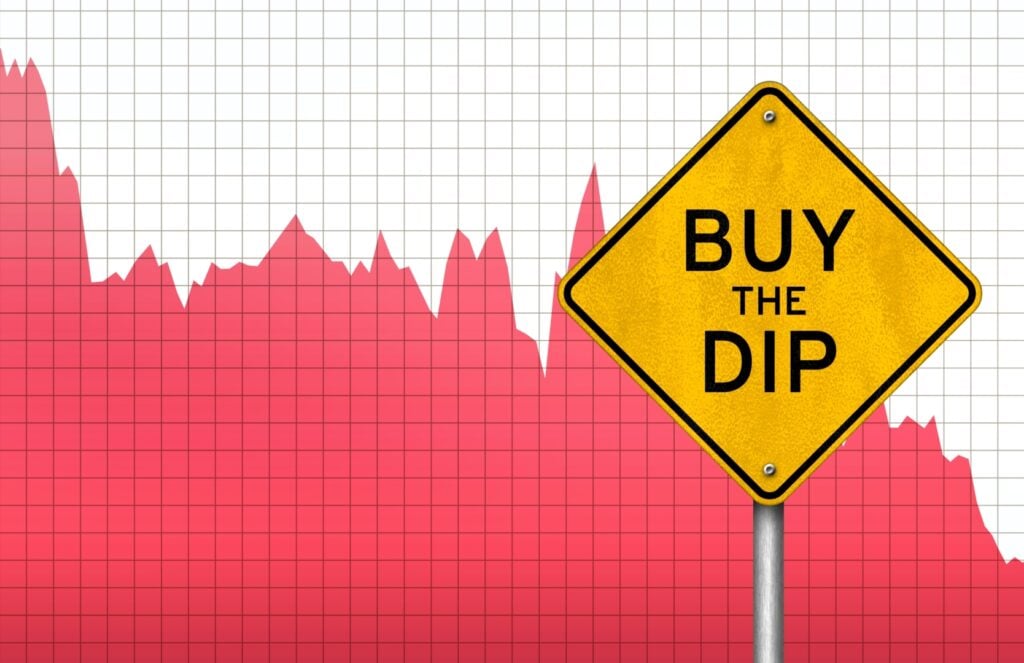
This choppy price action is not random; it's a direct consequence of a stark divergence in behavior between Bitcoin's largest holders, often called "whales," and smaller, retail investors. While whales have been observed accumulating during panic-driven sell-offs and then distributing into subsequent rallies, retail investors appear to be consistently "buying the dip" as prices slide. This pattern, where retail buys while whales sell, has historically served as a bearish signal, suggesting that a market correction may not yet be over.

The widely-tracked Crypto Fear and Greed Index recently plummeted to 12, deep within "extreme fear" territory. This reading is one of the lowest since the October crash, highlighting widespread investor anxiety. Such extreme sentiment often coincides with market bottoms, but when coupled with the observed on-chain dynamics, it raises questions about whether this dip is a genuine buying opportunity or a cleverly set bear trap designed to ensnare eager retail capital.

Understanding this dynamic is crucial for navigating Bitcoin's immediate future. The market is at a crossroads, with the potential for either a decisive breakout above $74,000 or a deeper test of the $60,000 support level. The actions of these distinct investor cohorts will likely dictate which path Bitcoin takes next, making on-chain analysis more critical than ever.

What Are Bitcoin Whales Really Doing?

Bitcoin whales, typically defined as wallets holding between 10 and 10,000 BTC, are the market's most influential players, and their recent movements paint a clear picture of strategic profit-taking. These large holders demonstrated aggressive accumulation between February 23rd and March 3rd, a period when Bitcoin traded between $62,900 and $69,600. This window notably covered the worst of the Iran-related sell-off and the initial stages of the subsequent recovery, indicating smart money buying into panic.

However, as Bitcoin rebounded sharply to $74,000 on March 5th, these same whale wallets began to offload their positions. Santiment data reveals that they sold roughly 66% of what they had just accumulated in the preceding days. This behavior confirms a pattern of whales using market liquidity at local tops to exit positions, effectively selling into strength generated by broader market optimism. A massive spike in transactions valued at $1 million+ occurred precisely as Bitcoin hit its local top, reinforcing the notion of whale profit-taking.

This isn't an isolated incident; it's a recurring theme. While some reports from late 2025 suggested whale accumulation, the more recent data from early March 2026 shows a decisive shift. The overall trend since Bitcoin's October peak indicates that larger holders have been net sellers, reducing their positions by approximately 0.8%. This persistent distribution from large wallets, especially after short-term accumulations, creates a ceiling for rallies and suggests a lack of conviction for sustained upward momentum.

The implication is clear: smart money is not currently betting on an immediate, powerful breakout. Instead, they are leveraging volatility to secure profits, suggesting a cautious outlook on Bitcoin's near-term price trajectory. For a sustained rally to materialize, this distribution from large wallets needs to cease, or ideally, reverse into a clear accumulation phase.

Why Are Retail Investors Still Buying the Dip?

While whales have been strategically taking profits, retail investors, characterized by wallets holding less than 0.01 BTC, have moved in the opposite direction, steadily increasing their positions as Bitcoin slipped back below $70,000. This "buy the dip" mentality among smaller holders is a classic pattern, but in the current market context, it raises concerns. Wallets holding less than 0.1 BTC have increased their share of the total supply to its highest level since mid-2024, demonstrating consistent accumulation despite price declines.

Several factors contribute to this persistent retail buying. Dollar-cost averaging (DCA) strategies have gained significant traction, encouraging consistent purchases regardless of price movements. The increased accessibility of cryptocurrencies through various exchanges and investment platforms has also lowered barriers to entry, making it easier for everyday investors to participate. Furthermore, some retail investors genuinely view current price levels as attractive long-term entry points, undeterred by short-term market weakness or geopolitical tensions.

However, market veterans often caution that retail accumulation during a phase of whale distribution has historically preceded challenging market conditions for smaller investors. This dynamic creates what technical analysts describe as a "distribution phase," where assets transfer from "strong hands" (whales) to "weak hands" (retail). The collective buying power of retail, while significant, often struggles to sustain rallies against persistent selling pressure from larger entities.

The current situation highlights a fundamental disconnect: retail is doing its part by providing a floor and sparking short-term momentum, but without the sustained participation and accumulation from larger players, these rallies tend to be limited. The enthusiasm of smaller investors, while a testament to Bitcoin's long-term appeal, may inadvertently be providing the liquidity for whales to exit, potentially setting up a difficult period for those chasing bounces.

What Does This Divergence Mean for Bitcoin's Price Trajectory?

The stark divergence between whale selling and retail buying creates a precarious market structure for Bitcoin, suggesting that the current dip may not be over. This pattern is a classic "distribution phase," where assets are transferred from sophisticated, large holders to less experienced retail investors. Historically, such phases often resolve in one of two ways: either through significant price declines that force retail capitulation, or extended sideways movement that tests investor patience to its limits.

With approximately 43% of Bitcoin's total supply now sitting at a loss, every price push higher runs into a wall of sellers. These are holders who have been underwater for weeks or months and are looking to break even rather than ride a potential rally. This dynamic was clearly observed when Bitcoin touched $74,000; the bounce was met with a flood of supply from both whales taking profit and underwater holders exiting at their cost basis. This creates a "liquidity trap" where retail demand is overwhelmed by persistent distribution, preventing sustained momentum.

The market is currently trapped in a narrow range, roughly between $61,000 and $72,000, and has been down 14% in February and 40% from its October peak. While on-chain data points to a flow-implied fair value near $95,000, suggesting a substantial 41% discount, the price cannot break out until the underlying demand catches up. This requires a decisive flip in whale behavior from distribution to accumulation. Until then, the path of least resistance remains downwards, with the critical $61,000 support level under constant pressure.

The current setup is high-risk, high-reward. The market needs to absorb the underwater supply and exhaust the selling pressure from whales. If retail runs out of capital before whale accumulation resumes, the $60,000 floor could be tested for real. Conversely, if the selling exhausts itself and whales re-enter, Bitcoin could finally break out with conviction.

Broader Market Context: ETF Flows, Geopolitics, and MVRV

Beyond the on-chain dynamics of whales and retail, several broader market factors are influencing Bitcoin's current trajectory. Institutional interest, particularly through spot Bitcoin ETFs, has been a significant narrative driver. However, this narrative has recently faced headwinds. After weeks of inflows, Bitcoin ETFs recorded $227.9 million in outflows on March 5th, followed by a substantial $349 million outflow on March 6th, led by Fidelity’s Wise Origin Bitcoin Fund with a $159 million withdrawal. This shift in institutional sentiment, marked by a five-week red streak for spot Bitcoin ETFs, signals a cooling of institutional enthusiasm.

Geopolitical tensions are also playing a crucial role in reducing overall risk appetite. Recent violent conflicts involving the US, Israel, and Iran have triggered a new wave of market fear, impacting global equities and, by extension, risk assets like Bitcoin. The news of Bitcoin slumping to $66,000 as oil price spikes rattled Asian stock markets underscores this interconnectedness. While cryptocurrencies sometimes defy traditional market movements, sustained global instability typically leads to a flight to safety, away from volatile assets.

Despite these short-term bearish signals, some long-term on-chain metrics suggest the macro bull case remains intact. Bitcoin's supply on exchanges has hit five-year lows, with only 11.9% of the total supply held on exchanges. This reduction in available supply, if coupled with renewed demand, could fuel future price appreciation. The 365-day Market Value to Realized Value (MVRV) ratio, a long-term indicator, sits at -28.5%, while the 30-day MVRV is near 0%. Long-term accumulation is statistically safer when both short and long-term MVRV ratios are negative, suggesting that while the short-term picture is cloudy, the longer-term value proposition might be strengthening.

This complex interplay of institutional flows, geopolitical events, and underlying on-chain health creates a challenging environment. While long-term metrics offer a glimmer of hope, the immediate future is heavily influenced by the prevailing risk-off sentiment and the critical divergence in investor behavior.

Key Indicators to Watch for Bitcoin's Next Move

Given the current market complexities, investors should closely monitor several key indicators to gauge Bitcoin's next move. The most critical factor remains whale wallet movements. A decisive reversal from the current distribution phase to sustained accumulation by large holders would be a powerful bullish signal. This would involve whale holdings flattening or, ideally, beginning to rise, indicating that smart money is re-entering the market with conviction.

Secondly, ETF flows will continue to be a crucial barometer of institutional sentiment. A sustained return to net inflows, particularly from major funds, would signal renewed institutional confidence and provide significant buying pressure. Conversely, continued outflows would confirm a bearish shift and likely exacerbate selling pressure. Watching Monday's ETF flows closely, as suggested by analysts, will be key to confirming any shift in institutional sentiment.

Thirdly, retail sentiment metrics and exchange net flows should be observed. While retail accumulation during a whale distribution phase is typically bearish, a capitulation event from retail, marked by significant outflows from smaller wallets, could signal a market bottom. Conversely, if retail continues to buy aggressively without whale support, it could prolong the distribution phase. Monitoring retail address growth rates and social media discussion volume can provide insights into their conviction or complacency.

Finally, critical support and resistance levels must be watched closely. Bitcoin's ability to hold the $61,000 support level is paramount. A break below this could trigger further downside, potentially leading to a test of $60,000 or lower. On the upside, a sustained breakout above $74,000 with significant volume and whale accumulation would signal a potential end to the current correction and the resumption of an upward trend. The market is waiting for coordinated whale accumulation to close the 41% discount to its flow-implied fair value.

Bitcoin is at a pivotal moment, caught between short-term bearish signals and long-term fundamental strength. The immediate future hinges on a shift in whale behavior and a return of institutional conviction. Until then, caution remains the prudent approach.


Want deeper research on any stock? Try Kavout Pro for AI-powered analysis, smart signals, and more. Already a member? Add credits to run more research.

SHARE THIS ON:

Related Articles

Category

You may also like

Crypto News5 days ago

Was $74K a bull trap? Bitcoin traders diverge on 2022 crash repeating

Bitcoin's rebound to $74,000 sparked disagreement among traders regarding whether the BTC price bottom is established, leading to divergent market views.
Crypto News5 days ago

Ethereum Price Brutal Bull Trap? Or Last Cheap Buying Opportunity?

Ethereum price action is currently being analyzed around the $2,160 level to determine if the market faces a bull trap or presents a final low-cost buying opportunity.
Crypto News2 months ago

Bitcoin Uncertain: Are Conflicting On-Chain Signals Pointing to Risk or Opportunity?

Bitcoin's MVRV Z-Score suggests slight undervaluation for potential accumulation, contrasting with Binary CDD data that signals ongoing distribution by large participants.
Crypto News2 months ago

Why Bitcoin's $3K flash drop might be another buying opportunity

Bitcoin experienced a recent $3K flash drop, raising questions about whether the movement reflects a temporary market reaction or a significant test of investor conviction.

Breaking News

View All →

Top Headlines

View More →
Stock News5 minutes ago

CPI Keeps Steady at +2.4% YoY

Stock News15 minutes ago

Oracle Has A New Price Target of $240

Stock News21 minutes ago

Nebius Stock: Knighted By Nvidia, Here's What Comes Next

Stock News23 minutes ago

Oracle's stock surges. Here's how it finally left the AI penalty box.

Stock News26 minutes ago

Meta Will Deploy Four New In-House Chips to Handle AI Workloads