MarketLens
Is Boeing's Recent China Deal a Win or a Miss for Investors

Key Takeaways
- Boeing's stock performance on May 15, 2026, saw a notable decline despite a 200-jet order from China, primarily due to market expectations for a much larger deal of around 500 aircraft being "priced in."
- While the China deal reopens a crucial market, Boeing faces significant operational challenges including a $47.2 billion debt load, ongoing 777X program delays to 2027, and a live jury trial related to 737 MAX safety allegations.
- Despite these headwinds, analysts maintain a "Moderate Buy" consensus with an average price target of $259.80, suggesting a potential 17.80% upside from the current $220.61 share price, driven by expected free cash flow recovery in 2026.
Is Boeing's Recent China Deal a Win or a Miss for Investors?
Boeing (NYSE: BA) shares, currently trading at $220.61 as of May 18, 2026, experienced a perplexing dip of nearly 5% on May 15, 2026, despite President Trump's announcement of a 200-jet order from China. This counterintuitive market reaction stems from deeply entrenched investor expectations: the market had largely "priced in" a significantly larger deal, with reports from sources like Bloomberg and estimates from Jefferies analysts suggesting a package of around 500 Boeing 737 MAX jets. When the actual announcement fell short of this high bar, the positive news was overshadowed by disappointment, leading to a sell-off.
The concept of "priced in" is critical here. Investors had already factored a substantial China order into Boeing's valuation, anticipating a major geopolitical breakthrough that would significantly bolster its commercial backlog. Boeing CEO Kelly Ortberg himself had hinted at a "big number" on a recent earnings call, further fueling these expectations. The 200-jet figure, while substantial on its own and marking the first major Chinese order in nearly a decade, was perceived as a "miss" against the backdrop of a 500-plane rumor. This dynamic highlights how investor sentiment, often driven by speculative reports and management hints, can dictate short-term stock movements more than the intrinsic value of the news itself.
Moreover, the lack of specific details surrounding the 200-jet deal added to investor skepticism. There were no disclosed operator names, no confirmed aircraft types, and no firm delivery timelines, leading BNP Paribas aerospace analyst Matt Akers to state that "investors are interpreting this as being less than hoped for." This ambiguity, coupled with the historical volatility of U.S.-China trade relations, means the market is applying a "geopolitical discount" to these orders. Until firm contracts are signed and delivery schedules are public, these orders remain somewhat hypothetical, existing within the broader context of trade negotiations involving tariffs and other sensitive issues. This cautious stance reflects a market unwilling to fully commit to the upside until concrete execution details emerge.
What Does the China Order Mean for Boeing's Backlog and Future Growth?
While the 200-jet order from China disappointed against elevated expectations, it still represents a significant step in reopening a crucial market for Boeing. China, historically a major customer, accounted for approximately 25% of Boeing’s order book in the past but currently makes up only 2% of its backlog. This dramatic shift underscores the importance of re-establishing commercial ties. The country's aviation market is projected to need at least 1,000 imported jets just to maintain growth and replace aging aircraft, with long-term estimates suggesting a demand for 9,000 new jets by 2045. This pent-up demand presents a substantial opportunity for Boeing, especially as it competes fiercely with rival Airbus for market share.
However, the 200-jet deal itself constitutes only about 3% of Boeing's existing commercial backlog, which stood at 6,807 aircraft at the end of April 2026. The total company backlog hit a record $695 billion in Q1 2026. This context reveals that while the China order is symbolically important for market access, its immediate impact on Boeing's massive production pipeline is relatively modest. Furthermore, China's last significant Boeing order was a 300-jet deal worth over $37 billion in 2017, making the current 200-plane announcement appear smaller in scale compared to previous engagements. This numerical comparison reinforces the market's initial disappointment, as it signals a potential step backward in geopolitical leverage rather than a significant leap forward.
Despite the tempered enthusiasm, the reopening of the Chinese market is a long-term positive catalyst. Boeing delivered 600 commercial aircraft in 2025, its best year since 2018, and secured over 1,100 new orders, building a record $567 billion commercial backlog. Management is pushing to increase production rates for both the 737 MAX and 787 programs, targeting 47 737 MAXs per month by summer 2026 and aiming for 52 per month as the supply chain stabilizes. The company plans to deliver around 500 737 MAX aircraft in 2026, up from 447 in 2025, and 90-100 787s, up from 88 last year. The China deal, if it leads to follow-on orders and strengthens the commercial relationship, could contribute to this production recovery and bolster the long-term case for Boeing stock, even if the initial announcement was underwhelming.
What Are the Key Headwinds Spooking Boeing Investors?
Beyond the China deal disappointment, Boeing faces a confluence of significant operational and legal challenges that are actively spooking investors. A major concern is the company's substantial total debt of $47.2 billion. This heavy debt load leaves little margin for execution error and could constrain future investments or share buybacks, even as the company aims for financial recovery. While management is focused on reducing this debt, it remains a persistent overhang, particularly given the ongoing need for capital investment in new aircraft development and production ramp-ups.
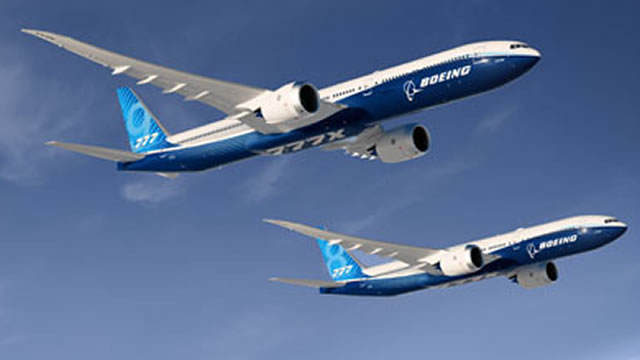
Adding to the financial strain are persistent program delays. The 777X program, a critical next-generation widebody jet, has been delayed to 2027, incurring over $15 billion in charges. These delays mean years of continued cash burn for the program without the offsetting revenue from deliveries, directly impacting Boeing's free cash flow (FCF). The company reported negative $1.5 billion in FCF in a recent period, indicating it is still burning cash despite signs of recovery. While management is guiding for $1 billion to $3 billion in positive free cash flow in 2026, achieving this target is crucial for demonstrating financial stabilization and alleviating investor concerns about liquidity.
Furthermore, Boeing is grappling with significant legal uncertainty. LOT Polish Airlines has initiated a landmark jury trial in Seattle, marking the first airline lawsuit tied to the 737 MAX crashes to reach a public courtroom. LOT alleges Boeing concealed safety flaws in the MCAS flight control system to secure a 2016 deal. A verdict against Boeing in this trial could open the floodgates for similar lawsuits from other carriers globally, potentially leading to billions in additional damages and further reputational damage. This legal battle, combined with the FAA's capped 737 MAX production at 42 aircraft per month (below Boeing's target of 47/month by summer 2026), highlights the ongoing regulatory scrutiny and execution challenges that continue to weigh heavily on investor sentiment.
Is Boeing's Financial Recovery on Track for 2026?
Despite the recent stock dip and ongoing challenges, Boeing's Q1 2026 results showed tangible signs of financial healing. The company reported revenue of $22.2 billion, a 14% year-over-year increase, and a net loss that narrowed significantly to $7 million, compared to a $31 million loss a year ago. This improvement in top-line growth and reduced losses indicates that the business is indeed on a recovery path, moving away from the deeper financial troughs experienced in previous years. Management's guidance for $1 billion to $3 billion in positive free cash flow (FCF) in 2026 is a critical target, as it would mark the first time Boeing has generated positive FCF in several years, signaling a crucial turning point in its financial health.
Analysts at TD Cowen, for instance, are bullish on Boeing's FCF growth potential, with analyst Gautam Khanna naming Boeing one of the firm's "Best Ideas for 2026." TD Cowen models FCF of $2.8 billion in 2026, rising to $7.7 billion in 2027 and $11.7 billion in 2028. This optimistic outlook is predicated on "improving execution, accelerating production, and a multiyear free-cash-flow ramp" that they believe the market is underestimating. Key catalysts for this FCF ramp include rate hikes on the 737 and 787 programs, certification milestones for the 777X and 737-7/10, and improving margins within Boeing Defense, where most cash outflows tied to $3 billion in charges are expected to end in 2026.
However, the path to full recovery is not without hurdles. While the business is "healing," it is not yet "healed." The $47.2 billion debt load remains massive, and free cash flow is still negative in some periods. The 777X program is years behind schedule, and the live jury trial related to the 737 MAX adds legal uncertainty that is difficult to quantify. Investors should view Boeing as a recovering company with real 2026 momentum, supported by its record $695 billion backlog and climbing production rates. The China deal, despite its initial market reception, is still the first major Chinese commercial win in nearly a decade, potentially paving the way for future orders. The focus for investors should be on the company's ability to consistently deliver on its FCF guidance and resolve its operational and legal challenges.
What's the Consensus Among Analysts and What Does it Mean for BA Stock?
Analyst sentiment for Boeing (BA) is broadly positive, with a "Moderate Buy" consensus rating based on the latest research. Of 24 analysts who have issued ratings in the last 12 months, 17 have given a Buy rating, 4 a Hold, and 3 a Sell. This indicates a prevailing optimistic view on the stock's future performance. The average 12-month price target for BA is $259.80, representing a potential 17.80% upside from the current price of $220.61. The highest price target is $298.00 (issued by Bernstein on January 15, 2026), while the lowest is $140.00 (issued by Wells Fargo on April 24, 2025).
Recent analyst updates reinforce this positive outlook. On May 18, 2026, Citi raised its price target for Boeing to $260.00, framing the recent aerospace selloff as a buying opportunity. Tigress Financial and Morgan Stanley also issued ratings on April 29, 2026, and April 23, 2026, respectively, contributing to an average price target of $268.33 from these three firms, implying a 21.86% upside. These ratings suggest that despite the recent China deal disappointment, analysts are focusing on Boeing's underlying recovery narrative, including improving execution and accelerating production rates.
The bullish case is further supported by the company's position as one-half of a commercial aerospace duopoly, offering multi-decade growth visibility. TIKR's valuation model, using a forecast of 10.8% annual revenue growth and 7.4% operating margins, projects the stock could reach $412 by December 2028, implying a total return of 76% from a price of $234. This projection assumes a P/E multiple expansion to 102.2x, reflecting improving fundamentals from its historical 64.2x average. While the stock's high valuation and debt load present risks, the consensus points to a company with significant medium- to long-term potential, especially if it can consistently deliver on its positive free cash flow forecasts and navigate its operational and legal challenges.
What Does This Mean for Investors?
Boeing presents a complex but potentially rewarding investment for long-term holders. While the recent market reaction to the China deal highlights the sensitivity to unmet expectations and geopolitical factors, the underlying recovery narrative, robust backlog, and analyst confidence suggest a positive trajectory. Investors should closely monitor Boeing's progress on its $1 billion to $3 billion positive free cash flow target for 2026, the resolution of the LOT Polish Airlines jury trial, and any further details or follow-on orders from China. The current price of $220.61 offers a compelling entry point for those willing to stomach short-term volatility in anticipation of the company's continued operational and financial healing.
Want deeper research on any stock? Try Kavout Pro for AI-powered analysis, smart signals, and more. Already a member? Add credits to run more research.
Related Articles
Category
You may also like


Trump-Xi Summit Puts Nvidia, Boeing And 500-Jet Deal In Focus

Boeing could finally reignite its China business. Will that breathe new life into its stock?

Up 20% Last Month, Boeing Is Transitioning From Crisis To Efficiency
Breaking News
View All →Featured Articles
Top Headlines

Red Apple Group Selects FirstService Residential to Manage The Residences at 400 Central

Apple to Bolster AI Capabilities in iOS 27

Tesla Just Hiked Model Y Prices for the First Time Since 2024. Time to Buy the Stock?

Nvidia Q1 Preview: Data Center Backlash