MarketLens

Log in

Is CleanSpark's Sustainable Bitcoin Mining a Game Changer

1 week ago
SHARE THIS ON:

Is CleanSpark's Sustainable Bitcoin Mining a Game Changer

Key Takeaways

  • CleanSpark (CLSK) is strategically positioned as a leader in sustainable Bitcoin mining, leveraging low-cost, clean energy to drive operational efficiency and market penetration.
  • The company is actively diversifying into high-performance computing (HPC) and AI data centers, aiming to transform its business model beyond the cyclical nature of Bitcoin.
  • Despite strong revenue growth and operational expansion, CLSK faces profitability challenges and capital intensity as it navigates the AI pivot and Bitcoin price volatility.

Is CleanSpark's Sustainable Bitcoin Mining a Game Changer?

CleanSpark (NASDAQ: CLSK) is carving out a distinctive niche in the volatile world of Bitcoin mining, positioning itself as a leader in sustainable digital infrastructure. The company's unwavering focus on clean, low-carbon energy and operational efficiency isn't just a marketing slogan; it's a core strategic advantage that enhances its market penetration and regulatory standing. By prioritizing renewable energy sources and grid-balancing initiatives, CleanSpark is not merely mining Bitcoin; it's building a resilient, future-proof compute platform.

This commitment to environmental, social, and governance (ESG) principles is a significant differentiator in an industry often scrutinized for its energy consumption. CleanSpark reports using over 90% clean, low-carbon energy to power its operations, a figure that resonates strongly with institutional investors increasingly focused on sustainability. This approach not only mitigates regulatory risks but also unlocks access to cheaper, more stable power contracts, directly impacting the company's bottom line. Their participation in utility demand-response programs, for instance, supports grid stability and can generate additional revenue streams, turning a potential liability into an asset.

The unit economics of CleanSpark's operations reflect this strategic focus. The company has achieved an impressive power cost of approximately $0.056 per kWh, placing it among the industry's lowest rates. This cost efficiency, combined with a 26% fleet efficiency increase year-over-year by 2025, allows CleanSpark to maintain healthier margins even when Bitcoin prices fluctuate. With an operational hashrate reaching 50 EH/s by June 2025 and plans to expand to 60 EH/s and beyond, CleanSpark is demonstrating its ability to scale efficiently while adhering to its sustainability mandate. This dual focus on growth and responsible energy use underpins its long-term value proposition.

How Does CleanSpark Achieve Such Low Power Costs and High Efficiency?

CleanSpark's ability to maintain industry-leading low power costs and high operational efficiency stems from a multi-faceted strategy centered on vertical integration, strategic site selection, and advanced technology. The company’s average power cost of approximately $0.056/kWh in 2025 is a testament to its disciplined energy procurement and infrastructure development. This isn't just about finding cheap electricity; it's about optimizing every aspect of energy consumption and conversion.

A key component of this efficiency is CleanSpark's extensive portfolio of over 30 rural U.S. sites, primarily in Georgia, Mississippi, Tennessee, and Wyoming. These locations are often chosen for their access to abundant, low-cost renewable energy sources and favorable regulatory environments. By owning and operating its infrastructure, CleanSpark gains vertical control over its energy supply and data center operations, allowing for rapid deployment and optimization. For example, by August 2025, CleanSpark had entered or advanced power contracts in excess of 1 GW, with 987 MW of contracted capacity by June 2025, of which 808 MW was actively utilized. This scale allows for significant purchasing power and operational leverage.

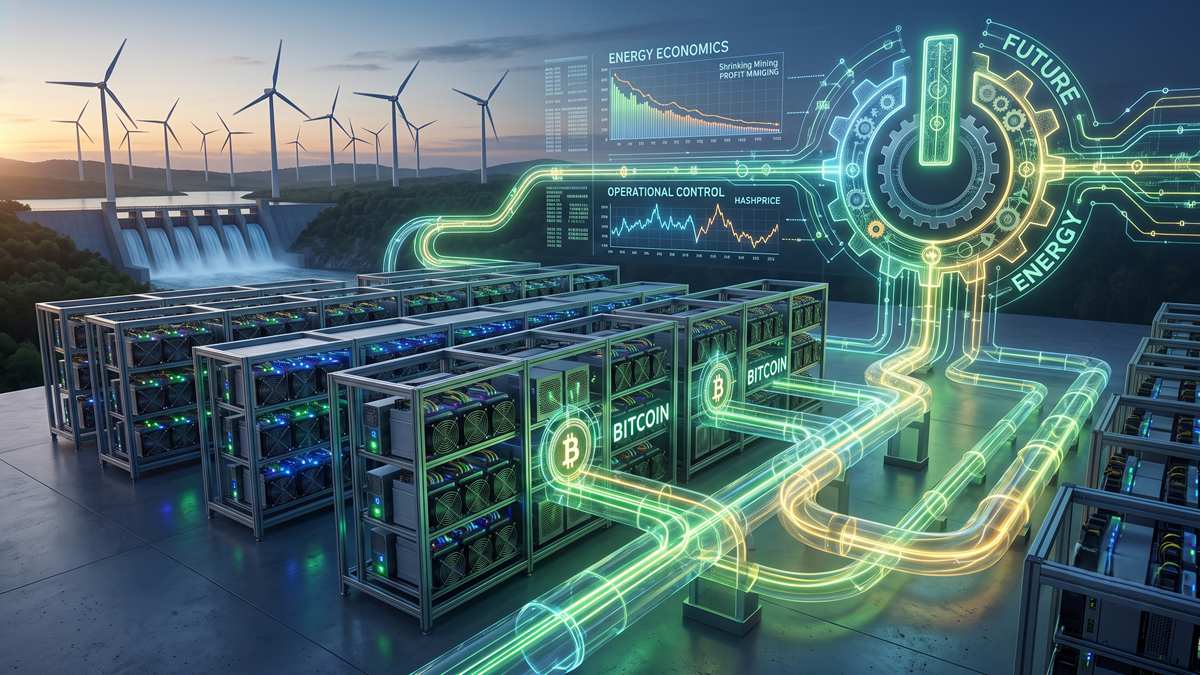
Technological innovation further enhances CleanSpark's efficiency. The company has made significant strides in fleet efficiency, improving to 16.07 J/TH (Joules per Terahash) and aiming for 13.5 J/TH through liquid immersion cooling. This technology not only reduces energy consumption per unit of computational power but also drastically cuts down on e-waste, with an 85% reduction highlighted in their ESG report. Immersion cooling also enables the development of liquid-cooled AI data centers, a critical step in their diversification strategy. These advancements underscore CleanSpark's commitment to continuous improvement in its core mining operations, ensuring it remains competitive even as Bitcoin mining difficulty increases.

Is CleanSpark's AI Pivot a Smart Diversification or a Costly Distraction?

CleanSpark's strategic pivot into high-performance computing (HPC) and AI data centers represents a significant evolution beyond its core Bitcoin mining operations. This move is driven by the intensifying economic pressures in Bitcoin mining, where hashprices remain near cyclical lows despite Bitcoin reaching highs above $123,500. The opportunity cost of dedicating megawatts to volatile Bitcoin mining versus stable, long-term AI leases has become increasingly apparent, prompting a sector-wide reallocation of capital.

The company aims to leverage its existing energy infrastructure and operational expertise to capture a share of the booming AI infrastructure market. CleanSpark has secured an additional $100 million Bitcoin-backed credit facility with Coinbase Prime to expand its energy and compute capacity, signaling a serious commitment to this diversification. With 1.5 GW of power access and agreements for 447 acres in Texas, including a 285 MW site targeting AI, CleanSpark is laying the groundwork for substantial HPC expansion. This pivot could transform CleanSpark into a hybrid energy-tech company, diversifying its revenue streams beyond the cyclical nature of Bitcoin.

However, this transition is not without its challenges and risks. While other miners like Cipher Mining (CIFR) have secured transformative, multi-billion-dollar, long-duration leases with hyperscalers like AWS, CleanSpark is still in "advanced discussions" for mega-leases. Until a significant hyperscaler deal is finalized, investors may continue to view CLSK primarily as a high-beta Bitcoin miner rather than a proven AI infrastructure play. The capital intensity of building out AI data centers, estimated at $9–$11 million per MW, combined with the need for continuous innovation and intense competition in both Bitcoin mining and HPC, will require substantial ongoing investment and disciplined execution.

What Does CleanSpark's Financial Health and Growth Trajectory Look Like?

CleanSpark's financial performance in fiscal year 2025 demonstrated robust growth, with revenue reaching approximately $766.3 million, a 102% year-over-year increase. This impressive top-line expansion was accompanied by a significant improvement in net income, which grew by 350.0% year-over-year, and EPS, which surged by 262.3%. The company's Q3 FY 2025 revenue alone was $198.6 million, up approximately 91% YoY, indicating strong operational momentum. These figures highlight CleanSpark's ability to scale its Bitcoin mining operations effectively and monetize its low-cost energy advantage.

However, a closer look at the trailing twelve months (TTM) financials reveals a more nuanced picture. While the company boasts a healthy current ratio of 10.54, indicating strong short-term liquidity, its TTM P/E ratio stands at -12.84, reflecting a net loss of 0.92pershare.TheTTMnetmarginis33.2-0.92** per share. The TTM net margin is **-33.2%**, and free cash flow (FCF) per share is **-3.68, with a negative FCF yield of -34.7%. This suggests that despite revenue growth, CleanSpark is currently operating at a loss and burning cash, primarily due to significant capital expenditures for expansion and the inherent volatility of Bitcoin.

The company's balance sheet has seen substantial growth, with total assets increasing from $1.96 billion to $2.78 billion, a +41.6% rise. By September 30, 2025, total assets reached $3.2 billion, with total long-term debt, net of discounts, at $644.6 million. CleanSpark's strategy of "non-dilutive growth" has involved using minimal equity issuance, instead relying on strategic acquisitions, partnerships, and debt financing, such as the $1.15 billion 0% convertible transaction closed in November 2025. This approach aims to preserve shareholder value but also increases leverage, with a debt-to-equity ratio of 1.29. Analysts project $1.5 billion in revenue and $319 million in earnings by 2028, implying a substantial 32.5% annual growth, but these projections hinge on successful execution of both mining and AI strategies.

How Do Regulatory and ESG Factors Shape CleanSpark's Future?

CleanSpark's proactive approach to ESG and its emphasis on sustainable energy are crucial in navigating the evolving regulatory landscape for Bitcoin mining. The industry has faced significant scrutiny over its energy consumption, but CleanSpark's commitment to using over 90% clean, low-carbon energy helps alleviate some of this pressure. This focus on carbon-free energy use could foster a more favorable regulatory environment, potentially encouraging supportive policies for sustainable digital infrastructure. Historically, sectors that prioritize efficiency and sustainability have gained competitive advantages, and CleanSpark's trajectory mirrors this trend.

The company's participation in utility demand-response programs and its ability to provide "spinning reserves" for grids with increasing renewable penetration demonstrate a tangible benefit to the energy infrastructure. This grid-balancing capability, along with data-driven reporting and timestamped telemetry, validates its claims of environmental value and creates additional revenue streams. Partnerships with Independent System Operators (ISOs) like CAISO and PJM further bolster its credibility and market access, positioning CleanSpark as a responsible energy partner rather than just a consumer.

Moreover, aligning with ESG frameworks broadens CleanSpark's investor base, attracting institutional investors who control trillions in assets under management and demand verifiable emissions and strong governance. The company benefits from aligning with clean-energy priorities, including the 30% Investment Tax Credit for onsite solar/storage under the Inflation Reduction Act. While state-level mining laws vary, CleanSpark's diversified site selection across permissive states like Texas and Wyoming helps mitigate exposure to unilateral crackdowns. This strategic alignment with clean energy policies and robust ESG practices not only reduces regulatory risk but also enhances its appeal to a wider pool of capital, crucial for its ambitious expansion plans.

What Are the Key Investment Implications for CleanSpark?

CleanSpark presents a compelling, yet complex, investment case. The company's strong operational efficiency, evidenced by its low power costs of $0.056/kWh and fleet efficiency of 16.07 J/TH, positions it well within the Bitcoin mining sector. Its significant Bitcoin treasury, holding over 13,000 BTC by September 2025 and 13,561 BTC by March 2026, provides a valuable asset base and optionality for growth financing.

The strategic pivot into AI/HPC data centers offers a long-term growth vector, diversifying revenue beyond Bitcoin's volatility. This move could transform CleanSpark into a leading provider of sustainable computing infrastructure, attracting a broader base of institutional investors interested in both digital assets and green technology. However, the success of this pivot hinges on securing major hyperscaler contracts and executing large-scale, liquid-cooled data center build-outs on time and within budget.

Investors should closely monitor CleanSpark's progress on its HPC initiatives, particularly the finalization of significant AI leases. While the company reported a net loss of $378.71 million in Q1 FY2026, this reflects the capital-intensive nature of its expansion. The current stock price of $11.79, trading significantly below analyst price targets of $21 to $23 in October 2025, suggests potential upside if the AI pivot gains traction and profitability improves. However, the volatility of Bitcoin prices and the company's elevated debt from credit facilities remain key risks.

CleanSpark is at a critical juncture, balancing its proven Bitcoin mining prowess with an ambitious pivot into AI. Its ability to execute this dual strategy, manage capital effectively, and continue leveraging its sustainable energy advantage will determine its long-term success. Investors should weigh the significant growth potential against the inherent risks of a rapidly evolving industry and a capital-intensive expansion.


Want deeper research on any stock? Try Kavout Pro for AI-powered analysis, smart signals, and more. Already a member? Add credits to run more research.

SHARE THIS ON:

Related Articles

Category

You may also like

Stock News2 days ago

Needham Raises CleanSpark Price Target on Hyperscaler Talks: Is the Bitcoin Miner Pivoting to AI?

Needham raised its price target for CleanSpark (CLSK) to $18 from $17 on May 4, following management discussions. The adjustment reflects potential strategic shifts as the bitcoin miner explores oppor...
Stock News3 days ago

Is Nvidia's Deal With Oklo a Game Changer?

Nvidia and Oklo have partnered to address energy constraints for artificial intelligence data centers. This collaboration aims to secure reliable power sources, which have emerged as a critical bottle...
Crypto News6 days ago

Bitcoin Miner MARA to Acquire Long Ridge Energy for $1.5B

MARA Holdings agreed to acquire natural gas power operator Long Ridge Energy for $1.5B. This transaction represents a strategic pivot for the Bitcoin miner, shifting from energy consumption to direct ...
Stock News1 week ago

Disruptive Theme of the Week: Bitcoin Miner Optionality

Bitcoin mining stocks have outperformed spot bitcoin by over 20% year-to-date, even as the underlying asset fell 11%. This performance divergence highlights shifting investor sentiment toward mining f...

Breaking News

View All →

Top Headlines

View More →
Stock News9 minutes ago

Apple to pay $250M to settle lawsuit over Siri's delayed AI features

Stock News13 minutes ago

AI Chip Packaging Constraints Create an Opening for Intel's EMIB Technology

Stock News21 minutes ago

Best Momentum Stock to Buy for May 6th

Stock News21 minutes ago

Time for Short-Term U.S. Treasury ETFs?

Stock News22 minutes ago

AMD stock drives chip sector into a territory last seen 25 years ago