MarketLens

Log in

Is Clorox's Digital Transformation a Game Changer for Operational Efficiency

3 days ago
SHARE THIS ON:

Is Clorox's Digital Transformation a Game Changer for Operational Efficiency

Key Takeaways

  • Clorox has completed a $580 million digital transformation, including a new ERP system, positioning it for long-term operational efficiency and data-driven insights.
  • International expansion, particularly in Latin America and through Burt's Bees DTC, is a key growth pillar, targeting mid-single-digit constant-currency growth by 2027.
  • Despite recent market share declines and flat category sales, Clorox's focus on premiumization, innovation, and professional channels aims to drive margin recovery and sustainable growth.

Is Clorox's Digital Transformation a Game Changer for Operational Efficiency?

The Clorox Company (NYSE:CLX) is in the midst of a profound transformation, moving beyond its traditional image as a bleach maker to become a digitally agile, globally competitive consumer staples giant. This strategic pivot, accelerated by the lessons learned from a 2023 cyberattack, culminates in a $580 million investment in its digital backbone, including a new cloud-based Enterprise Resource Planning (ERP) system. This isn't merely an IT upgrade; it's a fundamental reshaping of how Clorox operates, from demand forecasting to supply chain management, designed to unlock significant efficiencies and drive long-term value.

CEO Linda Rendle has been vocal about this shift, emphasizing the move from manual processes to automation and a data-driven operating model. The completion of the final phase of the U.S. ERP implementation in January 2026 marks a critical milestone, replacing a system that had been in place for over two decades. This modernization effort, reportedly built on SAP S/4HANA, provides a unified platform and end-to-end visibility, crucial for navigating today's dynamic consumer environment. The goal is clear: respond faster to consumer needs, streamline decision-making, and enhance overall operational resilience.

While the transition hasn't been without its bumps—including an inventory pre-build in Q1 FY2026 that temporarily impacted sales due to lower shipments—management asserts the implementation was "very smooth." The company anticipates full stabilization by Q4 FY2026, with efficiency improvements expected to benefit margins in subsequent quarters. This digital overhaul is foundational, enabling advanced analytics for trade optimization, AI-driven demand forecasting, and automated planning, all critical for reducing stockouts and promotional waste. It's a significant bet on technology to fuel future growth and margin expansion.

The investment also extends to hardening cybersecurity with a zero-trust architecture and segmented manufacturing networks, a direct response to the August 2023 breach. This proactive stance on digital security is paramount for maintaining operational continuity and protecting sensitive data in an increasingly interconnected world. Ultimately, Clorox's digital push is about creating a more robust, responsive, and intelligent enterprise, capable of leveraging data to drive superior consumer value and competitive advantage in a challenging market.

How is Clorox Leveraging its New ERP System and AI for Growth?

Clorox's recently completed ERP modernization is more than just a system replacement; it's the foundation for a new era of data-driven decision-making and operational excellence. The $580 million investment, spanning five years, includes not only the SAP S/4HANA implementation but also significant commitments to a data lake and artificial intelligence (AI) capabilities. This integrated approach aims to transform everything from manufacturing efficiency to market strategy, ultimately impacting the company's bottom line and market share.

The immediate benefits of the ERP system are expected to manifest in improved supply chain execution and demand planning. With a unified platform, Clorox can gain real-time insights into inventory levels, production schedules, and logistics, reducing the likelihood of stockouts and optimizing product availability. This enhanced visibility is critical for a company with a diverse portfolio and complex global operations, allowing for more agile responses to market shifts and consumer demand fluctuations. The company’s ability to accelerate its adoption of global business services, driven by this new global data infrastructure, is also expected to create further efficiencies on the administrative side.

Beyond basic operational improvements, the integration of AI is poised to unlock advanced capabilities. AI-driven demand forecasting, for instance, can analyze vast datasets—including historical sales, promotional activities, and external factors—to predict consumer behavior with greater accuracy. This precision helps optimize production, minimize waste, and ensure products are available where and when consumers want them. Similarly, advanced analytics for trade optimization will enable Clorox to fine-tune its promotional strategies, ensuring marketing spend delivers maximum return.

While the ERP transition caused some short-term disruption, including higher-than-expected shipments in Q2 FY2026 that are expected to reverse in Q3, the long-term vision is clear. Management projects a higher cost savings run rate and benefits from the Glad joint venture termination in the back half of the fiscal year, expecting "solid expansion" in Q4 gross margin. These digital capabilities are designed to be continuous inputs into Clorox's cost savings pipeline, contributing to an ongoing goal of expanding EBIT margin by 25 to 50 basis points annually.

What Are Clorox's International Expansion Strategies and Targets?

Clorox is increasingly looking beyond its mature domestic markets for growth, with international expansion emerging as a critical lever for its long-term success. The company's "Go Lean" strategy emphasizes product innovation and operational efficiency across key global markets, aiming to diversify revenue streams and reduce reliance on the U.S. market. This strategic focus is particularly evident in high-growth emerging economies like Latin America and Asia, where rising middle-class populations and evolving hygiene habits are driving demand for branded household and cleaning products.

A key objective is to achieve mid-single-digit constant-currency international growth between 2025 and 2027. This ambitious target is supported by deeper penetration in specific markets, such as Mexico and Chile, where the company sees significant untapped potential. Beyond traditional retail channels, Clorox is also accelerating its direct-to-consumer (DTC) presence for brands like Burt's Bees in EMEA (Europe, Middle East, and Africa) and APAC (Asia-Pacific) marketplaces. This DTC push allows for greater control over brand experience, direct consumer engagement, and potentially higher margins.

The early results from these international efforts are encouraging. In the second quarter of fiscal 2026, Clorox's International segment reported a robust 7% year-over-year rise in net sales, reaching $294 million. This growth was fueled by a positive price mix, favorable foreign exchange rates, and increased volumes. Organic sales for the segment also grew by 5%, significantly outperforming the Zacks Consensus Estimate of a 0.75% decline. Segment adjusted earnings before income taxes surged by a remarkable 48% to $31 million, exceeding consensus estimates.

However, international expansion is not without its challenges. Clorox must navigate currency volatility, diverse regulatory environments, and intense competitive pressures in these new markets. Balancing brand recognition with competitive pricing is crucial, especially in price-sensitive emerging economies. The company's management is mitigating these risks through diversified sourcing, dual-site manufacturing, and disciplined pricing strategies. Success abroad could be instrumental in driving both top-line growth and shareholder value for Clorox in the long run.

How is Innovation Driving Clorox's Product Premiumization and Market Share?

Innovation remains a cornerstone of Clorox's growth strategy, driving both near-term performance and long-term value creation through product premiumization and expansion into higher-margin segments. The company is investing heavily in research and development (R&D) to meet evolving consumer and professional demands for faster, low-odor, and sustainable cleaning solutions, as well as convenient formats. This focus is critical for regaining market share and strengthening its leadership in core categories.

One major R&D priority is the development of advanced disinfecting solutions. This includes faster kill-claim chemistries, lower-odor bleach formulations, and new hydrogen-peroxide and hypochlorous disinfectants specifically for healthcare channels. These innovations not only address consumer preferences but also cater to the stringent requirements of professional facility managers in healthcare and education, who demand validated kill-claims and reliable supply for institutional use. The CloroxPro division is actively targeting multi-year contract wins with electrostatic sprayers and broad-spectrum disinfectants in schools, offices, and acute-care facilities.

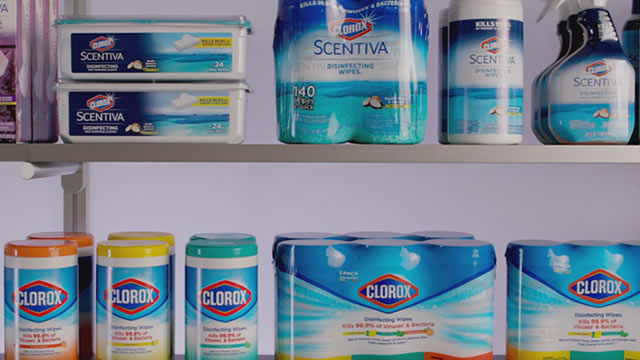
Beyond disinfection, Clorox is pursuing premiumization across its core cleaning and lifestyle categories. In U.S. core cleaning, this means format innovation, such as textured wipe substrates, enzyme-forward cleaners, and concentrated refills, designed to improve performance and unit economics. New scent and format variants for wipes, sprays, and bleach aim to grow share and household penetration through higher price ladders. Similarly, brands like Hidden Valley are pushing flavor innovation and dips, while Kingsford expands its lump charcoal and flavor pellets to lift average selling price and category share.

The company is also strategically expanding its reach through club and multi-pack initiatives, with 2024–2025 plans emphasizing multi-pack SKUs and club-channel distribution. This aims to restore shelf velocity after the 2023 disruption and capture bulk-buy consumers. Furthermore, Clorox leverages partnership-led, capital-light growth through joint ventures like Glad (waste management) and Brita (water filtration), accessing tailwinds in these adjacent categories. These diversified innovation and channel strategies are essential for Clorox to differentiate its offerings, command pricing power, and drive margin-accretive growth.

What Do Clorox's Q2 FY2026 Results Reveal About Its Performance?

Clorox's second-quarter fiscal 2026 results presented a mixed picture, reflecting both the ongoing challenges in a competitive consumer environment and the early benefits of its strategic initiatives. The company reported adjusted earnings of $1.39 per share, which missed the Zacks Consensus Estimate by 2.8%. However, net sales of $1.67 billion managed to beat the consensus mark by 2.5%. Both the top and bottom lines saw a year-over-year decline, with organic sales also falling, indicating persistent pressure on the business.

Despite the overall decline, there were bright spots within the segment performance. The International segment, as discussed, continued to exhibit strength, with sales rising 7% year-over-year and organic sales growing 5%. The Health and Wellness segment also showed resilience, growing 2% year-over-year, driven by a two-point increase in volumes. Its organic sales rose 2%, surpassing consensus estimates, and segment adjusted EBIT dipped only 2% to $190 million, still above expectations. These segments highlight areas where Clorox's innovation and expansion strategies are gaining traction.

Conversely, the Household segment faced significant headwinds, with net sales decreasing 6% year-over-year on both reported and organic bases. This decline was attributed to lower volumes and negative price mix, impacted by elevated promotions, larger pack sizes, and channel shifts. The Lifestyle segment also remained soft, reporting a 5% sales decline on both reported and organic bases, with adjusted EBIT plunging 54% to $72 million. These results underscore the competitive intensity and value-seeking consumer behavior that continue to exert pressure on Clorox's pricing and channel mix.

Management noted that category sales were "about flat" for both Q1 and Q2, with expectations of 0%-1% category growth in the back half of the fiscal year. While Clorox experienced a decline in market share, it observed "sequential improvement" exiting the quarter and into January. The completion of the ERP implementation in January led to "higher than expected shipments" in Q2, which are anticipated to reverse in Q3. The company is signaling confidence in innovation and increased marketing across multiple segments as the primary levers for market share recovery in the latter half of the year.

What is Clorox's Financial Health and Investor Outlook?

Clorox's financial health, as reflected in its TTM (trailing twelve months) fundamentals, presents a mixed but improving picture, particularly after navigating recent operational disruptions. The company currently trades at $104.14 with a market capitalization of $12.70 billion. Its P/E ratio stands at 16.77, which is lower than the industry average of 19.03x, suggesting a potentially attractive valuation relative to peers. The dividend yield is a robust 4.7%, with a payout ratio of 79.7%, appealing to income-focused investors.

Looking at profitability, Clorox's gross margin is 44.0%, operating margin is 15.2%, and net margin is 11.2%. Management is actively working to rebuild gross margin towards the "high-30s percent" and operating margin towards the "low-to-mid teens," supported by pricing, favorable mix, and cost savings. The company's return metrics are strong, with ROE at 1502.5%, ROA at 13.5%, and ROIC at 21.9%, indicating efficient capital deployment.

Leverage metrics show a Net Debt/EBITDA of 2.27, which is manageable for a consumer staples company. The current ratio, however, is 0.74, suggesting some short-term liquidity tightness, though this is not uncommon for companies with strong cash flow generation. On the growth front, TTM revenue growth is modest at 0.2%, but net income growth is a significant 189.3%, and EPS growth is 189.8%, reflecting a strong recovery from previous periods. Operating cash flow and free cash flow also show impressive TTM growth of 41.2% and 57.6%, respectively.

For fiscal 2025, management and sell-side consensus point to low- to mid-single-digit net sales growth, continued gross margin expansion, and EPS growth aided by productivity and normalized trade. Analysts project FY2025 revenue in the range of $7.4–$7.7 billion. While the Zacks Consensus Estimate for fiscal 2026 earnings implies a year-over-year decline of 23.5%, fiscal 2027 shows a projected growth of 15.3%, indicating a rebound. Clorox's strategic investments in digital transformation, innovation, and international expansion are designed to underpin this long-term growth trajectory, making it a compelling consideration for investors seeking stability with a clear path to future efficiency gains.


Clorox is clearly charting a course for renewed growth, leveraging substantial digital investments and targeted international expansion to overcome recent challenges. While the path to full operational stabilization and market share recovery will require continued execution, the foundational work is now complete. Investors should closely monitor gross margin trends and international segment performance as key indicators of the company's strategic success.


Want deeper research on any stock? Try Kavout Pro for AI-powered analysis, smart signals, and more. Already a member? Add credits to run more research.

SHARE THIS ON:

Related Articles

Category

You may also like

Stock News2 weeks ago

Will Walmart's Digital Push Pay Off in 2026?

Walmart's digital efficiency hinges on return on invested capital, which indicates how well its store network improves fulfillment economics.
Stock News2 weeks ago

Can Clorox's Digital Push Accelerate Operational Efficiency?

Clorox (CLX) is advancing digital transformation efforts to drive efficiency and margin gains despite navigating current ERP disruption and macro headwinds.
Stock News1 months ago

Is Chegg's $40B Skilling Market Bet a True Turnaround Catalyst?

Chegg, Inc. is pivoting toward the $40B global workforce skilling market, splitting operations into Chegg Skilling and Academic Services units.
Stock News3 months ago

Can Cloudflare's Edge AI Inference Reshape Cost Economics?

Cloudflare's Edge AI inference leverages custom Rust-based Infire to improve GPU utilization and reduce latency, potentially reshaping current inference cost economics.

Breaking News

View All →

Top Headlines

View More →
Stock News2 hours ago

Prediction: These 2 Stocks Will Be Worth More Than Apple in a Decade

Stock News7 hours ago

The AI Honeymoon Is Over: Why $MSFT Is Tanking And What It Means For Your Portfolio

Stock News10 hours ago

Streaming Wars: 1 Netflix Rival Dominating the Industry

Stock News10 hours ago

This Retail Giant Is Trading for Half the Price of Walmart and Nearly One-Third the Price of Costco, but Growing 3 Times as Fast

Stock News11 hours ago

ICOTYDE™ (icotrokinra) one-year results confirm lasting skin clearance and favorable safety profile in once‑daily pill for plaque psoriasis