MarketLens
Is ConocoPhillips' Permian Asset Sale a Smart Strategic Move

Key Takeaways
- ConocoPhillips is strategically divesting $2 billion in Permian assets, a move aimed at optimizing its portfolio and bolstering capital returns.
- This divestiture aligns with COP's broader $5 billion disposition target by year-end 2026, reinforcing its focus on high-margin, core assets.
- The company's robust capital allocation framework, including a 45% CFO payout to shareholders and significant debt reduction, positions it for long-term resilience.
Is ConocoPhillips' Permian Asset Sale a Smart Strategic Move?
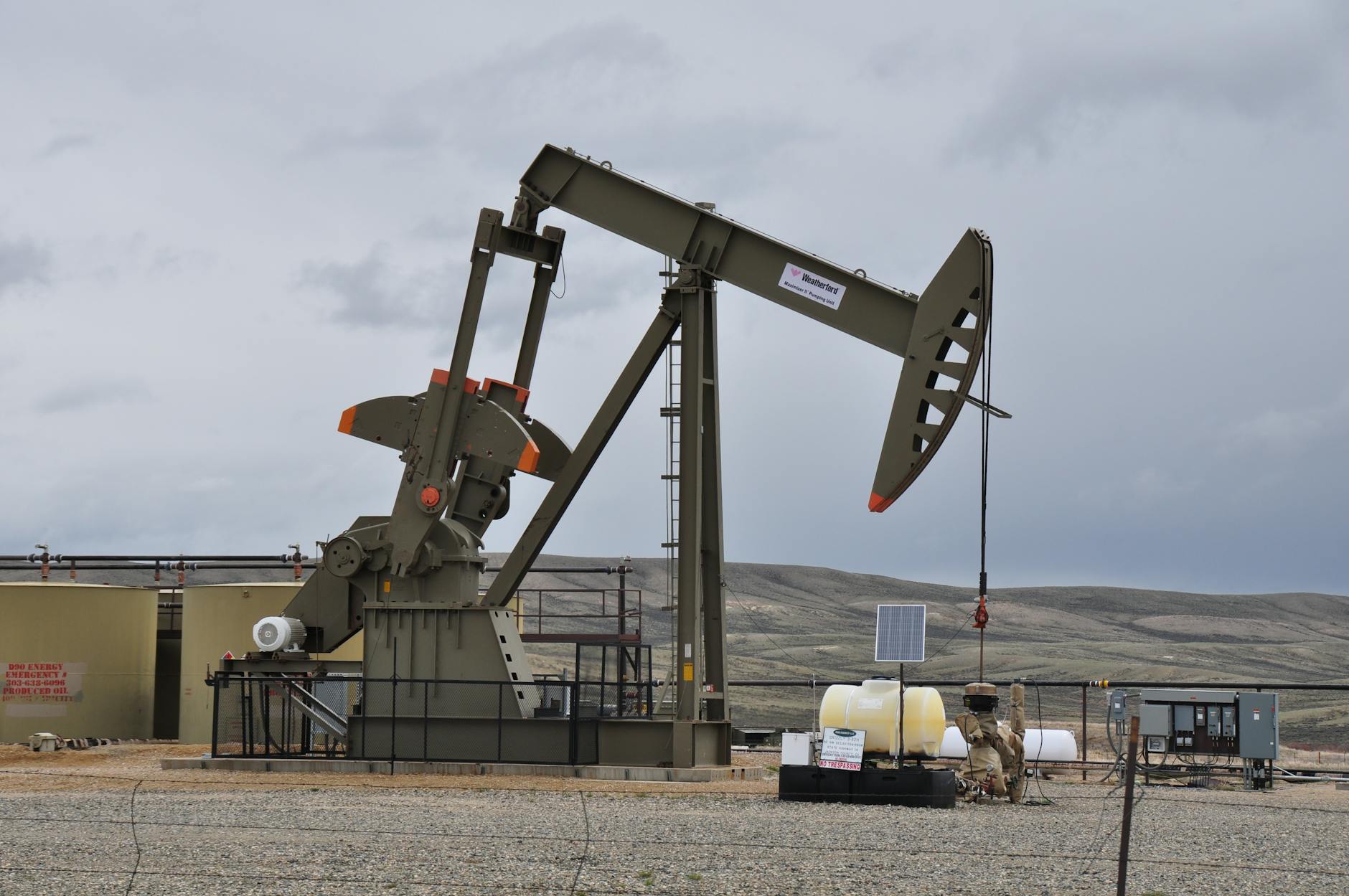
ConocoPhillips (NYSE: COP) is reportedly exploring the sale of approximately $2 billion worth of Permian Basin assets, a move that, if finalized, would further streamline its portfolio and reinforce its capital allocation strategy. This isn't an isolated event but rather a continuation of a deliberate, multi-year plan to high-grade its asset base, shedding non-core holdings to focus on more productive and higher-margin opportunities. The news, initially reported by Bloomberg, suggests the company is working with advisors, with interest expected from both strategic buyers and private equity firms.
This potential divestiture is a key component of ConocoPhillips' ambitious $5 billion disposition target by the end of 2026. The company has already made significant progress, having closed $3.2 billion in asset sales in 2025, including the $1.3 billion sale of its Anadarko Basin assets. These strategic sales are critical for optimizing the balance sheet, reducing debt, and reallocating capital towards projects that promise higher returns and greater long-term value. It reflects a disciplined approach to portfolio management, ensuring that every asset contributes optimally to the company's financial framework.
The Permian Basin, while a cornerstone of COP's operations, is vast and diverse. The assets under consideration for sale were acquired over the years through significant deals, including the $9.5 billion acquisition of Shell's Delaware Basin position in 2021 and previous transactions with Concho Resources. This suggests that even within a highly valued basin, ConocoPhillips is willing to prune assets that may not align with its evolving strategic priorities or meet its stringent cost of supply framework. The goal is not just size, but efficiency and profitability, ensuring that capital is deployed where it can generate the most compelling returns for shareholders.
This proactive portfolio management is particularly relevant in today's volatile energy market. By focusing on its most efficient and lowest-cost assets, ConocoPhillips enhances its resilience against commodity price fluctuations and positions itself for sustainable free cash flow generation. The company's ability to consistently high-grade its portfolio through both acquisitions and divestitures underscores a flexible and opportunistic strategy, adapting to market conditions while maintaining a clear vision for long-term value creation.
How Will This Divestiture Impact COP's Financial Health and Production Growth?
The potential $2 billion Permian asset sale will have a tangible impact on ConocoPhillips' financial health, primarily by boosting its cash reserves and providing additional flexibility for capital allocation. While the immediate effect on overall production might be a slight reduction, this is a calculated trade-off for improved capital efficiency and a stronger balance sheet. The company’s focus remains on profitable production, not just volume for volume's sake.
Financially, the proceeds from this sale will contribute directly to ConocoPhillips' stated goal of achieving $5 billion in dispositions by year-end 2026. These funds can be strategically deployed to further reduce gross debt, which stood at a debt-to-equity ratio of 0.36 as of the trailing twelve months (TTM). A stronger balance sheet enhances financial resilience, particularly in an industry susceptible to commodity price swings. Alternatively, the proceeds could be channeled into higher-return organic projects or returned to shareholders through increased dividends or share buybacks, aligning with the company's commitment to return 45% of cash from operations (CFO) to investors.
From a production standpoint, ConocoPhillips has consistently demonstrated its ability to maintain or even grow underlying production despite asset sales. For 2026, the company has guided for full-year production of 2.33 to 2.36 million barrels of oil equivalent per day (MMBOED). This guidance already incorporates the impact of previous dispositions and reflects the company's confidence in its remaining asset base, particularly its core Permian, Eagle Ford, and Bakken positions. The $2 billion Permian assets being considered for sale are likely non-core or less efficient acreage, meaning their divestiture will have a minimal impact on the company's overall production profile while improving its average cost structure.
Moreover, the strategic rationale behind these sales extends beyond just the immediate cash infusion. By shedding less productive assets, ConocoPhillips can concentrate its capital expenditures on its most prolific fields, driving higher returns on invested capital. The company's 2026 capital expenditures are projected to be approximately $12 billion, a $0.5 billion reduction from the midpoint of its 2025 guidance. This disciplined capital allocation, combined with the proceeds from asset sales, allows COP to fund its growth initiatives while simultaneously enhancing shareholder returns and strengthening its financial position.
What Does COP's Capital Allocation Strategy Look Like Post-Divestiture?
ConocoPhillips' capital allocation strategy is clearly defined and heavily influenced by its ongoing portfolio optimization, including the current Permian divestiture. The company has consistently prioritized a balanced approach: funding high-return projects, maintaining a strong balance sheet, and delivering sector-leading shareholder returns. This $2 billion sale provides additional dry powder to execute this strategy with even greater flexibility.
A cornerstone of COP's financial framework is its commitment to returning 45% of cash from operations (CFO) to shareholders. For 2025, the company returned $9.0 billion to investors, comprising $5.0 billion in share repurchases and $4.0 billion in ordinary dividends. The 2026 outlook reaffirms this commitment, with a declared first-quarter ordinary dividend of $0.84 per share. The proceeds from asset sales, such as the Permian divestiture, directly enhance the company's capacity to meet or even exceed these return targets without compromising its investment in future growth.
Beyond shareholder returns, the divestiture bolsters ConocoPhillips' ability to manage its debt profile. While the company already boasts a healthy net debt-to-EBITDA ratio of 0.68 (TTM), additional cash from asset sales can be used for further debt reduction, lowering interest expenses and improving financial flexibility. This is crucial for maintaining a strong investment-grade credit rating and ensuring access to capital markets on favorable terms, especially during periods of market volatility. The company retired $0.7 billion in debt at maturity in 2025, demonstrating its commitment to disciplined liability management.
Furthermore, the capital freed up from these sales can be redeployed into ConocoPhillips' most promising organic growth projects. The company is targeting a multi-year improvement in free cash flow of about $1 billion per year from 2026 to 2028, culminating in a projected $7 billion free cash flow inflection by 2029. A significant portion of this, approximately $4 billion, is expected from the Willow project alone. By divesting less strategic assets, COP can concentrate its capital on these high-impact projects, which are designed to deliver substantial long-term value and enhance its overall free cash flow generation capacity.
How Do Synergies and Cost Reductions Play into COP's Future?
The strategic divestiture of Permian assets by ConocoPhillips cannot be viewed in isolation; it's deeply intertwined with the company's broader efforts to capture significant cost synergies and operational efficiencies. These initiatives, particularly following the successful integration of Marathon Oil, are critical drivers for enhancing profitability and free cash flow, making the portfolio high-grading even more impactful. The company is not just selling assets; it's fundamentally reshaping its cost structure.
The integration of Marathon Oil, completed in late 2024, has been a major catalyst for operational improvements. ConocoPhillips expects to realize over $1 billion in annualized cost synergies on a run-rate basis by year-end 2025, with an additional $1 billion in one-time benefits. These savings stem from streamlined operations, reduced rig and frac crew counts, and lower general and administrative (G&A) expenses. For 2026, the company has guided for adjusted operating costs of approximately $10.2 billion, a $0.4 billion reduction from 2025 guidance, underscoring the tangible impact of these efficiency gains.
These cost reductions are not merely about cutting expenses; they are about improving the underlying economics of ConocoPhillips' asset base. By reducing lease operating expenses (LOE) and transportation and processing (T&P) costs, the company directly boosts its margins, making its remaining production more profitable. This enhanced efficiency means that even in a lower commodity price environment, COP can maintain robust cash flow generation. The company's goal of pushing its free cash flow breakeven into the low-$30s WTI by the decade's end is a testament to its commitment to operational excellence and cost discipline.
The proceeds from asset sales, combined with these significant cost synergies, create a powerful virtuous cycle. The divestitures free up capital, which can then be reinvested into the more efficient, lower-cost assets that benefit most from the synergy capture. This strategic alignment allows ConocoPhillips to achieve a more resilient and profitable business model, capable of delivering strong returns through various market cycles. It's a clear signal that the company is focused on maximizing value per barrel, rather than simply chasing production volumes.
What Are the Investor Implications and Risks for ConocoPhillips?
For investors, ConocoPhillips' strategic moves, including the Permian asset sale, present a compelling narrative of disciplined capital allocation and a clear path to enhanced shareholder value. The company, currently trading at $110.53, with a market capitalization of $136.58 billion, offers a 2.9% dividend yield and a robust free cash flow yield of 12.3% (TTM), suggesting it is undervalued relative to its cash flow potential. The ongoing portfolio optimization aims to further improve these metrics.
The bull case for ConocoPhillips hinges on its ability to execute its $5 billion disposition target, effectively redeploying capital into higher-return opportunities and returning a significant portion to shareholders. The company’s commitment to returning 45% of CFO, alongside a growing ordinary dividend, makes it an attractive option for income-focused investors. Furthermore, the projected $7 billion incremental free cash flow by 2029, driven by projects like Willow and continued cost synergies, paints a picture of substantial long-term value creation. Its low Beta of 0.29 also suggests relative stability in a volatile energy sector.
However, investors must also consider the inherent risks. Commodity price volatility remains the most significant external factor. While ConocoPhillips aims for a low free cash flow breakeven, a sustained downturn in oil and gas prices could impact profitability and its ability to meet capital return targets. The company's increasing exposure to natural gas and LNG markets, while offering diversification, also introduces sensitivity to global gas price fluctuations. Management has quantified this, noting that cash flow moves by roughly $400 million for every $1 change in Henry Hub gas prices.
Operational risks, though mitigated by a strong track record, always exist in large-scale energy projects. Delays or cost overruns in major developments could impact future cash flow projections. Furthermore, the success of asset sales depends on market conditions and finding suitable buyers at attractive valuations. While the $2 billion Permian sale is underway, there's always a possibility that the company may decide not to sell if terms aren't favorable. Investors should monitor quarterly earnings reports for updates on disposition progress, cost synergy realization, and project timelines.
ConocoPhillips is actively shaping its future, leveraging strategic asset sales and operational efficiencies to build a more resilient and shareholder-friendly business. The potential Permian divestiture is another step in this calculated journey, aiming to unlock further value and solidify its position as a leading energy producer. For long-term investors, COP offers a compelling blend of capital returns, disciplined growth, and a clear strategic vision in an evolving energy landscape.
Want deeper research on any stock? Try Kavout Pro for AI-powered analysis, smart signals, and more. Already a member? Add credits to run more research.
Related Articles
Category
You may also like
No related articles available
Breaking News
View All →No topics available at the moment