MarketLens

Log in

Is Costco's "Four-Digit Club" Entry a Sign of Enduring Growth

1 week ago
SHARE THIS ON:

Is Costco's "Four-Digit Club" Entry a Sign of Enduring Growth

Key Takeaways

  • Costco has cemented its status as a retail "gold standard," recently breaching the $1,000 share price, driven by its resilient membership model and consistent growth.
  • The company's aggressive international expansion and robust real estate pipeline suggest a significant runway for future growth, particularly in untapped global markets.
  • Despite a premium valuation (P/E of 52.89), Costco's strong financials and strategic advantages may justify its price for long-term investors, though macroeconomic risks persist.

Is Costco's "Four-Digit Club" Entry a Sign of Enduring Growth?

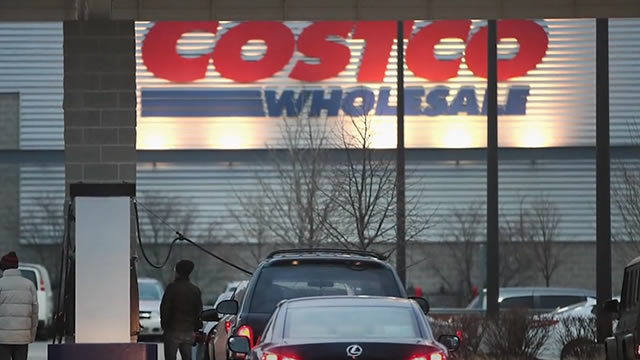
Costco Wholesale Corporation (NASDAQ: COST) officially crossed the $1,000 share price threshold on March 5, 2026, marking a significant milestone for the membership-based warehouse giant. This achievement, occurring just hours before a strong fiscal second-quarter 2026 earnings report, largely validated the stock’s impressive ascent. It underscores a powerful narrative: Costco has become a definitive anchor for the Consumer Staples sector, offering a rare combination of defensive stability and growth typically associated with technology companies, especially amidst a broader "rotation to safety" in early 2026.

The market's enthusiasm for Costco is reflected in its current trading price of $1018.55, pushing its market capitalization to a hefty $451.88 billion. This valuation is supported by a strong analyst consensus, with a "Buy" rating from 38 analysts and a median price target of $1100.00, suggesting further upside from current levels. Even the most conservative estimates hover around $769.00, while the high end reaches $1175.00, indicating a broad belief in the company's fundamental strength.

This sustained confidence isn't just about near-term performance; it speaks to a deeper conviction in Costco's long-term potential. The idea of a "growth runway for another 50+ years" might seem audacious for a retailer, but it's rooted in the company's unique business model and strategic execution. Costco's ability to consistently deliver value, expand its footprint, and adapt to evolving consumer preferences positions it as a durable compounder in an often-volatile market.

The company's recent Q2 2026 earnings, reporting EPS of $4.58 (beating estimates) and revenue of $69.6 billion, further solidified this view. These results demonstrate resilient demand and stable margins, even as broader economic conditions remain a key focus for investors. Costco's ability to thrive in various economic cycles reinforces its status as a "gold standard" asset, making the $1,000 mark more than just a numerical achievement, but a testament to its enduring business power.

How Does Costco's Membership Model Drive Long-Term Value?

At the core of Costco’s enduring appeal and its potential for decades of growth lies its robust, membership-driven business model. This isn't merely a retail strategy; it's a powerful economic engine that generates predictable, high-margin revenue streams independent of product sales. With membership fee income exceeding $1.7 billion per quarter globally as of 2025, this recurring revenue stream significantly boosts overall profitability and provides a stable financial foundation.

The membership system fosters unparalleled customer loyalty, evidenced by consistently high renewal rates. Members pay an annual fee for access to exclusive bulk discounts and a curated product assortment, creating a "destination shopping" experience. This model ensures repeat traffic and high customer spend per visit, driving industry-leading store productivity. Costco operates fewer locations than many big-box rivals, yet each warehouse draws from a wide radius, achieving remarkable sales volumes per site.

Costco’s product strategy further enhances this model. The company operates with a significantly lower gross profit margin on products, approximately 12.9%, compared to traditional retailers. This "low-price, high-volume" cycle attracts customers, which in turn enhances purchasing power and further reduces costs. The secret sauce here is Kirkland Signature, Costco’s private label brand. These products, which account for approximately 33% of total sales, offer comparable quality to national brands at lower prices, providing a unique differentiator and boosting overall profit margins.

This synergistic relationship between membership fees, high sales volumes, and private label penetration creates a formidable competitive moat. It enables Costco to maintain its low-price leadership while delivering strong returns, making it incredibly difficult for competitors to replicate. The model’s resilience has been particularly evident in recent years, with consumers increasingly prioritizing cost-effective options amidst inflation, leading to record-high renewal rates across the warehouse club sector.

Where Will Costco Find Its Next Decades of Growth?

Costco's future growth runway is heavily predicated on its aggressive and strategic expansion of its physical footprint, both domestically and, crucially, internationally. CEO Ron Vachris has confirmed plans for 28 net new warehouse openings in fiscal year 2026, with a longer-term target of 30 or more annually. This accelerated pace, requiring capital expenditures projected at $6.5 billion for the year, signals a substantially deeper inventory of sites in various stages of development, including multi-story formats to access denser urban geographies.

While the U.S. market, with 634 warehouses as of Q2 2026, still offers continued expansion potential in underserved areas, the real game-changer is international growth. Costco currently operates 924 warehouses across 14 countries, but its penetration in large, high-income regions outside North America remains relatively limited. Countries like China, Japan, Korea, and the UK represent significantly larger addressable markets where Costco's value proposition has proven highly resonant.

The financial performance of these international markets is already outpacing the domestic business. During the first 18 weeks of fiscal 2026, while U.S. comparable sales grew 5.9%, Canada delivered 7% comparable sales growth, and "Other International" markets produced a remarkable 9.5% comparable sales increase. This strong performance, particularly in regions where membership density relative to population is lower than in mature U.S. markets, highlights the vast untapped opportunity.

China, in particular, stands out as a major growth catalyst. Initial stores have generated exceptional sales volumes and member enthusiasm, suggesting the market could eventually support dozens of additional warehouses. The company's long-term planning calls for roughly half of its future openings to be outside the United States, indicating a clear strategic focus on global expansion. If Costco can demonstrate that these international warehouses deliver strong returns without eroding margins or brand trust, it will meaningfully extend the company's growth runway well into the next decade and beyond.

Beyond Brick-and-Mortar: E-commerce, Efficiency, and Private Label Power

Costco's growth story isn't solely about new warehouse openings; it's also about optimizing its existing ecosystem through e-commerce, supply chain efficiency, and the continued dominance of its private label, Kirkland Signature. While primarily known for its physical warehouses, Costco has been steadily building out its digital capabilities, with digital sales surging 20.5% in fiscal Q1 2026. This omnichannel approach caters to evolving consumer shopping habits, offering convenience while maintaining the core value proposition.

The company's operational efficiency is a critical, often overlooked, driver of its profitability. Costco's "fewer-but-larger" store strategy concentrates foot traffic into high-volume sites, reducing overhead costs per dollar of revenue. Its streamlined product range of approximately 4,000 SKUs (a fraction of a typical supermarket) enables a high-velocity, low-touch supply chain. This efficiency is further bolstered by a robust depot network and strategic investments in logistics hubs, ensuring rapid inventory turnover and minimizing operational complexity.

Kirkland Signature continues to be a powerhouse, providing a significant competitive advantage. These private label products not only offer members exceptional value but also boast higher profit margins than many branded goods, effectively compensating for Costco's overall low gross profit margin. Kirkland Signature's sales volume even surpasses that of major consumer brands like Lowe's and P&G, and its growth rate often outpaces the overall business. This brand loyalty reinforces the membership model and drives repeat purchases.

Moreover, Costco's scale and strong purchasing capabilities provide a buffer against external pressures, such as tariff policies. With only about 33% of its U.S. business relying on imported goods, and less than 15% from China, Mexico, and Canada combined, the company can flexibly replace affected goods and leverage its low-price strategy to maintain competitiveness. These combined factors — a growing e-commerce presence, relentless operational efficiency, and the strategic power of Kirkland Signature — are crucial for sustaining Costco's long-term growth trajectory.

What Risks Could Challenge Costco's Premium Valuation?

Despite Costco's undeniable strengths, its premium valuation presents a key area of scrutiny for investors. Trading at a P/E ratio of 52.89, well above both retail peers and its own historical average, the stock reflects significant market confidence. However, this elevated multiple leaves little margin for error, demanding flawless execution and sustained high growth rates to justify the price. The forward P/E ratio of 54 times and a PEG ratio exceeding 5 further highlight this premium, suggesting that any slowdown could trigger a valuation correction.

Macroeconomic pressures also pose considerable risks. While Costco's value-focused model tends to perform resiliently during economic downturns, a severe recession could still pressure discretionary spending and slow new membership growth. Consumer confidence has dropped to a three-year low, and while Costco's low-price strategy attracts customers, persistent inflation could squeeze margins if the company struggles to pass cost increases through to members. The latest data indicates a slowdown in comparable sales growth, particularly in non-food categories, raising questions about long-term growth momentum if this trend persists.

International expansion, while a major growth driver, is not without its challenges. Operating in diverse global markets exposes Costco to currency fluctuations, trade tensions, and varying regulatory landscapes. Cultural differences in shopping behavior and higher real estate costs in some regions can add friction to the expansion process. Investors need to watch store economics, renewal trends, and operating margins in newer international regions closely, rather than focusing solely on headline store counts, to ensure profitable scaling.

Finally, competition remains a factor. While Costco holds a dominant position in the U.S. warehouse membership retail market with over 60% market share, rivals like Sam's Club and BJ's Wholesale Club, along with e-commerce giants like Amazon, continue to innovate. Although Costco's business model offers a unique moat, these competitors are also adapting through enhanced product offerings, improved in-store experiences, and advanced e-commerce platforms. Costco's ability to maintain its competitive edge and justify its premium will depend on its continued innovation and execution.

Is Costco Stock a Buy for the Long Haul?

Costco's journey past the $1,000 mark is a testament to its exceptional business model, but the question for investors remains: is it still a compelling buy at these elevated levels? The consensus among analysts is broadly constructive, with a "Buy" rating and an average price target of $1061.33. This suggests a belief that the company can continue to deliver value, driven by its robust membership base, aggressive international expansion, and operational efficiencies.

For patient investors with a long-term horizon, Costco represents a "gold standard" asset. Its consistent revenue growth (FY2025 YoY revenue up 8.2%), strong net income growth (9.9%), and impressive returns on equity (28.8%) and invested capital (19.1%) underscore its financial health. The company's healthy balance sheet, with nearly $15 billion in cash and a low debt-to-equity ratio of 0.26, provides ample financial flexibility to navigate challenges and fund future growth initiatives.

However, the current valuation demands flawless execution. The market is pricing in significant future growth, meaning any missteps in comparable sales, membership renewal rates, or international profitability could lead to volatility. While the company's non-cyclical nature offers resilience, it is not entirely immune to broader economic downturns or shifts in consumer behavior.

Ultimately, Costco's ability to scale globally, sustain organic membership growth, and compound earnings into its premium valuation will be key. The focus will shift from the $1,000 milestone to how the company utilizes its massive cash reserves to future-proof its business against emerging competitors and shifting consumer habits. For those who believe in Costco's ability to maintain its world-class execution, the stock remains a core holding, but new investors should be mindful of the high entry multiple.

Costco remains a retail titan, offering a unique blend of stability and growth potential that few companies can match. Its strategic expansion and unwavering customer loyalty position it well for continued success. While its premium valuation requires careful consideration, the underlying business quality suggests it could still be a rewarding long-term investment.


Want deeper research on any stock? Try Kavout Pro for AI-powered analysis, smart signals, and more. Already a member? Add credits to run more research.

SHARE THIS ON:

Related Articles

Category

You may also like

Stock News2 weeks ago

Could Buying Costco Stock Today Set You Up for Life?

Costco demonstrated impressive, consistent same-store sales growth across economic cycles. The company's large scale provides a competitive advantage but suggests future growth rates may slow.
Stock News2 weeks ago

Costco's Warehouse Expansion Plans Signal Long-Term Growth Engine

Costco plans to open 28 new warehouses in Fiscal Year 2026 and over 30 annually, signaling a strategy to fuel growth via physical expansion and increased customer traffic.
Stock News3 weeks ago

Costco's Comparable Sales Stay Strong: Is Traffic Driving Growth?

Costco posted strong comparable sales growth driven by increases in both customer traffic and higher average ticket sizes. This performance suggests sustained consumer engagement across its membership...
Stock News1 months ago

Is a $130 Costco executive membership the new VIP status?

Costco's Executive membership base grew 9.1% to nearly 40 million members, as social media highlights the status associated with the $130 tier.

Breaking News

View All →

Top Headlines

View More →
Stock News22 minutes ago

Amazon to Buy Globalstar for $11.6 Billion | Bloomberg Tech 4/14/2026

Stock News22 minutes ago

Amazon's $12.5B Globalstar deal seen as long-term strategic bet, Jefferies says

Stock News36 minutes ago

Microsoft Is Buying 3,200 Acres For a Data Center. This Utility Stock Is Rising.

Stock News37 minutes ago

Apple price target raised ahead of earnings on expectation of strong iPhone sales, Services growth

Stock News49 minutes ago

Wells Fargo CFO Sees Growth Across Business Lines