MarketLens
Is Eagle Materials' Combined Structure Suppressing Its True Value

Key Takeaways
- RBC Capital Markets suggests Eagle Materials (EXP) could unlock $88 per share in unrecognized value by separating its heavy and light materials businesses.
- A spin-off would allow each segment to pursue tailored growth strategies and capital structures, appealing to distinct investor bases.
- Despite a consensus "Hold" rating and recent earnings miss, the sum-of-the-parts thesis presents a compelling long-term upside for patient shareholders.
Is Eagle Materials' Combined Structure Suppressing Its True Value?
Eagle Materials Inc. (NYSE: EXP), a diversified building materials giant, is currently trading at $229.26 with a market capitalization of $7.35 billion. While the company has demonstrated resilience across various construction cycles, a growing chorus of analysts, notably RBC Capital Markets, argues that its current integrated structure is actively suppressing its intrinsic value. The core thesis is straightforward: by combining two distinct businesses – heavy construction materials and light building materials – Eagle Materials is failing to achieve optimal valuation for either segment.
This isn't a new idea; back in May 2019, Eagle Materials' Board of Directors, under pressure from activist investor Sachem Head Capital Management, approved a plan to separate its Heavy Materials and Light Materials businesses into two independent, publicly traded corporations via a tax-free spin-off. The company even pursued alternatives for its Oil and Gas Proppants business at the time. While that separation was initially expected in the first half of 2020, the plan ultimately did not materialize as announced, leaving the "sum of the parts" opportunity on the table.
The argument for a split centers on the differing market dynamics, growth drivers, and investor profiles for each segment. Heavy materials like cement and aggregates are typically tied to large-scale infrastructure projects and commercial construction, often characterized by long cycles and steady demand. In contrast, light materials such as gypsum wallboard and recycled paperboard are more sensitive to residential housing starts and renovation trends, experiencing sharper cyclical swings. A single entity struggles to cater to investors seeking pure-play exposure to either of these distinct markets.
RBC Capital Markets analyst Anthony Codling recently reignited this discussion, estimating a potential upside of $88 per share if Eagle Materials were to split. This represents a significant 40% of unrecognized value, suggesting that the market isn't fully appreciating the individual strengths of each business. The current P/E ratio of 17.19 and an EV/EBITDA of 11.21 for the combined entity might not accurately reflect the potential of its underlying components if valued independently against their respective industry peers.
How Would a Heavy Materials Spin-Off Create Value?
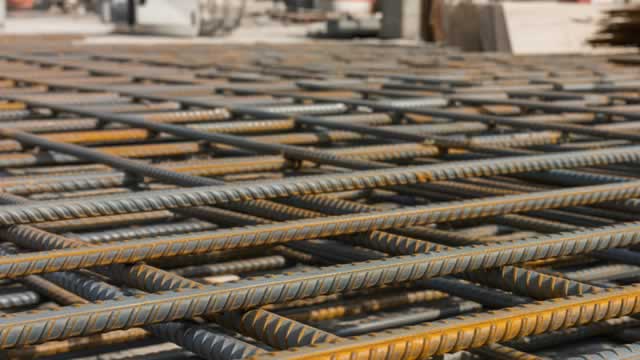
The Heavy Materials segment of Eagle Materials, encompassing cement, concrete, and aggregates, is a robust, cash-generative business primarily serving infrastructure and large commercial projects. This division boasts a strong U.S.-heartland cement-plant system, complemented by concrete and aggregates operations, and benefits from long-lived, owned raw material reserves. As a standalone entity, it would be positioned as the largest U.S.-owned pure-play cement company, focused on low-cost production and strategic growth within key U.S. geographies.
Currently, Eagle's heavy materials business trades at an enterprise value-to-EBITDA ratio of 11.8 times. This is notably below the industry average of 14.0 times for comparable heavy materials players. RBC Capital's analysis suggests that merely aligning this segment's valuation with its industry peers could unlock approximately $30 per share in additional value for shareholders. This valuation gap highlights the "conglomerate discount" often applied to diversified companies, where the market struggles to assign an appropriate multiple to disparate business lines.
The demand drivers for heavy materials are distinct and often less volatile than those for light materials. Government infrastructure spending, for instance, provides a foundational level of demand that can offset some fluctuations in private commercial construction. In its recent earnings report, Eagle Materials highlighted continued strength in heavy materials, with cement sales up approximately 9% year-over-year and organic aggregates volumes climbing a remarkable 34%. The company also announced approximately $8/ton cement price increases for early 2026, underscoring its pricing power in this segment.
Separating this business would allow it to implement a capital structure specifically tailored to its long-term, asset-heavy nature, optimize resource allocation for its strategic priorities, and pursue acquisitions or organic expansions that directly enhance its core heavy materials operations. Investors seeking exposure to the stable, infrastructure-driven growth of the U.S. construction market would find a pure-play heavy materials company far more appealing and easier to value, potentially driving a re-rating of its multiple. This focus would also enable a dedicated management team to concentrate on operational efficiencies and market penetration unique to the heavy materials landscape.
What's the Upside for a Pure-Play Light Materials Business?
Eagle Materials' Light Materials business, primarily consisting of gypsum wallboard and recycled paperboard, is a benchmark producer known for its superior margin performance. This segment thrives in U.S. sunbelt markets, leveraging sustainable low-cost producer positions and an integrated paperboard mill that supplies its wallboard plants with high-performing, low-cost facing paper. While the heavy materials segment leans into infrastructure, the light materials business is intrinsically linked to residential construction and renovation cycles, making it more cyclical but also offering significant upside during housing recoveries.
The current market environment has seen some headwinds for this segment. In its recent quarterly report, wallboard revenue fell 16%, operating earnings dropped 25%, and shipments declined approximately 14%. Wallboard pricing has been range-bound with modest downward pressure, reflecting a softer residential construction environment. However, this cyclical weakness could be precisely why a spin-off now could be opportune, allowing the new entity to be valued on its recovery potential rather than being dragged down by current residential softness within a larger, mixed portfolio.
RBC Capital's analysis points to the impressive profitability of the light materials business, which boasts an EBITDA margin of around 37%. This is significantly higher than the sector's average of 21%, showcasing its operational excellence and cost leadership. The analyst argues that if the "conglomerate discount" applied to this high-margin business is eliminated, particularly during the next housing recovery, shareholders could see an incremental value of about $58 per share. This substantial potential upside underscores the market's current undervaluation of this segment's standalone strength.
A separate Light Materials company would attract investors specifically looking for exposure to the residential housing market and its recovery. It would be able to deploy capital and pursue growth strategies uniquely suited to its market dynamics, such as expanding production capacity in high-growth regions or investing in advanced technologies for paperboard production. The current integrated structure masks the true earnings power and growth trajectory of this segment, preventing it from achieving a valuation commensurate with its industry-leading margins and future potential in a rebounding housing market.
How Would a Spin-Off Unlock Shareholder Value and Operational Focus?
The primary mechanism by which a spin-off unlocks shareholder value is through the elimination of the "conglomerate discount." When a company operates disparate businesses, investors often apply a lower valuation multiple to the combined entity than the sum of what its individual parts would command if they were standalone, pure-play companies. This discount arises because diversified companies can be harder to analyze, may have conflicting capital allocation priorities, and appeal to a broader, less specialized investor base.
A tax-free spin-off, as initially envisioned by Eagle Materials in 2019, would distribute shares of the new Light Materials entity to existing Eagle shareholders. This allows investors to receive direct ownership in two focused businesses. Each new company would then be able to establish its own capital structure, tailored to the specific needs and risk profile of its operations. For instance, the Heavy Materials business, with its stable cash flows and asset-intensive nature, might support a different debt-to-equity ratio than the more cyclical, but high-margin, Light Materials business.
Beyond valuation, the operational benefits are substantial. Each independent company would have its own dedicated management team and board of directors, allowing for a sharper strategic focus. The Heavy Materials team could concentrate solely on optimizing cement and aggregates production, pursuing infrastructure-related growth opportunities, and managing long-term raw material reserves. Simultaneously, the Light Materials team could hone in on gypsum wallboard market trends, residential construction cycles, and innovations in paperboard manufacturing. This specialized focus often leads to improved operational efficiency, faster decision-making, and more effective resource allocation.
Consider the implications for growth. As separate entities, both businesses could pursue strategic acquisitions or organic expansions that perfectly fit their distinct markets, without having to compete for capital against a different business line within the same corporate umbrella. This clarity in strategy and capital deployment is a powerful driver of long-term value creation. The ability for new and existing investors to value the two companies based on their particular operational and financial characteristics, as highlighted in the 2019 SEC filing, remains a compelling argument for such a separation.
What Are the Strategic and Operational Implications of a Split?
Executing a spin-off of this magnitude involves significant strategic and operational considerations that extend beyond just financial engineering. One of the most critical aspects is establishing independent management teams and boards of directors for both the Heavy Materials and Light Materials businesses. This ensures that each entity has leadership fully dedicated to its specific market, operational challenges, and growth opportunities. The initial plan in 2019 indicated that full management teams and boards would be named in the months leading up to the formal separation, with members of the current Eagle Board potentially serving on both.
Operationally, the separation would require disentangling shared services, IT systems, and supply chain logistics. While Eagle Materials already operates through distinct segments (Cement, Concrete and Aggregates, Gypsum Wallboard, and Recycled Paperboard), the combined corporate overhead and infrastructure would need to be divided or replicated. This process can be complex and costly in the short term, potentially leading to temporary disruptions or increased expenses as two new corporate structures are built out. However, the long-term benefits of streamlined operations and focused cost management typically outweigh these initial hurdles.
Strategically, the two newly independent companies would gain greater flexibility in their competitive positioning. The Heavy Materials business could emphasize its scale and low-cost production in the cement market, potentially becoming a more aggressive player in infrastructure bids. The Light Materials business, with its high margins, could focus on innovation in wallboard products or expanding its presence in high-growth residential markets. This independence allows each company to develop targets and goals that fit its unique opportunities, rather than being constrained by the broader corporate strategy of a diversified parent.
Moreover, a spin-off would allow each company to cultivate its own distinct corporate culture, attracting talent specialized in either heavy industry or light building materials. This can be a powerful advantage in competitive labor markets. While the initial 2019 plan noted both companies would remain headquartered in Dallas, TX, the ability to tailor corporate identity and employer branding to specific industry segments could enhance recruitment and retention. The ultimate goal is to create two "best-in-class" companies, each optimally positioned for profitability and growth within its respective industry.
What Does This Mean for Investors Amid Current Market Sentiment?
Eagle Materials is currently navigating a mixed market environment, reflected in recent analyst ratings and its stock performance. The stock is trading at $229.26, up 1.80% today, but its 52-week range of $191.91 to $243.64 indicates some volatility. Analyst sentiment leans towards caution, with a consensus "Hold" rating from 12 analysts, comprising two sell, eight hold, and two buy recommendations. The average 12-month price objective is $230.40, suggesting limited immediate upside from current levels according to Wall Street.
Recent earnings have also presented a nuanced picture. Eagle Materials reported Q3 EPS of $3.22, missing consensus estimates of $3.32, and revenue of approximately $556 million was essentially flat. This shortfall was primarily driven by weaker wallboard results, which saw revenue fall 16% and shipments decline 14%. However, the Heavy Materials segment showed resilience, with cement sales up 9% and aggregates volumes hitting a record 81% increase, underscoring the divergent performance of its two core businesses.
Despite these mixed signals, the company maintains a disciplined balance sheet with net debt of approximately $1.37 billion and a net debt/EBITDA leverage ratio of 1.77. Management has also been active in capital allocation, repurchasing approximately 1.4 million shares year-to-date and returning nearly $150 million to shareholders this quarter via dividends and buybacks. This commitment to shareholder returns, coupled with ongoing modernization projects like the Laramie cement plant and Duke wallboard facility, suggests a focus on long-term operational efficiency and capacity enhancement.
For investors, the RBC Capital "sum of the parts" thesis presents a compelling long-term narrative that contrasts with the current "Hold" consensus. While the market currently prices EXP with a P/E of 17.19 and an earnings yield of 5.8%, the potential for an $88 per share upside from a spin-off cannot be ignored. This suggests that patient investors willing to wait for a potential corporate action could see significant value unlocked, even if short-term analyst targets remain conservative due to current market headwinds in the residential sector.
The potential for a spin-off, while not actively discussed by management recently, remains a powerful lever for value creation. Should Eagle Materials revisit this strategic option, it could fundamentally alter the investment landscape for the company. Investors should monitor any renewed discussions around portfolio optimization, as a separation could provide a clearer path to realizing the full value of its distinct heavy and light materials businesses.
Want deeper research on any stock? Try Kavout Pro for AI-powered analysis, smart signals, and more. Already a member? Add credits to run more research.
Related Articles
Category
You may also like


Is It Too Late to Buy Palantir, or Is the Market Still Missing Something?

ARMOUR Residential REIT: High Yield Is Masking Structural Decay

Will Barrick Mining's Higher Costs Dent Its Profit Momentum Ahead?
Breaking News
View All →Featured Articles
Top Headlines
Billionaire Stanley Druckenmiller Sells Sandisk Stock and Buys an AI Stock Wall Street Says Is Deeply Undervalued

Tesla's South Korean sales up more than 300% to 11,134 vehicles in March

Meta Halts Work With Mercor After Major Breach, While ChatGPT-Parent OpenAI Investigates Incident: Report

US Stocks Mixed Following Trump's Iran War Address: Investor Fear Eases, But Greed Index Remains In 'Extreme Fear' Zone