MarketLens
Is Emerson Electric Poised for a Q2 Earnings Beat

Key Takeaways
- Emerson Electric (EMR) faces a critical Q2 2026 earnings report on May 5th, needing to validate its raised full-year guidance amidst a persistent orders-to-sales gap.
- The company's strategic pivot towards high-growth automation solutions, bolstered by recent cybersecurity and renewable energy partnerships, positions it well within a rapidly expanding industrial automation market.
- Despite a robust capital return plan and strong margins, EMR's stock performance hinges on accelerating sales growth and navigating regional economic headwinds in Europe and China.
Is Emerson Electric Poised for a Q2 Earnings Beat?
Emerson Electric is gearing up to report its second-quarter 2026 results after market close on Tuesday, May 5, 2026, with analysts keenly watching for signs of sustained momentum. The industrial automation giant delivered a strong performance in Q1 2026, posting adjusted earnings per share (EPS) of $1.46, comfortably beating the consensus estimate of $1.41 by 3.55%. This beat, however, was followed by a notable 7.8% decline in the stock price since the February 3rd report, raising questions about whether the market's optimism is already priced in or if the recent pullback presents a mispricing opportunity.
For the upcoming Q2, analysts are projecting an adjusted EPS of $1.55 (Public.com) or $1.54 (Ainvest), on revenue expected to hit approximately $4.6 billion. These targets reflect a consensus view that Emerson can build on its Q1 success, where underlying orders surged 9% year-over-year. This robust order growth signals strong demand for its solutions, particularly in North America, India, and the Middle East & Africa, indicating customers are deploying capital into longer-cycle projects within Emerson's key growth verticals.
However, a crucial challenge for Emerson lies in the disconnect between its impressive order growth and its more modest sales expansion. While underlying orders grew by 9% in Q1, underlying sales only increased by 2%. This gap suggests potential backlog conversion issues, which management will need to address to convince investors that the raised full-year EPS guidance of $6.40 to $6.55 is achievable. The market will be looking for an acceleration in sales growth towards the company's projected 4% annual pace to validate this optimistic outlook.
The upcoming earnings call, scheduled for 4:30 p.m. ET on May 5th, will be crucial for management to provide clarity on these dynamics. Investors will be scrutinizing not just the headline numbers, but also the commentary on backlog conversion, regional performance, and any updates to the full-year outlook. A clean beat on both sales and margins, coupled with confident guidance, could re-rate shares, while a failure to narrow the orders-to-sales gap risks undermining the growth narrative and potentially leading to further stock volatility.
How is Emerson's Automation Strategy Driving Growth?
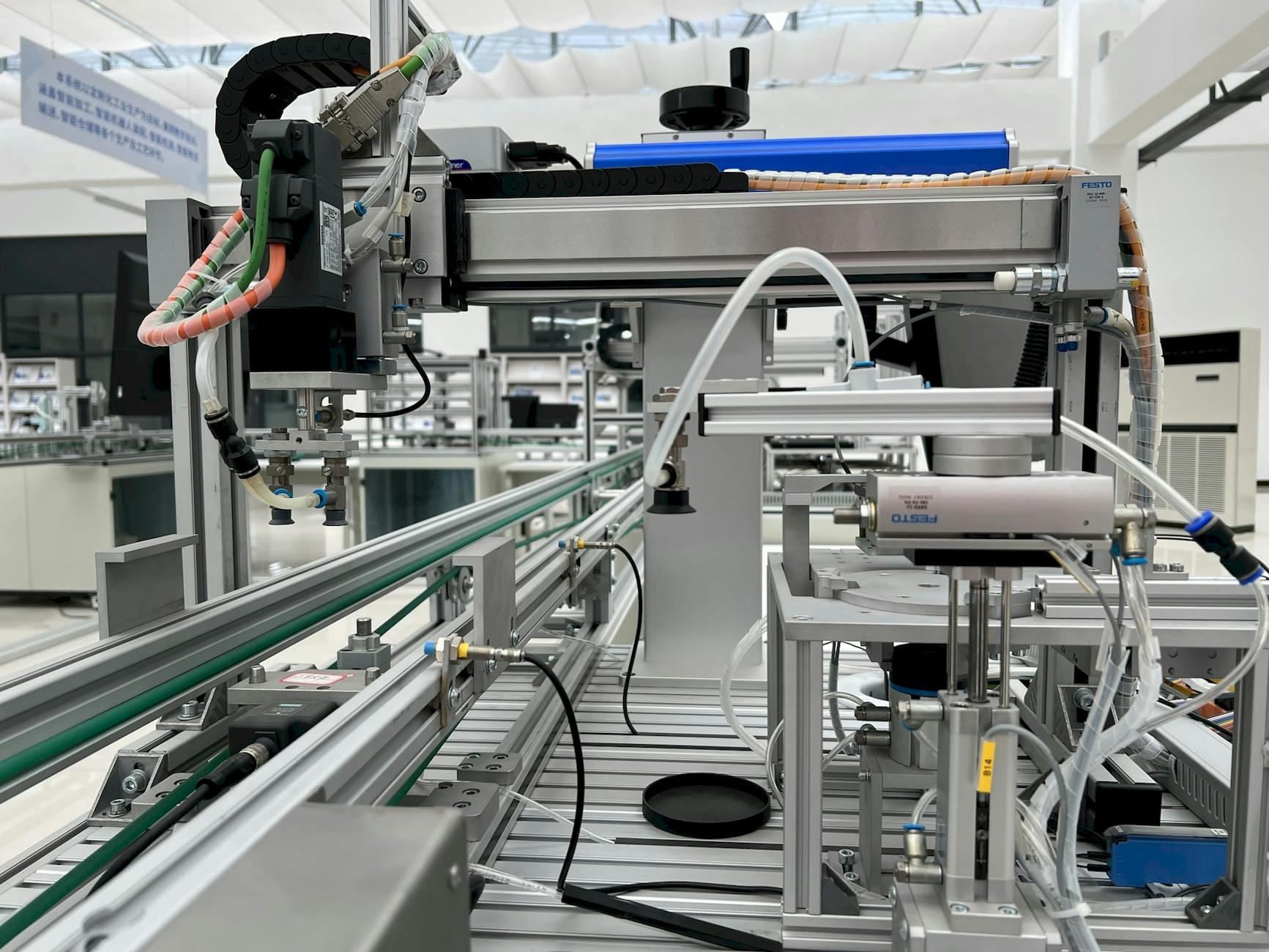
Emerson's strategic pivot towards high-growth automation solutions is a cornerstone of its long-term growth narrative, positioning the company squarely within a booming industrial automation market. This market is projected to reach $261.23 billion in 2026 and expand at a robust compound annual growth rate (CAGR) of 9.7% to $455.26 billion by 2033. Emerson, as a global automation leader, is a key player in this transformation, delivering advanced technologies that help customers optimize operations and accelerate innovation across diverse industries.
The company's focus on software-defined automation and its leadership in high-growth verticals are critical differentiators. In Q1 2026, Emerson's Software & Systems segment saw a 5% increase in reported sales and 3% underlying sales growth, with the annual contract value of its software growing 9% year-over-year to $1.6 billion. This highlights the increasing importance of software and digital solutions in enhancing productivity and efficiency for industrial clients. The hardware segment, which includes components like industrial robots, PLCs, and sensors, is also a significant contributor, estimated to hold the highest market share of 53.8% in 2026 due to its indispensability in operational processes.
Recent strategic collaborations underscore Emerson's commitment to expanding its automation footprint. The partnership with OPSWAT, announced on April 16, 2026, aims to strengthen cybersecurity for critical infrastructure operators by integrating safe patch management capabilities into Emerson's Ovation™ Automation Platform. This move addresses a growing concern in the industrial sector, where operational technology (OT) systems are increasingly vulnerable to cyber threats, further embedding Emerson's solutions into essential infrastructure.
Furthermore, Emerson's collaboration with Strategic Biofuels, announced on April 2, 2026, to deliver renewable carbon-neutral power to Louisiana, showcases its role in the energy transition. By providing advanced technologies for a first-of-its-kind biomass facility with carbon capture and sequestration, Emerson is tapping into the burgeoning demand for sustainable industrial solutions. These initiatives not only diversify Emerson's revenue streams but also align with global trends towards digitalization, decarbonization, and enhanced operational resilience, reinforcing its position as a leader in the industrial automation landscape.
What Are the Key Drivers and Headwinds for Emerson's Segments?
Emerson's diverse operational segments face a mixed bag of drivers and headwinds, reflecting the complex global industrial landscape. The Intelligent Devices segment, which includes sensors and final control solutions, is projected to grow 2% to 3% in Q2 and 4% for the full year. This growth is primarily supported by stable Maintenance, Repair, and Operations (MRO) demand, particularly strong in North America, and the phased delivery of its project backlog. However, this segment also grapples with continuing weakness in European markets, which could temper overall performance.
The Software & Systems segment, a key growth engine, saw underlying sales growth of 3% in Q1, driven by robust demand for power solutions and momentum in Test & Measurement, which surged 11% year-over-year. The company's focus on software-defined automation continues to attract customers deploying capital in longer-cycle projects. However, the Q2 outlook for this segment is impacted by a $0.09 per share headwind from software contract renewal dynamics, which could temporarily depress reported growth rates compared to the prior year.
Geographically, North America, India, and the Middle East & Africa are highlighted as regions of strong demand and growth. These areas are seeing significant capital deployment in Emerson's growth verticals, indicating healthy industrial activity and investment in automation. Conversely, management has explicitly cited softness in European and Chinese markets as a persistent headwind. This regional drag contributed to the Q1 orders-to-sales disconnect and remains a critical factor that could weigh on Q2 revenue execution.
The company's overall underlying sales growth is expected to be 1% to 2% in Q2, accelerating to approximately 4% for the full year. This acceleration is predicated on strong orders momentum and the lapping of the software contract renewal dynamic in the second half of the fiscal year. Excluding the impact of software contract renewals, Emerson anticipates a more robust 3% to 4% growth for Q2 and 5% for the full year. This nuanced outlook suggests that while underlying demand remains solid, specific market conditions and contract cycles will influence reported quarterly figures, making management's commentary on these factors particularly important during the earnings call.
Is Emerson's Valuation Justified by Its Financial Health and Outlook?
Emerson Electric's current valuation metrics present a mixed picture, reflecting both its established market position and the growth expectations embedded in its stock price. Trading at $146.35 with a market capitalization of $82.29 billion, EMR's P/E ratio stands at 35.56. This is considerably higher than the sector average, suggesting that investors are pricing in future growth and the company's strategic shift towards higher-margin automation software and solutions. The EV/EBITDA of 19.02 also points to a premium valuation, indicating that the market values Emerson's operational profitability and enterprise value.
Despite the elevated valuation multiples, Emerson demonstrates solid financial health and a commitment to shareholder returns. The company's gross margin of 52.8% and operating margin of 19.9% (TTM) are robust, with an adjusted segment EBITA margin of 27.7% in Q1 2026 providing a significant buffer against top-line volatility. This margin strength is a key reason why the raised full-year EPS target of $6.40 to $6.55 remains credible, offering operational flexibility to absorb market pressures and fund strategic initiatives.
Emerson's capital return strategy is also a significant factor supporting its valuation. The company completed $250 million in share repurchases during Q1 2026 and has a long-term target of returning $10 billion to shareholders by 2028, comprising $6 billion in share repurchases and $4 billion in dividends. This commitment to systematically reducing the share count and providing consistent dividends (current yield 1.46%) creates a tangible floor for the stock and enhances shareholder value, even amidst market fluctuations.
However, investors must weigh these strengths against potential risks. The current ratio of 0.84 indicates a relatively tight short-term liquidity position, though this is common for large industrial companies with established credit lines. The net debt/EBITDA of 2.45 suggests a manageable leverage profile. While analysts maintain a "Buy" consensus with a median price target of $168.00, implying a 14.8% upside from the current price, the stock's recent 7.8% decline since the Q1 earnings report highlights its sensitivity to execution and market sentiment. The market's reaction to Q2 results will be a crucial test of whether Emerson can justify its premium valuation through accelerated sales growth and continued margin expansion.
What Does This Mean for Investors?
For investors considering Emerson Electric, the upcoming Q2 earnings report on May 5th represents a pivotal moment that could either validate the company's growth narrative or expose underlying vulnerabilities. The market has already reacted with skepticism following the Q1 report, despite an EPS beat, as the significant gap between underlying orders (+9%) and sales (+2%) raised concerns about execution. A strong Q2 performance, particularly in narrowing this gap and demonstrating sales acceleration, is crucial for restoring investor confidence and driving the stock higher.
The bull case for EMR rests on its strategic transformation into a focused automation leader, benefiting from secular trends in digitalization, industrial IoT, and sustainable solutions. Its robust margins, aggressive capital return program, and strong demand in key regions like North America and India provide a solid foundation. The company's ability to integrate cutting-edge technologies, as seen in its cybersecurity and biofuels partnerships, positions it for long-term relevance and growth within the expanding industrial automation market.
Conversely, the bear case highlights the persistent regional softness in Europe and China, which could continue to dampen sales growth. The impact of software contract renewal dynamics on Q2 EPS, though temporary, adds another layer of complexity. If Emerson fails to meet or exceed the consensus EPS estimate of $1.55 and provide a confident outlook, the stock, currently trading at a premium valuation, could face further downward pressure. The market will be looking for concrete evidence that the raised full-year guidance is firmly on track, not just an aspiration.
Ultimately, investors should monitor three key areas in the Q2 report: the underlying sales growth rate, particularly in relation to orders; any updates on regional market conditions, especially in Europe and China; and management's commentary on the full-year outlook and backlog conversion. Emerson's long-term potential in industrial automation remains compelling, but near-term performance and clear communication will dictate whether the stock can break out of its recent trading range and move towards analyst price targets.
Emerson Electric stands at a critical juncture, with its Q2 earnings poised to either solidify its growth trajectory or expose the challenges of its strategic pivot. Investors should approach the upcoming report with a focus on operational execution and forward-looking guidance, as these will be the true determinants of EMR's near-term stock performance and long-term value creation.
Want deeper research on any stock? Try Kavout Pro for AI-powered analysis, smart signals, and more. Already a member? Add credits to run more research.
Related Articles
Is New Gold (NGD) Poised for a Q4 Earnings Beat
Category
You may also like


Will Exelon (EXC) Beat Estimates Again in Its Next Earnings Report?

Is Trending Stock Emerson Electric Co. (EMR) a Buy Now?

Emerson Electric (EMR) Earnings Expected to Grow: Should You Buy?
Breaking News
View All →Featured Articles
Top Headlines

Apple defeats bid for new Apple Watch import ban at US trade tribunal

The Brutal Truth About Tesla Stock ( I'm Less Bearish)

I Sold My Warner Bros. Shares and Bought These 2 Growth Stocks Instead.

Netflix: Why The 9% Dip Is A Gift For Long-Term Investors