MarketLens

Log in

Is Enphase Energy's Recent Performance a Blip or a Trend

14 hours ago
SHARE THIS ON:

Is Enphase Energy's Recent Performance a Blip or a Trend

Key Takeaways

  • Enphase Energy (ENPH) is navigating a challenging residential solar market downturn, evidenced by a 21% revenue decline and a net loss in Q1 2026, yet its strategic pivot into commercial solar and advanced battery tech offers significant upside.
  • The company's new IQ9 microinverter, featuring Gallium Nitride (GaN) technology, is a critical spearhead into the 480V commercial market, promising higher efficiency and reliability.
  • Enphase's integrated ecosystem, including the IQ Battery 5G and bidirectional EV charging, positions it strongly in the rapidly expanding Home Energy Management Systems (HEMS) market, projected to reach $9.54 billion by 2031.

Is Enphase Energy's Recent Performance a Blip or a Trend?

Enphase Energy's latest financial report for Q1 2026 paints a picture of a company grappling with a challenging market, yet simultaneously laying groundwork for future growth. The company reported net revenues of $282.9 million, a 21% year-over-year decline from $356.1 million in Q1 2025. This contraction was primarily driven by an 8% decrease in microinverter units sold and a substantial 39% drop in IQ Battery megawatt-hours shipped, reflecting softer demand, particularly in Europe where international revenue plummeted 47%.

The quarter also saw a significant compression in gross margin, falling from 47.2% to 35.5%, leading to a net loss of $7.4 million compared to a net income of $29.7 million in the prior year. This margin pressure was exacerbated by a $18.9 million loss on the sale of Advanced Manufacturing Production Tax Credits (AMPTC) generated in 2025, alongside fair value adjustments on new credits. While these figures are concerning, they reflect a broader cyclical downturn in the residential solar market, characterized by high interest rates and regulatory shifts like California's NEM 3.0, which impacted the sector throughout 2023-2024.

Despite these headwinds, Enphase maintains a robust balance sheet. The company generated $102.9 million in operating cash flow during Q1 2026 and ended the quarter with $497.5 million in cash and equivalents, plus $433.1 million in marketable securities. Notably, Enphase fully repaid $632.5 million of its 2026 convertible notes, significantly de-leveraging its position. This financial resilience, coupled with a restructuring plan initiated in January 2026 to align workforce and costs, suggests that management is proactively addressing the current market environment while preserving capital for strategic initiatives. The stock currently trades at $34.30, near the lower end of its 52-week range of $25.78 to $54.43, indicating investor caution but also potential for recovery if market conditions improve and strategic pivots gain traction.

How is Enphase Innovating to Capture New Markets?

Enphase Energy is not merely weathering the storm; it's actively innovating to diversify its revenue streams and capture new market segments beyond its traditional residential solar stronghold. A significant leap in its product lineup for 2026 is the IQ9 Microinverter, which represents the company's spearhead into the lucrative commercial market. This new microinverter is designed for 480V commercial projects and is a first for Enphase in incorporating Gallium Nitride (GaN) technology.

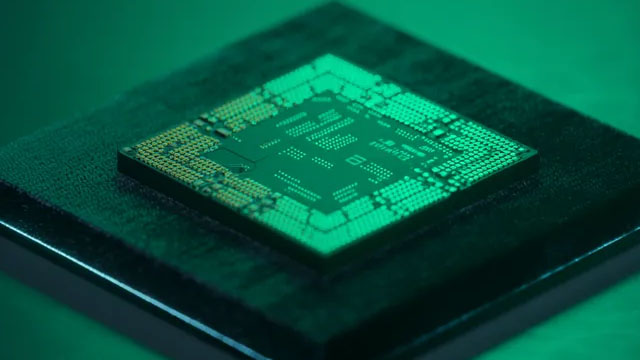
GaN technology replaces conventional silicon components, enabling faster switching, cooler operation, and improved reliability. This translates into a remarkable 97.5% conversion efficiency for the IQ9N-3P, a crucial factor for commercial installations where every percentage point of efficiency directly impacts profitability. The partnership with Infineon, a market leader in power semiconductors, for its CoolGaN bi-directional switch technology, underscores the advanced engineering behind the IQ9 series. This innovation not only simplifies design complexity and lowers installation costs but also allows Enphase to service a much larger segment of the commercial market, moving beyond residential applications.

The IQ9 Commercial Microinverters must be connected to the IQ Gateway Commercial Pro, which acts as the communication and control hub, offering real-time monitoring, energy management, and advanced grid features. This integrated approach extends Enphase's "no single point of failure" architecture, a key competitive advantage where the failure of one microinverter only affects a single panel, ensuring the rest of the system continues to produce power. This reliability is particularly appealing for commercial clients who prioritize uninterrupted energy supply. Furthermore, the IQ9 microinverter will be made with domestic content in U.S. manufacturing facilities, ensuring compliance with "Buy America Act" rules and eligibility for federal infrastructure projects, providing a significant competitive and tax advantage.

What are the Growth Drivers for Enphase's Home Energy Solutions?

Enphase Energy's growth drivers extend beyond its microinverter technology into a comprehensive suite of home energy solutions, positioning it as a key player in the burgeoning Home Energy Management Systems (HEMS) market. The company's IQ Battery 5G, its fifth-generation battery, is a significant offering. This modular design reduces installation time by 50% and substantially lowers the cost per kilowatt-hour, making energy storage more accessible and appealing to homeowners. The modular architecture also means homeowners can start small and scale up their storage capacity as needed, while its distributed design ensures exceptional reliability, as the rest of the system continues running even if one module underperforms.

Beyond storage, Enphase is deepening its footprint in the "smart home" ecosystem through bidirectional charging for Electric Vehicles (EVs). This innovation allows an EV to power a home during an outage, effectively turning the car into a massive mobile battery. As more automakers adopt bidirectional standards, Enphase is strategically positioned to become the "operating system" of the garage, integrating EV charging with solar generation and battery storage into a seamless home energy management system. This V2H (Vehicle-to-Home) integration is a powerful differentiator, addressing the growing demand for energy resilience and independence.

The broader market trends are highly favorable for Enphase's integrated solutions. The Home Energy Management market, valued at $4.43 billion in 2026, is projected to grow at a 16.58% CAGR to reach $9.54 billion by 2031. This growth is fueled by declining prices for IoT sensors, stricter building energy codes, and rising retail electricity tariffs. Enphase's vertically integrated hardware and software ecosystem, centered around the Enphase Energy System, allows it to capture recurring-style revenue through its Enlighten monitoring platform and grid services, where it aggregates residential batteries into "Virtual Power Plants" (VPPs) to support utilities during peak demand. This comprehensive approach, blending solar, storage, and smart energy management, positions Enphase to capitalize on the increasing electrification of homes and the strain on global grids.

How Does Enphase Stack Up Against Competitors?

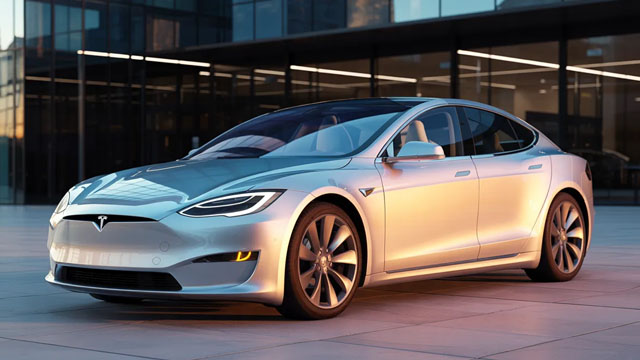
Enphase Energy operates in a highly competitive landscape, facing a "two-front war" against established giants and agile innovators. In the energy storage market, Tesla (NASDAQ: TSLA) with its Powerwall 3, which includes an integrated string inverter, is a formidable competitor. Tesla currently leads the storage market with an estimated 60% share, leveraging its strong brand recognition and aggressive pricing. However, Enphase's core competitive edge lies in its "no single point of failure" architecture. Unlike Tesla's centralized systems, where a single inverter failure can shut down the entire solar array, Enphase's microinverters ensure that if one unit fails, the rest of the system continues producing power. This reliability claim resonates strongly with homeowners and commercial clients alike.

Another key rival is SolarEdge Technologies (NASDAQ: SEDG), once a neck-and-neck competitor in the inverter market. While SolarEdge utilizes a string inverter with optimizers, Enphase's distributed microinverter approach generally offers superior shade handling with fully independent per-panel Maximum Power Point Tracking (MPPT). This is a significant advantage for complex residential rooftops with obstructions like HVAC units or skylights. NuWatt Energy, a prominent installer, even defaults to Enphase IQ8+ microinverters for residential projects, citing the 25-year standard warranty, no single point of failure, and superior shade handling as outweighing the $1,500-$2,500 price premium over SolarEdge for a typical 8 kW system. SolarEdge has also reportedly struggled with inventory gluts in Europe, allowing Enphase to gain market share in the premium European residential segment.

Beyond direct hardware competition, the battleground is shifting towards Home Energy Management Systems (HEMS). Companies like Huawei (Luna Series) and Sungrow are strong in European and Asian markets, offering AI-driven energy management and modular battery designs. Enphase's strategy of vertical integration, combining its microinverters, IQ Batteries, and the Enlighten software platform, aims to create a sticky ecosystem. This allows it to offer a comprehensive solution that integrates solar generation, battery storage, and energy management into a single cloud-based platform, generating recurring revenue through software and grid services. While the upfront cost of Enphase systems can be higher ($0.50-$0.70/W installed compared to SolarEdge's $0.30-$0.45/W), the long-term reliability, extended warranty, and integrated ecosystem often justify the premium for many customers.

What are the Key Risks and Opportunities for Investors?

Investing in Enphase Energy, despite its innovative edge and market positioning, comes with a distinct set of risks and opportunities that investors must weigh carefully. On the risk side, policy volatility remains a significant concern. The looming "Policy Cliff" of July 2026, where certain U.S. tax incentive deadlines could expire, might trigger a "pull-forward" of demand followed by a sharp drop. This regulatory uncertainty can create significant swings in demand and impact the company's financial performance. Furthermore, while interest rates have stabilized, any return to a "higher-for-longer" environment would immediately hurt residential solar affordability, a segment where Enphase still derives substantial revenue.

Another critical risk is lithium pricing. While battery costs have generally fallen, any supply chain shock in key raw materials like lithium or cobalt could squeeze margins on the IQ Battery line, impacting profitability. Geopolitically, while the push for energy independence in Europe provides a tailwind, local European competitors are beginning to lobby for protectionist tariffs against both U.S. and Chinese firms, which could complicate Enphase's international expansion. The company's Q1 2026 results already showed a 47% decline in international revenue, primarily due to softer European demand and regulatory transitions.

However, the opportunities are equally compelling. The 480V commercial rollout of the IQ9 microinverter is a massive catalyst; if Enphase captures even 10% of the small-to-medium commercial market by 2027, it could potentially double its current revenue base. The growing demand for resilient and efficient power solutions, driven by factors like AI data centers straining global grids, is shifting focus towards "distributed energy," a segment where Enphase's commercial systems are ideally suited. The company's domestic manufacturing strategy, favored by new "Foreign Entity of Concern" (FEOC) rules and the "One Big Beautiful Bill Act (OBBBA)," provides a significant competitive and tax advantage in the U.S.

Finally, Enphase's strong cash position, with over $1.5 billion in cash and marketable securities, presents opportunities for strategic M&A. The company is rumored to be looking at software acquisitions in the grid-balancing and predictive AI space, which could further enhance its HEMS capabilities and create new recurring revenue streams. Analyst sentiment, while currently a "Hold" consensus with a median price target of $40.00, acknowledges the potential, with high-side targets reaching $68.00. The relatively high short interest (15–20%) also suggests the potential for a short squeeze if positive catalysts materialize.

What Does This Mean for Investors?

Enphase Energy (ENPH) stands at a critical juncture, navigating a challenging residential market while strategically pivoting towards high-growth commercial and integrated home energy solutions. The Q1 2026 results reflect the ongoing headwinds, but the company's robust balance sheet and aggressive innovation, particularly with the GaN-powered IQ9 microinverter and the IQ Battery 5G, position it for a strong rebound as market conditions improve.

For investors, the current stock price of $34.30 may represent an attractive entry point for those with a long-term horizon, willing to stomach near-term volatility. The company's focus on reliability, efficiency, and an integrated ecosystem provides a strong competitive moat against rivals like Tesla and SolarEdge. Watch for adoption rates of the IQ9 in the commercial sector and the continued expansion of its HEMS offerings, including bidirectional EV charging, as key indicators of future growth.

Enphase's ability to maintain its premium gross margins while expanding into new markets will be crucial. The clean energy sector is poised for significant growth, and Enphase, with its diversified strategy and technological leadership, remains a compelling play on the future of decentralized power.


Want deeper research on any stock? Try Kavout Pro for AI-powered analysis, smart signals, and more. Already a member? Add credits to run more research.

SHARE THIS ON:

Related Articles

Category

You may also like

Stock News1 hour ago

Enphase Stock Falls After Earnings as Solar Slump Overshadows Data Center Push

Enphase Energy shares fell following its latest earnings report, as weakening U.S. solar demand offset investor optimism regarding the company's strategic expansion into data-center power equipment.
Stock News1 day ago

Can the semiconductor rally last?

Semiconductor stocks face scrutiny regarding the sustainability of their recent rally. Market analysts are evaluating whether current valuations can persist amid shifting sector momentum and broader e...
Stock News3 days ago

Eos Energy Enterprises Rebounds After Collapse: Recovery or Dead Cat Bounce?

Eos Energy Enterprises shares experienced a sharp reversal in late February following a significant price collapse. This volatility highlights the stock's sensitivity to market sentiment within the sm...
Stock News3 days ago

Want Decades of Passive Income? 4 Energy Stocks to Buy Right Now

Energy stocks may see increased volatility as Middle East geopolitical tensions drive oil prices higher. While rising prices could bolster sector earnings, investors should weigh potential gains again...

Breaking News

View All →

Top Headlines

View More →
Stock News23 minutes ago

Booking Holdings Q1 Earnings & Revenues Beat Estimates, Rise Y/Y

Stock News24 minutes ago

AI Growth Crux of AMZN Earnings as 2026 CapEx Tops $200B

Stock News34 minutes ago

Australia to require Google, Meta, TikTok to pay for local news — or face new tax

Stock News45 minutes ago

I'd Buy This Stock If I Lost Everything Today

Stock News54 minutes ago

Alphabet first-quarter results likely to show continued growth, boosted by cloud