Key Takeaways
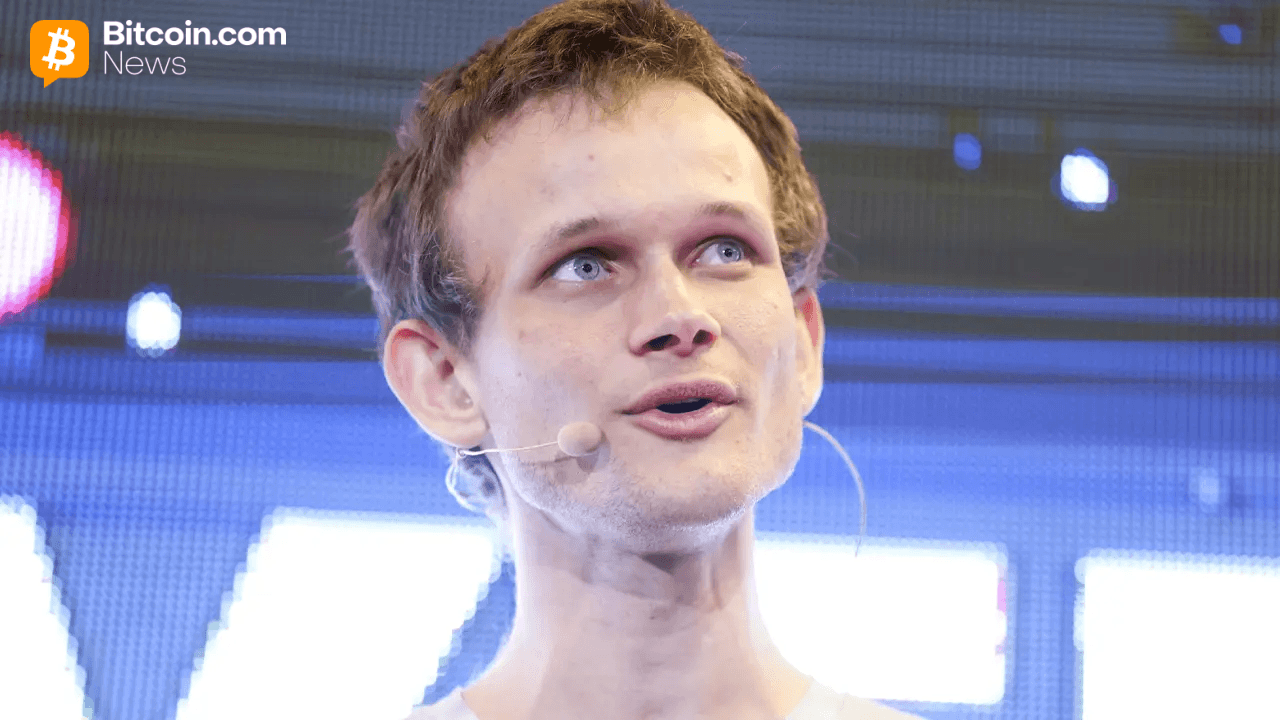
- Ethereum co-founder Vitalik Buterin is pushing for a fundamental shift towards "low-risk DeFi" and socially significant applications, moving away from speculative froth.
- The 2026 Ethereum roadmap prioritizes scalability, user experience, and core layer security, aiming to build a robust foundation for institutional and mass adoption.
- While ETH currently trades at $1,852.76 amidst network weakness, Buterin's vision and the ongoing protocol upgrades could unlock significant long-term value by fostering real-world utility and broader financial inclusion.
Is Ethereum Losing Its Soul? Vitalik Buterin's Call for "Real DeFi"
Ethereum, the undisputed leader in smart contract platforms, finds itself at a critical juncture, prompting its co-founder, Vitalik Buterin, to articulate a refined vision for its future. Buterin has publicly expressed concerns that the broader crypto ecosystem has drifted from its original goals, becoming too focused on speculative "toys or casinos" rather than applications with genuine social significance. This reflection signals a pivotal moment, urging the community to pivot towards what he terms "real DeFi" – a more stable, secure, and utility-driven decentralized finance landscape.
This isn't just philosophical musing; it's a strategic realignment. Buterin explicitly draws a line, defining which DeFi projects truly align with the Ethereum Foundation's direct support. He advocates for a shift away from the high-yield farming and memecoin frenzy that characterized earlier cycles, which he once viewed with skepticism due to their unsustainable yields and inherent risks. Instead, the focus is now squarely on "low-risk DeFi," encompassing reliable on-chain financial tools like payments, savings, fully collateralized lending, and synthetic assets.
The rationale is clear: such applications generate fees for the network while providing meaningful utility, particularly in regions where traditional financial systems are unreliable. This vision aligns with Ethereum's core values, aiming to create permissionless access to money management services without exploiting user data or attention. It’s a call for durable applications over flashy promises, seeking to build a trustworthy financial base layer that can sustain the network economically for decades, rather than relying on transient speculative activity.
This strategic pivot comes as ETH trades at $1,852.76, reflecting a -0.15% change from its previous close of $1,855.52, with a market capitalization of $223.62 billion. The network's 24-hour volume stands at $367.58 million, a notable figure but one that also highlights the underlying sentiment of prolonged weakness, as on-chain fees and network deposits hit multi-year lows. Buterin's push for "real DeFi" is therefore not just about ideals, but about re-anchoring Ethereum's value proposition in a more sustainable and impactful manner, potentially stabilizing its price by attracting long-term utility.
How Will "Low-Risk DeFi" Reshape Ethereum's Economic Engine?
Vitalik Buterin's vision for "low-risk DeFi" isn't merely an ideological stance; it's a blueprint for Ethereum's long-term economic sustainability, drawing a compelling analogy to Google's foundational success. Just as search and advertising became Google's economic engine, Buterin believes that reliable, low-risk financial tools can serve as Ethereum's anchor revenue stream. This model emphasizes generating revenue through meaningful utility rather than speculative froth, strengthening the ETH economy by providing permissionless access to essential financial services globally.
This shift is critical for Ethereum to evolve beyond a platform primarily associated with high-risk ventures. The ecosystem has matured significantly, with protocols like Aave and MakerDAO becoming safer, pushing hacks and vulnerabilities to the fringes of more experimental projects. This hardening of protocol security and decline in tail risks means that for many around the world, automated and transparent DeFi rails may now feel safer than local banks, making the timing ripe for this embrace of low-risk applications.
The implications for the ETH token are substantial. By focusing on practical applications like payment systems, savings accounts, and collateralized lending, low-risk DeFi ensures that ETH remains locked in the system, promoting network activity and providing crucial liquidity. This creates a durable backbone for Ethereum, fostering economic growth that aligns doing well with doing good. It moves the network away from relying on the "constant cycle of hype" and towards a more stable, predictable value proposition.
Beyond simple payments and savings, this foundation can evolve into deeper financial inclusion. Buterin envisions innovations such as undercollateralized lending via on-chain reputation and new forms of stable value like CPI-based flatcoins, whose purchasing powers are designed to remain constant, offering true stability beyond fiat pegs. These advancements represent a significant step towards making finance more accessible, secure, and reliable for underserved users, cementing Ethereum's place as a key player in global finance for the long haul.
What Does Buterin's Vision Mean for Institutional Adoption and Privacy?
Buterin's push for "real DeFi" and the broader Ethereum Foundation's refined strategy directly address key barriers to institutional adoption: security, privacy, and regulatory clarity. Institutions demand robust, predictable environments, and the move away from speculative, high-risk applications towards stable, utility-driven DeFi inherently de-risks the ecosystem. This strategic direction, emphasizing core values like decentralization, privacy, and security, is paramount for attracting traditional finance players who prioritize stability and compliance.
A significant development in this regard is the Enterprise Ethereum Alliance's (EEA) launch of a Privacy Working Group. This initiative aims to accelerate Ethereum adoption in businesses by addressing one of the most critical concerns for corporate use cases: data confidentiality. By developing privacy-preserving tools and standards, the EEA is paving the way for enterprises to leverage Ethereum's benefits without exposing sensitive information on a public blockchain, a non-negotiable requirement for many industries.
Moreover, Buterin's proposal for "smarter" DAOs, which includes the integration of AI stewards and privacy-preserving tools like zero-knowledge proofs (ZKPs), directly enhances the network's appeal to institutions. ZKPs protect voter identity and sensitive data, preventing coercion and bribery, which are crucial for maintaining integrity in decentralized governance. This focus on secure, transparent, yet private governance mechanisms builds a stronger trust layer, essential for institutional participation in on-chain decision-making and asset management.
The 2026 Ethereum roadmap further reinforces this institutional appeal by prioritizing security hardening, research into censorship resistance, and measurable security metrics. These efforts are particularly important for use cases like stablecoin settlement and tokenized funds, where trust in the network's resilience is a key requirement. By setting higher standards for protocol design and encouraging deeper innovation in security and privacy, Ethereum is actively lowering its perceived risk premium, making it an increasingly viable choice for corporate blockchain adoption.
The integration of Artificial Intelligence (AI) and the evolution of Decentralized Autonomous Organizations (DAOs) are poised to fundamentally transform Ethereum's future, moving beyond current limitations to unlock new levels of efficiency and participation. Vitalik Buterin has highlighted that while DAOs are a valuable concept, they need to become "significantly more intelligent," moving beyond simple token-based voting to more sophisticated governance structures. This involves deeper thinking about specific organizational goals and aligning governance mechanisms accordingly.
Buterin's recent proposals suggest deploying individual AI models, trained on users' values, to automate voting on thousands of DAO decisions. This addresses the pervasive issue of low participation rates (typically 15% to 25%) and the concentration of power among large token holders. Personal AI agents could infer user preferences from historical data, conversation history, and direct statements, casting votes on their behalf and flagging only critical issues for human review, thereby solving the "attention problem" that plagues current DAOs.
This vision extends to leveraging AI for enhanced security and proposal quality. Buterin suggests using prediction markets to incentivize high-quality proposals and filter out spam, especially as generative AI might flood open forums with low-quality content. AI agents could bet on the likelihood of proposals being accepted, rewarding valuable contributions and penalizing noise. Furthermore, privacy-preserving tools like multi-party computation (MPC) and trusted execution environments (TEEs) would enable AI agents to assess sensitive data, such as job applications or legal disputes, without exposing it on a public blockchain.
At its core, Ethereum is envisioned as a "decentralized world computer" with "permissionlessness" as its fundamental attribute. This means AI agents, like humans or companies, will have equal access rights to hold assets, make transactions, and participate in DAO governance on Ethereum. This synergy between AI and blockchain offers a defense line against digital authoritarianism, ensuring diversity and freedom in a future technological world potentially dominated by centralized AI. The ongoing development of zkEVM client development also supports this, enhancing scalability and network resilience for complex AI-driven applications.
What Are the Key Risks and Opportunities for ETH Investors?
For investors eyeing Ethereum, the current landscape presents a complex mix of risks and significant long-term opportunities, particularly given Buterin's strategic pivot and the ambitious 2026 roadmap. On the risk side, ETH's current price of $1,852.76 is a stark reminder of its volatility, trading significantly below its 52-week high of $4,955.90 and its 200-day moving average of $3,478.27. This prolonged weakness, marked by multi-year lows in on-chain fees and network deposits, suggests that until derivatives metrics stabilize, ETH price remains at risk.
Regulatory uncertainty, particularly in the U.S., continues to be a major headwind. Delays in clear crypto regulation could hinder Ethereum's growth and slow institutional adoption, impacting market confidence. Furthermore, while the network is designed for decentralization, there's a risk of centralization among large staking entities like Bitmine and ETFs, which could undermine the network's trustworthiness and decentralization ethos. The current staking rate, at approximately 30.8% of the total supply (lower than commonly reported figures), also impacts the network's true security posture and economic health.
However, the opportunities stemming from Buterin's vision and the 2026 roadmap are compelling. The shift towards "low-risk DeFi" and socially significant applications promises to build a more stable, utility-driven ecosystem, attracting a broader user base and generating durable revenue. This focus on real-world value, from permissionless payments to CPI-based flatcoins, could significantly increase the intrinsic value of the ETH token over time, moving it beyond speculative cycles.
The 2026 roadmap's emphasis on scalability through Layer 2 solutions, improved user experience via account abstraction, and hardening the core Layer 1 security (including quantum resistance) lays a robust foundation for future growth. These technical advancements are designed to reduce transaction costs, simplify onboarding, and enhance network resilience, all critical for mass consumer and enterprise adoption. If Ethereum successfully executes this strategy, it could cement its role as the foundational infrastructure for a truly decentralized global economy, offering substantial upside for patient investors.
Ethereum's Path Forward: A Bet on Utility Over Hype
Ethereum's journey into 2026 is clearly defined by a strategic pivot towards utility, stability, and genuine social impact, moving decisively away from the speculative froth that has often characterized the broader crypto market. The vision articulated by Vitalik Buterin, combined with the comprehensive 2026 roadmap, paints a picture of a network committed to becoming a core hub for all decentralized applications, permeating various industries beyond just finance. This is a long-term play, optimizing for decades rather than short-term cycles.
The emphasis on "low-risk DeFi," smarter DAOs, and seamless AI integration is not just about technical upgrades; it's about building a resilient, user-friendly, and economically viable ecosystem. While current market metrics for ETH show signs of weakness, the underlying strategic direction aims to re-anchor its value in tangible utility and widespread adoption. For investors, understanding this fundamental shift from hype to substance is crucial for evaluating Ethereum's potential.
Ultimately, Ethereum is betting that true innovation lies in delivering real-world value and fostering a decentralized future that stands as a bulwark against digital authoritarianism. The success of this ambitious roadmap will depend on effective execution, continued community alignment, and the ability to attract compelling applications that resonate with a global audience. If successful, Ethereum could indeed achieve its "Google Search moment," establishing a durable economic engine that drives sustained growth and cements its position as a foundational technology for the next era of the internet.
Want deeper research on any stock? Try Kavout Pro for AI-powered analysis, smart signals, and more. Already a member? Add credits to run more research.