MarketLens
Is Europe's Defense Spending Boom a Real Opportunity for US Contractors

Key Takeaways
- European rearmament efforts, driven by a 5% NATO GDP spending target by 2035, are creating a multi-decade tailwind for US defense contractors, despite EU "Buy European" initiatives.
- Lockheed Martin (LMT) and RTX Corporation (RTX) are particularly well-positioned due to their dominance in advanced air defense, missile systems, and fighter jets, which are critical European priorities.
- General Dynamics (GD) and L3Harris Technologies (LHX) offer diversified exposure to land systems, naval modernization, and crucial C4ISR capabilities, essential for Europe's strategic autonomy.
Is Europe's Defense Spending Boom a Real Opportunity for US Contractors?
Absolutely, the surge in European defense spending presents a substantial, long-term opportunity for leading US defense contractors, even as the EU pushes for greater strategic autonomy. Geopolitical realities, particularly Russia's ongoing aggression, have dramatically reshaped Europe's security landscape, prompting nations to accelerate rearmament and modernize their forces at an unprecedented pace. This shift is not merely a temporary bump; it's a structural change, with NATO allies committing to invest 5% of their GDP annually on core defense and security-related spending by 2035, a significant increase from the previous 2% target.
This commitment translates into hundreds of billions of euros in new contracts, targeting critical deficiencies identified by the European Commission, such as air and missile defense, artillery systems, ammunition, drones, and cyber capabilities. While European firms like Rheinmetall and BAE Systems are clear beneficiaries, the sheer scale of demand and the sophistication of certain systems mean that US primes remain indispensable partners. European defense procurement from the US accounted for approximately 64% of total procurement by European NATO countries between 2020 and 2024, highlighting a deep, established reliance that cannot be easily or quickly severed.
The EU's "ReArm Europe" plan, initially announced in February 2025, envisions up to €800 billion in additional defense spending capacity across the bloc, complemented by initiatives like the Security Action for Europe (SAFE) instrument, a €150 billion "loans for arms" program. While these programs aim to promote EU firms, the reality is that many European defense companies still rely on US-made components for their weapon systems, and the US defense industrial base offers scale and advanced technology that Europe currently lacks. This creates a complex but ultimately favorable environment for US contractors with established relationships and superior capabilities.
Consider the UK, which plans to increase defense spending to 2.5% of GDP by 2027 and add up to 12 attack submarines as part of the AUKUS program. Germany has loosened limits on government borrowing to allocate defense investments, and Eastern European nations are well above the spending targets. This broad-based commitment across the continent, coupled with the existing integration of US systems into European defense architectures, ensures that American defense giants will continue to play a pivotal role in Europe's rearmament story for years to come.
Which US Defense Giants Are Best Positioned for European Growth?
While European defense companies like Rheinmetall and Saab have seen significant contract wins, several US-accessible defense giants are uniquely positioned to capitalize on Europe's accelerated rearmament due to their specialized capabilities and existing partnerships. The focus on air defense, advanced missile systems, and next-generation combat aircraft directly plays into the strengths of companies like Lockheed Martin and RTX Corporation. These firms offer proven, high-performance solutions that European nations are urgently seeking to bolster their defenses against evolving threats.
Lockheed Martin (LMT), currently trading at $627.27 with a market cap of $145.15 billion, stands out as a prime beneficiary. Its F-35 stealth fighter jet program, for which Lockheed is the prime contractor, is a cornerstone of many European air forces. Components are manufactured across allied nations, including Denmark and the UK, demonstrating deep integration. The company's missile systems, particularly the Patriot air defense system and its GEM-T interceptors, are in high demand, especially after Denmark chose MBDA's SAMP/T over the American Patriot for its air defense needs, signaling a competitive but still crucial market. Replenishing missile stockpiles and upgrading air defense capabilities are top priorities for European nations, and Lockheed's portfolio is central to these efforts.
RTX Corporation (RTX), with a market cap of $258.86 billion and trading at $192.85, is another critical player. Its Raytheon division is a global leader in missile defense, including the Patriot system, and advanced air-to-air missiles like AMRAAM, which are widely used by European air forces. The company's Pratt & Whitney division supplies engines for numerous European military aircraft, including the F-35. The ongoing need for air and missile defense, identified as a priority capability by the EU and NATO, ensures a steady stream of demand for RTX's offerings. The company's recent strong performance, with TTM revenue growth of 9.7% and EPS growth of 39.7% in FY2025, underscores its operational strength in meeting global demand.
Beyond these two, General Dynamics (GD) and L3Harris Technologies (LHX) also offer compelling exposure. General Dynamics, trading at $355.28 with a market cap of $96.06 billion, is a major provider of land combat systems, including tanks and infantry fighting vehicles, which are seeing renewed demand across Europe. Its naval systems, such as submarines and destroyers, align with the modernization plans of navies like the UK's. L3Harris Technologies, at $349.34 and a market cap of $65.35 billion, specializes in C4ISR (Command, Control, Communications, Computers, Intelligence, Surveillance, and Reconnaissance) and electronic warfare systems, which are vital for enhancing the interoperability and technological edge of European forces.
How Will Lockheed Martin's F-35 and Missile Systems Drive European Sales?
Lockheed Martin's robust portfolio, particularly its F-35 fighter jet and advanced missile defense systems, positions it as a cornerstone beneficiary of Europe's rearmament. The F-35 Joint Strike Fighter program is not just a US military asset; it's a multinational effort with significant European participation, including manufacturing components in Denmark and the UK. As European nations seek to modernize their air forces and replace aging fleets, the F-35 remains the leading choice for many, offering unparalleled stealth, sensor fusion, and interoperability with NATO allies.
The demand for F-35s is expected to remain strong, despite the ongoing development of next-generation European fighters like the Global Combat Air Program (GCAP) and the Future Combat Air System (FCAS). These indigenous programs face significant development hurdles and infighting, as seen with the FCAS stalling amid disputes between Dassault Aviation and Airbus. This creates a continued reliance on the proven capabilities of the F-35 in the short to medium term, ensuring sustained orders and maintenance contracts for Lockheed Martin across the continent. Any instability in projected F-35 purchases from other countries would significantly upset Lockheed and its subcontractors, highlighting the program's importance.
Beyond fighter jets, Lockheed Martin's missile systems are critical to Europe's urgent need for enhanced air and missile defense capabilities. The Patriot air defense system, a product of Raytheon (now part of RTX) with Lockheed Martin providing key components like the PAC-3 missile, is a highly sought-after solution. While some European nations, like Denmark, have opted for European alternatives such as MBDA's SAMP/T, the overall demand for advanced air defense systems to replenish stockpiles and counter emerging threats remains immense. France and Italy, for instance, have placed additional orders for Aster missiles to bolster their air defense.
Lockheed's role in supplying critical components for these systems, alongside its own direct offerings, ensures a significant revenue stream. The company's long-term analyst estimates reflect this sustained demand, with revenue projected to reach $87.0 billion by FY2029 and $88.9 billion by FY2030. With a current dividend yield of 1.99% and a "Buy" consensus rating from 37 analysts, Lockheed Martin offers investors a stable, growth-oriented play on Europe's defense modernization.
What Role Will RTX and General Dynamics Play in Europe's Defense Buildup?
RTX Corporation and General Dynamics are poised to play pivotal roles in Europe's defense buildup, albeit through different but equally critical avenues. RTX, with its vast portfolio spanning advanced missile systems, air defense, and aerospace components, addresses Europe's most pressing needs in aerial and missile protection. General Dynamics, on the other hand, is a key player in land combat systems and naval modernization, areas where European nations are making substantial investments to enhance ground forces and maritime security.
RTX Corporation's Raytheon division is synonymous with advanced air and missile defense. The Patriot system, a cornerstone of NATO air defense, relies heavily on Raytheon's radar and command-and-control systems, with its GEM-T interceptors being a primary effector. As Europe prioritizes strengthening its air defense shield against ballistic missiles and drones, demand for these proven systems and their associated upgrades, maintenance, and ammunition will remain robust. Furthermore, RTX's Pratt & Whitney engines power a significant portion of the world's military aircraft, including the F-35s being acquired by European nations, ensuring a steady stream of revenue from both initial sales and long-term service contracts. The company's TTM Net Income growth of 41.0% and FCF growth of 75.1% in FY2025 demonstrate its capacity to scale and deliver on these critical programs.
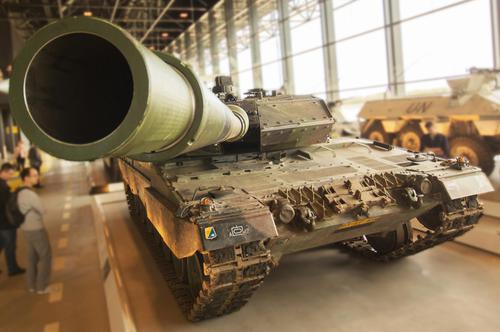
General Dynamics, with its diverse offerings, is set to benefit from Europe's renewed focus on land warfare and naval power. The war in Ukraine has underscored the importance of conventional ground forces, driving demand for modern main battle tanks, infantry fighting vehicles, and artillery systems. While European firms like KNDS and Rheinmetall are leading in some of these areas, General Dynamics' land systems division, which produces tracked, untracked, and amphibious combat vehicles, as well as ammunition and artillery, will likely see increased opportunities through direct sales or partnerships. The company's naval group, responsible for submarines and destroyers, aligns perfectly with the UK's plan to add up to 12 attack submarines and other European naval modernization efforts.
Both companies benefit from long-term analyst confidence. RTX has a consensus price target of $219.20 and a "Buy" rating from 26 analysts, with revenue projected to hit $109.7 billion by FY2029. General Dynamics holds a consensus price target of $404.22 and a "Buy" rating from 34 analysts, with revenue expected to reach $61.6 billion by FY2029. These projections reflect the anticipated sustained demand from global defense spending, with Europe being a significant growth driver for both.
What About L3Harris Technologies and Other Niche Opportunities?
Beyond the traditional defense primes, L3Harris Technologies (LHX) offers a compelling investment thesis for those looking for exposure to the critical, yet often less visible, aspects of Europe's defense modernization. L3Harris specializes in advanced C4ISR (Command, Control, Communications, Computers, Intelligence, Surveillance, and Reconnaissance) systems, electronic warfare, and secure communications. These capabilities are foundational to modern warfare and are precisely what European nations need to enhance interoperability, situational awareness, and their technological edge.
The EU's "Defense Industry Transformation Roadmap" explicitly identifies priority technologies like artificial intelligence, autonomous systems, quantum technologies, and cyber defense as central to its innovation-driven growth strategy. L3Harris is a leader in many of these areas, providing solutions that enable seamless communication across diverse platforms and forces, detect and counter electronic threats, and secure critical networks. As European militaries move towards more integrated, network-centric operations, the demand for L3Harris's expertise will only grow. The company's TTM Gross Margin of 24.1% and Operating Margin of 9.9% highlight its profitability in these high-tech segments.
While the EU aims to foster domestic innovation, the complexity and established nature of L3Harris's systems mean that European partners will likely continue to rely on its technology, either through direct procurement or collaborative development. The company's analyst consensus rating is a "Buy" from 32 analysts, with a median price target of $359.50, suggesting significant upside from its current price of $349.34. Revenue is projected to reach $29.6 billion by FY2030, reflecting sustained demand for its specialized offerings.
Furthermore, smaller, more niche US-accessible companies could also benefit. While the primary focus is on the large primes, the broader rearmament effort creates opportunities across the supply chain. For example, companies involved in advanced materials, specialized components, or dual-use technologies (civilian and military applications) could see increased demand. However, for direct, substantial exposure to the European defense boom, the established primes with their comprehensive portfolios and deep integration into NATO's defense architecture remain the most straightforward and impactful plays.
What Are the Risks and Investor Considerations?
While the tailwinds for US defense contractors from European rearmament are strong, investors must also consider potential risks and challenges. The most significant is Europe's push for "strategic autonomy" and the "Buy European" initiatives. Programs like the European Defense Fund (EDF) and the Security Action for Europe (SAFE) instrument are designed to promote cooperation among EU defense companies and prioritize procurement from EU firms. This could limit the direct market access for US companies, especially for less complex systems or those where European alternatives exist.
Another risk is the inherent fragmentation of the European defense market. Despite calls for greater cooperation, national interests and regulatory barriers often lead to a preference for domestic manufacturing over cross-border investments. This can slow down procurement processes and create inefficiencies, potentially impacting the pace of contract awards for all players, including US firms. The ongoing infighting between major European contractors on projects like FCAS illustrates these challenges.
Political shifts in the US also pose a risk. A potential withdrawal of US security assets from the Euro-Atlantic region or a change in foreign policy priorities could impact transatlantic defense cooperation and the willingness of European nations to invest in US systems. While Europe's rearmament is driven by its own security needs, the historical reliance on the US as a security guarantor has shaped its defense spending patterns.
Finally, valuation is always a consideration. Many defense stocks have seen significant appreciation in recent years due as geopolitical tensions escalated. Investors need to assess whether current valuations, such as RTX's P/E of 38.53 or LHX's P/E of 40.68, adequately reflect the growth prospects while accounting for the aforementioned risks. While the long-term outlook remains positive, short-term market corrections or unexpected geopolitical developments could introduce volatility.
Despite these challenges, the fundamental drivers of increased European defense spending—geopolitical instability, NATO commitments, and the urgent need to modernize—are powerful and enduring. The scale of the required rearmament means that US defense primes, with their advanced technology and production capacity, will remain essential partners for Europe for the foreseeable future, even as the continent strives for greater self-reliance.
The European rearmament drive represents a multi-decade investment cycle, offering compelling opportunities for select US defense contractors. While "Buy European" initiatives will create some headwinds, the sheer scale of demand and the advanced capabilities of companies like Lockheed Martin, RTX, General Dynamics, and L3Harris Technologies ensure their continued relevance. Investors should focus on these established players with diversified portfolios and strong track records, recognizing that geopolitical realities will continue to underpin robust defense spending.
Want deeper research on any stock? Try Kavout Pro for AI-powered analysis, smart signals, and more. Already a member? Add credits to run more research.
Related Articles
Category
You may also like


Can IBM's New Defense Contract Win Boost Top-Line Growth?

Four years into the Ukraine war, is Europe ready for its own army?

Will USAR's Expansion Plan in France Boost ex-China Rare-Earth Supply Chains?
Breaking News
View All →Featured Articles
Top Headlines

Microsoft, Meta, and Alphabet Stocks Are All Getting Hammered. But I Think Only 1 Is Worth Buying

Why the Verdict Against Meta and YouTube Could Change Social Media

How Much Further Could Micron Stock Fall?

Microsoft's role in an AI agent world is a problem for them, says Intelligent Alpha's Doug Clinton