MarketLens
Is Freeport-McMoRan (FCX) Just a Copper Play, or Something More

Key Takeaways
- Freeport-McMoRan (FCX) stands as a copper titan, strategically positioned to capitalize on the global electrification trend with significant capital investments in expanding its core copper assets.
- The emerging Texas lithium frontier, driven by Direct Lithium Extraction (DLE) and co-production with geothermal energy, presents a compelling new domestic supply chain opportunity for critical minerals.
- While FCX is not directly involved in Texas lithium yet, its deep expertise in large-scale resource extraction, U.S. operational footprint, and focus on sustainable mining make it a potential future player or partner in this rapidly evolving market.
Is Freeport-McMoRan (FCX) Just a Copper Play, or Something More?
Freeport-McMoRan, trading under the ticker FCX, is widely recognized as the bellwether for the global copper market, a position it has meticulously cultivated through its vast, geographically diverse operations. Today, the company’s performance is inextricably linked to the price of the "red metal," which has seen significant volatility but a strong rebound to over $6.00/lb by early 2026, driven by an undeniable structural deficit. This isn't just about digging metal out of the ground; it's about supplying the foundational material for the energy transition, a role that positions FCX at the nexus of the old industrial economy and the new digital-green future.
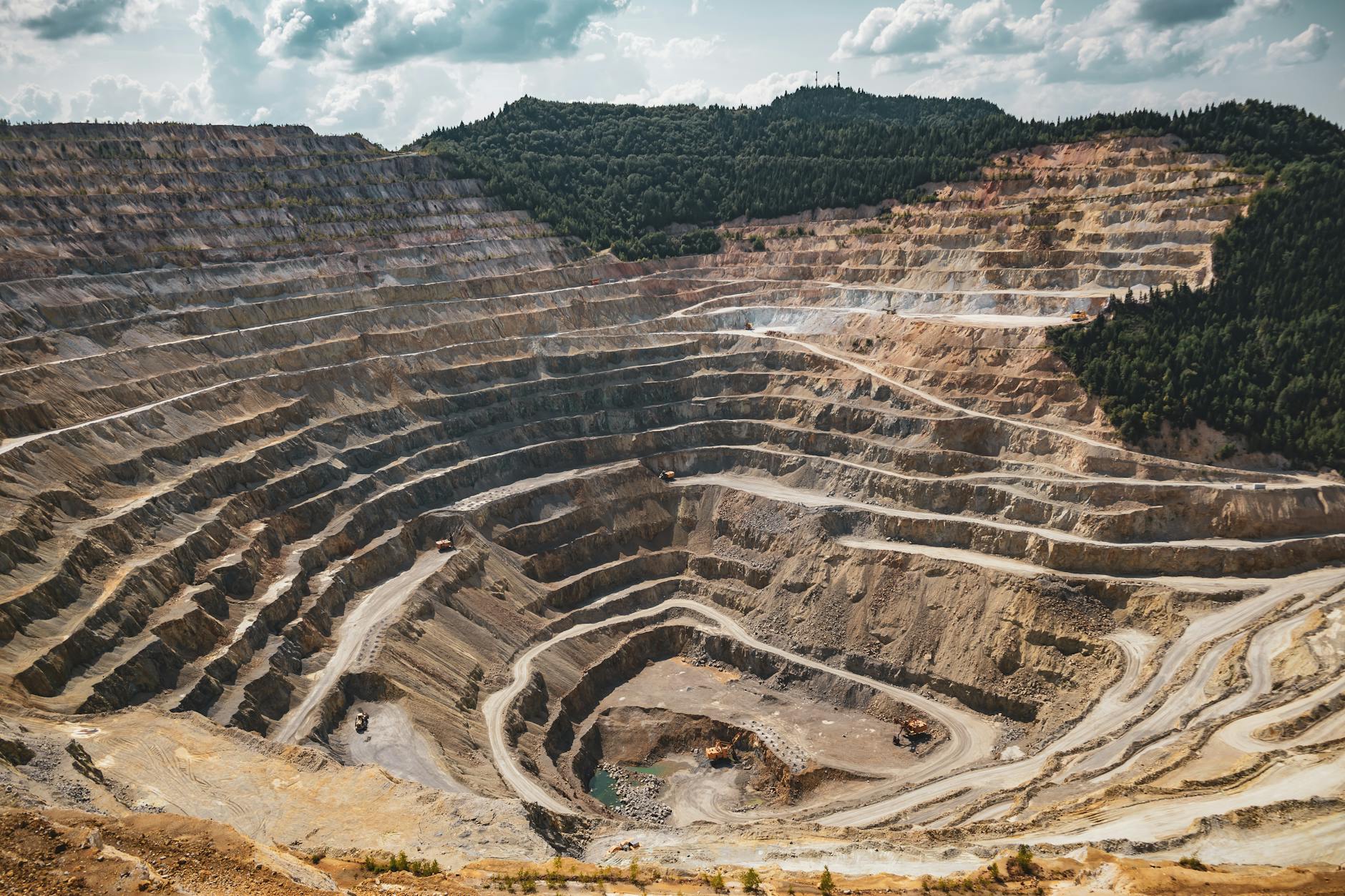
The company’s portfolio spans the highlands of Indonesia, the deserts of Arizona, and the mountains of Peru, reflecting a full spectrum of mining life from exploration to reclamation. FCX boasts approximately 104 billion pounds of proven and probable copper and 23 million ounces of gold, underpinning its near-term growth and resilience. This immense output is critical for countless sectors, from electric vehicle manufacturing and grid infrastructure upgrades to advanced defense systems, making copper a critical mineral for national security.
FCX supplies an impressive 70% of the refined copper produced in the U.S., a testament to its significant domestic footprint and strategic importance. This "America's Copper Champion" strategy is bolstered by a series of initiatives focused on enhancing its U.S. business through innovation and automation. The company is targeting an over 50% increase in U.S. copper production over the next four to five years, a bold ambition that aligns perfectly with the nation's drive for secure, domestic supply chains.
Beyond its sheer scale, Freeport-McMoRan is also a leader in innovation, particularly with its "Americas Leach Innovation Initiative." This breakthrough "leach-to-copper" process, utilizing proprietary catalysts, allows the company to extract copper from old waste rock and low-grade stockpiles. This "Hidden Mine" technology is already contributing an annual run rate of 300 million pounds of copper at a cost of less than $1.00 per pound, effectively creating new production with almost zero additional mining cost.
How is FCX Fueling its Copper Growth and Innovation?
Freeport-McMoRan is aggressively investing in its future, projecting capital expenditures of $4.3 billion-$4.5 billion for 2026 and 2027, a substantial increase from $3.9 billion in 2025. This boosted capex plan underscores the company's commitment to advancing its global and domestic copper footprint, ensuring it remains a leading supplier to a growing market. CEO Kathleen Quirk emphasizes that FCX is "strongly positioned for the future" with a robust portfolio of growth projects.
A significant portion of this investment is allocated to key expansion projects. For 2026, 45% of the discretionary capex, totaling $1.6 billion, is earmarked for early works at the Bagdad copper and molybdenum mine in Arizona. This includes $150 million for engineering, with an incremental investment of about $3.5 billion under review for the mine and processing operations expansion. Construction for Bagdad is expected to span three to four years, promising substantial future output.
Another 42% of the discretionary spend is dedicated to the Kucing Liar copper-gold mine in Indonesia, part of the massive Grasberg complex. Capital spend on Kucing Liar has already reached $1.1 billion, with another $4 billion remaining, and ramp-up expected in the 2030s. This long-term investment highlights FCX's commitment to its Indonesian operations, which have also seen the completion of the Manyar Smelter in 2025, satisfying local "downstreaming" requirements and ensuring full market access for Indonesian concentrates.
Domestically, the Lone Star Copper Mine in Safford, Arizona, is also a focal point. FCX expects to complete a pre-feasibility study this year, targeting an additional 300 million-400 million pounds of copper per year from its expansion. In South America, the expansion of the El Abra copper mine in Chile is under review, with a potential investment of about $7.5 billion (excluding $2 billion for extending leach operations). These projects collectively demonstrate FCX's multi-pronged strategy to meet the projected 5 million metric ton copper supply deficit by 2030.
What's Happening in the Texas Lithium Frontier?
The Texas Oil Belt is undergoing a remarkable transformation, rapidly emerging as America's next lithium frontier, driven by significant extraction activity in northeast Texas since late 2025. This shift is not merely incremental; it represents a major recalibration of U.S. energy priorities and a structural change in economic activity for regions once defined by coal or oil production. The Lone Star State, with its vast geological potential and supportive business environment, is becoming a key player in the domestic lithium supply chain, crucial for electric vehicles and renewable energy storage.
Key projects and players are already making strides. GeoFrame Energy, in partnership with Halliburton, began work in late 2025 to extract lithium from approximately 8,000 acres in Franklin County. This ambitious project aims to lead U.S. domestic lithium production, with projections to create over 100 local jobs and triple Mount Vernon’s city budget through tax revenue. Such developments highlight the profound economic impact these critical mineral ventures can have on local communities.
The Smackover Formation, particularly in Franklin, Titus, and Hopkins counties, is at the heart of much of this activity. T5 Smackover Partners is advancing an integrated project designed to combine baseload geothermal generation with large-scale lithium and bromine extraction. This innovative model reflects a broader trend towards co-production, where lithium is extracted from geothermal brines, offering a potentially low-cost and environmentally friendly pathway to production.
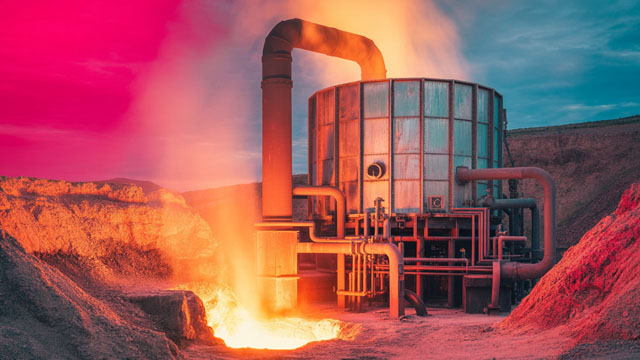
A defining characteristic of Texas lithium extraction is the widespread adoption of Direct Lithium Extraction (DLE) technology. Unlike traditional evaporation ponds, DLE pumps brine from underground, extracts lithium through selective absorption, and then re-injects the brine back into the formation. This closed-loop system minimizes surface disruption and aligns with increasing sustainability goals. Initial meaningful production from DLE units in East Texas is targeted for 2026, with expansion into early 2027, potentially positioning Texas output ahead of several other large-scale domestic projects.
Could FCX Become a Player in the Texas Lithium Rush?
While Freeport-McMoRan is primarily known as a copper and gold mining giant, its strategic positioning, extensive U.S. operational footprint, and deep expertise in large-scale resource extraction make it a compelling, albeit currently indirect, candidate for involvement in the burgeoning Texas lithium frontier. The company’s "America's Copper Champion" strategy, which emphasizes domestic mineral production and supply chain security, naturally aligns with the broader national imperative to secure critical minerals like lithium.
FCX's existing operations in Arizona and New Mexico provide a strong logistical and operational base within the U.S. Southwest, a region with similar geological characteristics to parts of Texas, particularly concerning brine resources. The company's focus on innovation, including hydrometallurgical processes and advanced leaching technologies, could be highly transferable to Direct Lithium Extraction (DLE) from brines. This technological synergy could allow FCX to leverage its R&D capabilities to efficiently and sustainably extract lithium, mirroring its success with the "Hidden Mine" copper initiative.
Furthermore, the growing migration of oil majors and oilfield services companies into the critical mineral space, as seen with ExxonMobil acquiring drilling rights for lithium deposits in Arkansas, sets a precedent for established resource companies diversifying their portfolios. ChampionX, a Texas-based oil and gas services player, is already exploring leveraging existing infrastructure and expertise in brine management for lithium extraction. FCX, with its comparable scale and technical prowess, could either directly enter this market or form strategic partnerships with companies already active in the Texas lithium space, such as GeoFrame Energy or T5 Smackover Partners.
The sheer scale of the Texas lithium opportunity, with potential output of 35,000 to 50,000 metric tons per year of lithium carbonate equivalent from projects like the Smackover, is significant enough to attract major players. For a company like FCX, which is accustomed to managing multi-billion dollar projects and complex supply chains, adding lithium to its portfolio could be a natural extension of its critical minerals strategy, especially given the strong government incentives under the U.S. Inflation Reduction Act (IRA) for domestic mineral production.
What Does FCX's Financial Health Tell Investors?
Freeport-McMoRan's financial health, as reflected in its latest TTM (Trailing Twelve Months) figures, presents a mixed but generally robust picture, especially when viewed through the lens of a cyclical commodity business. The company's market capitalization stands at a substantial $80.99 billion, indicating its significant presence in the global mining sector. However, the stock price recently saw a dip, trading at $56.35, down 4.83% from its previous close of $59.21, with today's volume at 18,655,526. This volatility is characteristic of the sector, but the 52-week range of $27.66 (low) to $69.75 (high) shows considerable upside potential.
From a valuation perspective, FCX trades at a P/E ratio of 36.99, which appears high, suggesting that investors are pricing in future growth and the long-term demand for copper. The P/S ratio of 3.15 and EV/EBITDA of 10.18 are more in line with a mature industrial company. The company's balance sheet appears healthy, with a Current Ratio of 2.29, indicating strong liquidity to cover short-term obligations. Its Debt-to-Equity (D/E) ratio of 0.61 and Net Debt/EBITDA of 0.93 suggest manageable leverage, a significant improvement from a decade ago when the company was focused on debt deleveraging.
Profitability metrics show a Gross Margin of 27.0% and an Operating Margin of 24.4%, demonstrating efficient core operations. The Net Margin of 8.5% translates to an EPS of $1.52. Return on Equity (ROE) is 12.0%, while Return on Invested Capital (ROIC) is 7.8%, indicating decent capital allocation efficiency. However, recent growth figures show some headwinds: while Net Income grew 17.0% and EPS 16.9% year-over-year for FY2025, Operating Cash Flow declined 21.6% and Free Cash Flow (FCF) dropped 52.6%. This FCF decline is notable, resulting in a P/FCF of 14.44 and an FCF Yield of 6.9%, suggesting that while the company generates cash, its recent growth investments are consuming a larger portion.
Despite these fluctuations, analysts remain largely bullish, with BofA Securities raising its price target to $81 from $68 and maintaining a Buy rating in early March 2026. This positive outlook is driven by revised metal price projections and expectations for FCX's earnings power. The company's commitment to returning value to shareholders through a 50% free cash flow return policy, combining dividends (currently yielding 1.1%) and buybacks, further enhances per-share metrics while retaining capital for strategic expansions.
What are the Key Risks and Opportunities for FCX Investors?
Investing in Freeport-McMoRan, like any commodity producer, comes with inherent risks, primarily centered around price volatility. Copper prices, while currently strong, are susceptible to global economic cycles, geopolitical disruptions, and shifts in supply-demand dynamics. A significant downturn in global growth or an unexpected surge in supply could impact FCX's revenue and profitability. Operational risks are also ever-present, particularly in large-scale mining operations like Grasberg in Indonesia, which has faced past challenges such as the Manyar Smelter fire in late 2024 and regulatory complexities.
Geopolitical factors, especially in Indonesia, remain a critical watch point. While the Indonesian government has extended export permits through mid-2026, ensuring cash flow stability, the long-term regulatory environment and the 2041 ownership transfer of a 12% stake to government interests introduce an element of uncertainty. Environmental and social governance (ESG) pressures are also increasing, requiring FCX to balance extraction with progressive land rehabilitation, water recycling, and community engagement to maintain its social license to operate.
However, the opportunities for FCX are equally compelling. The structural copper deficit, projected to reach 5 million metric tons by 2030, is a powerful tailwind. The global push for electrification, driven by electric vehicles, renewable energy infrastructure, and data centers, guarantees sustained demand for copper. FCX's strategic investments in expanding its U.S. and global copper footprint, coupled with its innovative leaching technologies, position it to be a primary beneficiary of this trend.
The potential, albeit indirect, involvement in the Texas lithium frontier represents a significant long-term opportunity. Diversifying into other critical minerals, especially those with strong domestic supply chain incentives, could de-risk FCX's portfolio and open new revenue streams. The company's strong balance sheet and disciplined capital allocation provide the flexibility to pursue such strategic expansions or partnerships. Ultimately, FCX is not just a mining stock; it's a fundamental bet on the physical infrastructure of the modern world, with a compelling narrative of growth underpinned by both its core copper business and potential future plays in emerging critical minerals.
Freeport-McMoRan stands as a revitalized giant, strategically positioned at the intersection of the global energy and AI revolutions. While operational risks and commodity volatility persist, the company’s robust growth strategy and potential for diversification into new critical minerals like Texas lithium offer a compelling long-term investment thesis. Investors should watch for continued execution on its ambitious capex plans and any strategic moves into the burgeoning domestic lithium market.
Want deeper research on any stock? Try Kavout Pro for AI-powered analysis, smart signals, and more. Already a member? Add credits to run more research.
Related Articles
Category
You may also like


Are You Looking for a High-Growth Dividend Stock?

Can Freeport-McMoRan's Project Pipeline Power the Next Growth Wave?

Ero Copper Corp. (ERO) is a Great Momentum Stock: Should You Buy?
Breaking News
View All →Featured Articles
Top Headlines

Meta Mulls Cutting 20% Or More Of Jobs Amid Big AI Spending, Setbacks

Exclusive: Meta planning sweeping layoffs as AI costs mount

The Smartest Growth Stock to Buy With $200 Right Now

Wall Street's Favorite Artificial Intelligence (AI) Bargain Stock for 2026 Is Hiding in Plain Sight