MarketLens

Log in

Is Innovate Robotics' Pivot into Healthcare a Game Changer

1 week ago
SHARE THIS ON:

Is Innovate Robotics' Pivot into Healthcare a Game Changer

Key Takeaways

  • Innovate Robotics is strategically pivoting into the high-growth healthcare robotics sector, targeting surgical assistance and patient care, a move that could redefine its market position.
  • The company's focus on specialized applications and ambulatory surgery centers (ASCs) offers a differentiated strategy against established giants like Intuitive Surgical.
  • While the healthcare robotics market presents significant opportunities, Innovate Robotics must navigate intense competition, regulatory hurdles, and substantial R&D costs.

Is Innovate Robotics' Pivot into Healthcare a Game Changer?

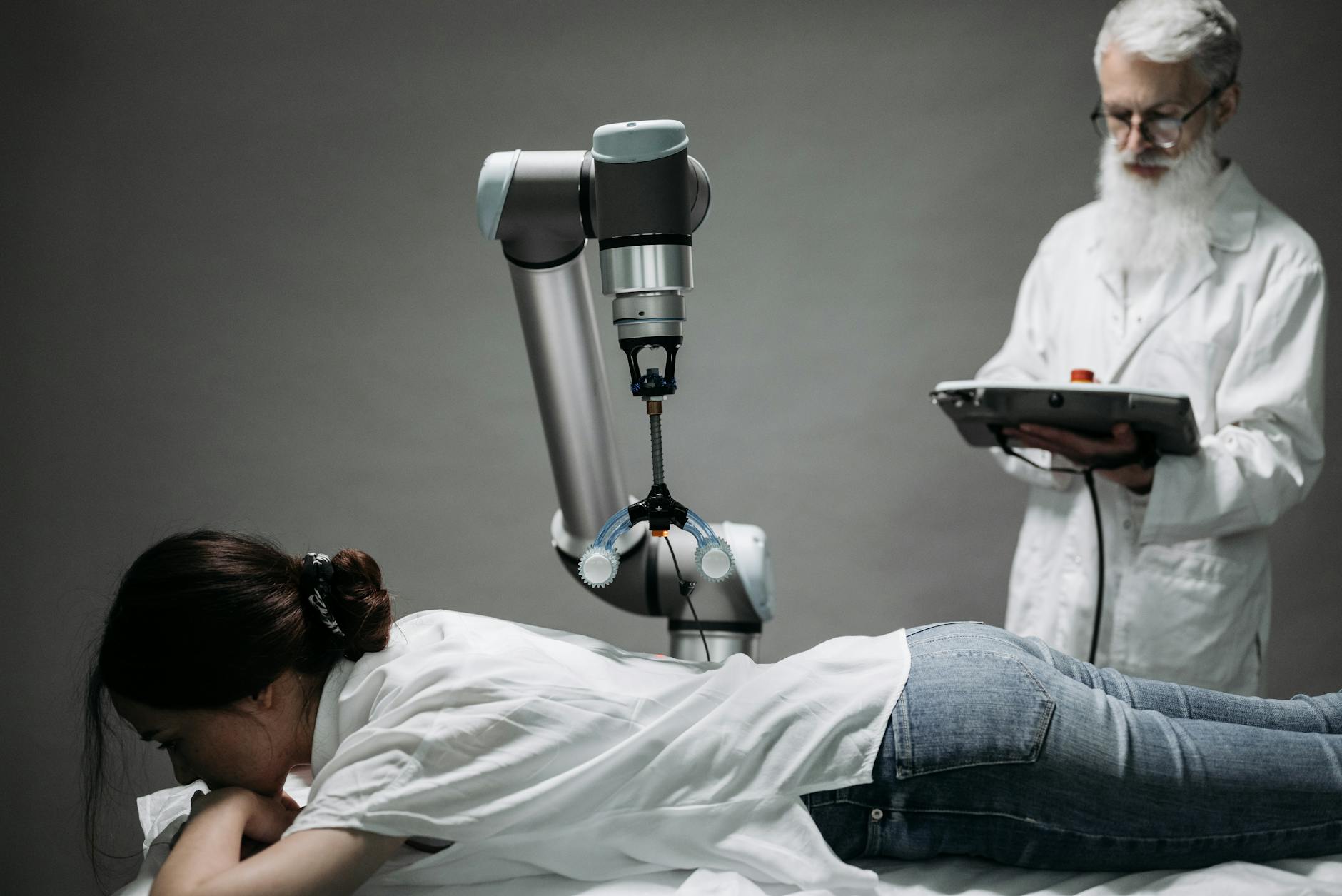
Innovate Robotics is making a decisive strategic shift, directing its innovative capabilities towards the burgeoning healthcare robotics market, specifically in surgical assistance and patient care. This move is not merely an expansion but a fundamental re-orientation, positioning the company to capitalize on one of the fastest-growing segments within the broader robotics industry. The global hospital robots market, for instance, was valued at $2.26 billion in 2025 and is projected to reach $4.6 billion by 2030, growing at a robust CAGR of 14.3% from 2026 to 2035. This significant market potential underscores the rationale behind Innovate Robotics' ambitious new product line.

The healthcare sector is ripe for robotic disruption, driven by an aging global population, increasing demand for minimally invasive surgeries, and a persistent need for operational efficiencies in hospitals. Robotic assistance promises reduced complications, improved patient outcomes, and shorter recovery times, making it an attractive investment for healthcare providers. Innovate Robotics' entry into this space aligns perfectly with these macro trends, aiming to address critical needs in surgical precision and patient handling. The company's new focus on surgical assistance and patient care positions it directly within these high-impact areas, promising to deliver tangible benefits to both medical professionals and patients.

This strategic pivot is particularly noteworthy given the broader trends observed in the robotics industry. The International Federation of Robotics highlighted AI and autonomy as top trends for 2026, capabilities that are increasingly critical in sophisticated medical applications. By integrating advanced AI and autonomous features into its new healthcare product line, Innovate Robotics could carve out a significant competitive edge. The shift reflects a calculated move to leverage its core robotics expertise in a market with strong tailwinds and substantial long-term growth prospects, moving beyond its previous, unspecified market focus.

The company's success will hinge on its ability to execute this pivot effectively, translating its robotic prowess into clinically viable and commercially successful healthcare solutions. This involves not only technological innovation but also navigating complex regulatory pathways and building trust within the medical community. Innovate Robotics is stepping into a market where precision, reliability, and safety are paramount, demanding a rigorous approach to product development and deployment. The potential rewards, however, are immense, offering a pathway to significant market share in a sector undergoing rapid transformation.

What Competitive Advantages Does Innovate Robotics Bring to Healthcare Robotics?

Innovate Robotics enters the healthcare robotics arena with several potential competitive advantages, particularly by targeting underserved niches and leveraging advanced technological integration. While the market is dominated by established players like Intuitive Surgical, Medtronic, and Johnson & Johnson, Innovate Robotics appears to be pursuing a strategy of differentiation rather than direct confrontation. This involves focusing on specialized applications and new sites of care, such as ambulatory surgery centers (ASCs), where larger systems have historically lacked a strong presence. This approach could allow Innovate Robotics to gain a foothold without immediately challenging the incumbents head-on.

One key advantage lies in its potential to develop modular, portable, and more cost-effective robotic systems. Companies like CMR are already finding success with smaller, portable robots that can be moved between hospital departments, offering flexibility that larger, fixed systems cannot. If Innovate Robotics can deliver similar or superior modularity, it could appeal to a broader range of hospitals and ASCs looking to establish or expand their robotics programs without massive upfront infrastructure investments. This focus on accessibility and adaptability could be a significant differentiator in a market increasingly seeking flexible solutions.

Furthermore, the integration of cutting-edge AI and machine learning capabilities into its surgical and patient care robots could provide a substantial edge. The healthcare robotics market is increasingly driven by advances in AI, which enhances precision, expands use-cases, and improves clinical outcomes. Innovate Robotics' ability to embed sophisticated AI algorithms for real-time decision-making, advanced imaging, and predictive analytics could elevate its offerings above competitors relying on older technologies. This technological sophistication, if effectively implemented, could lead to superior performance and patient safety.

Finally, strategic partnerships could accelerate Innovate Robotics' market penetration and validate its technology. Collaborations with leading healthcare providers or established medtech companies, similar to Microbot Medical's co-development agreement with Stryker Corporation, can provide invaluable clinical insights, distribution channels, and regulatory expertise. By aligning with key industry players, Innovate Robotics can mitigate some of the inherent risks of entering a new, highly regulated market. This blend of niche targeting, technological innovation, and strategic alliances forms the core of Innovate Robotics' competitive strategy.

How Will Innovate Robotics Navigate the Surgical Robotics Landscape?

Navigating the surgical robotics landscape requires a nuanced strategy, especially given the entrenched position of Intuitive Surgical and the aggressive entry of other large multinationals. Innovate Robotics' success will likely hinge on its ability to identify and exploit specific market gaps, focusing on areas where existing solutions are either inadequate or non-existent. The trend of "startups going where Intuitive is not" is a critical insight, suggesting that specialized uses and new sites of care, like ambulatory surgery centers (ASCs), offer the most viable entry points.

The market is currently seeing a bifurcation: large companies challenging Intuitive head-on in soft tissue surgery, and smaller competitors differentiating themselves in specialized applications. Innovate Robotics appears to be positioning itself within the latter category. This could involve developing robots for niche surgical specialties, such as cardiac surgery, which is shaping up as a key area for investment, or focusing on specific types of procedures that require unique robotic capabilities. Intuitive Surgical itself recently received FDA clearance for nine new indications in cardiac surgery, highlighting the growth potential in this area.

Another crucial aspect is the shift towards ASCs. These outpatient-focused centers are increasingly performing procedures but have historically lacked a strong robotics presence due to the size and cost of traditional systems. Companies like Distalmotion and Moon Surgical are actively targeting ASCs with smaller, more portable solutions. If Innovate Robotics can develop a system that is not only clinically effective but also fits the operational and financial constraints of ASCs, it could unlock a significant, relatively less competitive market segment. This strategy would allow the company to build market share and reputation before potentially expanding into broader hospital settings.

Furthermore, the integration of AI and advanced imaging capabilities will be paramount. As Intuitive Surgical's da Vinci 5 demonstrates, strengths in motion control, advanced imaging, and AI integration, coupled with new surgical instruments, can make a significant difference for surgeons. Innovate Robotics must ensure its new product line incorporates these cutting-edge features to offer a compelling value proposition. By focusing on modularity, specialized applications, and advanced technology, Innovate Robotics can carve out its niche and effectively compete in this dynamic and rapidly evolving surgical robotics market.

What are the Opportunities in Patient Care Robotics Beyond Surgery?

Beyond surgical assistance, Innovate Robotics' new product line targeting patient care robotics opens up a vast array of opportunities, particularly in areas like rehabilitation, telepresence, and automated patient handling. The broader healthcare robotics market encompasses a range of applications designed to improve operational efficiency, enhance patient safety, and support an overburdened healthcare workforce. This diversification beyond the operating room could provide Innovate Robotics with multiple revenue streams and a more resilient business model.

One significant area is rehabilitation robotics. These systems assist patients in recovering from injuries or strokes, offering precise, repetitive, and personalized therapy that can accelerate recovery and improve outcomes. The demand for rehabilitation services is growing, driven by an aging population and an increase in chronic conditions. Robots can provide consistent, data-driven therapy, reducing the physical strain on therapists and allowing for more intensive treatment protocols. Innovate Robotics could develop devices that offer advanced motion tracking, force feedback, and AI-driven adaptive exercises, differentiating its offerings in this segment.

Another promising segment is automated patient handling. This addresses the critical issue of caregiver injuries and patient dignity during transfers. Companies like Able Innovations are deploying platforms such as the ALTA Platform®, which automates lateral patient transfers, reducing injury risk for staff and enhancing comfort for patients. Innovate Robotics could develop similar or more advanced solutions, integrating intelligent features like patient presence detection, collision avoidance, and AI algorithms to optimize transfer processes. Such innovations are crucial for improving day-to-day workflow and supporting the long-term sustainability of frontline healthcare professionals.

Telepresence robotics also presents a compelling opportunity, especially in expanding access to care and facilitating remote consultations. These robots allow healthcare professionals to interact with patients from a distance, providing virtual rounds, remote diagnostics, and specialized consultations in underserved areas. This technology can bridge geographical gaps and improve the efficiency of care delivery, particularly in the context of increasing telehealth adoption. By developing robust, secure, and user-friendly telepresence robots, Innovate Robotics could tap into the growing demand for remote healthcare solutions, further broadening its market reach beyond traditional surgical applications.

What Risks and Challenges Lie Ahead for Innovate Robotics?

While the healthcare robotics market offers immense potential, Innovate Robotics faces significant risks and challenges that could impede its growth and profitability. The path to success in this highly regulated and competitive sector is fraught with hurdles, from substantial initial investment costs to the complexities of integrating new technologies into existing healthcare infrastructures. Understanding these challenges is crucial for investors assessing the company's long-term prospects.

One primary challenge is the high initial investment and maintenance costs associated with developing and deploying advanced medical robotics. R&D expenses for FDA authorization, clinical trials, and product refinement can be astronomical. Furthermore, once deployed, these systems require ongoing maintenance, software updates, and specialized training for healthcare professionals, adding to the total cost of ownership for hospitals. Innovate Robotics must demonstrate a clear return on investment for its customers to justify these expenditures, especially when competing against established players with proven track records and economies of scale.

Regulatory hurdles represent another formidable barrier. Medical devices, particularly those involved in surgical procedures, are subject to stringent regulatory approvals, such as FDA clearance in the U.S. This process is time-consuming, expensive, and requires extensive documentation and testing to ensure patient safety and efficacy. Any delays or failures in obtaining these approvals could significantly impact Innovate Robotics' time-to-market and financial viability. The company must have a robust regulatory strategy and dedicated resources to navigate these complex requirements successfully.

Finally, market adoption and integration with existing hospital systems pose considerable challenges. Healthcare professionals often report that robotic systems can be complex and require significant training. Innovate Robotics must prioritize intuitive interfaces, simplified controls, and comprehensive support programs to reduce the learning curve and maximize operational benefits. Moreover, integrating new robotic platforms with legacy hospital IT and workflow systems remains a significant adoption barrier. Innovate Robotics will need to develop solutions that are highly interoperable and adaptable to diverse hospital layouts and patient flow patterns to ensure seamless integration and widespread acceptance.

Innovate Robotics' strategic pivot into healthcare robotics is a bold move into a high-growth sector, offering substantial opportunities for innovation and market leadership. The company's success will depend on its ability to execute a differentiated strategy, leverage advanced technology, and effectively navigate the complex regulatory and competitive landscape. Investors should closely monitor its progress in product development, regulatory approvals, and market adoption to gauge its potential to become a significant player in this transformative industry.


Want deeper research on any stock? Try Kavout Pro for AI-powered analysis, smart signals, and more. Already a member? Add credits to run more research.

SHARE THIS ON:

Related Articles

Category

You may also like

Stock News21 hours ago

Amazon Acquires Fauna Robotics. Is This a Viable Threat to Tesla's Optimus Project?

Amazon acquired Fauna Robotics, shifting focus to a software-first, social robot platform potentially integrating with Alexa and Prime. This move contrasts with Tesla's labor-focused Optimus project, ...
Stock News1 months ago

Is Chegg's $40B Skilling Market Bet a True Turnaround Catalyst?

Chegg, Inc. is pivoting toward the $40B global workforce skilling market, splitting operations into Chegg Skilling and Academic Services units.
Stock News2 months ago

Can Serve Robotics Translate Lower Robot Costs Into Margin Leverage?

Serve Robotics sharply cut Gen 3 robot costs, positioning the company for margin improvement as utilization and delivery volumes increase across new markets.
Stock News2 months ago

Inside Biotech: AI’s expanding role in healthcare, from systems to self-navigation

Artificial intelligence is reshaping healthcare across clinical decision support, drug discovery, and hospital administration. This expansion indicates a growing integration of AI systems within medic...

Breaking News

View All →

Top Headlines

View More →
Stock News28 minutes ago

Institutions have dumped over $70 billion of Nvidia stock

Stock News51 minutes ago

My Top 6 Rebound Picks

Stock News1 hour ago

Statistically, These 2 "Magnificent Seven" Stocks Are Genius Buys, Based on a Time-Tested Valuation Metric

Stock News1 hour ago

Eli Lilly inks $2.75B AI deal with Insilico, bets on China biotech

Stock News2 hours ago

Avanza Fonder AB Sells 821,105 Shares of NVIDIA Corporation $NVDA