Key Takeaways
- Bank of America's recent upgrade of J.M. Smucker to "Buy" with a $130 price target signals a potential rotation into value-oriented consumer staples, driven by easing Hostess acquisition risks and robust core brand performance.
- Despite mixed recent earnings and ongoing sector headwinds like GLP-1 drugs and private label competition, Smucker's strategic focus on high-growth segments like Uncrustables and its strong dividend yield offer a compelling defensive play.
- Investors should monitor the company's ability to realize $100 million in Hostess synergies, manage coffee commodity costs, and leverage its pricing power amidst a challenging consumer environment.
Is J.M. Smucker (SJM) Poised for a Comeback in 2026?
The J.M. Smucker Company (NYSE: SJM), a household name synonymous with coffee, peanut butter, and fruit spreads, recently caught the market's attention with a significant upgrade from Bank of America Securities. Moving SJM from "Neutral" to "Buy" and raising its price target to $130 from $120, BofA's move suggests a shifting narrative for the consumer staples giant. This upgrade, following the Consumer Analyst Group of New York (CAGNY) conference, indicates growing confidence in Smucker's strategic direction and financial resilience, particularly as the broader market potentially rotates towards value and defensive plays.
This bullish re-evaluation comes at a time when the consumer staples sector, after underperforming in 2025 due to investor preference for AI-driven growth stocks, is showing signs of a more favorable environment in 2026. Fiscal stimulus, easing sector-specific pressures, and compelling valuations are creating a constructive backdrop. Smucker, with its portfolio of essential goods, is well-positioned to benefit from this shift, offering stability in an uncertain economic landscape. The $130 price target implies a potential upside of approximately 21.95% from its current price of $106.60, making it an attractive prospect for investors seeking defensive strength.
However, the path forward isn't without its bumps. Smucker's recent financial performance has been mixed, with its last reported quarterly EPS of $2.10 (for Q2 FY26, ending October 31, 2025) coming in line with estimates, but revenue of $2.3 billion slightly missing consensus. The company’s full-year fiscal 2026 EPS guidance of $8.75-$9.25 also falls below the analyst consensus of $9.88, highlighting ongoing operational pressures. Despite these challenges, the BofA upgrade underscores a belief that Smucker's underlying fundamentals and strategic initiatives are strong enough to navigate these headwinds and deliver value.
The market's current sentiment around Smucker is complex, reflecting both its defensive appeal and the operational hurdles it faces. While the stock closed 2.51% lower on February 25, 2026, trading at $106.60, its 52-week range of $93.30 to $121.48 suggests a stock that has seen its share of volatility. The upgrade from a major bank like BofA, however, provides a fresh perspective, suggesting that the long-term outlook for Smucker might be brighter than its recent price action or some of its mixed analyst ratings (currently a "Hold" consensus with a median target of $112.00) would imply.
How is the Hostess Acquisition Shaping Smucker's Future?
The $5.6 billion acquisition of Hostess Brands in September 2024 was a monumental move for J.M. Smucker, marking its largest transaction ever in the U.S. bread and cake category. Initially, the market reacted with skepticism, as Smucker's shares fell 7% on the announcement, with investors questioning the hefty price tag. However, Bank of America's recent upgrade signals a crucial shift in perception: the risks associated with the Hostess acquisition are now largely considered "de-risked." This change in sentiment is a significant catalyst for Smucker's re-rating.
The strategic rationale behind the Hostess deal was clear: to gain access to a faster-growing snack category with higher profitability and to expand Smucker's presence in convenience stores, leveraging Hostess's expertise. Smucker's CEO, Mark Smucker, emphasized that Hostess would strengthen the company's financial profile, contributing strong top-line growth, margin accretion, and significant synergy opportunities. The company projects approximately $100 million in annual synergies to be realized over two years, primarily through knowledge-based and strategic collaboration rather than just volume leverage.
These synergies are expected to come from complementary go-to-market strategies, with Smucker strong in grocery retail and Hostess excelling in the convenience store space. The integration aims to improve product shelf stability, reduce costs, and expand distribution for both portfolios. While the initial investor concern was around the acquisition multiple of 17.2x EBITDA, the focus has now shifted to the successful execution of these synergy targets and the operational benefits. Optimizing manufacturing footprints and ending certain promotions are key levers Smucker plans to pull to stabilize profitability within the Sweet Baked Snacks segment.
Despite the positive outlook from BofA, the Sweet Baked Snacks segment has faced challenges. In Q2 FY26, net sales for this segment decreased by 19% year-over-year to $256.1 million, primarily due to the divestiture of certain value brands and the Voortman business. Adjusted EPS for the quarter also saw a 24% decrease, partly attributed to reduced profitability in this segment. This highlights the ongoing work required to fully integrate Hostess and realize its potential. The market will be closely watching for signs of improved performance and the realization of the promised synergies as Smucker navigates this complex integration.
What are Smucker's Core Strengths and Growth Drivers?
Beyond the Hostess integration, J.M. Smucker's core segments continue to underpin its market position and offer significant growth potential. The company operates through U.S. Retail Coffee, U.S. Retail Frozen Handheld and Spreads, U.S. Retail Pet Foods, and Sweet Baked Snacks. Analysts at BofA specifically highlighted the strong fundamentals in Coffee, Pet, Peanut Butter, and Jelly, noting their expected contribution to long-term growth. This diversified portfolio of iconic, scaled brands provides a defensive moat in the consumer staples sector.
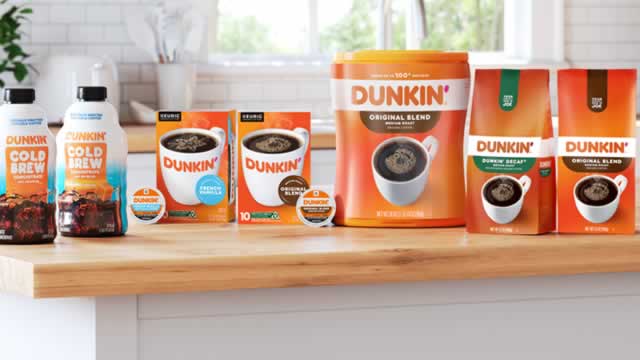
The U.S. Retail Coffee segment, home to Folgers, Dunkin', and Café Bustelo, remains a powerhouse. In Q2 FY26, this segment saw net sales increase by a robust 21% to $848.9 million. This impressive growth was primarily driven by a 27 percentage point increase in net price realization across the portfolio. While volume/mix decreased by 6 percentage points due to declines in Folgers and Dunkin', the strong pricing power, especially for Café Bustelo, demonstrates Smucker's ability to pass on higher costs and maintain revenue growth. However, segment profit decreased by 24% due to higher commodity costs and tariffs, indicating the ongoing battle against inflation.
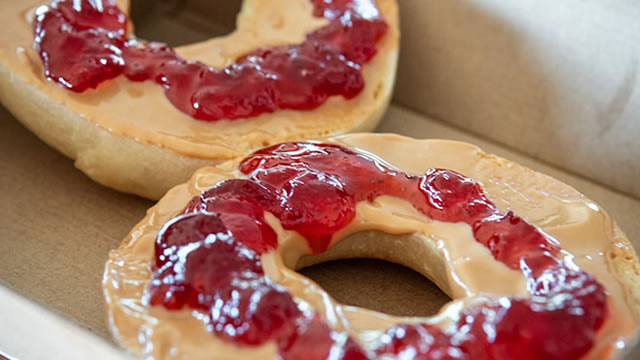
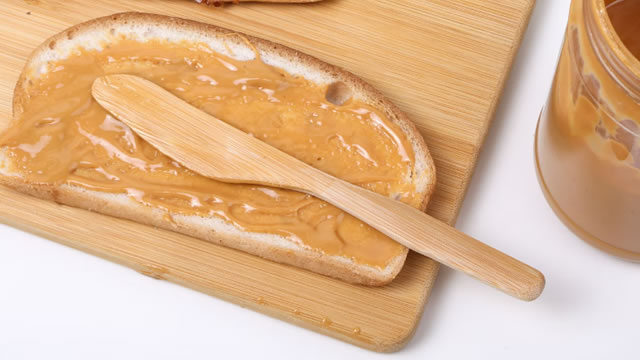
The Uncrustables brand within the U.S. Retail Frozen Handheld and Spreads segment is another standout growth driver. This product line, appealing to younger consumers, continues to see strong demand. While overall net sales for this segment decreased by 5% to $461.1 million in Q2 FY26, largely due to declines in peanut butter and fruit spreads, Uncrustables sandwiches provided a partial offset. The company has been investing in new manufacturing facilities for Uncrustables, signaling its commitment to expanding this high-growth area. Net price realization for Uncrustables also contributed positively to sales.
The U.S. Retail Pet Foods segment, including brands like Milk-Bone and Meow Mix, also contributes to Smucker's diversified revenue stream. Although net sales for this segment decreased by 7% to $413.2 million in Q2 FY26, primarily due to volume/mix declines for dog snacks and lapping prior-year contract manufacturing sales, net price realization still increased sales by 1 percentage point. Smucker's ability to maintain pricing power across its diverse portfolio, even in segments facing volume pressures, is a critical strength. The company's focus on these core brands, coupled with strategic investments and disciplined cost management, positions it for sustained long-term growth.
What Macro Headwinds and Sector Dynamics are Affecting Smucker?
The broader economic landscape presents a mixed bag for consumer staples companies like J.M. Smucker. While the sector is generally considered defensive, offering stability during economic downturns, it's not immune to macro headwinds. Inflationary pressures, shifting consumer spending habits, and emerging health trends like GLP-1 medications are all factors influencing Smucker's performance and outlook for 2026.
One of the primary challenges is managing input costs. Smucker has faced higher commodity costs, particularly for coffee, and tariffs, which have impacted segment profitability despite strong net price realization. The company's ability to continue passing on these costs to consumers without significantly impacting demand will be crucial. While Smucker has demonstrated pricing power, there's a delicate balance to strike, especially as consumers grapple with high inflation and slowing wage growth, potentially leading to increased demand for private label and value brands. Morgan Stanley, for instance, has warned that the U.S. food sector faces increasing competitive risk from value-focused pricing and private label momentum accelerating into 2026.
The rise of GLP-1 weight-loss drugs is another emerging headwind for certain food and beverage segments. These medications could potentially reduce consumption of specific foods, posing a structural challenge to the industry. However, BofA's analysis suggests that Smucker is "relatively limited GLP-1 exposed" compared to its peers, which could be a differentiating factor and a reason for its upgrade. Fidelity also projects a deceleration in the rapid adoption of GLP-1 drugs in 2026, suggesting a more balanced operating backdrop for consumer staples.
Despite these challenges, the consumer staples sector is expected to benefit from an improved investment environment in 2026. Lower interest rates and the normalization of recent headwinds, combined with potential fiscal stimulus from the "One Big Beautiful Bill Act," could deliver an income boost to middle-income consumers. This could translate into stronger discretionary spending and increased demand for consumer products. After underperforming the S&P 500 in 2025, valuations for staples stocks have become more compelling, attracting investors rotating out of high-growth momentum stocks into more stable, undervalued names. Smucker, with its strong brand equity and defensive characteristics, is well-positioned to capture this renewed investor interest.
How Does Smucker's Financial Health and Valuation Stack Up?
J.M. Smucker's financial health presents a complex picture, with some strong points alongside areas requiring careful monitoring. The company's current market capitalization stands at $11.37 billion, reflecting its significant presence in the consumer defensive sector. However, its valuation metrics show some divergences. The trailing twelve-month (TTM) P/E ratio is -9.52, indicating negative earnings per share of -$11.20. This negative EPS is largely due to a significant -265.4% decline in net income year-over-year for FY2025, which warrants a closer look at one-time or non-recurring items that may have impacted comparability.
Despite the negative P/E, other valuation metrics offer a different perspective. The P/S ratio is 1.30, and the P/FCF (Price to Free Cash Flow) is 17.90. The company's dividend yield is a robust 3.96% based on a quarterly dividend of $1.10 per share, making it attractive to income-focused investors. However, the TTM dividend payout ratio is -38.5%, which is a function of the negative EPS. This highlights the importance of looking beyond a single metric and understanding the underlying drivers of profitability.
Smucker's balance sheet shows a debt-to-equity (D/E) ratio of 1.31, indicating a moderate level of leverage. The current ratio, at 0.89, suggests that current assets are slightly less than current liabilities, which could imply some short-term liquidity management. However, the company's free cash flow (FCF) generation remains strong, with FCF per share at $5.96 (TTM) and a FCF yield of 5.6%. Management projects robust FCF of $875 million for FY26, an increase of $58 million from FY25, attributed to a decrease in capital expenditure as a percentage of sales. This strong cash flow is critical for debt reduction and continued dividend payments.
Analyst sentiment for SJM is currently mixed, with a consensus "Hold" rating from 29 analysts. While 12 analysts rate it a "Buy," 15 suggest "Hold," and 2 recommend "Sell." The median price target is $112.00, with a high of $117.00 and a low of $105.00. Bank of America's new $130 target stands out as one of the most bullish, suggesting a potential upside of 21.95% from the current price. This divergence in analyst opinion underscores the nuanced investment case for Smucker, balancing its defensive qualities and dividend appeal against operational pressures and the impact of the Hostess acquisition.
What Does This Mean for Investors and What Should They Watch?
For investors considering J.M. Smucker, the recent Bank of America upgrade provides a compelling argument for its defensive appeal and potential for a value rotation. The company's strong portfolio of household brands, coupled with its strategic expansion into the sweet snacks category via Hostess, positions it well for long-term stability. The attractive 3.96% dividend yield also offers a steady income stream, which is particularly appealing in a volatile market.
However, the investment thesis isn't without its caveats. Investors should closely monitor Smucker's ability to successfully integrate Hostess Brands and realize the projected $100 million in annual synergies. The performance of the Sweet Baked Snacks segment, which has faced profitability pressures, will be a key indicator of this success. Furthermore, managing commodity costs, particularly for coffee, and navigating the competitive landscape with private label brands will be crucial for maintaining gross margins.
The company's upcoming earnings report on February 26, 2026, will be critical. While the last quarter saw an EPS beat, the full-year guidance was below consensus. Any positive surprises or clearer guidance on synergy realization and cost management could further bolster investor confidence. Smucker's commitment to no further major acquisitions and hints at potential stock buybacks are also positive signals, suggesting a focus on deleveraging and returning capital to shareholders.
Ultimately, Smucker represents a defensive play with growth catalysts, albeit with execution risks. Its low beta of 0.23 indicates significantly lower volatility than the broader market, making it a potentially safe haven. For those seeking a stable, dividend-paying stock with a clear path to value creation through strategic acquisitions and strong core brands, Smucker, at its current price of $106.60, offers an intriguing opportunity, especially if the broader market continues its rotation into consumer staples.
J.M. Smucker is navigating a complex but potentially rewarding period, balancing strategic growth with operational challenges. The Bank of America upgrade highlights a growing conviction in the company's ability to de-risk its Hostess acquisition and leverage its core brand strengths. While vigilance on execution and macro factors is warranted, Smucker offers a compelling blend of defensive stability and upside potential for discerning investors.
Want deeper research on any stock? Try Kavout Pro for AI-powered analysis, smart signals, and more. Already a member? Add credits to run more research.