MarketLens

Log in

Is Micron's Explosive Rally Sustainable Beyond the AI Hype

2 days ago
SHARE THIS ON:

Is Micron's Explosive Rally Sustainable Beyond the AI Hype

Key Takeaways

  • Micron Technology's 285% stock surge over the past year is driven by more than just AI-specific HBM demand, with broader DRAM and NAND market recovery playing a crucial role.
  • Tightening supply across the memory industry, fueled by complex HBM production displacing conventional DRAM, is creating a structural shortage and driving significant price increases.
  • Despite a recent reduction in the number of institutional holders, major players like Vanguard and BlackRock are increasing their stakes, signaling confidence in Micron's long-term prospects.

Is Micron's Explosive Rally Sustainable Beyond the AI Hype?

Micron Technology (MU) has been on an absolute tear, with its stock price soaring an astonishing 285% over the past year, closing recently at $411.66. This meteoric rise has largely been attributed to the insatiable demand for High Bandwidth Memory (HBM) driven by the artificial intelligence (AI) boom. While AI undoubtedly plays a significant role, the narrative often oversimplifies Micron's underlying strengths and the broader market dynamics at play. The critical question for investors isn't just about AI, but whether this momentum is sustainable, underpinned by fundamental shifts in the wider memory market and Micron's strategic positioning within it.

The current market capitalization stands at a hefty $463.33 billion, reflecting investor optimism. However, a deeper dive reveals that Micron's success isn't solely a story of AI-specific chips. The company is benefiting from a confluence of factors, including a robust recovery in the broader DRAM and NAND markets, strategic product development beyond just HBM, and a notable shift in institutional investor sentiment. Understanding these multifaceted drivers is essential to assessing the long-term viability of Micron's valuation and its future growth trajectory.

Micron's management has consistently highlighted the strength across various end markets, not just the hyperscale AI data centers. This broad-based demand, coupled with disciplined industry supply, is creating a favorable pricing environment that extends beyond the high-profile HBM segment. The company's ability to capitalize on these wider market trends, while simultaneously excelling in advanced memory technologies, paints a more comprehensive picture of its current success and future potential.

Therefore, while the spotlight remains firmly on AI, savvy investors need to look beyond the immediate headlines. The true test of Micron's sustainability lies in its ability to leverage these broader market tailwinds, navigate competitive pressures, and continue innovating across its diverse product portfolio. This analysis will delve into these less-discussed catalysts, examining how they contribute to Micron's impressive performance and what they imply for its future.

What's Fueling the Broader Memory Market Recovery?

Beyond the headline-grabbing HBM segment, the broader DRAM and NAND markets are experiencing a significant, structural recovery that is a powerful, often underestimated, catalyst for Micron. This isn't merely a cyclical upturn; it's a market reset characterized by tightening supply and a significantly improved pricing outlook. Micron's management has explicitly stated expectations for DRAM prices to remain buoyant well into fiscal 2026, a testament to disciplined industry supply and robust demand across a diverse range of end markets.

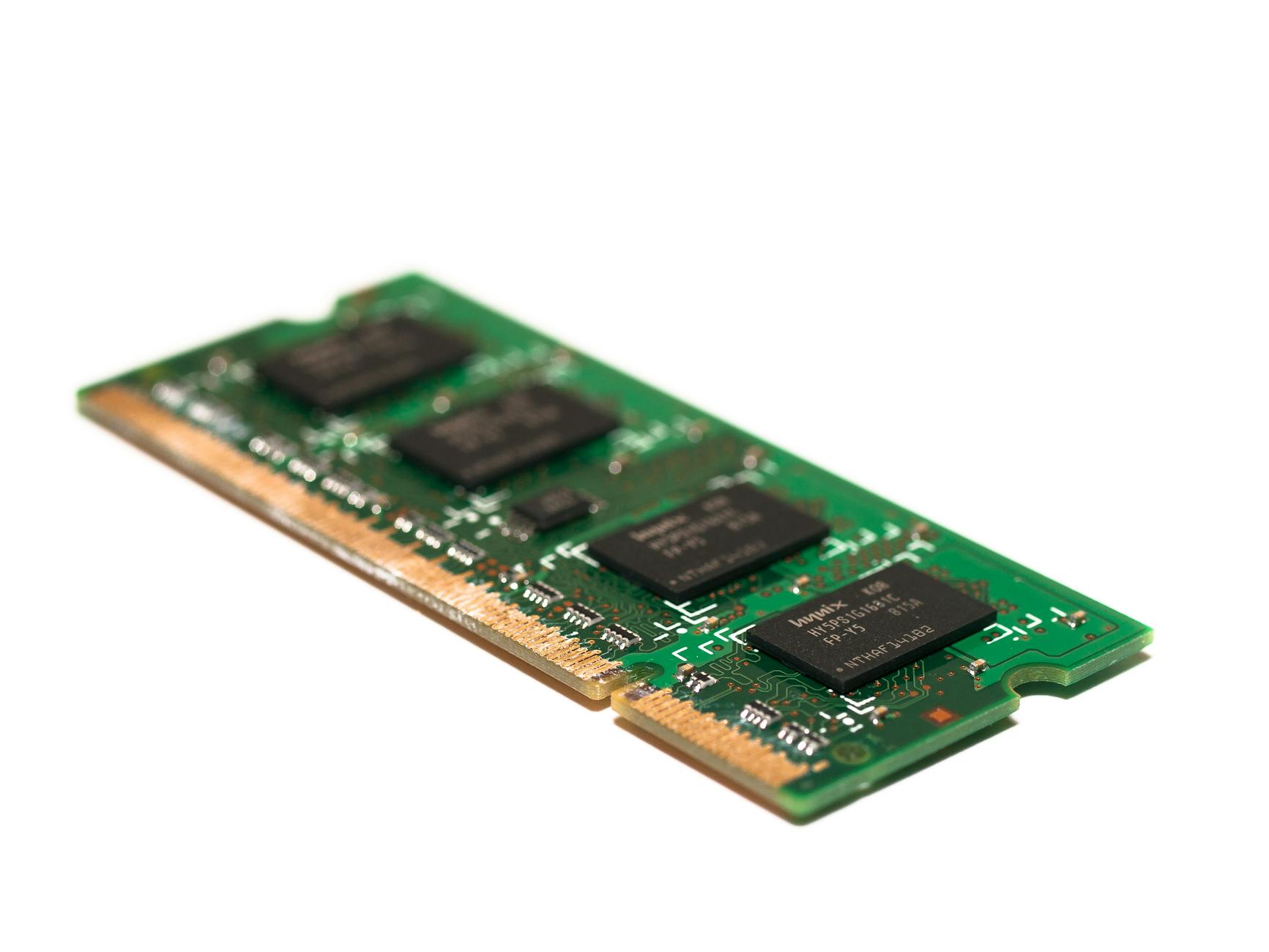
A key driver here is the industry-wide transition to DDR5 memory, particularly for data centers and high-performance computing applications. This shift represents a substantial upgrade cycle, moving beyond older DDR4 standards. Micron's DDR5 products, including high-capacity RDIMMs and low-power server DRAM, are seeing robust demand. The company reported generating "multiple billions of dollars in revenue" from these products in fiscal 2025, underscoring their importance outside of direct AI accelerator applications. This broad adoption of advanced conventional memory is critical for general server infrastructure and new computing platforms, creating a wide revenue base.

Furthermore, the demand isn't confined to data centers alone. The PC market, for instance, is forecast to see high single-digit percentage growth in unit sales in calendar 2025, an upward revision from prior expectations. While memory supply constraints might affect some PC shipments, the underlying demand for more powerful, memory-intensive machines is clear. Similarly, smartphone unit volumes are on track for low single-digit growth in calendar 2025, with AI features driving increased memory content per device. These trends indicate a healthy, diversified demand environment for Micron's core memory products.

This widespread demand, combined with strategic capital expenditure and production discipline from major memory manufacturers, is creating a favorable supply-demand imbalance. Micron's ability to lead in advanced node migration, such as its 1-gamma DRAM technology, further strengthens its position. This technological leadership allows for better performance and power efficiency, commanding premium pricing and solidifying its market share in these recovering segments. The confluence of these factors paints a picture of a memory market in a sustained recovery, providing a strong foundation for Micron's continued growth.

How is Micron Navigating the Shifting Supply-Demand Landscape?

Micron's strategic navigation of the evolving memory market is a masterclass in capitalizing on structural shifts, particularly how HBM production complexities are inadvertently tightening supply across the entire memory ecosystem. It's not just about selling more HBM; it's about benefiting from the ripple effect. The inherent complexity, lower yields, and advanced packaging requirements of HBM mean that one HBM wafer displaces the production of two or more conventional DRAM wafers. This creates a net reduction in the global supply of memory bits available for PCs, smartphones, and general-purpose servers, even as overall wafer output remains constant.

This strategic reallocation of manufacturing capacity towards high-margin HBM for AI data centers by major producers like Micron, Samsung, and SK Hynix is leading to a structural supply shortage for conventional DRAM and NAND. The economic consequence is severe price increases across the board. Analysts forecast memory prices to rise by a substantial 40-50% in Q1 2026, a clear indicator that the tight supply conditions are impacting all memory types, not just the most advanced AI-specific chips. Micron, as a leading memory manufacturer, is a direct beneficiary of this unprecedented pricing power.

Micron's proactive investments reflect this shifting landscape. The company's capital expenditure for fiscal 2026 is expected to be higher than fiscal 2025 levels, driven by investments in 1-gamma DRAM and HBM-related production. This dual focus ensures that while they are ramping up HBM capacity, they are also advancing their core DRAM technology, which will support both HBM growth (as 1-beta capacity transitions to HBM) and the broader market's demand for advanced conventional DRAM. This balanced approach allows Micron to capture value from both the high-end AI market and the recovering general memory segments.

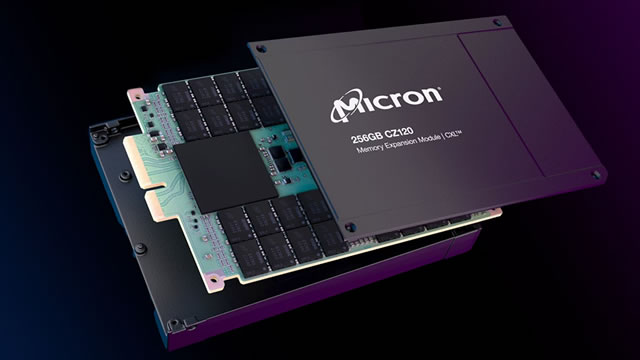
Furthermore, the industry is bracing for the debut of the LPDDR6 standard for mobile devices in 2026. This next-generation low-power memory will create another significant stream of demand for cutting-edge memory, adding another layer of complexity to an already constrained supply environment. Micron's position as a key supplier for LPDDR5X in NVIDIA's GB-product family, where it has been the "sole supplier of LPDRAM in the data center," demonstrates its capability to lead in these critical mobile and edge computing segments. This diversified product strategy, coupled with the structural supply constraints, positions Micron to thrive in a market where demand outstrips supply across multiple fronts.

What Do Institutional Investors See in Micron?

Institutional ownership data provides a crucial lens into how sophisticated investors perceive Micron's long-term prospects, and the picture is complex yet ultimately bullish. As of Q4 2025, Micron had 1,371 institutional holders, a notable decrease of 856 from the prior quarter. This might initially seem concerning, but the total invested capital remains substantial at $56.58 billion, and the overall ownership percentage, while down 60.12 percentage points, still represents a significant portion of the company. This suggests a consolidation of holdings rather than a mass exodus.

Delving deeper, the activity among top holders reveals a strong vote of confidence. Vanguard Group Inc., the largest institutional holder, increased its shares by +1.9%, now holding 106.61 million shares valued at $30.43 billion. BlackRock, Inc., the second-largest, showed an even more aggressive increase of +7.3%, bringing its stake to 100.70 million shares worth $28.74 billion. These two behemoths alone control nearly 18.5% of Micron's outstanding shares. While some firms like Capital World Investors and PRIMECAP Management Co/CA/ reduced their positions by -9.3% and -16.4% respectively, the overall trend among the largest, most influential asset managers points to sustained conviction.

The put/call ratio, currently at 1.32 (down -4.3% from the prior quarter), indicates a slight leaning towards bearish options bets, but this is a dynamic metric and not necessarily a long-term indicator of institutional sentiment. More telling is the analyst consensus, which remains overwhelmingly positive. Micron carries a "Buy" rating from 68 analysts, with 55 recommending "Buy" and 11 "Hold," and only 2 "Sell" ratings. This strong consensus, with recent upgrades and maintained "Overweight" or "Outperform" ratings from firms like Morgan Stanley and Mizuho, reinforces the institutional belief in Micron's trajectory.

The fact that 320 new institutional investors initiated positions and 793 increased their holdings, even as 1,065 closed out positions, suggests a rotation rather than a broad loss of faith. Larger, long-term focused institutions appear to be solidifying their stakes, recognizing Micron's pivotal role in the ongoing memory super-cycle. This institutional backing provides a layer of stability and validation, indicating that the smart money sees enduring value in Micron beyond short-term market fluctuations.

Is Micron's Current Valuation Sustainable?

Micron's impressive stock performance naturally brings its valuation under scrutiny. With shares trading at $411.66, up 285% over the last year, investors are right to ask if the current price is sustainable. Looking at traditional metrics, Micron's P/E ratio stands at 38.89. While this is significantly higher than the sector median of 23.6x cited in some analyses, it's crucial to consider the company's explosive growth profile. Micron's EPS soared a stunning 167% year-over-year to $4.78 in Q1 fiscal 2026, crushing estimates. For the full fiscal year 2026, Wall Street expects EPS to spike 300% to a record $33.22, followed by another 35% climb to $44.95 in fiscal 2027.

These staggering growth projections fundamentally alter the perception of its P/E. If EPS is indeed set to nearly quadruple in a single year, a P/E of 38.89 becomes far more palatable, reflecting the market's forward-looking nature. The P/S ratio of 10.95 and P/B of 7.88 are also elevated, but again, must be weighed against a projected revenue growth of 48.9% for FY2025 and an anticipated record revenue of $12.5 billion for fiscal Q1 2026. The company's gross margin expanded to 45.3% (TTM) and adjusted gross margin hit 56.8% in Q1 FY26, indicating strong profitability and pricing power.

However, not all valuation models paint such a rosy picture. A Discounted Cash Flow (DCF) analysis, which projects future cash flows and discounts them back to today, suggests Micron may be overvalued by as much as 116.8%, with an estimated intrinsic value around $189.89 per share. This divergence highlights the challenge of valuing a company in a rapidly evolving market with unprecedented growth rates. The DCF model's sensitivity to long-term assumptions and discount rates can lead to wide variations, especially when projecting out to 2030 with free cash flow reaching $20.4 billion.

Conversely, Simply Wall St's proprietary "Fair Ratio" P/E estimate for Micron is 63.1x, which is higher than the current 38.9x, suggesting the shares might be trading below this growth-adjusted assessment. This indicates that, when accounting for Micron's specific earnings growth profile, profit margins, industry, and risks, its current P/E might actually be considered undervalued by some metrics. The consensus analyst price target of $356.48 (median $350.00, high $500.00) implies a potential downside from the current price, but recent upgrades from Morgan Stanley ($450) and Mizuho ($480) suggest a belief in further upside. Ultimately, sustainability hinges on Micron's ability to execute on its ambitious growth forecasts and maintain its pricing power in a competitive, albeit supply-constrained, market.

What Future Growth Vectors, Excluding AI, Could Drive Micron?

While AI is undeniably a dominant force, Micron's future growth isn't solely tethered to the high-bandwidth memory for AI accelerators. Several other significant, non-AI specific vectors are poised to drive the company's performance in the coming years. The ongoing transition to DDR5 memory across the computing landscape, particularly in enterprise and client segments, represents a massive upgrade cycle. Micron's leadership in this area, with its 1-gamma based DDR5 products, ensures it captures a substantial share of this market. This isn't just about AI servers; it's about every new generation of server, workstation, and high-end PC requiring faster, more efficient memory.

Beyond DRAM, the NAND market is also poised for strengthening conditions. While often overshadowed by DRAM, NAND flash is critical for solid-state drives (SSDs) in data centers, client devices, and embedded applications. Micron's continued innovation in NAND technology, including its G9 based PCIe Gen4 QLC SSDs, positions it well to capitalize on increasing storage demands. As data generation continues its exponential growth, the need for high-capacity, high-performance storage solutions will only intensify, creating a robust, non-AI specific demand stream.

The automotive and industrial embedded markets represent another compelling growth vector. Modern vehicles are becoming increasingly sophisticated, requiring vast amounts of memory for advanced driver-assistance systems (ADAS), infotainment, and autonomous driving features. Similarly, industrial IoT, edge computing, and specialized networking equipment demand rugged, reliable, and high-performance memory solutions. Micron's Automotive and Embedded Business Unit (AEBU) is strategically positioned to benefit from the long design cycles and high-margin nature of these segments, providing a stable and growing revenue base independent of the AI super-cycle.

Finally, the increasing memory content per device across all categories—from smartphones to laptops—is a secular trend. Even without specific AI features, new generations of consumer electronics demand more RAM and storage for enhanced user experiences, multitasking, and richer applications. Micron's Mobile and Client Business Units are well-equipped to serve this persistent demand, ensuring diversified revenue streams. These combined factors demonstrate that Micron possesses a broad portfolio of growth drivers that extend far beyond the immediate AI infrastructure buildout, offering resilience and long-term potential.

Micron Technology is navigating a transformative period, leveraging both the AI boom and a broader memory market recovery. Its strategic investments and technological leadership position it strongly for sustained growth, despite competitive pressures and valuation concerns. Investors should continue to monitor demand trends, pricing power, and the company's execution on its ambitious CapEx plans to gauge its long-term potential.


Want deeper research on any stock? Try Kavout Pro for AI-powered analysis, smart signals, and more. Already a member? Add credits to run more research.

SHARE THIS ON:

Related Articles

Category

You may also like

No related articles available

Breaking News

View All →

No topics available at the moment