MarketLens

Log in

Is Morgan Stanley's Crypto Custody Bid a Game Changer for Wall Street

7 hours ago
SHARE THIS ON:

Is Morgan Stanley's Crypto Custody Bid a Game Changer for Wall Street

Key Takeaways

  • Morgan Stanley's application for a national trust charter to offer direct crypto custody is a significant escalation of Wall Street's commitment to digital assets, positioning the bank as a direct competitor to crypto-native custodians.
  • This strategic move is driven by surging institutional client demand for regulated crypto exposure and a maturing regulatory landscape, notably the Office of the Comptroller of the Currency's (OCC) increasing clarity on digital asset activities.
  • The national trust bank charter provides a robust, federally supervised framework for crypto custody, trading, and staking, offering institutional-grade security and regulatory certainty that has long been missing in the digital asset space.

Is Morgan Stanley's Crypto Custody Bid a Game Changer for Wall Street?

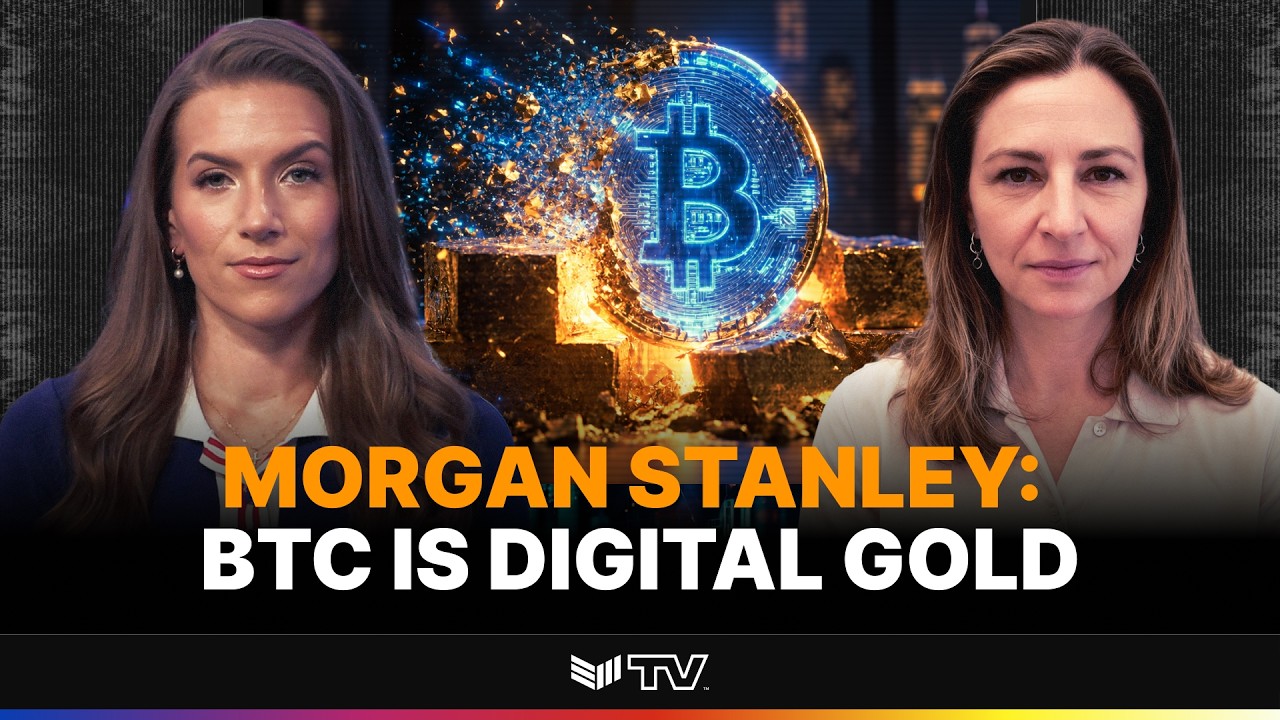
Morgan Stanley's recent application for a national trust charter to establish "Morgan Stanley Digital Trust, National Association" represents a pivotal moment in the convergence of traditional finance and digital assets. This isn't just another bank dabbling in crypto; it's a $264.57 billion market cap titan, managing nearly $9 trillion in client assets, making a definitive play for the foundational "plumbing" of the digital economy. The move signals a major escalation in how Wall Street intends to integrate cryptocurrencies, moving beyond passive investment products to direct, federally regulated custody and services.

This strategic filing with the Office of the Comptroller of the Currency (OCC) on February 18, 2026, aims to allow Morgan Stanley to directly custody digital assets, execute purchases, sales, swaps, and transfers, and facilitate fiduciary staking for its institutional and wealth management clients. Such a comprehensive offering would transform Morgan Stanley into a direct competitor to established crypto-native custodians like BitGo and Anchorage Digital, both of which already hold similar charters. The bank's stock, MS, currently trading at $166.47, saw a -6.21% dip today, reflecting broader market movements rather than a direct reaction to this long-term strategic play, which is more about future revenue streams than immediate quarterly impact.

The significance of this application cannot be overstated. It moves Morgan Stanley from a cautious, indirect approach to digital assets — where it previously offered access to crypto exchange-traded products (ETPs) for qualified clients — to building proprietary, regulated infrastructure. This is about owning the back-office, the settlement, and the fiduciary layers of blockchain finance under the stringent oversight of U.S. banking supervision. For a firm with $9.3 trillion in total client assets across its Wealth and Investment Management divisions, this isn't a side project; it's a calculated bet on the structural integration of digital assets into global finance.

The firm’s business plan, now publicly available, explicitly details its intent to provide a full suite of digital asset services. This includes not only custody but also supporting client investment activities and facilitating staking, a yield-generating activity crucial for many institutional investors. This comprehensive approach underscores Morgan Stanley's ambition to become a one-stop shop for institutional crypto services, leveraging its existing brand trust and extensive client relationships to capture a significant share of the rapidly expanding digital asset market.

What's Driving Wall Street's Deep Dive into Digital Assets?

The impetus behind Morgan Stanley's aggressive push into direct crypto custody is multifaceted, primarily driven by surging institutional client demand and an increasingly clear, albeit still evolving, regulatory environment. For years, institutional investors have expressed interest in digital assets, but the lack of regulated, secure, and scalable custody solutions from trusted financial institutions has been a major barrier. Morgan Stanley, with its massive wealth management client base, has been at the forefront of this demand, recognizing that its clients require the same level of security and oversight for digital assets as they do for traditional securities.

The regulatory landscape has matured significantly, providing the necessary framework for traditional financial institutions to enter this space with greater confidence. The OCC, in particular, has been instrumental, issuing five conditional approvals for crypto national trust bank charters in December 2025, followed by three more in February 2026. Firms like Circle, Ripple, BitGo, Fidelity Digital Assets, Paxos Trust Company, Stripe’s Bridge National Trust Bank, Crypto.com National Trust Bank, and Protego’s National Digital Trust Company have already received these approvals. This growing line of approvals signals that the regulatory template for digital assets is becoming stable enough for Tier-1 banks to scale into.

Moreover, the OCC recently issued Bulletin 2026-4, effective April 1, 2026, which clarifies the authority of national banks operating as trust companies to engage in non-fiduciary activities alongside their fiduciary ones. This clarification is critical because digital asset custody, while often seen as a non-fiduciary activity, can now serve as a primary business for a national trust bank. This regulatory certainty reduces execution risk for firms like Morgan Stanley, allowing them to confidently build out proprietary, regulated infrastructure for decentralized finance and tokenization.

Beyond custody, Morgan Stanley's broader digital asset strategy includes filing for spot Bitcoin, Ethereum, and Solana ETFs in January 2026, and plans to launch a proprietary digital wallet later in the same year. The bank also removed prior restrictions in October 2025, allowing all clients, including those with retirement accounts, to invest in crypto ETPs, a significant expansion from the previous $1.5 million asset threshold and aggressive risk tolerance requirement. These moves collectively demonstrate a comprehensive strategy to meet client demand across the entire spectrum of digital asset services, from investment products to direct custody and potentially even lending and yield generation.

Why the National Trust Charter is a Strategic Masterstroke

The choice of a national trust bank charter for Morgan Stanley Digital Trust, National Association, is not merely a regulatory formality; it is a strategic masterstroke that positions the bank uniquely in the digital asset ecosystem. Unlike a traditional commercial bank, a trust bank does not engage in deposit-taking or commercial lending. Instead, its core functions are centered around custody, fiduciary services, and asset administration, making it an ideal structure for safeguarding digital assets under a robust regulatory perimeter. This structure is, in essence, a highly regulated vault combined with a legal steward, perfectly suited to the unique characteristics of digital assets.

Crypto markets have historically suffered from a critical lack of qualified, federally supervised custodians capable of safeguarding assets, settling transactions, and managing operational risk at scale. The collapses of numerous crypto exchanges and startups in recent years, often due to uneven governance and fragile balance sheets, underscored the urgent need for institutional-grade solutions. The national trust bank charter directly addresses this "custody problem," offering a solution that provides the regulatory oversight and institutional trust that traditional investors demand.

A key advantage of the national trust bank charter is the federal preemption of certain state laws, such as money transmitter licensing laws, which can be a significant compliance burden for firms operating across multiple jurisdictions. This streamlined regulatory environment allows Morgan Stanley to operate with greater efficiency and consistency across its client base. Furthermore, the OCC’s recent clarifications, including Interpretive Letter 1184 in May 2025 confirming that national banks can engage in the purchase or sale of digital assets held in custody, and Interpretive Letter 1186 in November 2025 allowing banks to hold digital assets as principal for network fees, have paved the way for a broader scope of permissible activities.

The trust charter also mandates rigorous capital requirements and risk management protocols, which are far more stringent than those typically applied to crypto-native firms. Banks are required to hold significant capital reserves and maintain robust internal controls, including multi-layered security for cryptographic key management, independent audit reviews, and clear segregation of client assets. This ensures that client digital assets are held in trust for the client's benefit, are bankruptcy-remote, and cannot be used or pledged by the custodian for its own purposes – a stark contrast to the practices that led to scandals like FTX. This level of institutional maturity and regulatory scrutiny provides unparalleled assurance to clients, fostering the confidence necessary for widespread institutional adoption.

How Does Morgan Stanley Stack Up Against Competitors?

Morgan Stanley's entry into direct crypto custody immediately reshapes the competitive landscape, pitting the Wall Street giant against both established crypto-native custodians and other traditional financial institutions exploring similar ventures. On one side are firms like BitGo and Anchorage Digital, which already hold OCC-chartered bank status and have built reputations for robust security and crypto-native expertise. Anchorage, for instance, boasts a zero-incident history, while BitGo offers multi-signature architecture and comprehensive SOC audits. Morgan Stanley's challenge will be to match or exceed this security and compliance pedigree, while leveraging its own formidable advantages.

The bank's primary competitive edge lies in its massive client base and unparalleled brand trust. With nearly $9 trillion in client assets, Morgan Stanley can onboard institutional investors and high-net-worth individuals who have long sought crypto exposure but were hesitant to engage with less-regulated, crypto-native entities. The comfort of dealing with a familiar, federally regulated institution like Morgan Stanley, rather than a startup, is a powerful draw. This existing client relationship acts as a significant "fuel" for its new digital asset venture, potentially accelerating adoption faster than its crypto-native rivals.

Other traditional financial institutions are also making moves. Fidelity Digital Assets, Paxos, and Circle have received conditional OCC approvals, indicating a broader trend of incumbents building out their own regulated crypto infrastructure. JPMorgan, for example, is exploring accepting Bitcoin and Ether as collateral and developing crypto trading and settlement products, often through partnerships. U.S. Bank offers crypto custody via a partnership with NYDIG, while Citi is active in tokenizing its infrastructure. This signals a sector-wide shift toward vertical integration, where banks are choosing to build proprietary, regulated infrastructure rather than relying solely on third-party custodians.

Morgan Stanley's strategy is to become a "one-stop shop" for institutional crypto services, integrating custody with trading, staking, and potentially even lending and yield generation. This comprehensive approach, combined with its internal investment in blockchain infrastructure for decentralized finance and real-world asset tokenization, aims to differentiate it from competitors that might offer more siloed services. The global custody service market is projected to expand at a 6.13% CAGR, reaching $60.32 billion by 2031, driven by increasing assets under management and cross-border investments. Morgan Stanley's direct bid for a share of this expanding pie is a clear statement of intent, leveraging its institutional heft to capture a significant portion of this growth.

What Are the Key Risks and Challenges Ahead?

While Morgan Stanley's foray into direct crypto custody presents significant opportunities, it is not without substantial risks and challenges. The digital asset landscape, despite recent regulatory advancements, remains complex and volatile. One primary concern is the inherent volatility of cryptocurrencies themselves. Bitcoin, for example, currently trades at $66,080.01, down from its 52-week high of $126,296.00, while Ethereum is at $1,970.08, significantly below its $4,955.90 52-week high. These dramatic price swings introduce market risk for both the bank's clients and, indirectly, for the bank's reputation and potential fee income tied to asset values.

Operational and cybersecurity risks are also paramount. Managing cryptographic keys at scale is an incredibly complex task, requiring specialized hardware, secure facilities, trained personnel, and robust internal risk management protocols. A lost or compromised private key can lead to irrecoverable loss of funds, a risk that banks could be held liable for. While Morgan Stanley has extensive experience in risk management for traditional assets, digital asset custody introduces new vectors of attack and requires continuous adaptation to evolving technological threats. The OCC has emphasized that crypto-asset safekeeping is "complex," requiring "significant resources and attention" and having "elevated levels of compliance and legal risks."

Regulatory scrutiny, despite recent clarifications, remains a dynamic challenge. While the OCC has issued a final rule clarifying national trust banks' authority to engage in non-fiduciary activities, the exact breadth of permissible activities will likely be clarified through ongoing applications and potential litigation from states. Critics have questioned the OCC's legal authority to issue such charters to crypto-native firms, a precedent Morgan Stanley is now following. Any shift in the OCC's stance or successful legal challenges could introduce significant uncertainty and regulatory headwinds, impacting the bank's ability to scale its digital asset services.

Furthermore, competition will intensify as more Wall Street firms follow suit. If other major banks accelerate their institutional crypto offerings, it could lead to an intense battle for the same client base and regulatory attention, potentially compressing margins. Morgan Stanley's success will hinge on its operational execution, its ability to integrate these new services seamlessly into its existing infrastructure, and its capacity to maintain its security and compliance pedigree against both traditional and crypto-native rivals. The capital and operational demands of building out this new infrastructure could also add pressure to the bank's resources, requiring careful management to ensure it doesn't detract from core business lines or impact shareholder returns.

What Does This Mean for Morgan Stanley Investors?

For Morgan Stanley shareholders, this strategic move into direct crypto custody signals a long-term commitment to capturing a significant share of the rapidly evolving digital asset market. It positions the bank not merely as an observer but as a foundational infrastructure provider for the tokenized financial system of the future. The potential for new, high-margin fee-based revenue streams from custody, trading, and staking services could meaningfully diversify Morgan Stanley's income and deepen its relationships with institutional and wealth management clients.

The firm's ability to leverage its existing $9 trillion client base and strong brand reputation to attract digital asset flows is a powerful competitive advantage. As institutional adoption of cryptocurrencies accelerates, Morgan Stanley is positioning itself to be a primary beneficiary, offering the regulated, secure solutions that sophisticated investors demand. This proactive stance could enhance the bank's growth trajectory and reinforce its leadership in wealth and investment management, especially as digital assets become a core sleeve in alternative investment portfolios.

However, investors should monitor several key metrics. Watch for how quickly digital asset balances and related fee income begin to appear in Morgan Stanley's segment reporting. The success of this venture will depend on the speed of regulatory approvals, the bank's operational execution in building secure infrastructure, and the sustained demand from clients for these services. While the long-term outlook appears promising, the initial capital and operational investments, coupled with the inherent risks of the crypto market, mean that significant financial returns from this initiative may take time to materialize.


Morgan Stanley's bold step into direct crypto custody is a clear signal that digital assets are moving from the periphery to the core of global finance. This strategic pivot, backed by regulatory clarity and institutional demand, positions the bank for significant long-term growth in a rapidly expanding market. While challenges remain, Morgan Stanley's established trust and vast client network could make it a dominant player in the institutional digital asset space.


Want deeper research on any stock? Try Kavout Pro for AI-powered analysis, smart signals, and more. Already a member? Add credits to run more research.

SHARE THIS ON:

Related Articles

Category

You may also like

Crypto News1 day ago

Six Trillion In the Dark: Has Canton Redrawn Crypto's Map?

A potential "flippening" in finance may have occurred on Canton, a closed, bank-grade infrastructure, potentially redrawing the crypto map for investors.
Crypto News2 days ago

Bitcoin Price Prediction: Morgan Stanley Is Bringing Bitcoin Inside the Bank — Is Wall Street Going All In?

Morgan Stanley is integrating Bitcoin services within the bank, signaling a potential shift toward broader Wall Street adoption of the cryptocurrency.
Crypto News6 days ago

Has Wall Street Co-Opted Bitcoin? Bloomberg Expert Sparks Heated Debate

A Bloomberg analyst thread reignited debate over whether institutional intermediaries have diluted Bitcoin's core value proposition. The discussion centers on the role of Wall Street in the crypto eco...
Stock News1 months ago

Strategy (MSTR) Stock in 2026: Crypto Kick-Start or Another Gut Punch?

This is an open-ended, speculative question regarding the future performance of MicroStrategy (MSTR) stock contingent on Bitcoin's (BTC) trajectory, offering no concrete figures or facts.

Breaking News

View All →

Top Headlines

View More →
Stock News2 hours ago

Why March 9 Could Be a Huge Day for Tesla Investors

Stock News4 hours ago

2 No-Brainer Energy Stocks to Buy Right Now

Stock News4 hours ago

Amazon India slashes seller referral fees in retail growth push

Stock News4 hours ago

Amazon's cloud unit reports fire after objects hit UAE data center

Stock News4 hours ago

The 2 Best Quantum Computing Stocks to Buy in March