MarketLens

Log in

Is Nasdaq's Partnership with Kraken a Game-Changer for Tokenized Stocks

17 hours ago
SHARE THIS ON:

Is Nasdaq's Partnership with Kraken a Game-Changer for Tokenized Stocks

Key Takeaways

  • Nasdaq's strategic partnership with Kraken's parent, Payward, to launch tokenized equities by H1 2027 marks a significant institutional leap into blockchain-powered finance.
  • The collaboration leverages Kraken's established xStocks framework, which already boasts over $20 billion in cumulative trading volume and 85,000+ unique holders, signaling real-world adoption.
  • While the tokenized Real-World Assets (RWA) market is projected to surge to $9.43 trillion by 2030, significant hurdles like liquidity fragmentation and regulatory clarity remain.

Is Nasdaq's Partnership with Kraken a Game-Changer for Tokenized Stocks?

Nasdaq, Inc. (NDAQ) is making a bold move into the future of finance, announcing a strategic partnership with Payward, the parent company of crypto exchange Kraken, to develop tokenized equities. This initiative, slated for launch in the first half of 2027, aims to fundamentally reshape how traditional stocks and real-world assets (RWAs) interact with blockchain technology. It represents a significant institutional endorsement of tokenization, potentially bridging the gap between conventional capital markets and the burgeoning decentralized finance (DeFi) ecosystem.

The core objective is to modernize and streamline various financial processes, including corporate actions, shareholder engagement, and proxy voting. By tokenizing shares, Nasdaq and Kraken envision a system where asset ownership is recorded on a blockchain, offering enhanced transparency, efficiency, and potentially 24/7 trading capabilities. This isn't just about putting stocks on a blockchain; it's about embedding "programmable investor engagement" directly into the asset itself, ensuring token holders retain full legal and regulatory equivalence to traditional shareholders, including voting rights and dividend entitlements.

This collaboration builds directly on Nasdaq's tokenization proposal filed with the U.S. Securities and Exchange Commission (SEC) last year. That proposal sought approval for tokenized versions of listed stocks and exchange-traded products to trade alongside traditional shares, with both versions settling through the Depository Trust infrastructure to ensure interchangeability. Nasdaq President Tal Cohen emphasized that tokenization "has the potential to unlock the benefits of an always-on financial ecosystem—enhancing how investors access markets, how issuers engage with shareholders," highlighting the strategic importance of this venture for the exchange's long-term vision.

Kraken's role as a distribution partner is particularly crucial for international markets. The plan is to make these one-to-one tokenized versions of public company shares available to Kraken's customers outside the United States, especially in Europe and other international jurisdictions where xStocks are already accessible. This global reach, combined with Nasdaq's regulatory expertise and market infrastructure, positions the partnership to be a formidable force in the evolving landscape of digital assets.

How Does the xStocks Framework Power This New Era of Digital Equities?

The technical backbone of this ambitious partnership is Kraken's xStocks framework, which will serve as the permissionless infrastructure layer enabling tokenized stocks to interact with open blockchain networks while maintaining alignment with securities trading on Nasdaq’s markets. This isn't a theoretical concept; xStocks has already demonstrated significant traction in the tokenized equities space. Kraken's parent company, Payward, effectively controls the xStocks framework after acquiring Backed Finance, the original issuer of these tokenized equities, consolidating issuance and trading under one roof.

Since its launch in June 2025, xStocks has processed an impressive cumulative trading volume exceeding $20 billion across centralized (CEX) and decentralized (DEX) exchanges. This volume reflects genuine, sustained trading activity, not merely parked capital. Furthermore, xStocks represents 7 of the top 10 tokenized stocks by 24-hour trading volume, according to CoinMarketCap data as of February 17, 2026. The platform also boasts over 85,000 unique holders across supported networks, making it a clear leader in public market usage metrics for tokenized stocks.

The framework is already operational in various regulated venues. For instance, xStocks tokenized equities, including CRCLx, GOOGLx, NVDAx, SPYx, and TSLAx, began trading in early 2026 on 360X, the EU-regulated trading venue backed by Deutsche Börse. Additionally, xStocks has a partnership with CycleX, a Real World Asset tokenization and trading platform, which utilizes the xStocks framework to support trading in tokenized equities on its own platforms. This existing ecosystem demonstrates the scalability and interoperability of the xStocks technology.

For compliance and security, Payward Services will handle the Know Your Customer (KYC) and Anti-Money Laundering (AML) onboarding for clients accessing tokenized equities via Kraken. This ensures that all users interacting with the gateway meet applicable compliance requirements in relevant jurisdictions, a critical factor for institutional adoption. The underlying stocks and ETFs that back xStocks' on-chain instruments are provided with brokerage and custody by Alpaca, further solidifying the regulated and secure nature of the offering. This robust foundation positions the Nasdaq-Kraken collaboration for a strong market entry.

What is the True Market Potential of Real-World Asset Tokenization?

The market for tokenized Real-World Assets (RWAs) is not just growing; it's exploding, and the Nasdaq-Kraken partnership is perfectly positioned to capitalize on this monumental shift. The global tokenized RWAs market was valued at $297.71 billion in 2024 and is projected to reach an astounding $9.43 trillion by 2030, representing a compound annual growth rate (CAGR) of 72.8% from 2025-2030. This exponential growth is driven by several powerful forces, including heightened institutional participation, increasing interest in fractional ownership, and the deeper integration of decentralized finance (DeFi) platforms.

Institutional interest is a primary catalyst. Financial giants are increasingly adopting blockchain to digitize assets, motivated by the technology's ability to enhance efficiency, transparency, and liquidity. For example, State Street Corporation reported in October 2025 that digital assets comprised 7% of their portfolios, with a goal to increase this to 16%, including a 2-5% allocation to Bitcoin. This growing institutional demand is a clear signal of the market's maturation and its potential to integrate digital instruments into existing investment frameworks.

Fractional ownership is another significant driver, particularly for high-value assets like real estate, art, and private equity. Tokenization allows these assets to be divided into smaller, more accessible units, enabling smaller investors to participate in markets previously exclusive to large institutions. For instance, OCBC in Singapore became the first bank to offer tokenized government bonds to accredited investors, lowering the minimum investment from S$250,000 to just S$1,000. This democratizes access and unlocks new pools of capital.

Regulatory clarity, though still evolving, is also enhancing market expansion. Frameworks like Europe's MiCA, Singapore's Project Guardian, and Japan's FSA rules for security tokens are reducing legal ambiguity and bolstering investor confidence. These regulatory advancements provide a safer environment for innovation and institutional adoption. The Nasdaq-Kraken venture, with its focus on regulatory equivalence and compliance, directly addresses these needs, aiming to create a trusted pathway for mainstream tokenized equity adoption.

What Are the Key Hurdles and Risks Facing Tokenized Equities?

Despite the immense potential, the tokenized Real-World Assets (RWA) market, including tokenized equities, faces significant structural barriers that could impede widespread adoption and liquidity. While tokenization effectively solves the problem of ownership, it has not yet fully addressed the challenge of liquidity. Billions in tokenized RWAs currently sit idle across various blockchain networks, often locked in closed systems with illiquid or nonexistent secondary markets.

One of the primary issues is fragmented marketplaces. Unlike traditional stock exchanges like Nasdaq or NYSE, there is no single, unified market for RWAs. This fragmentation splits buyers and sellers, making it difficult to discover fair prices or even find a counterparty for a trade. Many RWAs are issued on private, permissioned blockchains that lack interoperability with broader DeFi markets, creating "permissioned liquidity traps" where tokens cannot be freely traded or transferred to public wallets.

Regulatory restrictions also pose a substantial hurdle. Most tokenized RWAs are legally considered securities, meaning they can only be sold to accredited investors or those who have passed stringent Know Your Customer (KYC) checks. These compliance rules are often hard-coded into the token itself, physically preventing transfers to unauthorized wallets. While necessary for compliance, this limits the pool of potential buyers and hinders the open, permissionless nature often associated with blockchain.

Valuation uncertainty further complicates matters. Pricing a single digital token representing a fractional slice of a commercial building or private credit loan can be challenging. When buyers and sellers cannot agree on a fair asset valuation, market activity freezes. Moreover, the RWA market largely lacks dedicated market makers, which are crucial for maintaining liquidity in traditional markets. The automated liquidity pools in DeFi were not designed for these unique, low-volume assets, leading to situations where a seller might find no one on the other side of a trade.

Technological and operational frictions also persist. High gas fees, slow transaction times, and the complexity of cross-chain interoperability can deter users. As Chris Yin, co-founder of Plume Network, aptly tweeted in 2025, "Simply tokenizing does NOT lead to liquidity and efficiency for assets. Adverse selection is real — bad assets don’t magically become good on-chain." Addressing these deep-seated issues will be critical for the Nasdaq-Kraken partnership to realize its full potential.

How Will This Partnership Impact Nasdaq's Business and NDAQ Stock?

Nasdaq's strategic embrace of tokenized equities, particularly through its partnership with Kraken, represents a forward-looking move that could significantly impact its long-term business model and the valuation of NDAQ stock. Trading at $86.93, down 1.69% today, with a market cap of $49.64 billion, Nasdaq is already a dominant player in traditional finance. This initiative signals a proactive approach to evolving market dynamics, positioning the exchange at the forefront of financial innovation rather than reacting to it.

The partnership could unlock new revenue streams for Nasdaq. By providing the infrastructure for tokenized equities, Nasdaq can potentially charge fees for issuance, trading, and settlement of these new digital assets. This expands its addressable market beyond traditional listings and trading, tapping into the burgeoning RWA tokenization space. The integration of blockchain technology also promises to reduce operational costs and increase efficiency in processes like corporate actions and proxy voting, which could boost Nasdaq's profitability margins over time.

From a competitive standpoint, this move is crucial. Other major exchanges, including the New York Stock Exchange (NYSE) and Intercontinental Exchange (ICE), are also exploring tokenized assets. NYSE announced in January 2026 that it is developing a blockchain-based platform for trading tokenized equities, and ICE recently invested in crypto exchange OKX. By partnering with Kraken, a leading crypto exchange with an established tokenized stock framework (xStocks), Nasdaq gains a significant first-mover advantage and a proven technological solution, potentially solidifying its position as a leader in digital asset innovation.

However, the success of this venture is not guaranteed. Regulatory approvals, particularly from the SEC, are paramount and could introduce delays or require adjustments to the planned launch in H1 2027. The inherent challenges of RWA liquidity and market fragmentation also mean that adoption might be slower than anticipated. While the partnership offers a compelling growth narrative, investors should weigh these potential upsides against the execution risks and the evolving regulatory landscape. Nasdaq's stock performance will likely reflect the market's confidence in its ability to navigate these complexities and successfully integrate this new paradigm into its core business.

What Does This Mean for Investors Considering NDAQ?

For investors looking at Nasdaq (NDAQ), this partnership with Kraken's parent, Payward, presents a compelling long-term growth narrative, but one that comes with its share of speculative elements. Nasdaq is not merely dabbling in blockchain; it's making a strategic bet on the future of financial markets, aiming to integrate traditional equities with the efficiency and transparency of distributed ledger technology. This positions NDAQ as a potential leader in the tokenized RWA space, a market projected for exponential growth.

The current NDAQ share price of $86.93 and its $49.64 billion market capitalization reflect its established position in traditional finance. The tokenization initiative, while forward-looking, is still in its early stages, with a planned launch in H1 2027. This means that any significant revenue or profit contributions from tokenized equities are several years away. Investors should view this as a strategic investment in future growth rather than an immediate catalyst for earnings.

The partnership offers a clear pathway for Nasdaq to diversify its revenue streams and enhance its competitive moat against other exchanges entering the digital asset space. However, the success hinges on navigating complex regulatory environments, overcoming the inherent liquidity challenges of tokenized assets, and achieving widespread adoption among both institutional and retail investors. While the xStocks framework provides a strong foundation, the market for tokenized equities is still nascent and subject to rapid shifts.

Investors should monitor regulatory developments, particularly from the SEC, and observe the initial adoption rates of tokenized equities once they launch. Nasdaq's ability to leverage its brand and infrastructure to build a liquid, compliant market for these new assets will be key. This is a high-potential, high-risk play that could redefine Nasdaq's role in global finance, making NDAQ an intriguing, albeit speculative, long-term holding for those bullish on the convergence of TradFi and Web3.

Nasdaq's venture into tokenized equities with Kraken is a bold strategic move, positioning the exchange at the vanguard of financial innovation. While the path to mass adoption is fraught with regulatory and liquidity challenges, the potential for long-term growth and market transformation is undeniable. Investors should approach NDAQ with a clear understanding of both the significant upside and the inherent risks of this evolving digital frontier.


Want deeper research on any stock? Try Kavout Pro for AI-powered analysis, smart signals, and more. Already a member? Add credits to run more research.

SHARE THIS ON:

Related Articles

Category

You may also like

News21 hours ago

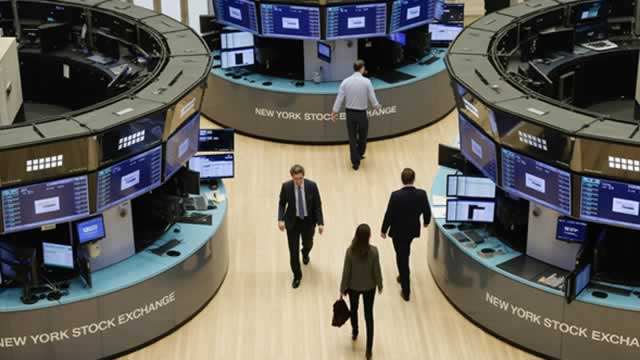
Nasdaq Partners With Kraken in Tokenization Push

Nasdaq partnered with Kraken to advance its September application seeking approval for trading tokenized versions of its listed stocks and ETPs.
News1 week ago

Will Stocks Crash in 2026?

The possibility of a stock market crash in 2026 is being questioned, representing a $64 trillion concern for investors. The snippet frames this as a major, open question regarding near-term market sta...
Crypto News1 months ago

Is the XRP Ledger About to Unlock a Tokenized Gold Revolution?

The XRP Ledger is gaining attention as a foundation for tokenized gold due to strong interest from analysts and developers. Its fast settlement and low transaction costs present a practical network fo...
Stock News1 months ago

Could Apple's Gemini deal be the catalyst the stock needs?

Apple reportedly finalized a long-rumored partnership with Google Gemini, sparking investor optimism regarding the iPhone maker's serious pursuit of AI integration.

Breaking News

View All →

Top Headlines

View More →
Stock News43 minutes ago

2 AI Stocks Shaping the Future of Technology to Buy Now, According to Wall Street

Stock News1 hour ago

Microsoft, Palantir Are Selling At 'Garage Sale Prices,' Says Dan Ives As AI Monetization Takes Center Stage

Stock News1 hour ago

1 Supercharged Growth Stock to Buy Before It Soars 102% Over the Coming Year, According to a Select Wall Street Analyst

Stock News2 hours ago

3 Artificial Intelligence Stocks You Can Buy and Hold for the Next Decade

Stock News2 hours ago

Apple now makes one in four iPhones in India: report