MarketLens

Log in

Is NIO's Profitability Pivot a Game Changer

5 hours ago
SHARE THIS ON:

Is NIO's Profitability Pivot a Game Changer

Key Takeaways

  • NIO Inc. has reached a pivotal moment, reporting its first-ever adjusted operating profit in Q4 2025, driven by a successful multi-brand strategy and improved margins.
  • XPeng Inc. is betting big on its advanced AI and autonomous driving technology, aiming for profitability despite a Q4 2025 delivery miss and intense market competition.
  • Both Chinese EV makers face a challenging domestic market defined by fierce price wars and new entrants, necessitating aggressive international expansion and cost optimization.

Is NIO's Profitability Pivot a Game Changer?

NIO Inc. stands at a critical juncture, having delivered its first-ever quarterly adjusted operating profit in the fourth quarter of 2025. This marks a significant turning point for a company long criticized for its "cash-burning" model, signaling a potential shift from a high-growth startup to a more financially disciplined entity. The reported adjusted operating profit of approximately RMB 950 million ($131 million) was a sharp reversal from the RMB 5.54 billion adjusted operating loss in Q4 2024, driven by increased deliveries and systematic cost optimization across its supply chain.

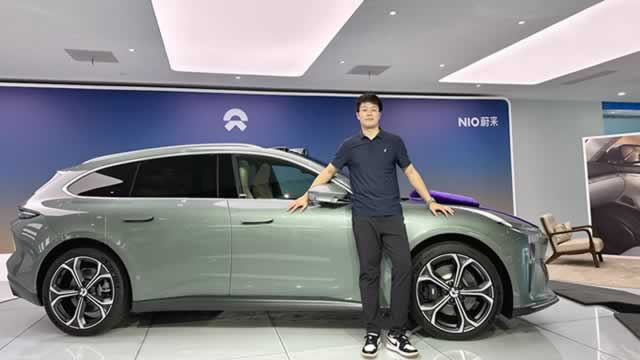
This profitability inflection is largely attributed to NIO's strategic expansion into a multi-brand ecosystem. The company's new Onvo brand, particularly the L60 and L90 SUVs, has successfully challenged rivals like the Tesla Model Y on price and interior space, significantly contributing to volume ramp-up. Furthermore, the compact Firefly brand, designed for the European market, aims to scale in 2026 and further boost margins, which recovered to 14.2% in late 2025 from single digits in 2023.

NIO's total deliveries for 2025 reached a record 326,028 vehicles, a 47% year-over-year increase, with preliminary total revenue estimated at $12.78 billion. The company’s cumulative deliveries surpassed 1,045,571 vehicles by February 2026, reinforcing its growing scale. With over $6 billion in cash and equivalents as of early 2026, and strategic backing from Abu Dhabi-based CYVN Holdings, NIO has moved past its immediate "bankruptcy risk" phase, though substantial debt from its infrastructure build-out remains a factor. CEO William Li has reaffirmed the ambitious goal of achieving annual non-GAAP profitability for the full year 2026, underscoring the company's commitment to sustainable development.

Can XPeng's AI and International Push Drive Sustainable Growth?

XPeng Inc. is navigating a complex landscape, with the market keenly focused on its ability to achieve single-quarter profitability, particularly after a mixed performance in Q4 2025. The company's non-GAAP net loss narrowed to RMB 150 million in Q3 2025, nearing breakeven, but Q4 deliveries of 116,249 vehicles fell short of its guidance range of 125,000 to 132,000 units. Despite this miss, XPeng's full-year 2025 deliveries reached 429,445 vehicles, representing a robust 126% year-over-year growth, showcasing its significant expansion.

The company is aggressively leveraging its software prowess in artificial intelligence and autonomous driving as a new growth engine. XPeng's second-generation VLA solution, hailed by Morgan Stanley as a "bold leap forward," is set to be commercially adopted by Volkswagen, marking a significant validation of its technology. The introduction of models like the G7, equipped with XPeng’s in-house Turing AI chip, further underscores its commitment to intelligence-driven vehicles. This focus on full-stack in-house development of intelligent driver-assistance software positions XPeng as a technology architect, not just an automaker.

To counter sluggish domestic sales, which saw February deliveries plunge nearly 50% year-on-year to 15,256 units, XPeng is accelerating its internationalization strategy. The company has already expanded its presence to 60 countries and regions in 2025 and plans further global penetration from 2026 to 2030. This includes localized supply chain teams in Europe and ASEAN, and a focus on extended-range electric vehicles (EREVs) to drive sales growth. XPeng has set an ambitious target of delivering 550,000–600,000 vehicles in 2026, representing a 28.1–39.7% growth from 2025, signaling its determination to scale globally.

How Do NIO and XPeng Stack Up Financially?

A direct financial comparison between NIO and XPeng reveals distinct trajectories, particularly as both companies strive for profitability in China’s hyper-competitive EV market. NIO, with a current market capitalization of $11.58 billion and trading at $4.88, has seen its stock price fluctuate within a $3.02 to $8.02 52-week range. Its TTM financials show a P/S ratio of 1.10 and a deeply negative P/E of -3.59, reflecting ongoing losses. While its gross margin stands at 11.2%, the operating margin remains significantly negative at -28.8%, despite the recent adjusted operating profit.

XPeng, on the other hand, boasts a higher market capitalization of $17.53 billion and trades at $18.45, within a $15.38 to $28.23 52-week range. Its TTM P/S ratio is 1.67, also with a negative P/E of -20.67. XPeng's gross margin of 17.1% is notably higher than NIO's, and its operating margin of -6.1% is considerably less negative, suggesting better operational efficiency and a closer path to sustained profitability. This is further supported by XPeng's stronger revenue growth of 33.2% year-over-year in FY 2024 compared to NIO's 18.2%.

Analyst consensus paints a mixed picture. For NIO, the average price target is $6.70, with a "Buy" rating from 23 analysts. Forward estimates for FY 2027 project revenues of $149.8 billion and an EPS of -$0.45. XPeng has a higher consensus price target of $25.50 and also a "Buy" rating from 16 analysts. Its FY 2027 revenue consensus is $134.1 billion with an EPS of $2.75, indicating an expectation of positive earnings sooner than NIO. While both companies are still unprofitable on a TTM basis, XPeng's stronger growth in revenue and margins, coupled with a less severe operating loss, gives it a modest financial edge in the near term.

What Are the Key Competitive Dynamics in China's EV Market?

China's EV market in 2026 is a brutal battleground, characterized by intense price wars and the emergence of formidable new contenders. The "wild-growth phase" is over, replaced by a focus on profitability, intelligence, and global expansion. Legacy giants like BYD and Geely, alongside new entrants like Xiaomi EV, are exerting immense pressure on "first-wave benchmarks" such as NIO and XPeng. The market has consolidated significantly, with the top ten manufacturers now accounting for around 95% of new energy vehicle sales, up from 60-70% just a few years ago.

BYD remains the undisputed volume leader, with 94,176 passenger NEV retail sales in January 2026, capturing a 15.8% market share. Geely is a close second with 92,135 units and 15.5% share. Xiaomi EV, a new force, rapidly climbed to fifth place with 39,002 units and a 6.5% share in January, directly pressuring NIO's delivery volumes in tier-1 cities. Tesla, despite its global leadership, has seen its China sales drop, even falling out of the top 10 NEV retail sales in January 2026 with 18,485 units, partly due to increased exports from its Shanghai plant.

NIO and XPeng are fighting for market share in this crowded space. NIO ranked eighth in January 2026 NEV retail sales with 27,061 units (a 4.5% share), while XPeng did not make the top 10. The competition has forced both companies to diversify their product offerings and optimize costs. NIO's multi-brand strategy (Nio, Onvo, Firefly) aims to cover a broader price spectrum from RMB 150,000 to RMB 800,000. XPeng, with its diverse lineup including the G9, P7i, G6, P7+, MONA M03, X9, and the new G7, is doubling down on intelligence-driven vehicles to differentiate itself. This fierce domestic competition is a primary driver for both companies to aggressively pursue international markets.

What Are the Risks and Opportunities for Investors?

Investing in NIO and XPeng, while offering exposure to China's dynamic EV sector, comes with a distinct set of risks and opportunities. On the risk front, the ongoing price war in China's EV market is a significant overhang, compressing margins and making sustained profitability challenging. Both companies face intense competition from domestic giants like BYD and new entrants like Xiaomi, as well as legacy automakers accelerating their EV transitions. Geopolitical friction, including potential tariffs on Chinese-made EVs in the EU and US, poses a substantial threat to their international expansion plans. NIO, in particular, has already faced headwinds in Europe, dismantling its direct-sales model in February 2026 in favor of a dealer-based approach, which could impact its premium service image.

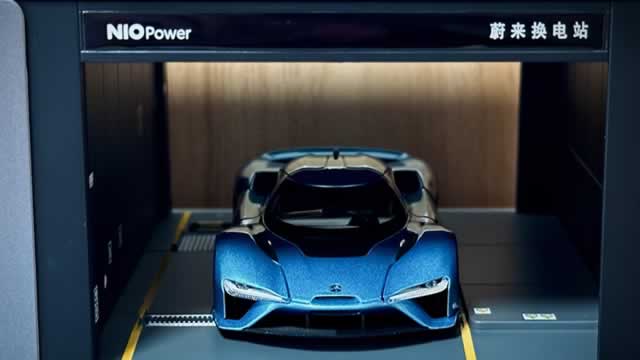
However, compelling opportunities exist. NIO's achievement of adjusted operating profitability in Q4 2025 is a major psychological and financial milestone, signaling improved operational efficiency and a more sustainable business model. Its multi-brand strategy, with Onvo targeting the mass market and Firefly expanding into Europe, offers significant scaling potential. NIO's unique battery swap network, now open to competitors, positions it as a "utility provider" and a potential long-term moat. The upcoming launch of the Onvo L80 SUV in May 2026 is expected to be a major sales catalyst, alongside expansion into the Middle East with Abu Dhabi's backing.

XPeng's technological leadership in AI and autonomous driving, highlighted by its VLA 2.0 solution and partnership with Volkswagen, presents a strong differentiation strategy. Its aggressive internationalization, focusing on localized R&D and manufacturing, could unlock new revenue streams and reduce reliance on the saturated domestic market. The company's ambitious 2026 delivery target of 550,000–600,000 vehicles indicates confidence in its product pipeline, including new EREV models. For investors, the long-term thesis for both companies hinges on their ability to translate technological innovation and market expansion into consistent, sustainable profitability, navigating the complex interplay of domestic competition and global ambitions.

NIO and XPeng are no longer just EV startups; they are evolving into multi-faceted technology companies. While the path to consistent profitability remains challenging amidst intense competition and geopolitical uncertainties, their strategic pivots towards diversified brands, advanced AI, and global expansion offer a compelling, albeit high-risk, investment narrative for the long term. Investors should closely monitor their upcoming earnings reports and delivery figures for signs of sustained operational improvements and market traction.


Want deeper research on any stock? Try Kavout Pro for AI-powered analysis, smart signals, and more. Already a member? Add credits to run more research.

SHARE THIS ON:

Related Articles

Category

You may also like

Stock News3 days ago

Is Oracle Stock The New King Of Cloud Growth?

Oracle's aggressive pivot toward Oracle Cloud Infrastructure (OCI) sparks debate regarding its status as a rising cloud growth titan or an overextended underdog.
Stock News3 weeks ago

Will NIO's Recall Spark Broader Software Scrutiny in EVs?

NIO recalled 246,229 electric vehicles in China because a software glitch caused screens to black out, raising safety concerns that may prompt broader regulatory review.
Stock News3 weeks ago

As NIO Eyes Adjusted Operating Profit in Q4, Is the Stock a Buy Now?

NIO guides for its first-ever quarterly adjusted operating profit in Q4'25, driven by record deliveries, new brands, and margin gains signaling a sharp turnaround.
Stock News2 months ago

Can Cloudflare's Edge AI Inference Reshape Cost Economics?

Cloudflare's Edge AI inference leverages custom Rust-based Infire to improve GPU utilization and reduce latency, potentially reshaping current inference cost economics.

Breaking News

View All →

Top Headlines

View More →
Stock News31 minutes ago

Large cap tech stocks like Nvidia are a deal now, says Silvant Capital's Michael Sansoterra

Stock News33 minutes ago

S&P 500 Snapshot: Lowest Close of 2026

Stock News1 hour ago

Micron Technology Will Hit Jackpot With This New Product

Stock News1 hour ago

Stock Market Today, March 9: Nvidia Rises Ahead of GTC as Investors Watch for AI Chip Announcements

Stock News1 hour ago

Stock Market Today, March 9: Amazon Edges Higher on Zoox Robotaxi Expansion