MarketLens

Log in

Is Nokia's Recent Stock Surge Sustainable Amid 5G and AI Tailwinds

1 week ago
SHARE THIS ON:

Is Nokia's Recent Stock Surge Sustainable Amid 5G and AI Tailwinds

Key Takeaways

  • Nokia (NOK) shares have recently surged, driven by strong 5G infrastructure demand and strategic investments in AI-native network solutions, particularly in North America.
  • The company's pivot towards AI-driven optical networks and its significant partnerships, including a $1 billion investment from NVIDIA, are positioning it for long-term growth despite near-term market headwinds.
  • While North American telecom spending and enterprise private 5G deployments offer substantial tailwinds, investors must weigh these against risks like carrier spending cuts and intense competition.

Is Nokia's Recent Stock Surge Sustainable Amid 5G and AI Tailwinds?

Nokia (NOK) has seen its stock price climb recently, closing at $8.25 on March 24, 2026, up 2.36% with a notable trading volume of 49.5 million shares. This upward movement reflects growing investor optimism around the Finnish telecom giant's strategic pivot and its positioning within the rapidly evolving 5G and AI-native network landscape. After a period of underperformance, with shares trading between a $4.00 low and $8.82 high over the past 52 weeks, the market is beginning to re-evaluate Nokia's potential.

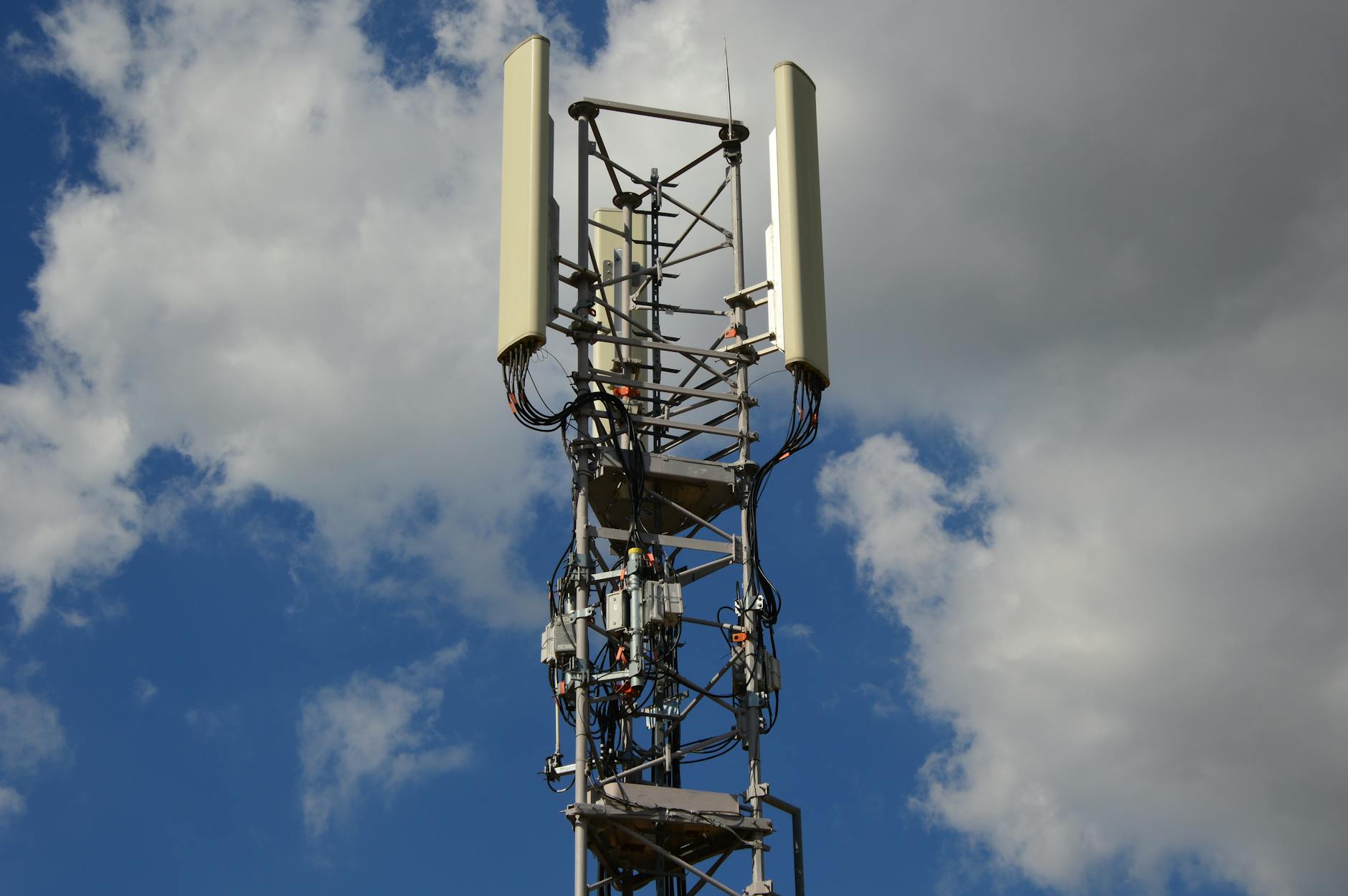
The rally is not merely speculative; it’s underpinned by tangible developments in Nokia's core businesses. Demand for 5G infrastructure remains robust, particularly in key markets like North America, where telecom operators are aggressively expanding their networks. Furthermore, Nokia's proactive embrace of AI-driven network solutions and strategic partnerships is setting the stage for future growth, aiming to capitalize on the global AI boom. This shift is critical as the company navigates a competitive environment and seeks to solidify its market share.

Nokia's management has articulated a clear vision for 2026 and beyond, focusing on disciplined execution and capturing growth in AI & Cloud. The simplification of its operating model into Network Infrastructure and Mobile Infrastructure, effective from the start of 2026, is designed to sharpen accountability and improve profitability. This strategic realignment, coupled with significant investments in R&D and manufacturing, suggests a concerted effort to move beyond past challenges and capture emerging opportunities in next-generation connectivity.

However, the path forward isn't without its complexities. While the market is reacting positively to Nokia's strategic direction, the company still faces challenges such as fluctuating telecom capital expenditure cycles and intense competition from rivals like Ericsson. The sustainability of this recent surge will depend heavily on Nokia's ability to convert its strategic initiatives and partnerships into consistent financial performance and market share gains, particularly in the high-growth segments of optical and AI-native networks.

How is Nokia Capitalizing on the AI-Native Network Revolution?

Nokia is making a significant bet on the AI-native network revolution, viewing it as a long-term structural shift that fundamentally expands the role of networks. The company believes that as intelligence moves beyond data centers into real-world systems, networks will demand unprecedented performance, security, and reliability. This vision underpins its strategy to deliver trusted AI-native networks, enabling broad AI adoption and supporting sustainable growth over time.

A pivotal catalyst in this strategy is Nokia's $1 billion partnership with NVIDIA, announced in Q4 2025. This collaboration integrates NVIDIA's Aerial RAN Computer Pro into Nokia's Radio Access Network (RAN) portfolio, specifically targeting AI-native 5G-Advanced and 6G networks. The partnership leverages NVIDIA's 6G-ready platform to enhance connectivity, computing, and sensing capabilities, with field trials expected to commence in 2026 alongside partners like T-Mobile US and Dell Technologies. This move is anticipated to stabilize Nokia's declining RAN market share and accelerate its transition to distributed compute architectures.

Beyond this flagship partnership, Nokia is actively expanding its collaborations to embed AI across its offerings. Recent announcements include exclusive AI network deals with Telefónica to implement advanced networking solutions across new Edge data centers in Spain. Additionally, Nokia has expanded partnerships with Deutsche Telekom and TIM Brasil to accelerate cloud-based, disaggregated, and AI-native RAN technology development. These initiatives are crucial for laying the groundwork for programmable and automated mobile networks, which are simpler, faster, and better optimized for future connectivity requirements.

The company's focus on AI extends to its Network Infrastructure segment, where it expects net sales growth of 6-8% in 2026, consistent with its long-term targets. Within this, the combined IP and Optical Networks segment is projected to grow 10-12% in 2026, driven by AI and cloud demand. Nokia's acquisition of Infinera, a U.S. optical networking firm, and its investments in indium-phosphide semiconductor fabrication further solidify its position in this high-growth segment, anticipating that 800G coherent pluggables will become the standard for AI networks in 2026.

What Does North American Telecom Spending Mean for Nokia's Growth?

North America has emerged as a critical growth engine for Nokia, with the region's robust telecom spending trends directly impacting the company's performance and future prospects. The market is currently valued at approximately $50 billion as of 2023 and is projected to grow at a compound annual growth rate (CAGR) of around 6% through 2028, reaching an estimated $70 billion. This consistent investment is driven by the ongoing rollout of 5G infrastructure, extensive fiber expansion, and the continuous upgrading of existing networks, making it a pivotal hub for telecom infrastructure investments.

Nokia's strategic focus on this region is evident in its significant commitments. The company agreed to a $4 billion investment with the U.S. administration to expand its R&D and manufacturing footprint in the country, aiming to accelerate AI-ready network infrastructure. This multi-year plan complements its earlier $2.3 billion commitment through the Infinera acquisition, reinforcing Nokia's position in critical network infrastructure and supporting the nation's capacity for AI-optimized connectivity at scale.

The impact of this focus is already visible in Nokia's financial results. In Q1 2025, Nokia's net sales in North America grew by a robust 21% year-over-year, from €1.031 billion to €1.319 billion. This growth was broad-based, comprising double-digit increases in optical networks, IP networks, and mobile networks, including a new deal with T-Mobile US. This performance stands in contrast to declines in other regions like EMEA, highlighting North America's importance as a counterweight to regional softness.

Despite the positive momentum, the North American market presents a mixed picture. While Nokia has reportedly increased its market share in the U.S. in recent quarters, concerns persist regarding a major U.S. carrier's multi-year replacement of Nokia radio gear, which could lead to lost revenue and margin pressure. However, the broader trend of increasing fiber-to-the-home (FTTH) investment, driven by operators like AT&T and Verizon, and the significant demand from hyperscalers for optical network solutions (Nokia secured €1.5 billion in hyperscaler orders by November 2025, a threefold increase year-over-year) provide strong tailwinds that Nokia is actively pursuing.

What Do Nokia's Latest Financials and Outlook Tell Us?

Nokia's latest financial reports and 2026 outlook paint a picture of a company in transition, balancing growth investments with a focus on profitability and efficiency. For the full year 2025, net sales grew 2% year-over-year on a constant currency and portfolio basis, reaching €22.4 billion, with comparable operating profit at €2.0 billion and free cash flow of €1.5 billion, equating to a strong 72% FCF conversion. The company's comparable diluted EPS for 2025 was €0.29.

Looking ahead to 2026, Nokia has introduced financial guidance targeting comparable operating profit of €2.0 to €2.5 billion. This reflects a cautious approach, yet recent performance suggests potential upside. The company expects net sales growth in Network Infrastructure of 6-8%, consistent with its long-term target, and 10-12% growth in combined IP and Optical Networks. Capital expenditures are projected to be higher in 2026, between €900 million and €1 billion, primarily for investments in additional manufacturing capacity to support growth in Optical Networks and real estate renewal projects.

From a valuation perspective, Nokia's current market capitalization stands at $44.56 billion. Its TTM P/E ratio is 43.73, while its P/S is 1.98, and P/FCF is 26.83. These metrics suggest the market is pricing in future growth, especially given the TTM EPS of $0.16. The company maintains strong cash reserves and low leverage, with a Net Debt/EBITDA of -0.12 and a Current Ratio of 1.58, providing a buffer against execution risks and supporting shareholder returns. The Board has proposed a dividend authorization of €0.14 per share, translating to a dividend yield of 2.0% based on the TTM payout of 85.1%.

Despite a reported -52.7% decline in TTM net income and -0.6% in revenue growth for FY2025 YoY, the long-term picture is more nuanced. The five-year cumulative net income growth per share is 124.8%, indicating significant improvements over a broader horizon. Analysts hold a "Buy" consensus rating for NOK, with a median price target of $7.54 and a high of $8.50, suggesting some believe the stock is currently trading above its fair value, while others see potential for a re-rating to $10 by mid-2026 if AI and 5G integration accelerates.

What Are the Key Risks and Challenges Facing Nokia?

While Nokia's strategic pivot and recent stock performance are encouraging, several significant risks and challenges could impede its growth trajectory. The telecom equipment sector is inherently cyclical, heavily influenced by capital expenditure (capex) cycles of major operators. There's a risk that carriers, after significant 5G build-outs, might pull back on spending to repair balance sheets, mirroring post-4G trends. For instance, Verizon is already signaling massive capex cuts for 2026, which could impact equipment providers like Nokia.

Competition remains fierce, particularly from rival Ericsson, which has also made significant gains in North America. The market for 5G and AI-native network solutions is highly competitive, requiring continuous innovation and substantial R&D investments. Nokia's Q4 2025 comparable operating margin decreased by 90bps year-over-year to 17.3% due to growth investments in Network Infrastructure, including the integration of Infinera. This highlights the cost pressures associated with staying at the forefront of technological advancements.

Furthermore, Nokia faces specific regional challenges. While North America has been a bright spot, a major U.S. carrier is reportedly replacing a significant portion of its legacy Nokia radio equipment, reinforcing worries about lost revenue and margin pressure in the region over time. Although Nokia expects to leverage its global manufacturing network to minimize the impact of U.S. tariffs, it still anticipates a €20-€30 million hit to its operating profit in Q2 2026. Additionally, net sales in EMEA slumped by 20% in Q1 2025, impacted by challenging prior-year comparisons.

Investor sentiment can also be volatile. Recent analyst downgrades from "Buy" to "Hold" by Danske Bank and DNB Carnegie, both setting a €6.50 price target, reflect cautious stances due to uncertain market conditions. These downgrades, coupled with post-event profit-taking after periods of optimism around AI-RAN partnerships, can create near-term uncertainty and pressure on the stock. Nokia's new operating and financial structure, while aimed at efficiency, could also create temporary investor uncertainty as the market adjusts to new segment expectations.

What Does This Mean for Investors Considering Nokia?

For investors eyeing Nokia, the current landscape presents a compelling narrative of strategic transformation and growth potential, albeit with inherent risks. The company's aggressive push into AI-native networks, fortified by the $1 billion NVIDIA partnership and expanding collaborations with major telecom operators like Telefónica, Deutsche Telekom, and TIM Brasil, positions it favorably for the next wave of digital transformation. These initiatives are not just about 5G; they are about building the foundational infrastructure for 6G and the broader AI boom, which is expected to drive significant demand for advanced optical components and network solutions.

The strong performance in North America, with a 21% year-over-year net sales growth in Q1 2025 and a $4 billion investment in U.S. R&D and manufacturing, underscores a clear geographic focus that is yielding results. Nokia’s Network Infrastructure segment, particularly IP and Optical Networks, is projected for robust growth, driven by hyperscaler demand and the adoption of 800G coherent pluggables. This segment, bolstered by the Infinera acquisition, is crucial for Nokia's long-term revenue and profitability.

However, investors must remain cognizant of the cyclical nature of telecom capex and the intense competitive pressures. While Nokia's financial health appears solid with strong cash reserves and low leverage, the modest comparable operating profit guidance for 2026 and the ongoing replacement of its legacy equipment by a major U.S. carrier highlight potential headwinds. The stock's current valuation, with a TTM P/E of 43.73, suggests that much of the future growth is already priced in, requiring flawless execution to justify further upside.

Ultimately, Nokia appears to be a long-term play on the foundational technologies enabling the AI and 5G/6G eras. Its strategic repositioning, strong partnerships, and focus on high-growth segments like optical networks offer a compelling bull case. Yet, the stock's sensitivity to telecom spending cycles and competitive dynamics means investors should anticipate volatility and prioritize a long-term horizon, carefully monitoring execution against its ambitious strategic goals.

Nokia's journey from mobile phone pioneer to a leader in AI-native network infrastructure is a testament to its adaptability. The company is strategically positioned to capitalize on the global demand for advanced connectivity, but sustained success will hinge on disciplined execution and navigating the inherent complexities of the telecom market. Investors with a long-term view and an appetite for growth in foundational tech could find Nokia an intriguing opportunity.


Want deeper research on any stock? Try Kavout Pro for AI-powered analysis, smart signals, and more. Already a member? Add credits to run more research.

SHARE THIS ON:

Related Articles

Category

You may also like

Stock News1 week ago

Workday Rides on Subscription Revenue Growth: Will it Sustain?

Workday's stock faces sustainability questions despite riding subscription revenue growth and AI innovation, as analyst estimates are reportedly slowing.
Stock News1 months ago

Is Nokia a Buy, Sell, or Hold in 2026?

Nokia stock nearly doubled since July 2024, outperforming the S&P 500, driven by reorganization toward AI-native networks and the anticipated 6G upgrade cycle.
Stock News1 months ago

Does Corning Stock Win The AI Infrastructure Race?

Corning stock (GLW) surged 40% over the last month due to optimism regarding its role in AI data center buildout. However, closer analysis of the AI infrastructure landscape suggests GLW may not be th...
Stock News2 months ago

General Motors Company (GM) Hit a 52 Week High, Can the Run Continue?

General Motors (GM) stock reached a new 52-week high, prompting investor scrutiny regarding potential continued gains. Future performance depends on the strength of the company's underlying fundamenta...

Breaking News

View All →

Top Headlines

View More →
Stock News47 minutes ago

Microsoft Plots $10 Billion AI Push. This Stock Jumped 20% on the Plan.

Stock News1 hour ago

Tesla Delivers 358K Vehicles In Q1 — But Growth Story Loses Speed

Stock News1 hour ago

1 Trillion Reasons to Invest in Nvidia

Stock News2 hours ago

7 Dividend Increases Expected In April 2026

Stock News3 hours ago

Brilliant Buys for Uncertain Times: 2 Growth Stocks to Own for the Long Term