MarketLens
Is Samsung's Galaxy S26 AI Push a Game Changer for Investors

Key Takeaways
- Samsung's new Galaxy S26 lineup aggressively integrates "agentic AI" and a novel Privacy Display, aiming to redefine the premium smartphone experience amidst a contracting market.
- The company's strategic pricing, with higher MSRPs for base models, directly confronts rising memory costs and tests its pricing power against Apple's premium segment.
- Beyond mobile, Samsung's robust Device Solutions (DS) division, a key beneficiary of the AI-driven semiconductor supercycle, provides a crucial profit buffer and diversified investment appeal.
Is Samsung's Galaxy S26 AI Push a Game Changer for Investors?
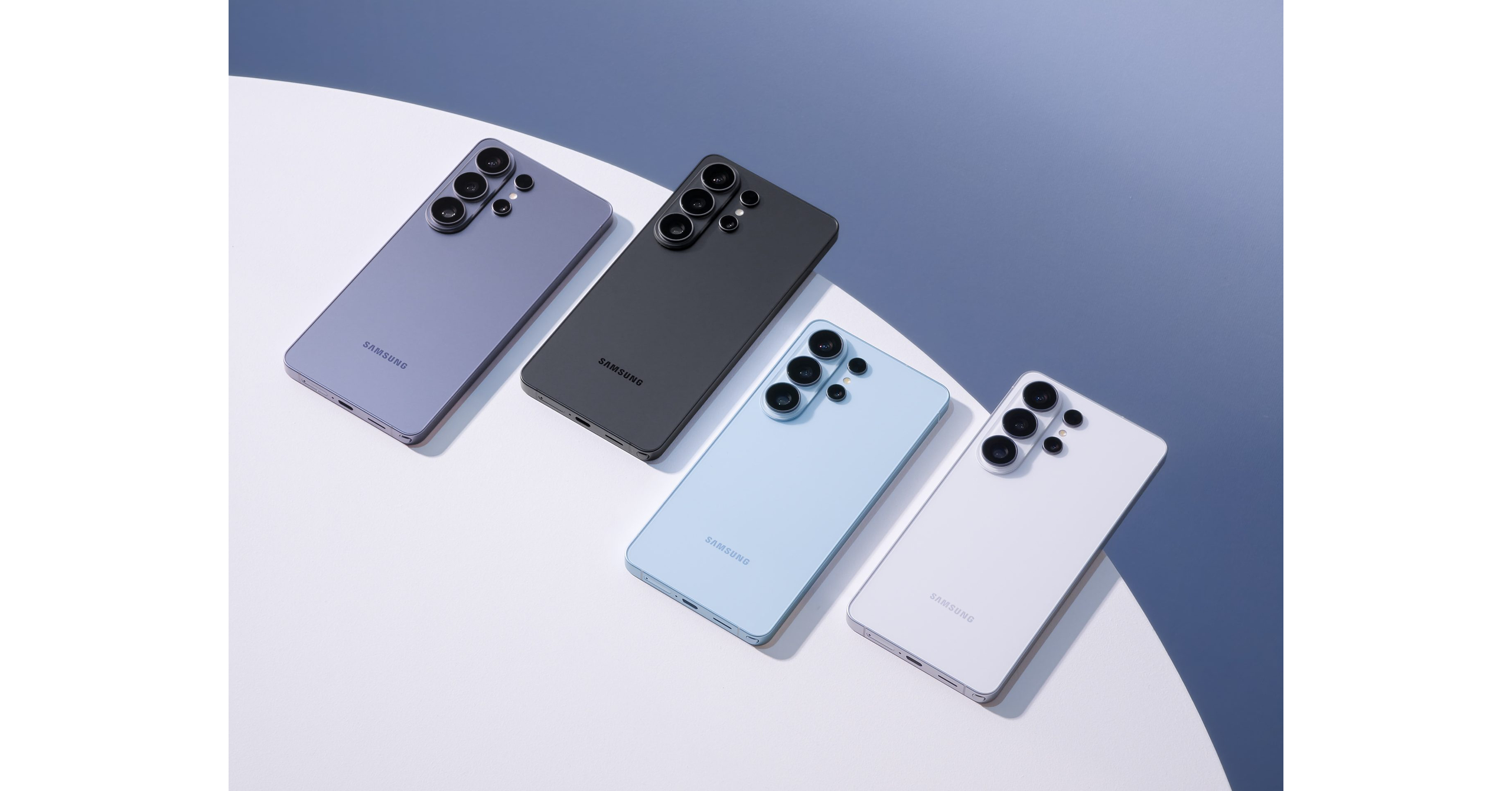
Samsung Electronics (SSNLF) is making a bold statement with its new Galaxy S26 smartphone lineup, unveiled weeks ahead of Apple's anticipated product showcase. This isn't just another incremental upgrade; it's a strategic pivot, heavily leaning into "agentic AI" and hardware innovation to differentiate in a fiercely competitive and contracting global smartphone market. The company is betting that deeply integrated AI capabilities, powered by Google's Gemini models, will justify higher price points and drive upgrade cycles, even as worldwide smartphone sales are forecast to drop by 12.9% in 2026 to 1.12 billion units. This aggressive move positions Samsung not merely as a hardware provider, but as a leader in the evolving AI-first mobile experience.
The Galaxy S26 ($899.99) and S26+ ($1,099.99) will debut at higher Manufacturer's Suggested Retail Prices (MSRPs) compared to their predecessors, while the S26 Ultra ($1,299.99) maintains its price point. This pricing strategy is a direct response to rising component costs, particularly memory, which are projected to push the average smartphone price up by 14% to a record $523. With general availability starting March 11, Samsung is challenging the market to accept premium pricing for premium AI-driven features. For investors, the critical question is whether this AI-centric approach can translate into sustained market share gains and improved profitability for Samsung's Mobile eXperience (MX) division, especially given the broader market headwinds.
What Differentiates Samsung's Agentic AI and Privacy Display?
Samsung's S26 series isn't just "AI-enabled"; it's designed as an "effortless AI phone," integrating agentic capabilities directly at the operating system level. This means AI agents can orchestrate multi-step workflows across various applications on a user's behalf, moving beyond simple voice commands or single-app functions. Features like "Now Nudge" exemplify this, proactively pulling up calendar suggestions and providing replies within messaging apps, eliminating the need to switch between multiple interfaces. This deep integration, powered by Google's Gemini, aims to transform the smartphone into a truly proactive personal assistant, capable of complex tasks like ordering dinner or booking a car on command.
Beyond software, Samsung has introduced a tangible hardware innovation in the S26 Ultra: the "Privacy Display." Touted as the "world's first" built-in version for phones, this feature uses a new angled-pixel arrangement to make the screen appear grayed out when viewed from the side, akin to a stick-on privacy protector but integrated directly into the display. This addresses a common user pain point, offering enhanced security for sensitive information in public settings. Combined with camera AI enhancements like revised Nightography, Super Steady Video with horizon lock, and Photo Assist (cribbed from Google), these features collectively form a compelling differentiation swing. They justify the higher price points and aim to defend upgrade demand in a challenging macroeconomic environment, setting a new benchmark for what a premium smartphone should offer.
How Will Rising Costs and a Contracting Market Impact Samsung's Margins?
The global smartphone market faces significant headwinds in 2026, with IDC forecasting a 12.9% decline in worldwide sales. This contraction is exacerbated by a worsening memory crisis, as conventional DRAM contract prices are projected to increase by a staggering 90% to 95% quarter-over-quarter in Q1 2026. Such a dramatic cost shock puts immense pressure on handset makers, forcing them to choose between higher prices, more aggressive promotions, or accepting lower margins. Samsung's decision to raise MSRPs for the S26 and S26+ models directly reflects this reality, attempting to pass on some of these increased component costs to consumers.
Samsung's MX (Mobile eXperience) + Networks segment reported KRW 29.3 trillion in revenue and KRW 1.9 trillion in operating profit in Q4 2025. The company explicitly stated its goal for Q1 2026 is "sustained profitability" and "supply stability" amid these cost pressures. The success of the S26 lineup will be a crucial test of Samsung's pricing power and brand loyalty. If the market is already pricing in higher device prices due to memory tightness, as IDC's average selling price (ASP) forecast suggests, then Samsung's move might be well-timed. However, if the company is forced to "buy" demand back through unusually aggressive carrier subsidies and trade-in promotions (like the "save up to $900" offer), the net prices could erode, impacting the very margins it seeks to protect. This delicate balance between maintaining profitability and driving volume in a shrinking, high-cost market is a key watchpoint for investors.
Is Samsung's Early AI Move a Threat to Apple's Dominance?
Samsung's aggressive AI push with the S26 series, launched weeks ahead of Apple's (AAPL) expected March 4 event, has created a significant "expectation gap" in the premium smartphone market. For years, Apple has commanded superior profitability and ecosystem lock-in, achieving a record 24.2% global market share in Q4 2025 with 81.3 million shipments, surpassing Samsung as the top vendor for the full year 2025 with 247.8 million shipments and a 19.7% market share. However, Samsung's early and concrete demonstration of agentic AI, powered by Google Gemini and integrated at the OS level, sets a new benchmark that Apple must now match or exceed.
The direct comparison is stark: Samsung's S26+ at $1,099.99 is priced squarely against Apple's iPhone 17 Pro, which starts at $1,099. This forces a direct "Android flagship vs. iPhone Pro" comparison, where Samsung is leading with tangible AI features and a novel Privacy Display. While Apple is expected to introduce a smarter Siri powered by Google Gemini with its iOS 26.4 update, Samsung has already shipped this technology in a live product. This puts Apple in a position where its upcoming announcements for the iPhone 17e and a rumored low-cost MacBook will be judged against Samsung's already-demonstrated capabilities. The market will scrutinize whether Apple's AI features are perceived as lagging or merely incremental, potentially undermining its aspirational pull and valuation premium if it fails to close this expectation gap.
How Does Samsung's Diversified Business Model Offer a Buffer?
While Samsung's mobile division navigates the intense competition and cost pressures of the smartphone market, its diversified business model provides a crucial strategic advantage and a significant profit buffer. The true engine of Samsung's profitability is often its Device Solutions (DS) division, which encompasses semiconductors and displays. This segment is poised to be a major beneficiary of the accelerating semiconductor supercycle, fueled by the insatiable demand for memory chips (like HBM and DRAM) driven by global AI infrastructure buildouts. In Q1 2026, conventional DRAM contract prices are expected to surge by 90-95%, a boon for memory suppliers like Samsung.
This vertical integration allows Samsung to maintain volume leadership in mobile, not just for direct smartphone profits, but also to secure internal demand for its highly profitable components. As memory components become more limited and expensive, larger players with stronger supply chain integration, deeper capital reserves, and broader SKU coverage, like Samsung, are better positioned to absorb cost shocks and secure favorable component prices. This makes Samsung an attractive investment for those seeking leveraged exposure to the foundational AI component economy, offering a more stable and diversified play than pure-play smartphone manufacturers. The DS division's anticipated record profit margins in 2026 could significantly offset any potential margin compression in the MX division, highlighting the conglomerate's resilience.
What Does This Mean for Investors in SSNLF?
For investors, Samsung (SSNLF) presents a complex but potentially rewarding proposition, balancing the competitive dynamics of the smartphone market with the structural tailwinds of the semiconductor industry. The stock currently trades at $65.21, with a market cap of $383.22 billion and a P/E ratio of 32.95. While its TTM EPS stands at $6569.77, it's important to note that the OTC listing for SSNLF represents a fraction of the underlying KRX-listed stock, hence the discrepancy in per-share metrics. The company's dividend yield of 0.8% (with a payout ratio of 22.4%) offers a modest income stream.
The bull case for Samsung hinges on its aggressive AI leadership in smartphones, which could drive premium sales and market share gains, coupled with the robust performance of its DS division. With TTM revenue growth of 10.9% and net income growth of 34.5% (FY2025 YoY), the company demonstrates strong operational momentum. However, the bear case acknowledges the contracting global smartphone market, intense competition from Apple and Chinese brands, and the execution risk associated with its pricing strategy amidst rising component costs. Investors should monitor the adoption rate of the S26 series, the impact of promotions on net ASPs, and the continued strength of the semiconductor supercycle. Samsung's ability to leverage its vertical integration and diversified revenue streams will be key to navigating these challenges and delivering long-term value.
Samsung's strategic bet on agentic AI and its robust semiconductor business position it uniquely in the evolving tech landscape. While the smartphone market faces headwinds, the company's diversified strengths and innovative drive offer a compelling narrative for investors looking beyond short-term volatility. The coming quarters will reveal if its bold moves translate into sustained market leadership and enhanced shareholder value.
Want deeper research on any stock? Try Kavout Pro for AI-powered analysis, smart signals, and more. Already a member? Add credits to run more research.
Related Articles
Category
You may also like


Samsung's S26 gives an advance look at what the Google-powered Apple Siri could do

Is Innodata's Largest Customer Expansion a 2026 Breakout Catalyst?

Is There an AI Bubble – and If So, How Do Investors Navigate It?
Breaking News
View All →Featured Articles
Top Headlines
Apple Hikes Prices On New Laptops Amid AI Chip Shortage
Apple unveils new MacBook Air and MacBook Pro with M5

Wall Street analyst updates Nvidia stock price target

NASDAQ Index, S&P 500 and Dow Jones Forecast – US Indices Struggle Early on Tuesday