MarketLens

Log in

Is Solana (SOL) Defying Crypto Winter with Institutional Inflows

12 hours ago
SHARE THIS ON:

Is Solana (SOL) Defying Crypto Winter with Institutional Inflows

Key Takeaways

  • Solana (SOL) is attracting significant institutional capital, with recent $53 million inflows defying broader crypto market outflows, signaling a rotation into the high-performance blockchain.
  • The "Firedancer" upgrade, particularly its "Frankendancer" components already live on mainnet, is enhancing network resilience and throughput, positioning Solana for high-frequency trading and consumer AI applications.
  • Despite past security concerns and centralization critiques, Solana's growing real-world adoption, including major partnerships and ETF proposals, suggests a maturing ecosystem with strong long-term potential.

Is Solana (SOL) Defying Crypto Winter with Institutional Inflows?

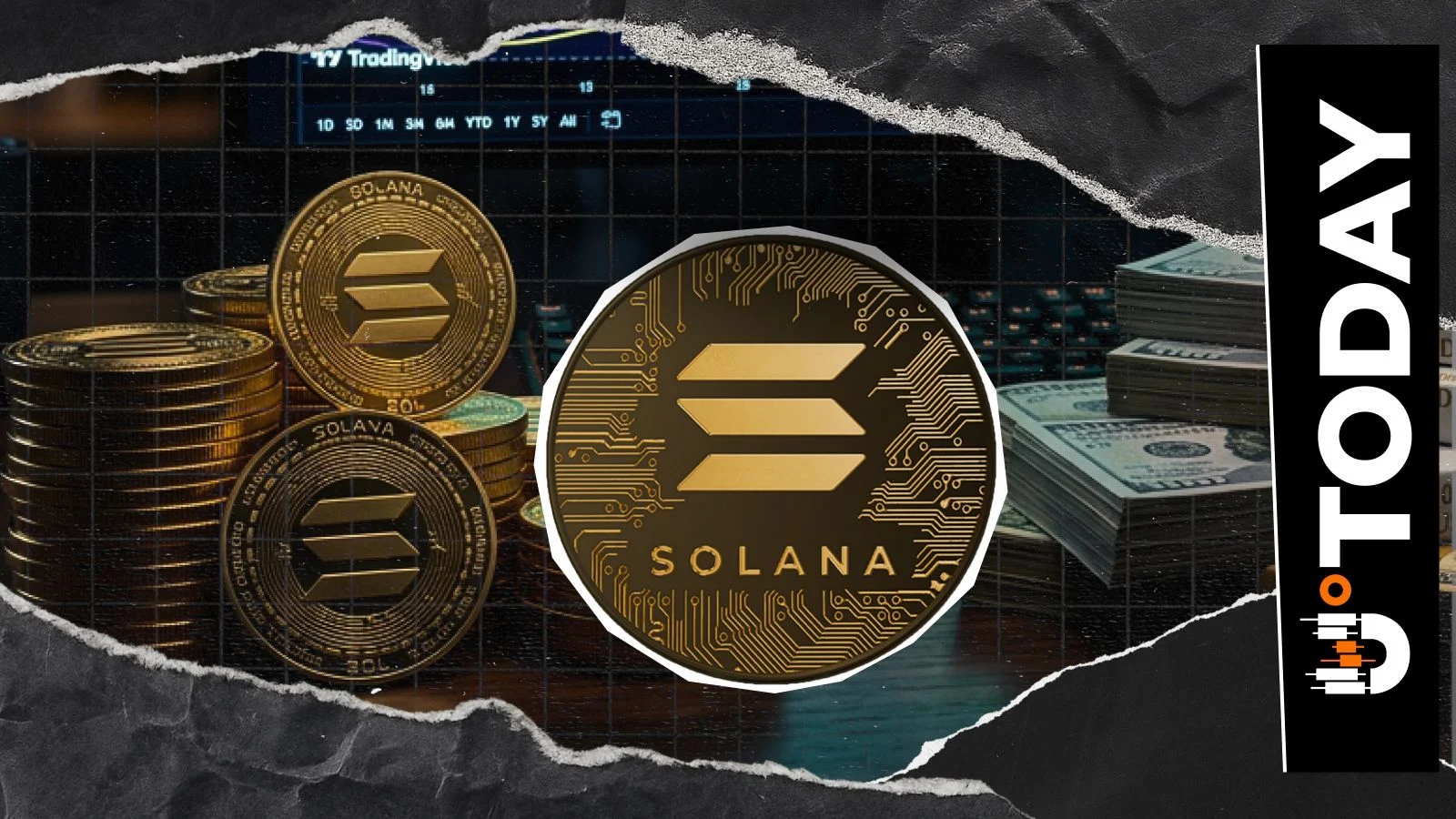
Solana (SOL) is indeed showing remarkable resilience, attracting substantial institutional capital even as the broader cryptocurrency market experiences outflows. This counter-trend inflow, highlighted by a recent $53 million weekly influx into Solana funds, suggests a strategic repositioning by large investors who are increasingly looking past short-term volatility. While Bitcoin and Ethereum ETFs have faced redemptions, Solana-focused products are seeing consistent accumulation, with cumulative flows reaching $901.25 million since early February.

This institutional appetite isn't just about price speculation; it reflects a growing conviction in Solana's underlying technology and its potential as a core infrastructure layer for Web3. Funds like Bitwise's BSOL and Fidelity's FSOL are leading the charge, with Fidelity alone adding $1.16 million in a single session. These inflows indicate that institutions are viewing the current price range, with SOL trading around $87.55, as an attractive entry point, accumulating assets as the token consolidates. The market's ability to absorb these large allocations without triggering a sell-off is a critical test of institutional discipline and a positive sign for Solana's stability.

The macroeconomic backdrop, particularly strong earnings from AI-related firms like Nvidia, is also indirectly bolstering confidence in crypto markets, leading to coordinated institutional repositioning across major assets. Solana's ability to attract capital during a period of broader market caution underscores its differentiated appeal. This isn't merely a speculative gamble; it's a calculated bet on a blockchain designed for speed, efficiency, and scalability, qualities that are becoming increasingly essential for real-world applications. The continued demand for Solana ETFs, even amidst price weakness, signals a long-term investment horizon for these sophisticated players.

How is the Firedancer Upgrade Reshaping Solana's Technical Foundation?

The "Firedancer" upgrade is fundamentally reshaping Solana's technical foundation, addressing long-standing concerns about network resilience and performance. Developed by Jump Crypto, Firedancer is a next-generation validator client designed to improve the speed, stability, and overall robustness of the Solana network. While the full Firedancer client is still under active development, its hybrid "Frankendancer" components are already live on the mainnet, delivering measurable performance improvements for validators. This incremental deployment strategy allows for real-world testing and refinement, ensuring a smoother transition to the full client.

Frankendancer replaces key parts of Solana's existing validator client, Agave, with Firedancer's optimized networking stack and block production logic. This means validators are already experiencing smoother leader performance, faster packet handling, and more consistent slot production. The core innovation lies in Firedancer's ability to bind individual workloads directly to specific CPU cores, creating a deterministic execution model with minimal overhead. This design allows validators to behave more predictably under high-intensity workloads, a crucial requirement as Solana scales towards handling hundreds of thousands, and eventually millions, of transactions per second.

Beyond raw performance, Firedancer introduces a vital structural improvement: client diversity. Solana has historically relied on a single validator client, Agave, which posed a systemic risk. A bug or flaw in this single client could potentially compromise the entire network. Firedancer, written in C++ (compared to Agave's Rust), provides a second, fully independent implementation. This redundancy significantly strengthens the blockchain's security model, reducing the risk of correlated failures and enhancing overall network resilience, much like Ethereum benefits from its multi-client approach. This move is critical for attracting institutional capital, which prioritizes robust and fault-tolerant infrastructure.

What Role Does Solana Play in the Future of AI and High-Frequency Trading?

Solana is uniquely positioned to become a primary blockchain for consumer AI-crypto applications and high-frequency trading, thanks to its unparalleled speed and low transaction costs. The network's average transaction fees remain sub-penny, around $0.00025, with near-instant finality, making it ideal for micro-payments and the rapid, frequent interactions characteristic of AI-driven applications. This cost-efficiency and speed are critical for use cases like decentralized AI agents requiring constant, low-cost data exchange or real-time settlement in financial markets.

The "Firedancer" upgrade, with its potential to push real-world transaction per second (TPS) towards 10,000+ and even 1 million TPS under optimal test conditions, further solidifies Solana's competitive edge. This capacity is essential for high-frequency trading (HFT) firms that demand ultra-low latency and massive throughput to execute complex strategies. Solana's architecture eliminates batch processing, enabling real-time settlement for financial services applications, which reduces counterparty risk and enhances efficiency. This capability is transforming how DeFi protocols and tokenized assets operate, making Solana an attractive platform for industries requiring rapid and secure transactions.

Moreover, infrastructure developments like Pipe Network's SolanaCDN are directly enhancing network efficiency for remote participants. By reducing cross-region latency from 300ms to 78ms, SolanaCDN improves validator performance and helps equalize validator rewards, fostering broader network participation. This global infrastructure, combined with Firedancer's deterministic execution model, ensures that Solana can handle the demanding requirements of both consumer-facing AI applications and sophisticated HFT operations. The network's ability to process around 70 million transactions per day with negligible fees already demonstrates its capacity for high-volume, real-world utility, setting it apart from competitors like Ethereum, which still faces higher Layer 1 gas fees.

What Are the Key Catalysts and Risks for Solana Investors?

For Solana investors, several key catalysts and risks are shaping its near-term and long-term trajectory. On the bullish side, the ongoing institutional accumulation is a significant driver. Solana ETFs have seen 19 consecutive days of inflows, totaling $476 million since their October 28 launch, with Bitwise's BSOL alone capturing $424 million by staking 100% of its SOL holdings to deliver yield. This sustained demand, even amidst broader market downturns, signals strong institutional confidence and a rotation of capital into SOL. The proposal for a VanEck JitoSOL ETF, the first U.S. ETF backed by a liquid staking token, is another major catalyst. If approved by the SEC within its 45-day review period (with a possible extension), it would represent a significant milestone for liquid staking products in the U.S. market, potentially unlocking further institutional capital.

However, Solana faces notable risks. Past security incidents, including $17.45 million in losses from breaches in 2025, have eroded institutional trust, leading to critiques regarding network security and validator concentration. While Solana's high-performance architecture is a draw, its speed has sometimes come at the cost of decentralization, with higher hardware requirements limiting validator count to around 3,500 compared to Ethereum's over 1 million. This trade-off is a point of scrutiny for institutions prioritizing security and decentralization.

Another risk factor is the potential for delayed adoption of critical upgrades like Firedancer. If validators fail to widely adopt the new client, Solana's throughput advantages may not fully translate into real-world usage, hindering its ability to compete with Ethereum's rapidly evolving Layer 2 solutions. Furthermore, high-risk corporate moves, such as Safety Shot's $25 million investment in the Solana-based memecoin Bonk, which triggered a 50% stock drop for the Nasdaq-listed company, highlight the volatility and unpredictability still present in the ecosystem. Investors must weigh Solana's performance advantages and growing adoption against these inherent risks and the competitive landscape.

How Does Solana Stack Up Against Ethereum in the Scalability War?

In the ongoing Layer 1 scalability war, Solana and Ethereum present contrasting architectural philosophies, each with distinct advantages and trade-offs. Ethereum, with its modular architecture (L1 security + L2 execution), prioritizes decentralization and security, boasting over 1,000,000 active validators. Its 2025/2026 Pectra upgrade significantly improved capital efficiency for validators and slashed data blob costs, making Layer 2 solutions like Arbitrum and Optimism even cheaper. However, Ethereum's liquidity remains fragmented across multiple Layer 2 rollups, and Layer 1 gas fees can still be high ($1-$10+) during peak congestion, making it less ideal for high-frequency retail transactions.

Solana, in contrast, employs a monolithic architecture optimized for extreme speed and unified liquidity. Its Firedancer upgrade has effectively eliminated historic outage issues, pushing real-world TPS towards 10,000+. Average transaction fees are a fraction of a penny (~$0.00025) with near-instant finality, positioning it as the undisputed leader for consumer apps, DePIN (Decentralized Physical Infrastructure Networks), and retail memecoin trading. Solana's network activity is robust, with 4.4 million daily active addresses across its ecosystem, a 16% increase from the end of last year, significantly outpacing Ethereum's approximately 530,000 daily active addresses.

Despite Solana's speed and cost advantages, its higher hardware requirements limit validator count to around 3,500, leading to valid critiques regarding network centralization compared to Ethereum. While Ethereum's Layer 2s can achieve 40,000+ TPS, Solana's native speed (currently 3,000-5,000+ TPS post-Firedancer) offers a unified, high-throughput environment without the complexities of navigating multiple rollups. Standard Chartered analyst Geoffrey Kendrick recently trimmed his 2026 SOL forecast to $250 from $310, acknowledging its potential while factoring in market dynamics. The choice between Solana and Ethereum often depends on the specific use case: Solana for low-cost, high-speed consumer applications, and Ethereum for deep liquidity, institutional security, and high-value smart contracts.

What's Next for Solana?

Solana is navigating a critical juncture, balancing its technological prowess with the need to build sustained institutional trust. The successful integration of Firedancer and continued growth in real-world adoption will be paramount. Investors should closely monitor the SEC's decision on the JitoSOL ETF and Solana's ability to maintain its key support level around $76, with a breakout above $92 potentially signaling further upside. While the path ahead may be volatile, Solana's foundational strengths in speed and cost-efficiency, coupled with growing institutional interest, position it as a formidable player in the evolving digital asset landscape.


Want deeper research on any stock? Try Kavout Pro for AI-powered analysis, smart signals, and more. Already a member? Add credits to run more research.

SHARE THIS ON:

Related Articles

Category

You may also like

Crypto News2 weeks ago

Citi builds on Solana: Will SOL become the ‘internet capital market'?

SOL price is currently in freefall, despite recent news that Citi is building on the Solana blockchain.
Crypto News3 weeks ago

Solana's quiet takeover – Can SOL profit from the FUD around Ethereum?

Solana (SOL) may currently outperform Ethereum across several key metrics, suggesting potential investor interest amid current market uncertainty surrounding Ethereum.
Crypto News1 months ago

Solana Price Prediction: Millions Pour Into SOL ETFs While the Price Dives – What Do These Investors Know That You Don't?

Net inflows into Solana-linked ETFs persisted despite the token's recent price retreat, indicating Wall Street maintains a bullish outlook contrary to current bearish price action.
Crypto News1 months ago

Can Solana's $1B RWA ATH shift institutional crypto adoption?

Solana's Real World Asset (RWA) Total Value Locked (TVL) reached $1B, driven by increasing institutional demand and faster on-chain spending.

Breaking News

View All →

Top Headlines

View More →
Stock News50 minutes ago

Palantir insiders just dumped $400 million PLTR stock in two weeks

Stock News1 hour ago

AlTi Global Inc. Acquires 3,376 Shares of Amazon.com, Inc. $AMZN

Stock News1 hour ago

Apple Inc. $AAPL Shares Bought by 5th Street Advisors LLC

Stock News2 hours ago

Peter Thiel Sells $290 Million In PLTR Stock As Palantir Surges Nearly 6% Amid AI-Driven Rally

Stock News4 hours ago

The Strait of Hormuz is facing a blockade. These countries will be most impacted