MarketLens

Log in

Is Target's Turnaround Story Finally Gaining Traction

2 days ago
SHARE THIS ON:

Is Target's Turnaround Story Finally Gaining Traction

Key Takeaways

  • Target (TGT) delivered a Q4 2025 earnings beat, sparking cautious optimism, but sustained sales and traffic growth are critical to validate the new CEO's turnaround strategy.
  • The retailer faces significant headwinds, including intense competition from Walmart and Costco, declining customer traffic, and a struggle to differentiate in both value and discretionary categories.
  • New CEO Michael Fiddelke's plan focuses on merchandising authority, enhanced customer experience, AI integration, and store investments, aiming for 2% net sales growth in 2026.

Is Target's Turnaround Story Finally Gaining Traction?

Target's latest earnings report for Q4 2025 has put the retailer squarely in the spotlight, igniting a "prove me wrong" narrative that has investors and analysts closely watching its next moves. The company announced adjusted EPS of $2.44, handily beating expectations, and reported net sales of $30.5 billion, largely in line with company forecasts. This performance, coupled with new CEO Michael Fiddelke's optimistic outlook for 2026, sent shares soaring by 6.78% to $120.84 on the day of the announcement.

However, the enthusiasm is tempered by a challenging backdrop. While the earnings beat provided a much-needed boost, comparable sales still declined by 2.5% in the quarter, marking the fourth consecutive period of falling customer traffic. Fiddelke, who took the helm on February 1st, highlighted that sales "turned positive" year-over-year in February, signaling a potential inflection point. This positive trend at the start of the current quarter is a crucial data point, offering a glimmer of hope that the company's strategic shifts are beginning to resonate with consumers.

The market's reaction reflects a cautious optimism, acknowledging the earnings beat while keenly awaiting details from the concurrent investor day in Minneapolis. This event is seen as a defining moment for Target, providing a platform for Fiddelke and his new leadership team to articulate how they plan to reverse more than two years of underperformance. The focus will be on demonstrating a clear path to sustainable growth, moving beyond the "low-water mark" of 2025 and convincing Wall Street that Target can indeed prove its skeptics wrong.

The stock's current valuation, with a P/E ratio of 13.80 and a P/S of 0.52, suggests the market is pricing in some of the recent struggles. Yet, the positive February sales and the new leadership's ambitious guidance for 2026, targeting EPS of $7.50 to $8.50, indicate a belief within the company that a rebound is achievable. Investors will be scrutinizing the execution of these plans, particularly how Target intends to regain market share in a fiercely competitive retail environment.

What Challenges Does Target Face in a Shifting Retail Landscape?

Despite the recent earnings beat, Target is navigating a retail landscape fraught with significant challenges that have contributed to its multi-year underperformance. The most pressing issue remains declining customer traffic and sales, with the company reporting a fourth straight quarter of falling customer transactions. This trend is starkly contrasted by rivals like Walmart, which saw a comparable sales gain of 4.6% in its U.S. segment, highlighting a widening gap in consumer preference for everyday essentials and value.

Target's struggle is often characterized as being "stuck in the middle." It lacks the sheer scale and operational efficiency of Walmart to consistently win on price, yet it has also seen its differentiation in style and curated offerings eroded. Consumers, increasingly value-conscious amidst economic uncertainty, have flocked to competitors like Walmart and Costco for groceries and household staples. This shift has particularly impacted Target's discretionary categories, such as apparel and home goods, where it has historically held a strong position but has recently struggled to maintain its edge.

Beyond direct competition, Target has faced internal and external pressures that have eroded consumer trust and complicated its operational environment. The company experienced consumer backlash in early 2025 following decisions related to diversity initiatives, which some critics argued demonstrated a disconnect with its cultural pulse. Geopolitical tensions and supply chain disruptions have further added complexity to its cost structure, making it harder to balance competitive pricing with healthy margins.

The full-year 2025 results underscore these difficulties, with net sales decreasing 1.7% to $104.8 billion and net income declining by 9.4% year-over-year. This consistent erosion of sales and traffic indicates that Target needs more than incremental changes; it requires a fundamental re-evaluation of its value proposition and customer experience to compete effectively. The challenge for new CEO Michael Fiddelke is not just to stabilize the business but to redefine Target's unique appeal in a market dominated by giants and increasingly discerning consumers.

How is New CEO Michael Fiddelke Planning to Reinvigorate Growth?

New CEO Michael Fiddelke is spearheading a comprehensive turnaround strategy designed to reignite growth and differentiate Target in a crowded retail market. His vision is built on a three-pronged approach: restoring Target’s reputation for style and design, significantly improving the customer experience, and advancing the use of AI for faster, more informed decision-making. This strategy aims to shift Target from merely a discount retailer to a "destination for discovery," emphasizing curated products and a unique shopping journey.

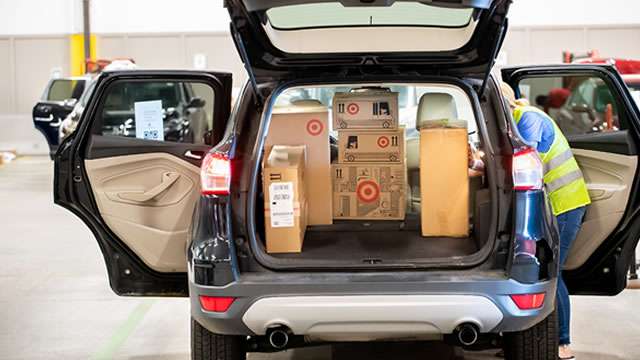
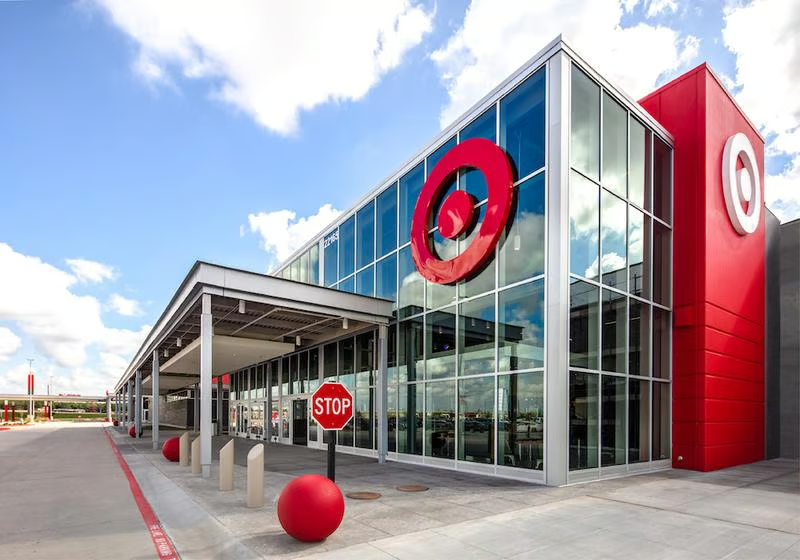
A key pillar of Fiddelke's plan involves substantial investments in Target's physical and digital infrastructure. The company plans to open approximately 20 new stores, primarily large formats, and undertake extensive remodels across many existing locations in 2025. These physical stores are envisioned as "hubs" that not only enhance the in-store experience but also power more efficient fulfillment operations, supporting digital growth and same-day services. This "stores-as-hubs" model is critical for improving delivery speed and convenience, leveraging existing assets to meet evolving consumer expectations.

Technology, particularly AI, is central to Fiddelke's strategy. Target is modernizing its core inventory management system with AI-powered solutions to improve reliability and reduce out-of-stocks, addressing a critical operational pain point. AI is also being leveraged to optimize decisions, enhance the customer experience, and streamline inventory flow, aiming for a more agile and responsive supply chain. This technological push extends to digital tools and analytics, which will provide deeper insights into shopper behavior and allow for more personalized offerings.

Furthermore, Target is doubling down on its loyalty program, Target Circle, with ambitious plans to triple its Target Circle 360 membership base over the next three years. This involves new perks, benefits, and strategic partnerships, such as one with Marriott Bonvoy, to enhance member value. The goal is to deepen customer engagement and drive repeat purchases, particularly through same-day services like Drive Up and Same-Day Delivery, which were its fastest-growing shopping modes in 2024. These initiatives collectively aim to deliver net sales growth around 2% in 2026, with new stores and non-merchandise sales contributing over one percentage point of that growth.

Can Target's Strategic Investments Drive Sustainable Profitability?

Target's ambitious turnaround strategy, while promising, hinges on its ability to translate strategic investments into sustainable profitability. The company's financial health provides a mixed picture, with some areas showing resilience while others signal ongoing pressure. For the trailing twelve months (TTM), Target reported a gross margin of 27.3%, an operating margin of 5.3%, and a net margin of 3.8%. These figures, while respectable for the retail sector, reflect a slight compression compared to previous periods, particularly in operating income, which declined 8.1% to $5.1 billion in full-year 2025.

The company's return on invested capital (ROIC) for the TTM stood at 10.7%, a healthy figure that indicates efficient capital allocation, though it was down from 13.8% in the prior year. This metric will be crucial to watch as Target pours capital into store remodels, new store openings, and technology upgrades. The management's guidance for 2026 includes an operating income margin rate approximately 20 basis points higher than the 4.6% adjusted rate in 2025, suggesting a focus on improving operational efficiency and profitability alongside sales growth.

Funding these initiatives appears manageable, given Target's solid balance sheet. The company reported $5.49 billion in cash and cash equivalents as of January 31, 2026, and a relatively low debt-to-equity ratio of 0.35. Its current ratio of 0.94 indicates adequate liquidity to cover short-term obligations. Additionally, Target has approximately $8.3 billion remaining under its share repurchase program, though no shares were repurchased in Q4 2025, suggesting a focus on reinvestment and debt management.

The dividend yield of 3.8% with a payout ratio of 50.8% remains attractive to income-focused investors, and the company has a history of consistent dividend growth, with a 1.7% increase in dividend per share in FY2025. This commitment to shareholder returns, even during a challenging period, signals management's confidence in future cash flow generation. However, analysts will be closely monitoring whether the planned $5 billion investment in store experience and "merchandising authority" can truly drive the expected sales growth and margin expansion without significant earnings hits in the short term, as the profit rhythm may not be smooth.

What Does This Mean for Target Investors?

For investors eyeing Target, the current landscape presents a classic "prove it" scenario. The Q4 2025 earnings beat and the positive sales trends in February offer a much-needed psychological boost, but the stock's long-term trajectory hinges on the flawless execution of CEO Michael Fiddelke's ambitious turnaround plan. Wall Street's consensus rating is a Hold, with a median price target of $102.00, suggesting that while the immediate downside may be limited, significant upside is not yet guaranteed without sustained evidence of improvement.

The bull case for Target rests on the successful implementation of its strategic initiatives: revitalizing its brand with newness and value, enhancing the customer experience through store remodels and digital integration, and leveraging AI for operational efficiency. If Target can effectively differentiate its offerings, particularly in discretionary categories, and drive consistent traffic growth, it could regain market share and justify its forward guidance of $7.50 to $8.50 EPS for 2026. The company's strong dividend yield of 3.8% also provides a compelling reason for patient investors to hold.

However, the bear case highlights the formidable challenges. The retail environment remains fiercely competitive, with Walmart and Costco continuing to gain ground, especially among value-conscious consumers. Target's historical struggles with online execution and cultural relevance cannot be overlooked. If Fiddelke's strategy fails to resonate or if external pressures like geopolitical tensions and consumer uncertainty persist, Target could continue to underperform. The risk of a "profit rhythm" that isn't smooth, as noted by some analysts, means investors should brace for potential volatility.

Ultimately, Target remains a stock for those willing to monitor its progress closely. The company's current price of $120.84 is near its 52-week high of $122.43, indicating that much of the immediate optimism may already be priced in. Investors should look for tangible signs of sustained comparable sales growth, improved customer traffic, and expanding operating margins in upcoming quarters before declaring the turnaround a definitive success.

Target's journey in 2026 is a critical test of its resilience and strategic vision under new leadership. While the recent earnings provided a glimmer of hope, the path to sustained growth is fraught with challenges and requires flawless execution. Investors should remain vigilant, focusing on tangible improvements in sales and traffic to validate the company's ambitious turnaround story.


Want deeper research on any stock? Try Kavout Pro for AI-powered analysis, smart signals, and more. Already a member? Add credits to run more research.

SHARE THIS ON:

Related Articles

Category

You may also like

Stock News4 hours ago

As Plug Power Sees Gross Margins Turn Positive, Is the Stock a Buy?

Plug Power's gross margins turned positive, suggesting its turnaround plan may be gaining traction. Investors are now assessing if this operational improvement warrants a change in the stock's valuati...
Stock News3 weeks ago

AI Is Becoming the Backbone of Target's Ambitious Retail Turnaround

Target (TGT) is leveraging AI-driven inventory planning to address in-stock gaps, showing faster improvements on key items as part of a broader retail turnaround strategy.
Stock News1 months ago

Is Trending Stock Target Corporation (TGT) a Buy Now?

Target (TGT) is currently receiving increased attention from Zacks.com users, prompting an exploration of the stock's future outlook. Investors will be watching for updated earnings reports or guidanc...
Stock News1 months ago

Is lululemon's Guest Experience Revamp Improving Store Traffic?

Lululemon's guest experience revamp, including product activation and new store formats, is beginning to increase store traffic and engagement metrics. This uplift occurred despite ongoing pressures w...

Breaking News

View All →

Top Headlines

View More →
Stock News18 minutes ago

Nvidia Just Made Another Pair of Brilliant AI Bets

Stock News20 minutes ago

Apple's Agentic Moment Is Here - But It Isn't Siri

Stock News29 minutes ago

Non-Farm Payrolls Sink -92K in February

Stock News47 minutes ago

These stocks in the S&P 500 have dropped the most since the U.S. and Israel attacked Iran

Stock News1 hour ago

Alibaba's AI Just Handled 200 Million Orders — Amazon And OpenAI Are Still Building The Cart