MarketLens

Log in

Is the Agricultural Robotics Market on the Cusp of a Revolution

1 day ago
SHARE THIS ON:

Is the Agricultural Robotics Market on the Cusp of a Revolution

Key Takeaways

  • The agricultural robotics market is poised for explosive growth, projected to reach $57.18 billion by 2030, driven by labor shortages and the critical need for sustainable farming.
  • AgriSense AI, as a conceptual leader in precision agriculture, leverages autonomous tractors and AI to optimize resource use, boost yields, and significantly reduce environmental impact.
  • While high upfront costs and regulatory hurdles remain, the long-term economic and environmental benefits of agri-robotics, including retrofit solutions, present a compelling investment thesis for the sector.

Is the Agricultural Robotics Market on the Cusp of a Revolution?

Yes, the agricultural robotics market is not just growing; it's undergoing a fundamental transformation, driven by an urgent need for efficiency and sustainability in global food production. This isn't a futuristic concept anymore; autonomous machines are already plowing, planting, spraying, and harvesting across fields worldwide, leveraging artificial intelligence, advanced sensors, and high-precision navigation systems. The market is projected to expand from $21.23 billion in 2025 to an impressive $25.85 billion in 2026, demonstrating a robust compound annual growth rate (CAGR) of 21.8%. This rapid acceleration is primarily fueled by persistent farm labor shortages, increasing mechanization demands, and the widespread adoption of GPS-based field automation.

Looking further out, the trajectory is even more compelling. Experts forecast the market will hit $57.18 billion by 2030, maintaining a strong 22% CAGR. This growth is underpinned by continuous advancements in autonomous farm systems, sophisticated AI-enabled robots, and the expansion of indoor robotic farming. Precision agriculture, which has been gaining traction since the early 2000s with technologies like GPS and yield mapping, is now the bedrock for this autonomous revolution. It’s making agribots integral to minimizing labor costs and dramatically enhancing productivity, with 66% of farmers already utilizing GPS yield monitors or maps.

The shift is profound, moving beyond simple mechanization to intelligent systems capable of perception, reasoning, and dynamic adaptation to diverse environmental conditions. This convergence of robotics, AI, and precision agriculture is reshaping how we grow, manage, and distribute food. Companies like John Deere, Kubota, and CNH Industrial are already deploying autonomous tractors, while startups like Burro and Bloomfield Robotics offer specialized solutions for tasks from fruit transport to disease identification. This isn't just about bigger machines; it's about smarter farming, promising efficiency gains and a more sustainable future for agriculture.

How are Autonomous Tractors and AI Transforming Farming?

Autonomous tractors and AI are fundamentally reshaping farming by enabling unprecedented levels of precision, efficiency, and resource optimization across the entire agricultural workflow. These advanced machines, equipped with sophisticated sensor networks and AI control modules, move farming from broad-stroke, reactive management to fine-grained, proactive interventions. They perceive their surroundings in real-time using LIDAR, high-resolution cameras, and RTK-corrected GPS, allowing them to navigate fields, detect obstacles, and perform tasks with centimeter-level accuracy, significantly reducing human error.

The core benefit lies in precision resource management. AgriSense AI, as a leading concept in this space, enables variable-rate application of water, fertilizers, and pesticides based on real-time needs sensed at a granular level. This drastically reduces overuse, minimizing nutrient runoff into waterways, decreasing greenhouse gas emissions from excess nitrogen fertilizer, and lowering the overall chemical load on the environment. For instance, AI-powered weeding robots can differentiate between crops and weeds, applying microdoses of herbicides or using mechanical removal, which aligns with critical sustainability targets like the EU Green Deal.

Beyond input optimization, these technologies offer enhanced risk management and operational continuity. AI-powered monitoring facilitates early detection of pests and diseases, allowing for targeted interventions rather than broad-spectrum spraying, which benefits biodiversity. Autonomous tractors can operate continuously, even in challenging conditions or during labor shortages, ensuring productivity and maintaining task precision around the clock. This capability is critical given the rising labor costs and shrinking rural workforces globally. The integration of IoT devices with farm management systems further enhances this, providing real-time data on soil conditions, weather patterns, and crop health, enabling data-driven decision-making and predictive maintenance.

What are the Cost-Saving Benefits and Scalability Opportunities?

The cost-saving benefits of autonomous tractors and AI-driven precision agriculture are substantial, primarily stemming from optimized resource utilization, reduced labor dependency, and improved operational efficiency. By applying inputs like water, fertilizers, and pesticides with extreme precision, farms can significantly cut down on waste. This isn't just about saving money on materials; it also translates into higher yields and better crop quality, directly impacting the bottom line. For example, targeted spraying reduces chemical use, which lowers purchase costs and minimizes environmental impact, potentially opening doors for carbon credits or eco-labeling schemes.

Labor costs, a major expense for farms, are dramatically reduced through automation. Autonomous tractors and robots can perform repetitive, physically demanding, or hazardous tasks without human operators, addressing the pervasive issue of labor shortages and an aging farmer population. This ensures operational continuity and allows existing staff to focus on more complex, value-added activities. The ability of these machines to operate around the clock also means higher utilization rates for expensive equipment, maximizing return on investment.

Scalability opportunities are also immense, particularly through retrofit solutions and flexible ownership models. Farmers don't always need to invest in brand-new autonomous equipment; retrofit kits can transform conventional tractors into autonomous ones, often in less than a day. Companies like BlueWhite have successfully automated tractors operating on over 60,000 hectares of orchards using such systems, which include sensors, cameras, GPS, LIDAR, and an AI control module, while retaining conventional use capability. This lowers the barrier to entry for many farms. Furthermore, financing, leasing, pay-as-you-go models, and subscription-based software (SaaS) are gaining traction, making advanced robotics more accessible, especially for small and mid-sized farms in emerging markets. These models enable continuous software upgrades, fleet management, and predictive maintenance, ensuring long-term ROI.

What are the Key Challenges and Risks for Adoption?

Despite the compelling benefits, the widespread adoption of autonomous agricultural robotics faces several significant challenges and inherent risks. The most prominent hurdle is the high upfront cost of advanced sensors, drones, robotics, and sophisticated software platforms. This substantial initial investment can be prohibitive, particularly for smallholder farmers or those in developing regions, creating a risk of a "digital divide" in agriculture and potentially exacerbating existing inequalities between large, technologically advanced operations and smaller farms.

Beyond capital expenditure, maintaining connectivity across vast agricultural fields presents a technical challenge. Reliable GPS, cellular, and internet connectivity are crucial for remote monitoring, real-time operational adjustments, and continuous AI model updates. In many rural areas, this infrastructure is lacking, limiting the effectiveness and reliability of autonomous systems. Unpredictable outdoor conditions, such as dust, varying light, leaf occlusion, and diverse soil types, also pose technical hurdles for sensor reliability and AI perception, requiring robust systems that can generalize across different geographies, crops, and seasons.

Regulatory and safety uncertainties further complicate market growth. Current legislative frameworks often lag behind the rapid pace of technological advancement. For example, some regions still require a human operator on board self-propelled farm equipment, even if it's designed to function autonomously. Clear rules governing autonomous tractors on public roads, liability in case of accidents, and certification of sensors and software are often absent, increasing risk and cost for manufacturers and slowing adoption. Additionally, concerns around data sovereignty—who owns the data generated on farms, and how it's used—raise questions about farmer autonomy and bargaining power, as data could potentially be exploited by large corporations.

Who are the Major Players and What's Their Strategic Outlook?

The agricultural robotics market is highly competitive and fragmented, featuring a diverse ecosystem of global OEMs, ag-tech firms, and innovative startups, all vying for market share. Global leaders like Deere & Company, CNH Industrial, AGCO Corporation, Kubota Corporation, and Trimble Inc. are at the forefront, leveraging their scale and distribution networks. These established players are strengthening their automation capabilities through the integration of smart guidance systems, AI-enabled tools, and precision farming technologies across their extensive product portfolios, including tractors, harvesters, and aerial monitoring platforms.

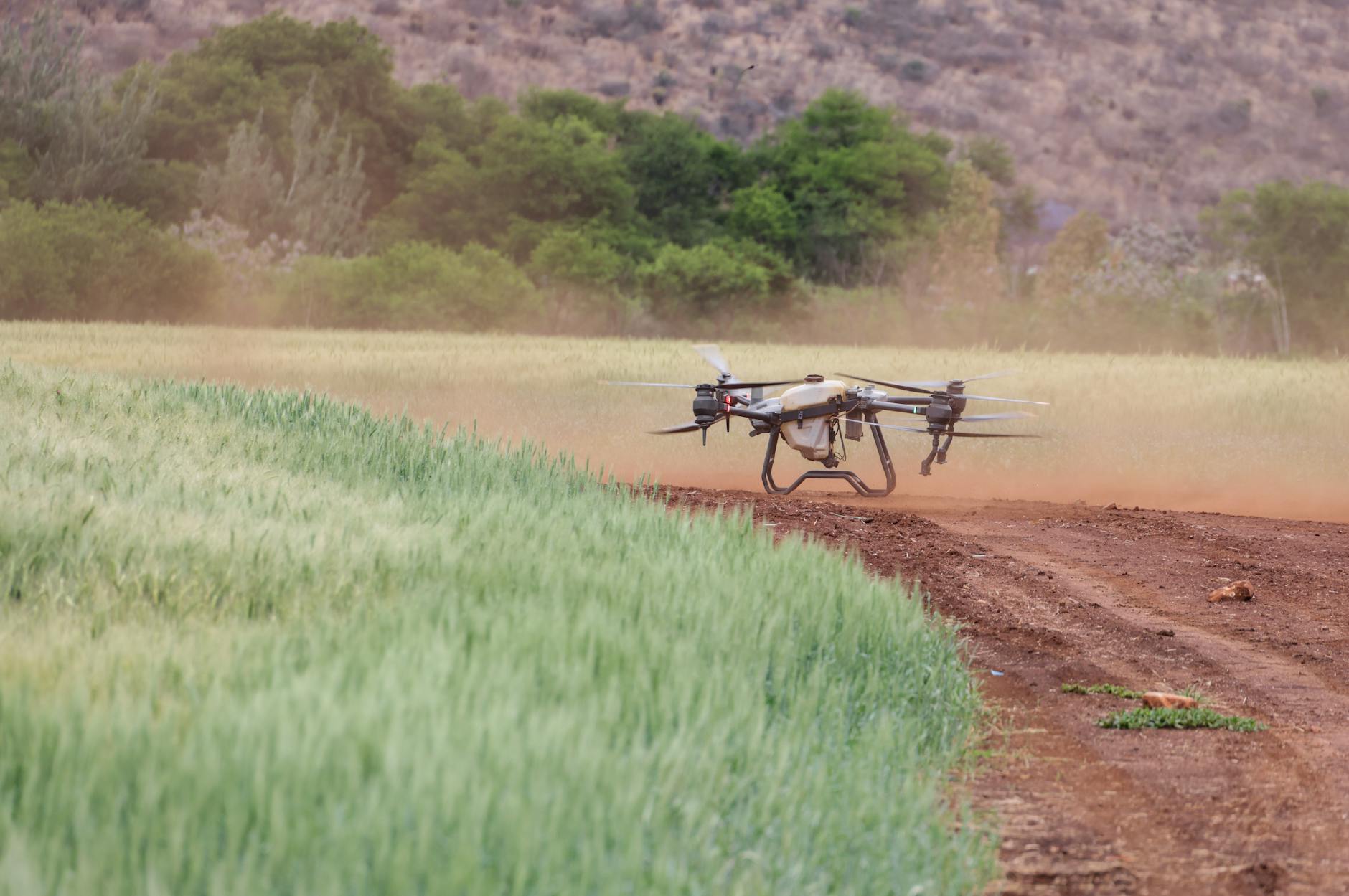
Beyond the giants, specialized and niche innovators are driving significant advancements. Companies like GUSS Automation (backed by John Deere) focus on autonomous sprayers, while AgXeed offers its AgBot for cultivation, sowing, and spraying. Startups such as Blue River Technology (acquired by John Deere), Naïo Technologies, and Small Robot Company are pioneering machine-vision-driven weeding and other specialized field robotics. The market also sees significant contributions from drone manufacturers like DJI, which recently launched its Agras T50 and T25 drones for precision spraying and monitoring.

The strategic outlook for these players involves a mix of product innovation, partnerships, and market expansion. Many companies are expanding their portfolios to address the needs of small and mid-sized farms through compact and scalable robotic equipment, recognizing the substantial untapped market potential in these segments. Partnerships, acquisitions, and regional collaborations are common strategies to accelerate innovation and market penetration. For instance, CNH Industrial launched SenseApply, an AI-powered sprayer technology, in June 2025, demonstrating a commitment to enhancing sustainability and efficiency through precise input application. The Asia Pacific region is expected to be the fastest-growing market, driven by technological advancements, labor shortages, and rising demand for sustainable farming practices, making it a key focus for global expansion.

What Does This Mean for Investors?

For investors, the agricultural robotics market presents a compelling long-term growth opportunity, driven by undeniable macro trends like global food demand, labor shortages, and the imperative for sustainable farming. The market's projected growth to $57.18 billion by 2030 underscores its transformative potential, making it a sector ripe for strategic investment. However, given the fragmented nature of the market and the varying levels of technological maturity, a discerning approach is crucial.

Investors should focus on companies with strong intellectual property in AI, autonomous navigation, and vision systems, as these are the foundational technologies driving the revolution. Companies offering flexible solutions, such as retrofit kits and Robot-as-a-Service (RaaS) models, may have an edge in capturing market share, particularly among smaller farms. Furthermore, those demonstrating clear pathways to address regulatory hurdles and ensure data security will likely build greater trust and accelerate adoption.

While direct investment in a pure-play "AgriSense Robotics" might be challenging given the conceptual nature of the term, exposure can be gained through established agricultural machinery manufacturers heavily investing in autonomy, or through innovative ag-tech startups specializing in AI and robotics. The sector's growth is not just about technological prowess; it's about solving real-world problems for farmers, making it a resilient and impactful investment theme for the coming decade.


Want deeper research on any stock? Try Kavout Pro for AI-powered analysis, smart signals, and more. Already a member? Add credits to run more research.

SHARE THIS ON:

Related Articles

Category

You may also like

Stock News6 days ago

Carbon Robotics & NVIDIA - From Farm to Fork: How AI Is Transforming Food Safety

Carbon Robotics is integrating NVIDIA AI technology to enhance food safety and precision agriculture. This collaboration aims to automate weed control and crop monitoring, potentially reducing chemica...
Stock News1 week ago

Electric Off-Highway Equipment Industry Business Report 2026: Decarbonization Pressure in Construction and Mining Sectors Throws the Spotlight on the Future $4.8 Billion Market - Forecast to 2030

The global electric off-highway equipment market is projected to reach $4.8 billion by 2030, growing from a $2.2 billion valuation in 2024. This expansion is driven by increasing decarbonization press...
Stock News1 week ago

Best Robotics Stocks To Research – April 25th

MarketBeat identified Teradyne, Ouster, PROCEPT BioRobotics, Serve Robotics, and Richtech Robotics as key stocks to watch on April 25th. These companies represent a diverse range of robotics technolog...
News1 week ago

Fertiliser costs weigh on maize as EU farmers plant spring crops

Maize planting area in Europe is expected to decline this year as elevated fertilizer and energy costs discourage farmers. The shift in spring crop selection reflects broader agricultural margin press...

Breaking News

View All →

Top Headlines

View More →
Stock News4 minutes ago

Amazon's Trillion-Dollar Blueprint For Planetary Lead

Stock News12 minutes ago

Years in the Making, AMD's Upside Movement Has Just Begun

Stock News14 minutes ago

Apple Settles False Advertising Claim Over Missing AI Features

Stock News15 minutes ago

How to get your slice of Apple's juicy $250M settlement over Siri AI delay

Stock News18 minutes ago

Here's Why Alphabet (GOOGL) is a Strong Growth Stock