MarketLens

Log in

Is the AI Computing Capital Cycle Reshaping Big Tech's Dominance

1 hour ago
SHARE THIS ON:

Is the AI Computing Capital Cycle Reshaping Big Tech's Dominance

Key Takeaways

  • The AI computing capital cycle is accelerating, with major tech players like Apple, Google, and Microsoft investing heavily in chips, models, and data centers.
  • Google's Gemini 3 is driving significant enterprise adoption through deep integration with Workspace and aggressive pricing, challenging competitors like OpenAI.
  • Microsoft is solidifying its position as a critical AI infrastructure provider, leveraging Azure and strategic partnerships to power enterprise AI solutions.

Is the AI Computing Capital Cycle Reshaping Big Tech's Dominance?

The artificial intelligence revolution is not just a technological shift; it's a massive capital reallocation, driving an unprecedented computing capital cycle that is reshaping the competitive landscape for tech giants. Investments made in 2025 are accelerating into 2026, creating a dynamic ecosystem where capital and computing resources flow rapidly among companies involved in AI model development, accelerator design, and data center infrastructure. This intense activity is not merely about incremental upgrades; it represents a fundamental re-platforming of technology, with companies vying for control over the foundational layers of the AI stack.

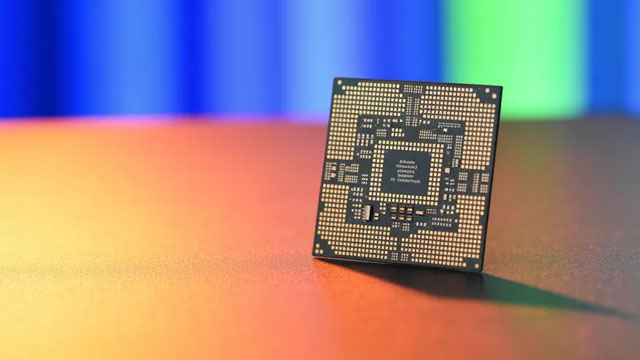
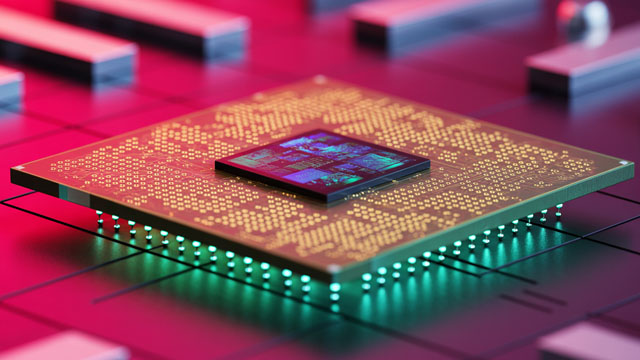
This "AI data center boom" is heavily exposed to specialized AI chips, with Deloitte predicting these chips will approach $500 billion in revenue in 2026, accounting for roughly half of global chip sales. AMD CEO Lisa Su has even raised her estimate for the total addressable market of AI accelerator chips for data centers to a staggering $1 trillion by 2030. While the volume of these high-value chips remains relatively low—less than 20 million units in 2026, or about 0.2% of total chip volume—their disproportionate revenue contribution highlights a shift towards a high-margin, low-volume paradigm in the semiconductor industry.

This concentration of value is already disrupting downstream sectors, creating "zero-sum" competition for wafer and packaging capacity. Essential components like memory are projected to see 50% price spikes by mid-year, redrawing global supply chain maps. For investors, this means understanding not just who is building the best AI models, but who controls the underlying infrastructure and critical components. The strategic alliances among AI, semiconductor, and cloud infrastructure providers are defining the new battlegrounds, making vertical integration and ecosystem control paramount.

The market for edge AI chips, powering devices from AI smartphones to humanoid robots, is also experiencing robust growth, forecast to exceed $80 billion by 2036 with an 18.5% CAGR from 2025. This bifurcated market—cloud AI for data centers and edge AI for devices—presents distinct opportunities and challenges. As we delve into the strategies of Apple, Google, and Microsoft, it becomes clear that each is pursuing a unique path to capitalize on this transformative era, leveraging their existing strengths while aggressively innovating to secure future market share.

How is Google's Gemini 3 Accelerating Enterprise AI Adoption?

Google's Gemini 3, unveiled in late 2025, marks a significant strategic pivot, positioning itself as the "intelligence layer" for enterprises rather than just another chatbot. This flagship multimodal AI model is engineered to process text, images, audio, and video within a single, unified context, focusing on advanced reasoning and complex task execution within the Google ecosystem. Its enterprise-first approach is already yielding substantial results, driving Google Cloud's Q1 2025 revenue to $12.3 billion, a 28% year-over-year growth directly attributed to AI services integration.

The model's capabilities, including multimodal understanding, agentic coding, and advanced tool orchestration, are resonating deeply with businesses. Box's CTO, Ben Kus, noted that Gemini 3 Pro's multimodal understanding transforms how institutional knowledge works across mission-critical workflows. Similarly, Shopify's CTO, Mikhail Parakhin, highlighted its ability to follow complex instructions with minimal prompt tuning, crucial for building helpful agents. This early customer feedback suggests strong initial performance and a clear path to scaled production deployment, moving beyond mere experimentation.

Google's aggressive pricing strategy is a key differentiator, with Gemini 3 Pro available at $2 per million tokens, a striking 60% below OpenAI's pricing. This move has triggered an AI market price war, benefiting enterprise customers and pressuring competitor margins. Combined with batch processing discounts offering 50% additional savings for non-real-time applications and a free tier for Google AI Studio, Google is actively lowering barriers to entry for developers and enterprises. This economic leverage, coupled with its integrated ecosystem (Workspace, Android, YouTube), creates significant switching cost advantages and a powerful competitive moat.

The impact on enterprise productivity is already evident. Early adopters of Gemini Workspace integration report average time savings of 105 minutes per user per week. Financial services clients have achieved a 40% reduction in document processing time, while manufacturing enterprises cut technical documentation creation time by 60%. Healthcare organizations accelerate research analysis by 50% using multimodal document processing. These quantifiable business impacts underscore Gemini 3's role as a daily productivity engine, deeply embedded across Google Search, Chrome, Android, and Nest smart home devices, reshaping how billions work and interact with information. Alphabet shares are currently trading at $303.56, reflecting a -0.91% change today, with a market cap of $3.67 trillion.

What is Apple's Strategy for AI with M5 Chips and Edge Computing?

Apple, with its deep integration of hardware and software, is taking a distinct approach to the AI revolution, focusing heavily on on-device AI and edge computing, powered by its custom silicon like the upcoming M5 chips. While Google and Microsoft are battling for cloud AI dominance, Apple is doubling down on making AI ubiquitous and personal, directly on the devices users hold. This strategy leverages Apple's control over its ecosystem, ensuring optimal performance, privacy, and user experience for AI features that run locally.

The M5 chips are expected to significantly enhance the neural processing unit (NPU) capabilities across Apple's product lineup, from iPhones and iPads to Macs. This on-device processing allows for instant AI responses, enhanced privacy by keeping personal data local, and reduced reliance on constant cloud connectivity. Features like advanced image and video processing, real-time language translation, and highly personalized intelligent assistants will become more powerful and efficient. This focus aligns with the broader trend of edge AI, where the global market for edge AI chips is projected to exceed $80 billion by 2036.

Apple's control over its entire stack, from chip design to operating system and applications, gives it a unique advantage in optimizing AI performance and energy efficiency. Integrating HBM (High Bandwidth Memory) closer to logic chiplets, either on silicon interposers or in 3D stacks, allows data to move much faster between processors and memory at multiple terabytes per second, while being more energy efficient. This system-level integration is crucial for enabling the demanding AI workloads forecast to triple or quadruple annually between 2026 and 2030 in hyperscale data centers, but also critical for powerful on-device AI.

While Apple's direct contributions to the "AI data center boom" might seem less pronounced than its peers, its influence on the broader AI ecosystem is undeniable. By driving demand for advanced, energy-efficient custom silicon, Apple is pushing the boundaries of semiconductor innovation. The company's strategy ensures that as AI becomes more pervasive, its devices remain at the forefront of delivering intelligent, seamless experiences. Apple shares are currently trading at $263.75, down 0.37% today, with a market cap of $3.88 trillion, reflecting investor confidence in its integrated approach.

How is Microsoft Solidifying its Position as an AI Infrastructure Giant?

Microsoft is strategically solidifying its position as a critical AI infrastructure provider, leveraging its Azure cloud platform and making substantial investments in data centers and strategic partnerships. The company's approach is to provide the foundational compute and model capabilities that power the enterprise AI transformation, rather than solely focusing on a single flagship model. This strategy is evident in its $15 billion commitment with NVIDIA to Anthropic, the lab behind the Claude family of AI models, signaling a deep integration of Claude into enterprise workflows.

This partnership is not just about capital; it's about consolidating training capacity and extending cloud-native enterprise reach. Claude's "Constitutional AI" approach, known for more interpretable and aligned models, is particularly attractive for regulated industries and agentic applications, which are becoming increasingly vital for enterprise adoption. Microsoft's focus on enterprise-safe AI agents and robust cloud infrastructure positions it as a go-to partner for businesses navigating the complexities of AI deployment, especially those requiring reliability, transparency, and risk-aware solutions.

Microsoft's data center investments are a cornerstone of its AI strategy. The company is continuously expanding its global cloud footprint to meet the surging demand for AI compute. This includes not only traditional server infrastructure but also specialized hardware for AI training and inference, ensuring that Azure can handle the most demanding AI workloads. This infrastructure play is crucial for supporting the "AI data center boom," which is expected to account for roughly half of global chip revenues in 2026.

The company's integrated ecosystem, particularly with Microsoft 365 and its Copilot AI assistant, ensures that advanced AI functionality is available where people already work. While Google's Gemini 3 challenges Microsoft's Visual Studio Code editor with its new AI-enabled code editor, Antigravity, Microsoft's deep entrenchment in enterprise software provides a powerful distribution channel for its AI capabilities. This comprehensive strategy, spanning cloud infrastructure, AI model partnerships, and productivity suite integration, makes Microsoft a formidable player in the evolving AI landscape. Microsoft shares are currently trading at $403.93, up 1.35% today, with a market cap of $3.00 trillion.

What are the Broader Investment Implications in the AI Ecosystem?

The rapid advancements by tech giants like Apple, Google, and Microsoft are creating a ripple effect across the broader AI ecosystem, presenting both significant opportunities and inherent risks for investors. The semiconductor industry, in particular, is at the epicenter of this transformation. With generative AI chips projected to approach $500 billion in revenue in 2026, the demand for specialized hardware is unprecedented. This surge is driving a "zero-sum" competition for wafer and packaging capacity, leading to projected 50% price spikes in essential components like memory by mid-year.

This intense demand is also fueling capital expenditure in memory, with DRAM capex expected to rise 14% and NAND flash capex by 5% to $61 billion and $21 billion, respectively. While this meets near-term demand, there's a risk of building overcapacity in the industry, a cyclical pattern familiar to semiconductor investors. The race for system-level performance is also driving innovation in chiplet technology and heterogeneous system integration, pushing manufacturers to integrate HBM closer to logic chiplets for faster data movement and energy efficiency. This creates opportunities for companies specializing in advanced packaging and testing, areas where expertise is currently scarce in the US and Europe.

Beyond hardware, the rise of autonomous AI agents is poised to redefine enterprise workflows in 2026. Early adopters report ROI between 1.7x and 10x per dollar invested, with 84% of enterprises planning to increase AI agent investments. This shift from rigid robotic process automation (RPA) to adaptive, reasoning AI agents represents a fundamental change in how businesses operate. The real competitive weapon will be multi-agent orchestration, where specialized agents collaborate on complex, end-to-end business processes, creating proprietary intelligence and network effects.

However, investors must also consider the mounting "tech debt" from complex revenue-sharing agreements and compute-for-equity swaps, which could pressure future profitability for AI model developers and data center infrastructure players. The market is also clarifying into a "two-platform" enterprise AI market, dominated by Microsoft with OpenAI and Google with Gemini, creating a binary choice for many businesses. This concentration, while driving efficiency, could also lead to regulatory scrutiny and competitive pressures, potentially forcing data sharing requirements or impacting integrated ecosystem advantages.

The AI gold rush is in full swing, and while the major tech players are making significant strides, the investment landscape is complex and dynamic. Google, with its Gemini 3, is aggressively capturing enterprise market share through a powerful multimodal model, deep Workspace integration, and competitive pricing, making it a compelling play for those betting on widespread AI adoption. Apple, conversely, is carving out its niche in on-device AI with its M5 chips, offering a differentiated approach focused on privacy and personalized experiences, appealing to long-term hardware and ecosystem investors.

Microsoft continues to be a foundational pick, leveraging its Azure cloud and strategic partnerships to provide the essential infrastructure and enterprise-grade AI solutions. Its commitment to Anthropic and focus on reliable, transparent AI agents positions it well for the evolving needs of regulated industries. However, the intense competition for AI talent, compute resources, and market share means that sustained innovation and strategic execution will be paramount for all three giants.

For investors, the key lies in understanding the distinct strategies and competitive advantages of these companies. The semiconductor sector, while volatile, offers substantial upside for companies providing critical AI chips, advanced memory, and packaging solutions. Furthermore, the burgeoning market for AI agents and multi-agent orchestration presents opportunities in specialized software and integration services. As the AI paradigm shifts from model supremacy to distribution and user experience ownership, companies that can seamlessly integrate AI into daily workflows and deliver tangible ROI will emerge as long-term winners.


Want deeper research on any stock? Try Kavout Pro for AI-powered analysis, smart signals, and more. Already a member? Add credits to run more research.

SHARE THIS ON:

Related Articles

Category

You may also like

Crypto News1 week ago

Is Altcoin Season beginning? BTC Dominance breakdown hints at

Debate over an altcoin season is reigniting following the breakdown of Bitcoin dominance and rejection of stablecoins. This shift suggests capital may be rotating out of BTC and stable assets.
News1 week ago

The AI Bubble That Could Completely Reshape Your Portfolio

The market is currently experiencing an AI bubble, which analysts suggest could fundamentally alter investment portfolios across sectors.
Stock News2 weeks ago

Is Sandisk the New Nvidia?

AI capital expenditure budgets by hyperscalers are accelerating, fueling unprecedented demand for high-bandwidth memory chips.
Stock News1 months ago

The $530 Billion AI Question: Which Big Tech Stock Is Winning?

Big Tech plans $530B AI infrastructure spending by 2026, but monetization remains unclear. Meta sees improved advertiser ROI from AI models. Google currently leads, monetizing AI directly via Search a...

Breaking News

View All →

Top Headlines

View More →
Stock News30 minutes ago

IP Group portfolio company Oxa raises $103 million in Series D backed by National Wealth Fund and Nvidia

Stock News47 minutes ago

Physical AI Is Less Than 3% of Nvidia's Revenue. Here's How It Could Transform Nvidia By 2035.

Stock News6 hours ago

Prediction: Nvidia (NVDA) Will Be Worth More Than Alphabet, Apple, Amazon, Tesla, Meta, and Microsoft Combined by 2030

Stock News7 hours ago

Meta Creates New AI Unit to Accelerate Model Development

Stock News8 hours ago

Nvidia Expands Telecom Push With AI-Native 6G Initiative