MarketLens

Log in

Is the "Digital Gold" Thesis Still Valid in 2026

3 days ago
SHARE THIS ON:

Is the "Digital Gold" Thesis Still Valid in 2026

Key Takeaways

  • Gold and Bitcoin, while both considered store-of-value assets, are currently exhibiting a "Great Divergence" in their market behavior and drivers.
  • Gold remains the traditional safe haven, driven by geopolitical hedging and central bank accumulation, offering stability and inflation protection.
  • Bitcoin acts more as a high-growth, high-volatility asset, influenced by liquidity cycles and tech adoption, with its "digital gold" thesis still evolving.

Is the "Digital Gold" Thesis Still Valid in 2026?

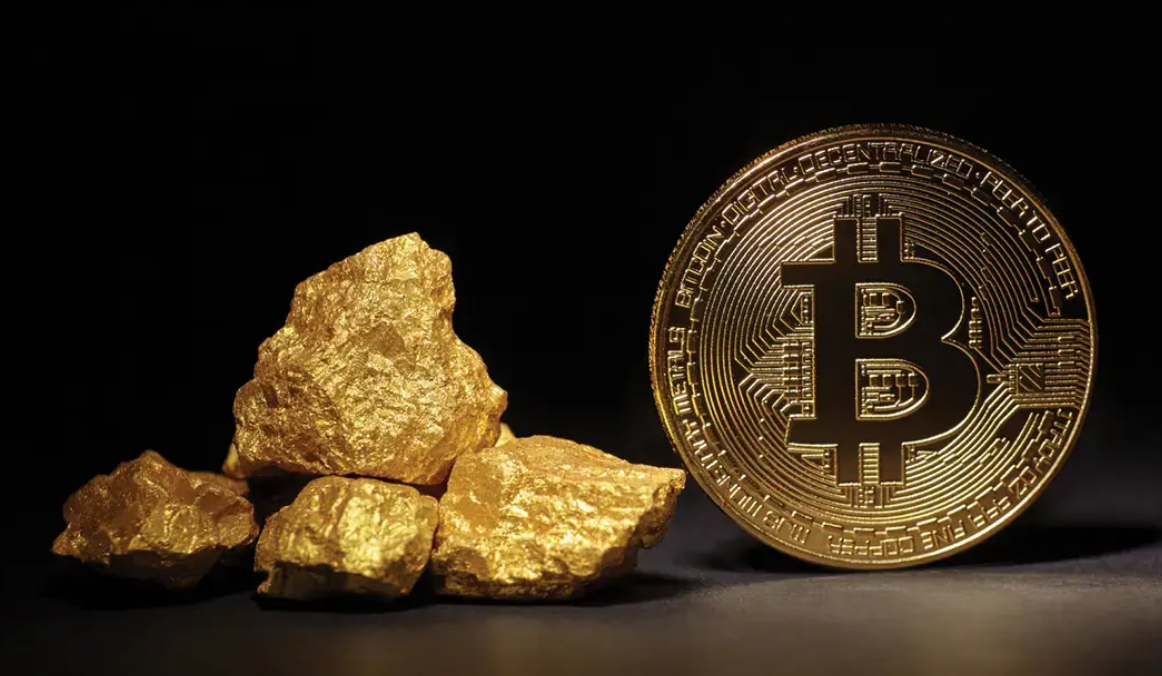
The financial landscape of 2026 is a complex tapestry woven with geopolitical tensions, persistent inflation concerns, and rapidly evolving technological advancements. In this environment, investors are increasingly scrutinizing traditional and novel assets alike, seeking reliable havens for wealth preservation. For years, the debate has raged: Gold, the millennia-old standard of value, versus Bitcoin, the digital upstart often dubbed "digital gold." While both assets promise to hold value when fiat currencies falter, their recent performance and underlying drivers suggest a significant divergence, challenging the notion that Bitcoin is merely a modern iteration of bullion.

This "Great Divergence" became particularly pronounced in early 2026. Gold has surged, fueled by a "sovereign put" as central banks diversify away from weaponized fiat currencies, while Bitcoin, reliant on global liquidity and technological optimism, has faced headwinds from rising real yields and regulatory fragmentation. The market is witnessing a clear bifurcation: gold acting as insurance against systemic risk, and Bitcoin behaving more like a leveraged call option on the future of finance. Understanding this shift is crucial for investors navigating an increasingly unpredictable world.

The comparison between Bitcoin and gold is no longer just about performance metrics; it's about understanding their fundamental natures and how they react to different stressors. Gold, with its physical immutability and lack of counterparty risk, thrives on fear and fragmentation. Bitcoin, a technological marvel, acts as a liquidity sponge, vulnerable to the very technological forces that birthed it. This article will delve into their distinct roles, historical performance, and future outlook, helping investors decide how each fits into a resilient portfolio.

Why Has Gold Become the "King of Sovereignty" in a Fractured World?

Gold's enduring appeal as the "King of Sovereignty" is rooted in its proven history as a safe haven, a role that has only intensified amidst the geopolitical and economic turbulence of 2026. The precious metal has consistently demonstrated its ability to preserve purchasing power, even as fiat currencies grapple with inflation and instability. Its physical nature, universal recognition, and lack of counterparty risk make it an indispensable asset for nations and prudent investors alike, particularly when trust in global institutions and currencies wanes.

Current market data underscores gold's robust performance. Gold futures (GCUSD) are trading at $4,428.60, despite a recent daily dip of 3.20%. More significantly, its 52-week range of $2,970.40 to $5,626.80 highlights a strong upward trend, with its 200-day average at $4,243.45 providing a solid long-term support level. This resilience is not merely speculative; it's driven by structural factors, notably strategic accumulation by central banks. Many emerging markets are actively diversifying their currency reserves away from the U.S. dollar and towards physical assets, providing a stable demand floor for gold that previous rallies lacked.

Gold's value proposition extends beyond crisis hedging. It has historically demonstrated a negative correlation with stocks during equity crashes, meaning it often rises when traditional markets fall, offering crucial portfolio diversification. While it doesn't generate income or dividends, its return relies on price appreciation, which has been substantial in recent years. Analysts like JP Morgan forecast gold averaging $5,055 by Q4 2026, with long-term projections reaching $6,000/oz by 2030 under a base case of continued global money supply growth. This outlook is supported by constrained mine production, growing at only about 1.5% annually, against sustained demand.

What Defines Bitcoin's Evolving Role as the "Prince of Speculation"?

Bitcoin, often hailed as "digital gold," has carved out a distinct and increasingly complex role in the financial ecosystem, acting more as the "Prince of Speculation" than a direct substitute for traditional bullion. While it shares gold's scarcity, its value is fundamentally derived from network utility, adoption, and market perception, making it highly sensitive to liquidity cycles and technological optimism. This has led to a performance profile characterized by both explosive growth potential and significant volatility, setting it apart from gold's more measured movements.

Today, Bitcoin (BTCUSD) is trading at $71,009.85, up 4.66% on the day, with a market capitalization of $1.42 trillion. Its 52-week range, however, spans a wide $60,001.00 to $126,296.00, illustrating its inherent volatility. The 200-day average of $92,568.15 suggests it's currently trading below its longer-term trend, reflecting recent market pressures. While institutional adoption has grown, particularly with the launch of Spot Bitcoin ETFs in early 2024, these vehicles also provide liquid exit points during risk-off periods, as seen with net outflows in early February 2026.

Bitcoin's scarcity is programmatic and absolute, with a fixed supply of 21 million coins, contrasting with gold's naturally scarce but still minable supply. This predictable scarcity, combined with its decentralized nature, positions Bitcoin as a hedge against government debasement and policy manipulation. However, its relatively short 16-year history means it is less proven in extended, sustained inflationary environments or deep equity declines compared to gold. Its price action is heavily influenced by market sentiment, regulatory news, and macroeconomic trends, often behaving like a leveraged tech stock rather than a purely defensive asset.

How Do Their Performance and Volatility Profiles Compare?

When comparing Bitcoin and gold, their performance and volatility profiles tell a tale of two fundamentally different assets, each suited to distinct investment objectives. Over the past decade, Bitcoin has delivered significantly higher percentage returns, driven by rapid adoption and increasing market interest. Early investors in Bitcoin have seen substantial gains, but these come with a much higher degree of risk and price swings. Gold, on the other hand, has delivered more modest but consistent returns, primarily functioning as a stabilizing force and a hedge against economic uncertainty.

Recent market dynamics highlight this divergence. While gold has climbed significantly over the past year, hitting an all-time high of $5,595 in January (though currently trading at $4,428.60), Bitcoin has seen a more turbulent path. From its all-time high of $126,000 in October 2025, Bitcoin has fallen, currently trading around $71,009.85. This stark contrast in short-term behavior underscores their differing roles: gold as insurance, Bitcoin as a leveraged call option on the future of finance.

Bitcoin's volatility is notoriously high, with double-digit price swings being routine. Its price can rise or fall dramatically within short periods, creating opportunities for high returns but also introducing significant risk. For instance, in early 2026, Bitcoin experienced a drop of over 26% in just a few weeks. Gold, by contrast, exhibits lower standard deviation in its price movements, functioning as a "risk-off" asset. During the 2008 financial crisis, gold prices surged as investors sought safety, and it held up significantly better than Bitcoin during the Federal Reserve's aggressive interest rate hikes in 2022. This makes gold a stable asset for risk-averse investors, while Bitcoin appeals to those with a higher risk tolerance seeking asymmetric upside.

What Do Geopolitical and Macroeconomic Headwinds Mean for Each Asset?

The current geopolitical and macroeconomic climate, characterized by "Resource Realism" and fiscal dominance, serves as a critical stress test for both gold and Bitcoin, revealing their distinct responses to global instability. Gold thrives in this environment, benefiting from falling real interest rates, geopolitical tensions, and growing skepticism toward the U.S. dollar. Its role as a "King of Sovereignty" is reinforced by central banks strategically accumulating gold reserves, diversifying away from fiat currencies and providing a structural demand that underpins its price stability.

Consider the "Greenland Crisis" of early 2026, which saw gold soar while Bitcoin sold off. This event highlighted a critical distinction: in modern warfare scenarios involving cyber-attacks, physical bullion is perceived as immune to power outages and digital vulnerabilities, making it the preferred asset for true "ruin risk" protection. Gold's price movements are generally moderate and predictable, reinforcing its role as a safe haven during periods of economic instability. Its 200-day average of $4,243.45 reflects a robust long-term trend, even with daily fluctuations.

Bitcoin, however, behaves differently under stress. As a "Prince of Speculation," it is highly sensitive to liquidity and risk appetite. During periods of market caution, Bitcoin often acts not as a protective shield but as a real risk asset, experiencing significant drawdowns. For example, during the chaos of early 2026, leveraged funds facing margin calls in equity markets used Bitcoin, with its 24/7 liquidity, as an "ATM" to raise cash, leading to selling pressure. This demonstrates that while Bitcoin may be a hedge against currency debasement, it is not necessarily a safe haven in all systemic crises, especially those that trigger a broad risk-off sentiment and liquidity crunch.

How Can Investors Strategize with Both Gold and Bitcoin?

Given the "Great Divergence" and their distinct characteristics, many professional strategists are moving beyond the "Gold OR Bitcoin" debate, advocating for a "Barbell Strategy" that leverages the strengths of both assets. This approach acknowledges that gold and Bitcoin serve different purposes and can offer genuine diversification, especially with their 1-year rolling correlation dropping to -0.17. Instead of choosing one over the other, investors can combine them to balance stability with growth potential in an increasingly complex financial landscape.

A typical barbell strategy might allocate 10-15% of a portfolio to gold, serving as the "Safety Weight." This portion protects against "ruin risk" scenarios like war, EMPs, or fiat collapse, providing a solid, lower-volatility anchor. Gold's proven track record as an inflation hedge and its accumulation by central banks make it ideal for preserving wealth during systemic crises. Its current price of $4,428.60 and long-term bullish forecasts to $6,000/oz by 2030 underscore its defensive value.

Conversely, a 2-5% allocation to Bitcoin can act as the "Growth Weight," protecting against "FOMO risk" (missing out on the digitization of value). Bitcoin, currently at $71,009.85, offers asymmetric upside potential, acting as a bet on the digital future and technological adoption. While highly volatile, its programmatic scarcity and growing institutional acceptance make it a compelling, albeit riskier, growth asset. This combination dampens overall portfolio volatility while maintaining exposure to significant upside, providing a balanced and resilient strategy for the modern investor.

In today's inflation-prone world, both gold and Bitcoin offer compelling, yet different, armor. Gold provides the time-tested stability and trust of centuries, while Bitcoin offers the innovation and disruption of the digital age. Savvy investors need not choose just one; instead, understanding their unique strengths and weaknesses allows for a balanced portfolio that can weather tomorrow's storms and capitalize on diverse opportunities.


Want deeper research on any stock? Try Kavout Pro for AI-powered analysis, smart signals, and more. Already a member? Add credits to run more research.

SHARE THIS ON:

Related Articles

Category

You may also like

News2 days ago

Is ‘de-dollarization' real?

The U.S. dollar's dominance as the world's reserve currency is currently being tested after decades of use. Data is being examined to determine if the euro presents a viable alternative.
Stock News4 weeks ago

Are You Expecting a Check from the Government? Fact-Checking Stimulus Payment Claims for February 2026

Claims regarding proposed 2026 government stimulus checks are being fact-checked, covering tariff dividend plans, DOGE payments, military bonuses, and expired COVID relief credits.
Crypto News1 months ago

Satoshi's 2010 Post Revives Bitcoin's Digital Gold Thesis Amid Market Debate

A 2010 forum post by Satoshi Nakamoto resurfaced, reigniting debate over Bitcoin's digital gold narrative. Galaxy Digital's research head issued a rebuttal to critics arguing Bitcoin failed as a curre...
Crypto News2 months ago

Do Bitcoin and Altcoins Have the Most Room for Growth in 2026?

The provided snippet questions whether gold represents the opposite of Bitcoin and altcoins regarding potential growth in 2026. No concrete data or directional magnitude for any asset is established.

Breaking News

View All →

Top Headlines

View More →
Stock News16 minutes ago

Amazon Eyes Delivery Robots as MIT Tackles Warehouse Bottlenecks

Stock News25 minutes ago

Micron's stock falls into a bear market — and it's now the cheapest in the S&P 500

Stock News37 minutes ago

Why Tesla isn't getting a boost from high gas prices

Stock News43 minutes ago

5 Lessons That Completely Reshaped How I Approach Dividend Investing

Stock News52 minutes ago

Jury Finds Meta, Google Liable for Addiction | Bloomberg Tech 3/26/2026