MarketLens

Log in

Is the Small-Cap Renaissance for Real, or Just a Head Fake

1 hour ago
SHARE THIS ON:

Is the Small-Cap Renaissance for Real, or Just a Head Fake

Key Takeaways

  • Small-cap stocks, particularly those tracked by the SPDR Portfolio S&P 600 Small Cap ETF (SPSM), are showing strong signs of a durable comeback in 2026 after years of underperformance.
  • Domestic catalysts like lower interest rates, fiscal stimulus from the OBBB Act, and broadening AI benefits are fueling a significant rebound in small-cap earnings growth.
  • Despite recent gains, SPSM offers compelling valuations relative to large-caps, making it an attractive complementary holding for long-term, patient investors.

Is the Small-Cap Renaissance for Real, or Just a Head Fake?

The recent outperformance of small-cap stocks, exemplified by the SPDR Portfolio S&P 600 Small Cap ETF (SPSM), suggests a durable shift rather than a fleeting rally, driven by improving fundamentals and a supportive macroeconomic backdrop. After nearly a decade of watching mega-cap tech dominate headlines and portfolio returns, 2026 is shaping up to be a pivotal year for smaller companies. The narrative of small-caps as a perennial underperformer is finally being challenged, with early indicators pointing to a sustained reversal.

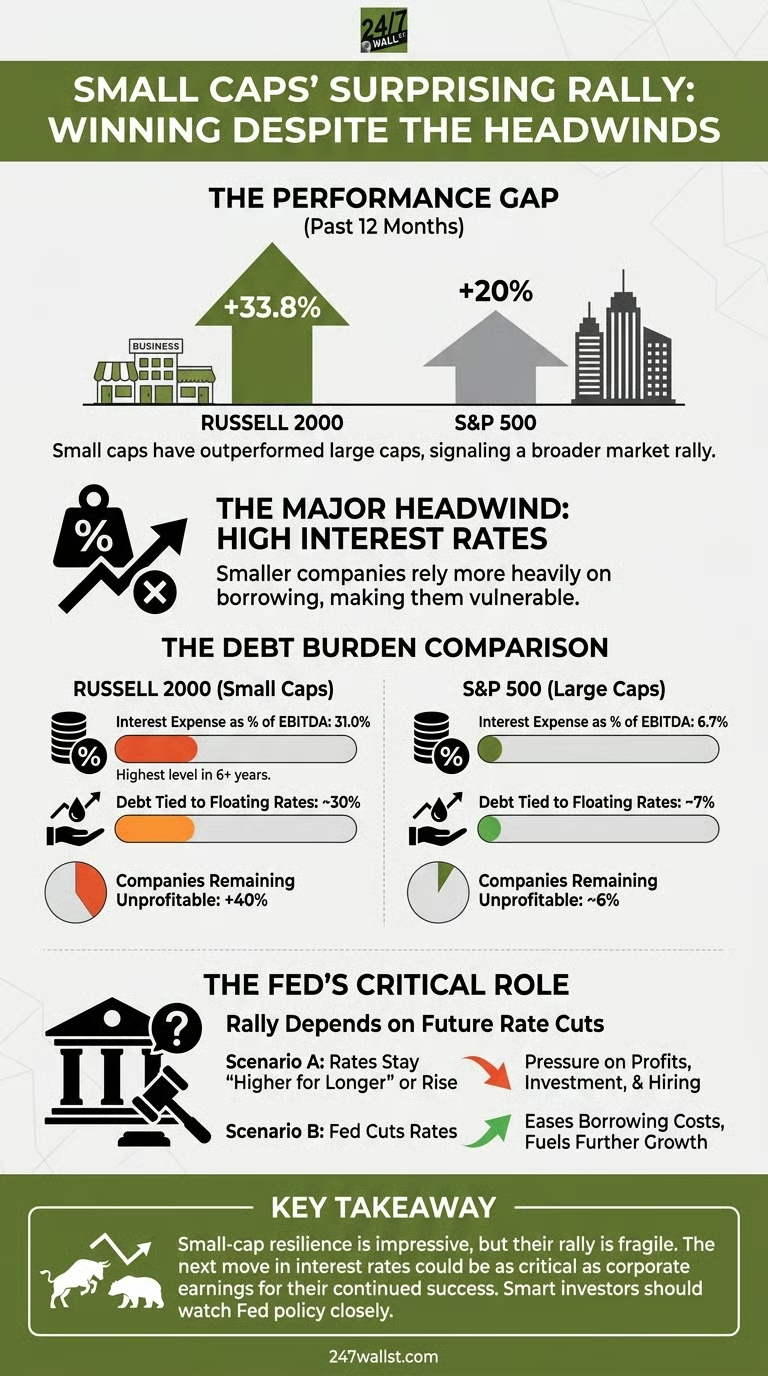
Consider the recent data: the Russell 2000, a key small-cap index, jumped 6.5% year-to-date as of February 6, 2026, significantly outpacing the S&P 500’s 1.1% gain over the same period. SPSM itself surged 8.7% in early 2026, demonstrating that this isn't just an isolated phenomenon. This sudden shift has drawn considerable investor attention, prompting a re-evaluation of an asset class that many had written off.

This isn't merely a sentiment-driven bounce. Beneath the surface, fundamental drivers are aligning to support this resurgence. Small-cap earnings, which had fallen sharply for almost three years, began to rapidly improve in late 2025. This earnings-driven pivot is crucial, distinguishing the current rally from previous, short-lived surges that ultimately fizzled out. The question for investors now is whether this momentum can be sustained, or if it's another false dawn for small-caps.

Historically, small-caps are known for their outsized returns but also their outsized risk and volatility. They tend to lead during periods of economic expansion and lag during downturns. The current environment, characterized by improving economic data and a shifting interest rate landscape, appears increasingly consistent with a setup for sustained small-cap leadership. It’s a compelling story, but one that requires a deeper dive into the specific catalysts at play.

What Makes SPSM a Unique Play in the Small-Cap Space?

SPSM, the SPDR Portfolio S&P 600 Small Cap ETF, offers investors a low-cost, diversified gateway into the small-capitalization segment of the U.S. equity market, but with a crucial distinction: it tracks the S&P SmallCap 600 Index. Unlike some broader small-cap benchmarks, the S&P 600 screens for earnings quality and operational stability, focusing on profitable, liquid companies. This "quality screen" is a key differentiator, aiming to filter out more speculative or unprofitable names that can often drag down returns in the small-cap universe.

The fund boasts an ultra-low expense ratio of just 0.03% annually, making it one of the most cost-effective ways to access this market segment. With $13.99 billion in assets under management (AUM) and an average daily volume of over 2.15 million shares, SPSM provides ample liquidity for most investors. Its portfolio is broadly diversified across 607 holdings, effectively mitigating company-specific risk, with the top 10 holdings accounting for a modest 5.63% of total assets.

SPSM's portfolio tilts towards cyclical sectors, with Financials and Industrials combining for 35.2% of its holdings. This value-oriented positioning means the fund holds established businesses like Moog Inc. and Eastman Chemical, rather than early-stage growth bets. While this focus on quality and value can provide a defensive edge during market stress, it also means SPSM might lag during periods when high-beta growth stocks are in favor. The ETF also offers a quarterly dividend, with a current yield of 1.58% based on its last payment of $0.24 per share.

Despite its strengths, SPSM's longer-term performance has trailed its large-cap counterparts. Over the past five years, SPSM gained 34.21%, significantly behind the S&P 500's 76.23% return. However, its one-year return of 14.27% has nearly matched the S&P 500’s 14.31%, reflecting a recent convergence driven by market conditions favoring value. This recent parity, combined with its quality focus, positions SPSM as a potentially attractive option for investors seeking a more robust small-cap exposure as market leadership broadens.

What Domestic Catalysts Are Fueling Small-Cap Earnings Growth?

A confluence of domestic economic and policy catalysts is creating a powerful tailwind for small-cap earnings, setting the stage for a potentially sustained period of outperformance. Unlike multinational corporations, small-cap companies often have a more domestic revenue base, positioning them to benefit disproportionately from U.S.-centric economic improvements and policy shifts. This localized exposure is proving to be a significant advantage in the current environment.

One of the most impactful drivers is the evolving interest rate environment. Small-cap companies typically carry more variable-rate debt and higher leverage than their large-cap peers. As financial conditions become less restrictive and interest rates fall, their interest expense tends to decline more quickly, leading to a disproportionate boost to earnings. While the Federal Reserve isn't expected to cut rates until at least June 2026, the anticipation alone is already providing a psychological lift, and any actual cuts will directly translate into reduced borrowing costs. The current 2s/10s Treasury spread of +0.59% indicates a normal yield curve, which is generally supportive of economic activity.

Fiscal stimulus, particularly from the One Big Beautiful Bill (OBBB) Act signed into law in July 2025, is another potent catalyst. This legislation introduces lower taxes on overtime, reduced state and local tax burdens, and lower fuel prices, all of which put more cash into consumers' hands, boosting discretionary spending. Crucially, the OBBB Act also includes a permanent 100% bonus-depreciation provision, allowing businesses to immediately expense investments in equipment and machinery. This significantly reduces the after-tax cost of domestic capital investment, fueling a "manufacturing renaissance" and encouraging reshoring, which directly benefits small-cap domestic suppliers.

Furthermore, the benefits of artificial intelligence (AI) are beginning to broaden beyond mega-cap tech. Smaller companies with lean cost structures and high operating leverage can achieve outsized impacts on margins from even incremental productivity gains through AI adoption. Deregulation across various economic segments, from financial services to healthcare, also offers a meaningful tailwind, as compliance costs weigh more heavily on smaller firms. These factors, combined with an improving regional banking environment and receding tariff uncertainty, paint a compelling picture for small-cap earnings growth in 2026.

Are Small-Cap Valuations Still Compelling, and Is Market Broadening Underway?

Despite the recent rally, small-cap valuations remain compelling, especially when viewed through a historical lens and compared to their large-cap counterparts. This valuation gap is a critical component of the bull case for small-caps, suggesting there's still significant room for upside as the market continues to broaden its leadership. For years, investors poured into a narrow band of mega-cap growth stocks, leaving smaller companies relatively unloved and undervalued.

The S&P 500 currently trades at roughly 23x earnings, sitting more than a full standard deviation above its 10-year median. By stark contrast, the S&P 600, which SPSM tracks, trades nearer 15.5x–16.0x, slightly below its long-term median. This significant discount highlights an attractive entry point for investors willing to look beyond the established market leaders. The Russell 2000, another small-cap benchmark, trades at a forward P/E of 23.25x, notably lower than the Nasdaq 100's forward P/E of 24.69x, further underscoring the relative undervaluation.

This valuation discrepancy is not just about price; it's also about the earnings trajectory. Small-cap earnings growth strengthened in 2025, and estimates for 2026 appear significantly stronger than for large-caps. The S&P 600 index is expected to record 12.7% positive earnings growth in 2025, followed by 10.7% in 2026 and 14.7% in 2027. This positive earnings momentum, coupled with attractive valuations, creates a powerful setup for continued performance.

The concept of "market broadening" is central to the small-cap thesis. After a prolonged period of narrow market leadership, where a handful of mega-cap stocks drove overall index returns, there is growing evidence that the rally is expanding to include a wider array of companies. High-frequency economic data, such as the U.S. PMI remaining above the 50% expansion threshold, suggests a broadening economic recovery. This shift from concentrated gains to a more inclusive market rally is precisely the environment where small-caps, with their diverse and domestically focused revenue streams, tend to thrive.

What Are the Risks and Tradeoffs for SPSM Investors?

While the outlook for small-caps and SPSM appears increasingly positive, investors must remain cognizant of the inherent risks and tradeoffs associated with this asset class. Small-cap stocks, by their very nature, carry greater risk and more volatility than their larger, more established counterparts. This means that while the potential for outsized returns exists, so too does the potential for more significant drawdowns during periods of market stress.

One key tradeoff for SPSM is its concentration in cyclical sectors, with Financials and Industrials making up a substantial portion of its holdings. While these sectors are poised to benefit from an expanding economic backdrop and lower interest rates, they are also highly sensitive to economic shifts. If the anticipated economic recovery falters, or if these sectors fall out of favor, SPSM could lag. Consumer sentiment, currently at 52.9, remains weak, reflecting ongoing pressures that could impact economically sensitive stocks if not addressed.

Moreover, despite the recent positive momentum, small-caps have a long history of underperforming during economic downturns. Although current indicators suggest a U.S. recession is not imminent, any unexpected economic shocks or a reversal in the interest rate trajectory could quickly dampen small-cap enthusiasm. The fund's modest dividend yield of 1.58% also makes it less attractive for income-focused investors seeking substantial current cash flow, positioning it more as a growth-oriented play.

Another consideration is the quality profile of the broader small-cap universe. While SPSM's S&P 600 index screens for profitability and financial stability, Morningstar research indicates a general decline in the quality of small-cap companies over the past decade, both in the U.S. and internationally. This suggests that while SPSM aims to capture the "quality" segment, the overall small-cap landscape can be more challenging. Investors should view SPSM as a complementary component to a well-diversified portfolio, rather than a standalone replacement for large-cap exposure, requiring patience and a tolerance for volatility.

What Does This Mean for Investors Looking at SPSM?

For investors considering the SPDR Portfolio S&P 600 Small Cap ETF (SPSM), the current environment presents a compelling, albeit nuanced, opportunity. The confluence of attractive valuations, strengthening earnings momentum, and supportive macroeconomic tailwinds suggests that the long-awaited small-cap renaissance may finally be at hand. However, a disciplined approach, understanding the fund's specific characteristics, is paramount.

SPSM, with its focus on profitable and liquid small-cap companies through the S&P 600 Index, offers a quality-screened exposure that differentiates it from broader small-cap funds. Its ultra-low expense ratio of 0.03% and substantial AUM of $13.99 billion make it an efficient and liquid vehicle for gaining exposure. The fund's cyclical tilt positions it well for a broadening economic recovery and declining interest rates, which disproportionately benefit smaller, domestically focused businesses.

While small-caps have historically been volatile, the current setup, driven by tangible earnings growth and fiscal stimulus, points to a durable foundation for performance. Investors should consider SPSM as a long-term strategic allocation, complementing existing large-cap holdings, rather than a short-term tactical trade. The potential for continued outperformance in 2026 and beyond makes SPSM a fund worth studying closely for those seeking to diversify and capitalize on the shifting market dynamics.

The pieces are falling into place for U.S. small-caps to reclaim market leadership. For investors willing to broaden their horizons and embrace a segment of the market that has been overlooked for too long, SPSM offers a high-quality, low-cost way to participate in this potential resurgence. Patience will be key, but the reward for discerning investors could be significant.


Want deeper research on any stock? Try Kavout Pro for AI-powered analysis, smart signals, and more. Already a member? Add credits to run more research.

SHARE THIS ON:

Related Articles

Category

You may also like

News1 day ago

Record Highs In Small Caps - Durable Rally Or Short-Term Bounce?

Small-cap indexes reached record highs recently, prompting investor debate over whether this marks a durable rally or a temporary short-term bounce.
Stock News1 week ago

39% Yield from the YieldMax NVDA Option Income Strategy ETF (NVDY): Real or Fake?

The YieldMax NVDA Option Income Strategy ETF (NVDY) reports a 39% yield, which raises questions about its sustainability given NVIDIA's status as an AI processor leader.
Stock News1 week ago

Is This AI Infrastructure Stock a Real Millionaire Maker or Just Hype?

Micron, one of three memory hardware industry dominators, is actively pursuing leadership in the American market.
Crypto News3 weeks ago

Tether : Between record valuations and skepticism, where is the truth?

Tether claims a $500 billion valuation amid ongoing investor skepticism regarding its financial health. The company faces divided opinion due to reduced fundraising and regulatory challenges.

Breaking News

View All →

Top Headlines

View More →
Stock News1 hour ago

Opinion | Why Netflix Lost Warner to Paramount

Stock News1 hour ago

Stock Market Today, Feb. 27: Inflation and AI Fears Lead to February Slump

Stock News1 hour ago

3 Stocks Wall Street Analysts Say You Can Buy Now and Forget About Until 2036

Stock News1 hour ago

How Amazon's massive stake in OpenAI could boost its AI and cloud businesses

Stock News1 hour ago

Dan Ives: Software sector will start to bottom from current levels