MarketLens
Is the Solar Sector Finally Ready for a Sustained Rally

Key Takeaways
- The U.S. utility-scale solar market is entering a robust growth phase, fueled by supportive policies like the IRA and increasing demand, creating a strong tailwind for specialized suppliers.
- Array Technologies (ARRY) and Shoals Technologies (SHLS) are well-positioned to capitalize on this expansion with their core offerings in solar trackers and electrical balance-of-system (EBOS) solutions.
- Despite strong order books and revenue growth, both companies grapple with margin pressures from tariffs and supply chain complexities, necessitating a nuanced view for investors.
Is the Solar Sector Finally Ready for a Sustained Rally?
The solar energy sector, often a darling of growth investors, has experienced its share of volatility, but a new chapter of sustained expansion appears to be unfolding, particularly within the utility-scale segment. This isn't just wishful thinking; it's a narrative increasingly supported by policy tailwinds, technological advancements, and a clear shift in energy demand. Analysts are taking notice, with recent upgrades and positive outlooks for key players like Array Technologies (ARRY) and Shoals Technologies (SHLS) signaling a potential turning point.
The U.S. solar market is projected to reach an installed capacity of 453.37 GW by 2031, expanding at a robust 10.96% CAGR from 269.54 GW in 2026. This impressive growth is largely underpinned by the Inflation Reduction Act (IRA), which offers uncapped investment and production tax credits, offsetting up to 50% of project costs. Such incentives are dramatically improving project economics nationwide, making large-scale solar deployments more attractive than ever before.
Beyond policy, the fundamental drivers are compelling. Affordability of solar power continues to improve, making it competitive with traditional energy sources. Project pipelines are secured through safe harbor provisions, and expanding domestic manufacturing capacity is reducing reliance on volatile international supply chains. This onshoring trend is critical, as tariffs and trade restrictions have historically introduced significant price swings and project delays, impacting profitability for many developers and suppliers.
However, the path isn't entirely smooth. The industry still grapples with interconnection delays, particularly in regions like MISO and CAISO, where wait times can average five years. These delays lift holding costs and can erode project internal rates of return (IRRs) by up to 12%. While regulatory reforms are underway to streamline new applications, a substantial backlog of legacy projects remains, posing a near-term challenge that requires careful navigation from developers and their suppliers.
What's Driving the Utility-Scale Solar Boom?
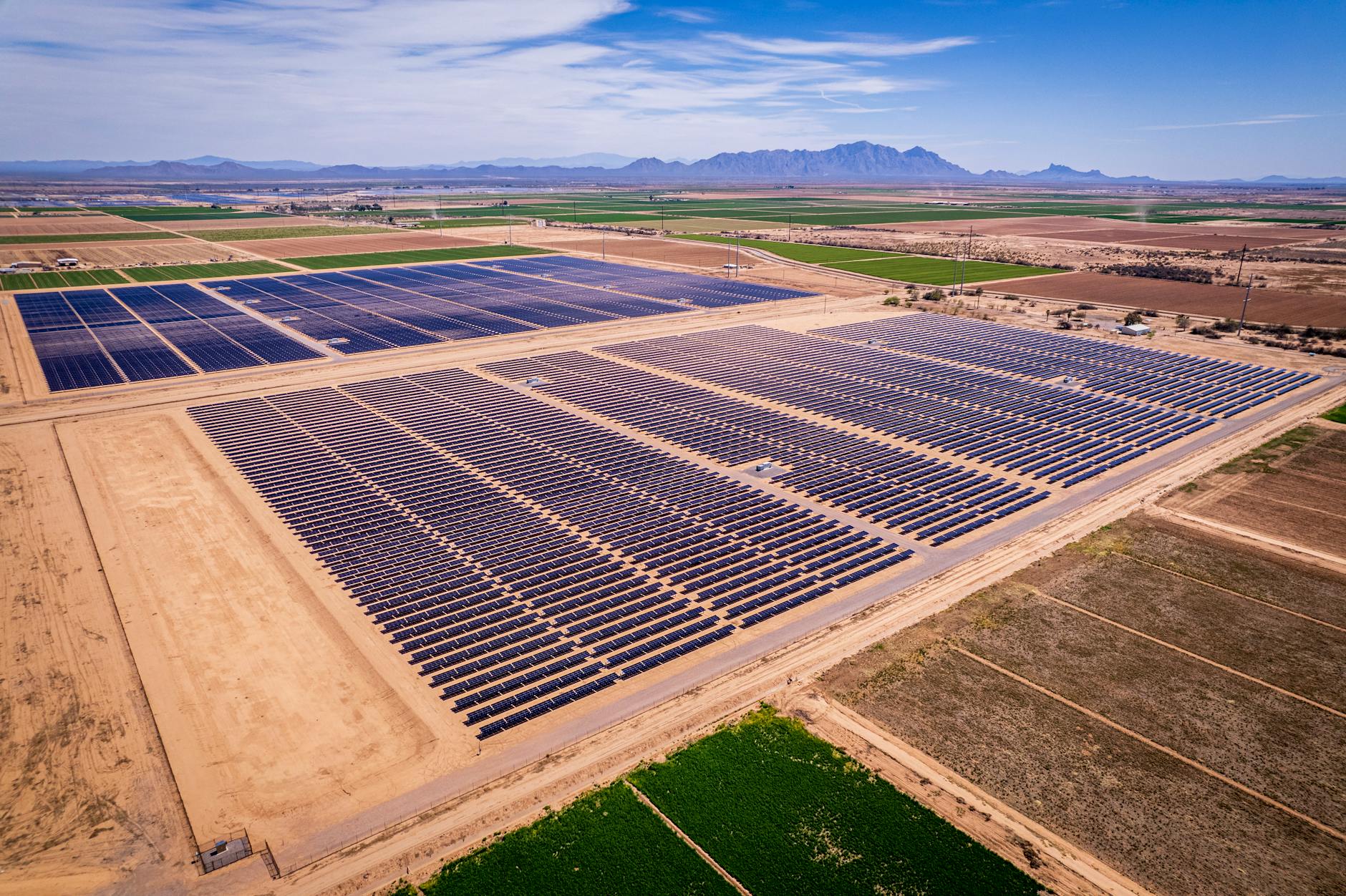
The utility-scale segment, which accounted for 73% of installed capacity in 2025, is the powerhouse of U.S. solar growth, leveraging single-axis trackers and low land prices to achieve competitive Levelized Cost of Energy (LCOE) of $20-35 per MWh. This scale and efficiency are paramount as the nation pushes towards decarbonization targets and addresses surging electricity demand, increasingly driven by sectors like AI data centers. The sheer volume of projects in the pipeline underscores the long-term demand for specialized components.
Domestic manufacturing is a critical component of this growth story. Ongoing efforts to onshore more aspects of the solar supply chain are paying off, helping the industry grapple with tariffs and trade restrictions that have historically complicated project development. Stronger, more holistic U.S. solar manufacturing not only reduces dependence on foreign entities but also guards against price volatility and creates new jobs, reinforcing the economic and workforce benefits of the transition.
The shift towards longer-duration corporate Power Purchase Agreements (PPAs), now extending to 15-20 years, provides enhanced cash-flow visibility for developers. This stability, coupled with the IRA's domestic content adders, creates a more predictable and attractive investment environment for large-scale projects. These factors collectively build a robust foundation for companies supplying critical infrastructure to these utility-scale installations.
However, the industry faces headwinds. Commerce Department anti-circumvention findings in 2024 froze 15 GW of Southeast-Asian modules in transit, causing project delays and forcing developers to renegotiate PPAs. While domestic production is scaling, output still lags demand, and module prices rebounded from $0.18 to $0.24 per watt by mid-2025. This cost premium for U.S.-made components, ranging from 5-8%, can squeeze margins across the value chain, a challenge that both Array and Shoals must navigate.
How is Array Technologies (ARRY) Positioned in This Landscape?
Array Technologies, a leading global provider of utility-grade solar tracking technology, is riding this solar wave with a strong focus on enhancing the efficiency of large-scale solar installations. Their patented tracker technology is designed to boost energy production by as much as 25% with only a minimal cost increase, a significant value proposition for utility-scale developers. This specialization gives ARRY a competitive edge in a market increasingly prioritizing efficiency and yield.
The company has demonstrated a recovery in revenue growth, signaling a positive trend after a period of market share loss. For fiscal year 2028, analysts project ARRY's revenue to reach $1.6 billion, with EPS of $1.03. This forward outlook reflects increased confidence in its business improvement and its ability to capitalize on the expanding utility-scale market. The stock has seen significant price momentum, gaining 31% in the past six months and 185.4% from its 52-week low of $3.76.
Array's strategic moves include breaking ground on a $50+ million manufacturing campus in Bernalillo County, New Mexico. This new 216,000-square-foot facility is projected to create over 300 jobs and will aid in the manufacturing, assembly, design, and engineering of solar tracking technology. This investment in domestic manufacturing is a key competitive advantage, allowing ARRY to offer 100% domestically sourced trackers, which is increasingly important given policy incentives and supply chain resilience concerns.
Despite a -41.9% year-over-year revenue decline in FY2024, Array's legacy operations have shown signs of regaining momentum, with an 87% improvement in the first nine months of 2025, driven by a 104% increase in volume. The company's current order book predominantly comprises domestic projects, underpinning continued momentum. While ARRY's TTM P/E is negative at -51.80, its P/S ratio of 1.30 and P/FCF of 19.60 suggest a valuation that analysts view as compelling, with a consensus "Buy" rating from 26 analysts and a median price target of $10.00.
What Does Shoals Technologies (SHLS) Bring to the Table?
Shoals Technologies Group, a key player in electrical balance of system (EBOS) solutions, including battery energy storage solutions (BESS) and OEM components, is also positioned to benefit from the utility-scale solar boom. Shoals' integrated solutions are critical for optimizing energy output and ensuring safe, reliable performance across solar installations, making them an indispensable partner for developers. The company reported record quarterly revenue of $148.3 million in Q4 2025, up 39% year-over-year, driven by higher demand for utility-scale solar products.
Despite the strong top-line growth, Shoals' Q4 2025 earnings per share of $0.1 missed estimates, and profitability suffered due to cost pressures including tariffs, logistics, labor, and higher legal expenses. GAAP gross margin fell to 31.6% from 37.6% in the prior year. Management expects tariffs to remain a headwind in 2026, estimating a $3.7 million impact on cost of goods sold in 2025, which affected full-year gross margin by 80 basis points.
However, the company enters 2026 with a robust order book and resilient underlying market demand, boasting a record $747.6 million in backlog and awarded orders. This backlog is diversified across international, OEM, commercial/industrial (C&I), and BESS channels, indicating broad market penetration. For full-year 2026, Shoals guided revenue of $560-600 million and adjusted EBITDA of $110-130 million, projecting $65-85 million in operating cash flow.
Shoals is also strategically expanding its portfolio, including a partnership with ON.Energy focused on solutions for grid-safe data centers. This collaboration, pairing ON.Energy's medium-voltage uninterruptible power supply systems with Shoals' DC recombiners, addresses the growing demand for backup power and grid-interactive capabilities for AI data centers. While BESS order patterns can be "lumpy," this diversification into new, high-growth segments positions Shoals for long-term value creation.
ARRY vs. SHLS: A Comparative Look for Investors
When comparing Array Technologies and Shoals Technologies, investors see two companies with distinct but complementary roles in the solar ecosystem, both benefiting from the same macro tailwinds but facing different operational nuances. Array, with its specialized solar tracking technology, holds a 12% estimated market share in 2026, positioning it among the top five in the industry. Its moat lies in enhancing solar installation efficiency, a critical factor for utility-scale projects.
Shoals, on the other hand, provides the essential electrical balance-of-system (EBOS) solutions that connect and optimize solar modules. While Array's revenue growth in FY2024 was negative, Shoals delivered a 19.1% revenue increase in FY2025. However, Array's Q1 2024 bookings of $400 million and its current order book predominantly comprising domestic projects highlight its strong pipeline. Shoals' record $747.6 million backlog, diversified across channels, also signals robust future revenue.
Valuation metrics present a mixed picture. Array currently trades at a P/S of 1.30, while Shoals is at 2.43. Array's TTM P/E is negative, reflecting recent losses, whereas Shoals has a P/E of 34.42. Shoals' gross margin of 35.0% (TTM) is higher than Array's 26.3%, but both are under pressure from tariffs and supply chain costs. Shoals' net debt to adjusted EBITDA of 1.3x is significantly lower than Array's 9.40x, indicating a stronger balance sheet.
Both companies carry a "Buy" consensus rating from analysts, with Array having 15 Buy ratings out of 26, and Shoals with 16 Buy ratings out of 22. Array's median price target is $10.00, while Shoals' is $11.00. The investment thesis for both hinges on their ability to convert strong backlogs into profitable revenue, manage cost pressures, and leverage their specialized offerings within a rapidly expanding utility-scale solar market.
What Are the Key Risks and Investor Implications?
While the solar sector's tailwinds are strong, investors in Array Technologies and Shoals Technologies must remain cognizant of the inherent risks. Both companies face ongoing profitability pressures from tariffs and logistics costs, which have impacted gross margins. Shoals, for instance, has struggled to fully pass through tariff costs to customers, directly affecting its bottom line. The broader market also contends with skilled-labor shortages, inflating EPC costs by over 18% year-over-year.
Interconnection delays remain a significant hurdle for new ground-mount projects, particularly in congested grid regions. While reforms are in progress, the sheer volume of legacy projects under old rules means these delays could persist until 2028, impacting project timelines and revenue recognition for suppliers. Furthermore, the solar industry, despite its growth, is susceptible to policy shifts and trade uncertainties, which can introduce volatility.
For Array, a key risk highlighted by analysts is potential demand softening for solar equipment and supply chain challenges, especially as it derives the majority of its revenue from outside the U.S., leading to margin dilution. Its limited direct engagement with end customers, relying instead on EPC firms, can also make it more vulnerable to market fluctuations. Investors should monitor Array's ability to convert its strong domestic order book into profitable revenue and manage its higher debt levels.
Shoals, despite its robust backlog and diversification into BESS and data centers, must demonstrate consistent profitability amidst cost pressures. Its Q4 2025 EPS miss, coupled with negative free cash flow of -$11.3 million in the quarter (due to remediation costs and elevated capex for a new facility), highlights the need for disciplined execution. Investors should watch for improvements in gross margins and positive free cash flow generation as the company scales its operations and navigates tariff impacts.
The solar energy market is poised for significant growth, offering compelling opportunities for specialized component providers like Array Technologies and Shoals Technologies. Both companies possess strong competitive advantages and robust pipelines, but their ability to navigate persistent cost pressures and supply chain complexities will be crucial for sustained shareholder value. Investors should closely monitor their margin performance, cash flow generation, and execution on strategic growth initiatives to determine if these solar plays can truly shine.
Want deeper research on any stock? Try Kavout Pro for AI-powered analysis, smart signals, and more. Already a member? Add credits to run more research.
Related Articles
Has the AI Stock Rally Finally Hit a Wall
Category
You may also like


First Solar vs. Enphase Energy: Which Solar Stock Shines Now?

Why the Silver Rally Could Be Here to Stay

Are the Markets Setting Up for a Santa Claus Rally?
Breaking News
View All →Featured Articles
Top Headlines

Meta delays rollout of new AI model, NYT reports

Meta Delays Rollout of New A.I. Model After Performance Concerns

Marathon Petroleum (MPC) Ascends While Market Falls: Some Facts to Note

Tesla (TSLA) Suffers a Larger Drop Than the General Market: Key Insights