MarketLens
Is TSMC Still the Undisputed King of AI Chips

Key Takeaways
- Taiwan Semiconductor Manufacturing Company (TSM) continues to dominate the advanced chip market, with Q1 2026 results underscoring robust, multi-year AI-driven demand.
- Despite its strong financial performance and critical role in the global tech ecosystem, TSMC faces significant, systematically underpriced geopolitical risks tied to its concentration in Taiwan.
- Investors must weigh TSMC's unparalleled technological leadership and pricing power against the potential for catastrophic supply chain disruption and its long-term diversification strategy.
Is TSMC Still the Undisputed King of AI Chips?
Taiwan Semiconductor Manufacturing Company (TSM) remains the indispensable engine of the global technology sector, particularly as the artificial intelligence (AI) revolution accelerates. The company controls an astonishing 70% of global foundry revenue and over 90% of the world’s most advanced chip production at leading-edge nodes like 3nm and 5nm. This near-monopoly isn't just a market share statistic; it's the very foundation upon which the AI infrastructure boom is being built, powering everything from advanced data centers to the latest smartphones.
TSMC’s recent financial performance serves as a powerful testament to this dominance. The company reported a record-breaking first quarter in 2026, with revenue surging 35% year-over-year to $35.9 billion (NT$1.134 trillion). This impressive growth wasn't a fluke; it marked TSMC's fourth consecutive quarter of record profit, driven almost entirely by the insatiable demand for AI and high-performance computing (HPC) applications.
The numbers speak for themselves: HPC accounted for 61% of TSMC’s Q1 revenue, while advanced chips (7nm or smaller) made up 74% of total wafer revenue, with 3nm nodes alone contributing 25%. This shift from consumer electronics to AI-driven computing is a structural change, not a cyclical blip. Hyperscalers like Nvidia, Apple, and AMD are all fiercely competing for TSMC's advanced node capacity, creating a supply-constrained environment that grants TSMC significant pricing power and robust margins.
This sustained demand has fueled a remarkable run for TSMC shares, which have more than doubled in the past year. The market's conviction in the multi-year AI megatrend is clear, and TSMC stands at its epicenter, validating that AI infrastructure spending is a production-scale commitment, not just speculative hype.
What Do TSMC's Q1 2026 Earnings Tell Us About AI Demand?
TSMC's Q1 2026 earnings call delivered a resounding message: the AI infrastructure boom is not just real, it's accelerating, and TSMC is reaping the rewards. The company’s net income surged a remarkable 58% year-over-year, reaching a record NT$572.48 billion. This profit jump, alongside a revenue increase of 40.6% year-on-year to $35.9 billion, comfortably surpassed both internal guidance and analyst expectations.
The key driver behind this stellar performance was the relentless demand for AI chips. TSMC CEO C.C. Wei emphasized that "AI-related demand continues to be extremely robust," reinforcing the company's "conviction in the multi-year AI megatrend." This isn't just rhetoric; it's reflected in the company's upgraded full-year 2026 revenue growth forecast of more than 30% in U.S. dollar terms, an increase from previous guidance. Furthermore, TSMC projected Q2 revenue between $39 billion and $40.2 billion, signaling continued sequential growth.
This strong outlook comes despite broader concerns about the global economy and geopolitical tensions. TSMC executives explicitly stated they do not anticipate any near-term impact on operations from the Middle East conflict, citing multiple sources for specialty chemicals and gases like helium and hydrogen, along with robust safety inventories. This resilience underscores the strategic importance of AI chip production, which appears to be recession-proof and, to some extent, war-resistant.
The company is responding to this demand by aggressively ramping up investments. Capital expenditure for 2026 is expected to hit the high end of its $52 billion to $56 billion range, with future three-year capex projected to be "significantly higher than the past three years." This massive investment is primarily directed towards cutting-edge 3nm and 2nm chips, as well as advanced packaging technologies like CoWoS, which are becoming critical bottlenecks in the AI supply chain.
How Does Geopolitical Risk Threaten TSMC's Dominance?
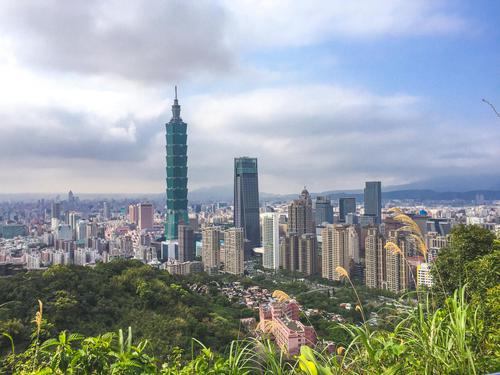
While TSMC's financial performance shines, a shadow looms large over its future: the escalating geopolitical tensions surrounding Taiwan. The company operates almost entirely from one island, just 100 miles from mainland China, creating what many analysts call the "Taiwan chokepoint." This concentration represents arguably the single largest unpriced supply-chain risk in global markets, with potential economic consequences that are staggering.
Consider the stakes: a full Taiwan conflict is estimated by Bloomberg Economics to cost approximately $10 trillion in first-year global GDP impacts. Even a mild disruption, lasting 2-6 weeks, could wipe out 0.5-1.5% of global GDP. The sheer scale of TSMC’s advanced chip production – over 90% of the world’s supply – means any interruption would propagate through every major sector of the global economy within days, from smartphones and data centers to automotive and defense.
China's military capabilities continue to advance, with the PLA reportedly targeting 2027 for Taiwan-scenario readiness. Recent December 2025 exercises were described as the largest Taiwan-focused drills ever conducted, sending a clear signal. Meanwhile, U.S. deterrence bandwidth is stretched across multiple theaters, competing for the same weapons systems, logistics, and political capital needed for Taiwan. This confluence of factors makes the risk increasingly acute.
The problem is the lack of a near-term substitute. Building a new leading-edge fab takes 3-4 years and costs upwards of $10 billion. TSMC Arizona's first advanced node fab isn't expected to reach 2nm volume production until 2030, and competitors like Samsung and Intel remain years behind at cutting-edge nodes. This "no fast substitution" reality means the global economy is critically dependent on Taiwan's stability, a risk that prediction markets imply at a 22% conflict probability by 2027, yet remains systematically underpriced in global equity, rates, FX, and commodity markets.
What is TSMC Doing to Mitigate Supply Chain Risks?
Recognizing the immense concentration risk, TSMC has embarked on an aggressive, multi-pronged strategy to diversify its manufacturing footprint and enhance supply chain resilience. This isn't just a corporate initiative; it's a geopolitical imperative, driven by governments and major customers alike. The goal is to de-risk the global semiconductor supply chain, a mission that comes with both significant opportunities and complex challenges.
TSMC is investing heavily in overseas fabs, with major projects underway in Arizona (USA), Kumamoto (Japan), and Dresden (Germany). The first Arizona fab, focused on 4nm technology, is slated to begin production in early 2025, with a second fab for 2nm targeted for 2030. In Japan, a second fab is also under construction, and a new facility in Dresden, Germany, marks its first European expansion. These efforts are partly in response to government incentives, such as the U.S. CHIPS and Science Act and the EU Chips Act, which aim to onshore critical chip capacity.
However, replicating TSMC's scale, technological expertise, and deeply integrated supply chain outside of Taiwan presents immense hurdles. Building these overseas fabs is "extremely expensive and inefficient," as noted by experts, leading to higher manufacturing costs and, consequently, higher chip prices. TSMC is already planning 5-10% increases for advanced nodes and a potential 50% surge for 2nm wafers due to these diversified operational costs.
Despite these global expansions, TSMC CEO C.C. Wei has consistently emphasized that Taiwan will remain the core of the company's R&D and its most advanced production. Taiwan is expected to maintain a one-step lead, adopting next-generation process technologies before they are deployed overseas. This strategy balances global presence with domestic technological leadership, ensuring Taiwan's "silicon shield" remains potent for the foreseeable future, even as overseas fabs gradually dilute its leverage as a sole deterrent.
Is TSMC's Valuation Reflecting Its Risks and Rewards?
TSMC's current valuation presents a complex picture, reflecting both its unparalleled technological leadership and the significant geopolitical overhang. The stock is trading at $414.15 as of May 7, 2026, near its 52-week high of $420.00, and boasts a colossal market capitalization of $2.15 trillion. This premium valuation is largely driven by its indispensable role in the AI boom and its robust financial performance.
Looking at key valuation multiples, TSMC trades at a TTM P/E of 30.85, a P/S of 14.50, and a P/FCF of 58.49. While these metrics appear elevated compared to historical averages for some industrial sectors, they are arguably justified by the company's exceptional growth profile. TSMC reported TTM EPS of $74.38, with analysts forecasting a forward EPS of $755.92 for FY 2028, indicating massive expected earnings expansion. The company’s net income growth was 49.8% year-over-year in FY2025, with a staggering 239.8% cumulative growth over five years.
Wall Street analysts generally maintain a bullish stance on TSM. The consensus price target is $427.50, with a median of $450.00 and a high of $480.00, suggesting further upside from current levels. Out of 25 analysts, 18 rate it a "Buy" and 7 a "Hold," with no "Sell" ratings. This optimism largely stems from the "unbreakable supply chain momentum" fueled by AI and the company's strong pricing power due to capacity constraints.
However, the market's pricing of geopolitical risk remains a critical debate. While TSMC's stock has soared, implied volatility and geopolitical risk premia are historically subdued relative to the potential tail risk of a Taiwan disruption. This suggests that while investors acknowledge the risk, they may not be fully pricing in the catastrophic economic consequences of an extreme scenario. The "silicon shield" concept, where Taiwan's critical role deters conflict, is gradually eroding as overseas fab expansion and U.S. export controls dilute Taiwan’s unique leverage.
What Should Investors Watch Next for TSMC?
For investors navigating the complex landscape of TSMC, the narrative is a delicate balance between undeniable growth and existential risk. The company’s technological lead and central position in the AI supercycle are secure for the foreseeable future, but the geopolitical chessboard demands constant vigilance. It’s not just about quarterly earnings anymore; it’s about the structural integrity of the global tech supply chain.
First, keep a close eye on TSMC's advanced node mix and CoWoS/advanced packaging capacity commentary in upcoming earnings calls. These are the new bottlenecks, and their expansion is crucial for meeting insatiable AI demand. Any shifts in capital expenditure plans or customer demand visibility for the rest of 2026 will also provide critical insights into the pace of AI infrastructure build-out.
Second, monitor geopolitical developments in the Taiwan Strait with extreme care. While TSMC has expressed confidence in its supply chain resilience against Middle East conflicts, the Taiwan scenario is a different beast entirely. Watch for any changes in China's military posture, U.S. deterrence strategies, and the progress of TSMC's overseas fabs in Arizona, Japan, and Germany. These diversification efforts, while costly, are essential long-term de-risking plays.
Finally, consider the broader implications of "technonationalism." Governments worldwide are pushing for domestic chip capacity, which could lead to a more fragmented, less efficient, but potentially more resilient global semiconductor ecosystem. TSMC's ability to navigate this evolving landscape, balancing its role as a global foundry with national security interests, will be key to its long-term trajectory.
TSMC is more than just a chipmaker; it is the critical chokepoint of the global AI economy. Its trajectory is essential for anyone serious about technology, geopolitics, or capital allocation. Investors must remain acutely aware of the systemic risks, even as the AI boom continues to drive record profits and an optimistic analyst outlook.
Want deeper research on any stock? Try Kavout Pro for AI-powered analysis, smart signals, and more. Already a member? Add credits to run more research.
Related Articles
Why is Infineon Bullish on Humanoid Robot Chips
Category
You may also like

The 2026 Chip War Is Already Over and Apple Dominated

Wall Street Analyst Warns Hyperscaler Custom Chips Pose ‘Significant Risk' to NVIDIA's Dominance
AI Demand Is Surging — But Taiwan Semiconductor Is Controlling the Supply
Breaking News
View All →Featured Articles
Top Headlines

Meta challenges New Mexico's $3.7 billion plan for teen mental health in social media trial

Instagram Introduces Instants, Meta's New Private Photo Sharing App

Nvidia (NVDA) Exceeds Market Returns: Some Facts to Consider

Apple Prepares App Store for Autonomous AI Agents