MarketLens

Log in

Is Tyson Foods (TSN) Poised for a Rebound Amidst Sector Headwinds

11 hours ago
SHARE THIS ON:

Is Tyson Foods (TSN) Poised for a Rebound Amidst Sector Headwinds

Key Takeaways

  • Tyson Foods (TSN) is currently trading near its 52-week low, presenting a potential value opportunity despite near-term headwinds in its Beef segment.
  • The company's recent Q2 2026 earnings beat, driven by strong performance in Chicken and Prepared Foods, signals operational improvements and strategic shifts.
  • While a high dividend payout ratio and ongoing governance concerns warrant caution, analyst consensus points to significant upside potential for TSN shares.

Is Tyson Foods (TSN) Poised for a Rebound Amidst Sector Headwinds?

Tyson Foods, Inc. (NYSE: TSN), a global protein giant, is currently navigating a complex market landscape marked by fluctuating commodity prices, shifting consumer preferences, and intense operational scrutiny. Trading at $56.58 as of June 12, 2026, the stock sits near the lower end of its $50.56 to $69.48 52-week range, reflecting investor apprehension. However, a closer look at its recent performance and strategic initiatives suggests that Tyson may be more resilient than its current valuation implies, potentially offering an attractive entry point for long-term investors. The company's Q2 2026 earnings, reported on May 4, 2026, delivered an adjusted EPS of $0.87, comfortably beating the consensus estimate of $0.76. This beat, coupled with a slight revenue outperformance at $13.65 billion against $13.63 billion estimates, indicates that operational improvements in key segments are beginning to bear fruit.

Despite a trailing twelve-month (TTM) P/E ratio of 44.09, which appears elevated, the forward P/E ratio drops significantly to 13.43 based on MarketBeat data, anticipating substantial earnings growth in the coming fiscal year. This discrepancy highlights the market's expectation for a turnaround from recent profitability challenges. Wall Street analysts, encompassing 30 firms, currently hold a "Buy" consensus rating for TSN, with an average price target of $75.00, suggesting a potential upside of over 32% from the current share price. This optimistic outlook is underpinned by the company's diversified protein portfolio and strategic pivot towards higher-margin, value-added products, which could insulate it from some of the volatility inherent in its commodity-driven segments.

What Do Recent Earnings and Guidance Reveal About Tyson's Health?

Tyson Foods' Q2 2026 earnings report, released on May 4, 2026, offered a mixed but generally positive picture, showcasing resilience in certain segments despite persistent challenges elsewhere. The company reported sales of $13.65 billion, a 4.4% year-over-year increase, narrowly surpassing analyst expectations of $13.63 billion. More impressively, adjusted earnings per share (EPS) came in at $0.87, significantly beating the consensus estimate of $0.76 by $0.11. This performance was primarily driven by robust momentum in the Chicken and Prepared Foods segments, as highlighted by CEO Donnie King during the earnings call. He noted that disciplined execution of operational initiatives and more efficient marketing contributed to these segments' strength.

However, the Beef segment continued to be a drag on overall profitability. For fiscal 2026, Tyson anticipates an adjusted operating loss for its Beef segment ranging from (500)millionto(500) million to (350) million. This projection aligns with the USDA's forecast for a 2% decrease in domestic beef production in fiscal 2026 compared to fiscal 2025. In contrast, the Chicken segment is expected to deliver strong adjusted operating income of 1.9 billion to \2.05 billion, with domestic chicken production projected to increase by 2%. Similarly, the Pork segment is forecast to achieve an adjusted operating income of $250 million to $300 million, benefiting from a projected 2% increase in domestic production. The Prepared Foods segment is also expected to contribute significantly, with anticipated adjusted operating income of $1.25 billion to $1.35 billion.

Looking ahead, Tyson Foods updated its FY 2026 revenue guidance to a range of $55.5 billion to $56.6 billion. This revised outlook, while substantial, came in slightly below the consensus revenue estimate of $56.8 billion. The company also boosted its FY26 Free Cash Flow (FCF) guidance to between $1.2 billion and $1.8 billion, and reduced total debt by $747 million, demonstrating a commitment to balance sheet strength. The next earnings report for Q3 2026 is estimated for August 3, 2026, and investors will be keenly watching for continued progress in the profitable segments and any signs of stabilization in Beef.

How Are Operational Shifts and Strategic Investments Shaping Tyson's Future?

Tyson Foods is actively undertaking significant operational shifts and strategic investments to enhance efficiency and adapt to evolving market dynamics. A notable move is the planned closure of its massive beef processing plant in Lexington, Nebraska, effective January 20, 2026. This facility, which processes up to 5,000 cattle daily and employs over 3,200 workers, represents approximately 5% of the entire U.S. beef market. The decision, driven by tight cattle supplies and negative packer margins, underscores the company's focus on optimizing its operational footprint in the face of structural challenges within the beef supply chain. This closure, alongside the reduction of the B-shift at its Amarillo, Texas plant impacting around 1,700 workers, highlights Tyson's proactive approach to managing utilization and protecting margins.

Beyond facility closures, Tyson is heavily investing in digitization and supply chain integration. The company is currently implementing a new Enterprise Resource Planning (ERP) system and utilizing SAP's integrated business planning solutions to further digitize its supply chain. This initiative aims to streamline data collection and foster tighter collaboration across marketing, operations, and manufacturing functions. The goal is to improve supply chain visibility through technologies like IoT and Big Data, which is crucial for managing perishable protein products. For instance, knowing that certain chicken suppliers are experiencing a heatwave allows Tyson to make more informed decisions about growth rates and inventory.

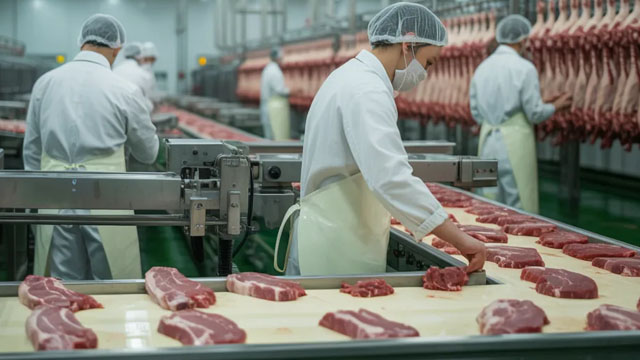
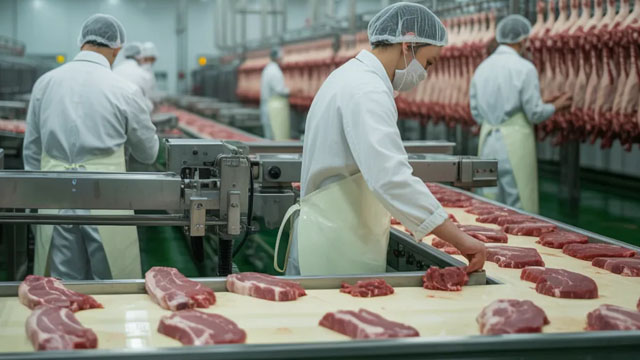
These investments extend to automation within processing facilities. While meat processing has historically been labor-intensive, Tyson is exploring how AI can replace manual labor in areas like deboning and packaging. The company's focus on "controllables" – operational execution, mix optimization, and cross-segment integration – has already yielded results. Its Prepared Foods segment, for example, achieved its highest fill rates since 2013, even as beef remains a structural challenge. This strategic pivot towards value-added products and enhanced operational efficiency is critical for building margin resilience in a highly competitive and low-margin industry.

What Are the Key Analyst Sentiments and Price Targets for TSN?

Wall Street analysts hold a generally positive, though nuanced, view on Tyson Foods (TSN), with a consensus that suggests significant upside potential from current levels. According to API data, 30 analysts cover TSN, resulting in a "Buy" consensus rating, with 15 analysts rating it a "Buy" and 14 a "Hold," and only 1 "Sell." The average price target among these analysts is $75.00, implying a substantial 32.5% upside from the current price of $56.58. This average target ranges from a high of $80.00 to a low of $69.00, indicating a relatively tight band of expectations among the most optimistic analysts.

However, MarketBeat's data, based on 15 analysts over the last 12 months, presents a slightly more conservative "Hold" consensus, with 10 hold ratings and 5 buy ratings. Their average twelve-month stock price forecast is $68.27, with a high forecast of $80.00 and a low of $58.00. This average forecast still represents a forecasted upside of 20.60% from the current price. Recent rating changes include Piper Sandler upgrading TSN from Neutral to Overweight on April 6, 2026, while Stephens & Co. maintained an Equal Weight rating on May 5, 2026. Goldman Sachs also added Tyson Foods to its US Conviction List on June 1, 2026, maintaining a Buy rating and setting an $81 price target, citing expectations for earnings growth above consensus.

The bullish sentiment is largely tied to expectations of steadier beef margins, alongside solid fundamentals in the chicken and pork segments. Analysts believe these factors support a slightly higher revenue growth outlook and firmer profit margins. For fiscal year 2028-09, consensus revenue is estimated at $58.2 billion (from 5 analysts) with EPS at $5.67 (from 3 analysts). For FY 2029-09, revenue is projected at $60.7 billion with EPS at $6.59. These forward estimates underscore the anticipated recovery and growth that underpin the optimistic price targets, suggesting that while the TTM P/E is high, future earnings are expected to normalize and grow substantially.

What Are the ESG and Governance Challenges Facing Tyson Foods?

Tyson Foods faces significant environmental, social, and governance (ESG) challenges that are increasingly drawing investor scrutiny. The company's vast scale in global food production exposes it to critical environmental pressures, particularly in its supply chain, which operates in regions prone to deforestation, water stress, and soil degradation. While Tyson has set emissions targets, institutional investors like RLAM, which engaged extensively with the company since 2019, believe it still "lacks a credible transition plan showing how those goals will be met." Without clear interim milestones or robust board-level accountability, the company remains exposed to foreseeable climate-related shocks. RLAM escalated its concerns at the February 5, 2026, Annual General Meeting (AGM), voting against seven directors to highlight the widening gap between risk and oversight.

On the social front, Tyson has faced criticism regarding its labor practices and animal welfare concerns. Recent litigation concerning allegations of child labor has raised serious questions for investors about the robustness of Tyson's human rights oversight. These risks underscore the importance of strong systems, transparent reporting, and effective grievance mechanisms to protect both the business and its workforce. The company's employee trend shows a decrease from 142,000 in 2022 to 133,000 in 2025, which, while potentially reflecting efficiency gains, also raises questions about labor management in a challenging industry.

Governance issues are particularly prominent, stemming from Tyson's multi-class share structure. This structure grants the founding family, through Tyson Limited Partnership (TLP), disproportionate voting control relative to their economic ownership. This imbalance, as noted by RLAM, can reduce the influence of independent investors and make it harder to demand timely progress on material ESG issues. A board with limited independence and concentrated voting power may be less able to challenge management effectively or respond decisively to rising risks. While Tyson's ESG score reflects efforts in sustainable sourcing and reducing its environmental footprint, these governance gaps present a structural impediment to fully embedding ESG considerations into decision-making and could pose long-term risks to shareholder value.

Is Tyson's Dividend Sustainable, and What's the Outlook for Shareholders?

Tyson Foods has a long-standing commitment to returning value to shareholders, evidenced by its consistent dividend payments and share repurchases. The company has increased its dividends for 14 consecutive years, a testament to its financial stability and a positive signal for income-focused investors. The current quarterly dividend stands at $0.51 per share, translating to an annual dividend of $2.04 and a yield of 3.6% based on the current share price of $56.58. The next dividend payment is scheduled for September 15, 2026, with an ex-dividend date of September 1, 2026.

However, a key concern for dividend sustainability is Tyson's payout ratio, which currently stands at a high 154.7% on a trailing twelve-month basis. This indicates that the company is paying out more in dividends than it is earning, which is generally unsustainable in the long run and could signal financial strain. While a high payout ratio can sometimes be temporary due to depressed earnings, it warrants close monitoring. The company's net income growth has been negative, with a -40.8% year-over-year decline in FY2025 and a -84.9% cumulative decline over three years, further highlighting the pressure on earnings.

Despite the high payout ratio, Tyson's management has demonstrated a commitment to shareholder returns. During the Q2 2026 earnings call, CEO Donnie King mentioned returning $445 million of cash to shareholders year-to-date through a combination of dividends and share repurchases. The company's balance sheet also shows some strength, with a current ratio of 1.83 and a net debt/EBITDA of 2.97. The boosted FY26 Free Cash Flow guidance of $1.2 billion to $1.8 billion could provide some relief and support future dividend payments, assuming the company can convert its operational improvements into stronger bottom-line results. Investors should weigh the attractive yield against the high payout ratio and the company's ability to significantly improve its net income in the coming quarters.

Tyson Foods presents a compelling, albeit complex, investment case. While the Beef segment remains a significant challenge and governance concerns persist, the company's strong performance in Chicken and Prepared Foods, coupled with strategic digitization efforts, offers a clear path to improved profitability. With shares trading near 52-week lows and analysts projecting substantial upside, TSN could be an attractive long-term play for investors willing to navigate the near-term volatility and monitor the execution of its turnaround strategy.


Want deeper research on any stock? Try Kavout Pro for AI-powered analysis, smart signals, and more. Already a member? Add credits to run more research.

SHARE THIS ON:

Related Articles

Category

You may also like

Stock News1 week ago

Down 12.8% in 4 Weeks, Here's Why Tyson (TSN) Looks Ripe for a Turnaround

Tyson Foods (TSN) shares fell 12.8% over the past four weeks, reaching technically oversold levels. The stock may face a near-term trend reversal as Wall Street analysts increasingly revise earnings e...
Stock News2 weeks ago

Tale of 2 Food Stocks: Hormel Jumps on Earnings While Tyson Falls on Cattle Concerns

Hormel shares rose following strong demand for its turkey brands, while Tyson Foods fell after reporting an operating loss in its beef segment. Divergent performance highlights contrasting pressures a...
Stock News2 weeks ago

Is Altria Group (MO) Outperforming Other Consumer Staples Stocks This Year?

Altria Group (MO) and Tyson Foods (TSN) are currently being evaluated against broader consumer staples sector performance for the year-to-date period. This comparative analysis highlights relative str...
Stock News1 months ago

Tyson Foods, Inc. (TSN) Q2 2026 Earnings Call Transcript

Tyson Foods (TSN) released its Q2 2026 earnings transcript, providing updated financial performance data and operational commentary. Investors are evaluating the report for insights into margin trends...

Breaking News

View All →

Top Headlines

View More →
Stock News43 minutes ago

Rocket Lab Corporation (RKLB) Stock Drops Despite Market Gains: Important Facts to Note

Stock News1 hour ago

S&P 500 Snapshot: Late Week Rally Pushes Index Into Green

Stock News1 hour ago

How Elon Musk Just Became The World's First Trillionaire

Stock News2 hours ago

Could Tesla merge with SpaceX? The future of the space economy

Stock News2 hours ago

3 Core Artificial Intelligence (AI) Stocks to Buy With $1,000 Right Now and Hold for the Next Decade