MarketLens
Is USA Rare Earth the Answer to America's Critical Mineral Dependence

Key Takeaways
- USA Rare Earth (USAR) is strategically positioned to capitalize on the surging demand for critical rare earth elements and the U.S. drive for supply chain independence.
- A transformative $1.6 billion U.S. government funding package, coupled with an aggressive "mine-to-magnet" vertical integration strategy, underpins a strong bull case.
- While operational execution and significant capital expenditure present risks, analyst price targets suggest substantial upside potential from current levels.
Is USA Rare Earth the Answer to America's Critical Mineral Dependence?
USA Rare Earth (NASDAQ: USAR) is emerging as a pivotal player in the global race to secure critical mineral supply chains, particularly as geopolitical tensions and surging demand for advanced technologies intensify. The company's ambitious "mine-to-magnet" strategy, aiming for full vertical integration on U.S. soil, directly addresses a national security imperative: reducing reliance on China for essential rare earth elements. With a current market capitalization of $1.92 billion and shares trading at $19.73, USAR has captured significant attention, especially after securing a substantial government funding package.
The broader rare earth market is at an inflection point. Global demand is projected to rise by two to three times by 2030-2035, and potentially seven to ten times by 2050, driven by electrification, defense modernization, and advanced manufacturing. China, which historically dominated this sector, now consumes roughly 60% of its own rare earths domestically, shrinking its export surplus and highlighting the vulnerability of Western supply chains. This strategic shift has prompted the U.S. government to actively support domestic alternatives, creating a fertile ground for companies like USAR.
The urgency is further underscored by the Pentagon's fast-approaching January 1, 2027, deadline, which will ban Chinese-sourced rare earths from the U.S. defense supply chain at every stage, from mining to magnet production. This regulatory tailwind, combined with the strategic importance of heavy rare earth elements (HREEs) for electric vehicle motors, wind turbines, and advanced robotics, positions USAR squarely in a high-growth, high-stakes sector. The company's focus on HREEs, which are far scarcer and more supply-constrained than their light counterparts, gives it a unique competitive edge.
What Catalysts are Fueling Analyst Optimism for USAR?
The widespread bullish sentiment from top-tier firms like Roth MKM, Cantor Fitzgerald, UBS Group, and Canaccord Genuity Group stems primarily from USA Rare Earth's transformative $1.6 billion funding package from the U.S. government, announced in January 2026. This landmark deal, which includes up to $277 million in direct funding and a $1.3 billion senior secured loan under the CHIPS and Science Act, is designed to accelerate the company's domestic and vertically integrated "mine-to-magnet" strategy. It represents a significant vote of confidence from Washington in USAR's ability to restore U.S. critical mineral independence.
This capital infusion is being deployed to advance two cornerstone projects: the Round Top Mountain project in Texas and the magnet manufacturing facility in Stillwater, Oklahoma. The Round Top deposit, touted as the richest known deposit of heavy rare earths, gallium, and beryllium in the country, is now targeting commercial production by late 2028. This acceleration from an original 2030 timeline is a direct result of the secured funding and positive solvent-extraction piloting results, demonstrating tangible progress.
Simultaneously, the Stillwater plant is on track to begin commissioning in early 2026, with a goal to produce high-performance sintered neodymium-iron-boron (NdFeB) magnets. These magnets are critical components in F-35 fighter jets, electric vehicle motors, and missile guidance systems. The proposed CHIPS funds will help increase Stillwater's production capacity to 10,000 TPA of NdFeB magnets by 2029, more than doubling previously planned capacity, and establish on-site metallization and strip-casting capabilities. This integrated approach, from raw material to finished magnet, is a key differentiator and a major driver of analyst enthusiasm.
How Does USAR's "Mine-to-Magnet" Strategy Create Value?
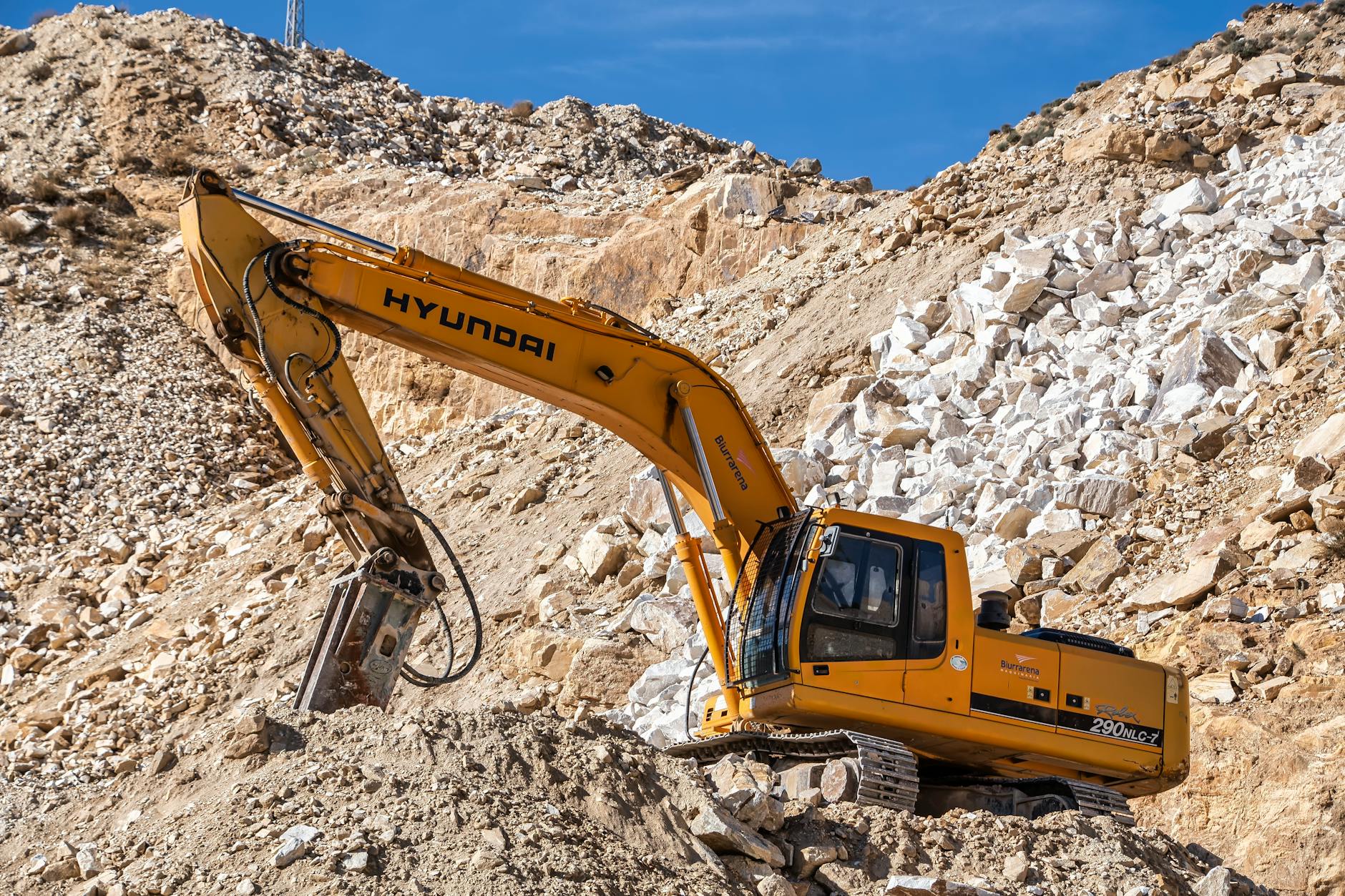
USA Rare Earth's "mine-to-magnet" strategy is a comprehensive, multi-stage approach designed to capture value across the entire rare earth supply chain, a critical differentiator in a market historically fragmented and dominated by offshore players. The strategy begins with the Round Top deposit in Sierra Blanca, Texas, which contains 15 of 17 rare-earth elements, notably rich in heavy rare earths like dysprosium and terbium. This deposit is also a source of gallium, hafnium, and zirconium, all vital for semiconductor manufacturing. The mine is expected to extract 40,000 metric tons per day of feedstock and process 8,000 TPA of mixed rare earth carbonate (MREC), HREEs, and critical mineral oxides.
The next crucial step in this vertical integration is metal-making, significantly bolstered by USAR's acquisition of Less Common Metals (LCM) in November. LCM is currently the only proven producer of both light and heavy rare earth metals outside China, providing a critical link in the supply chain. This acquisition secures essential feedstock for the Stillwater facility and supports higher throughput. LCM's existing NdFeB strip cast capacity of 1,500 metric tons, targeting 2,000 metric tons by early 2026, is a testament to USAR's commitment to building out robust, non-Chinese processing capabilities.
Finally, the Stillwater, Oklahoma, facility completes the "mine-to-magnet" loop by manufacturing high-performance NdFeB magnets. This plant is on track to begin commissioning in the first quarter of 2026, with an ambitious target of reaching 10,000 metric tons of annual magnet-making capacity by 2029. This full vertical integration is not just about efficiency; it's about strategic independence, allowing USAR to control quality, mitigate supply risks, and serve high-value defense, automotive, and industrial sectors that demand secure, domestically sourced materials.
What are the Financial Projections and Valuation Implications?
USA Rare Earth, while still in its pre-revenue development phase, has provided aggressive financial targets that underpin much of the analyst optimism. Management projects substantial growth, targeting $2.6 billion in revenue, $1.2 billion in EBITDA, and $900 million in free cash flow by 2030. These figures, if achieved, would position USAR as a highly profitable entity in the critical minerals sector, especially given the current market cap of $1.92 billion.
Based on these 2030 projections, the stock would trade at highly attractive valuation multiples: a price-to-sales ratio of approximately 0.74x, an enterprise value-to-EBITDA of around 1.6x, and a price-to-free cash flow of roughly 2.1x. These are significantly lower than typical multiples for mature, high-growth companies, suggesting substantial undervaluation if USAR can execute its operational roadmap. The implied upside to the consensus analyst price target of $34.33 (median $35.00, high $35.00, low $33.00) from the current $19.73 is approximately 74%, with some analysts seeing up to 94% upside.
The company's target for gross profit breakeven in 2027, EBITDA breakeven in 2028, and cash flow breakeven in 2029 further illustrates the anticipated rapid ramp-up in profitability. These projections assume favorable oxide pricing, with neodymium-praseodymium around $125 per kilogram, and highlight the significant value of HREEs like dysprosium ($900/kg) and terbium ($3,500/kg), which are in dramatic undersupply outside China. The milestone-based government funding structure also provides a degree of financial discipline, ensuring capital is disbursed only upon achievement of operational targets.
What are the Key Risks and Challenges for USAR Investors?
Despite the compelling bull case and robust government backing, investing in USA Rare Earth is not without significant risks, reflecting its early-stage development and the inherent complexities of the rare earth industry. The primary challenge lies in operational execution. USAR is a pre-revenue company, and its financial projections hinge on successfully bringing both the Stillwater magnet manufacturing facility and the Round Top mine to commercial production on schedule and within budget. Delays in equipment procurement, commissioning, or scaling up production could severely impact revenue generation and profitability timelines.
Another critical risk is the substantial capital expenditure required. While the $1.6 billion government funding package is transformative, the total estimated capital investment for the Texas and Oklahoma projects is $3.3 billion. This implies a significant portion of funding must still come from private sources or future government tranches. Although USAR strengthened its balance sheet with over $400 million in cash by November 2025 and a $1.5 billion PIPE in January 2026, the company has historically faced heavy cash burn and recurring equity dilution to fund its progress. Future funding needs could lead to further dilution for existing shareholders.
Furthermore, the rare earth market, while strategically vital, is subject to price volatility and geopolitical shifts. While USAR's focus on HREEs and domestic supply chain independence offers some insulation, global supply-demand dynamics and potential shifts in government policy could still impact its long-term prospects. The company's lack of price floors or long-term offtake agreements, unlike some peers, exposes it to market price fluctuations, particularly for its HREE output. Finally, competition from established players like MP Materials, which has largely completed its own domestic rare earth magnet supply chain, also presents a competitive landscape that USAR must navigate effectively.
What's the Long-Term Outlook for USA Rare Earth?
USA Rare Earth stands at a critical juncture, poised to potentially redefine the Western rare earth supply chain. The combination of a robust "mine-to-magnet" strategy, substantial government backing, and an urgent geopolitical need for supply independence creates a powerful narrative for long-term growth. While the path to commercial success is fraught with execution risks and significant capital demands, the potential rewards for investors are substantial if the company delivers on its ambitious operational and financial targets.
The strategic importance of USAR's projects cannot be overstated, extending beyond mere financial returns to encompass national security and technological leadership. For risk-tolerant investors with a multi-year horizon, USAR presents a speculative yet compelling opportunity to invest in a company addressing a critical global challenge. The coming years will be defined by USAR's ability to transition from development to commercial-scale production, turning political promise into tangible output and unlocking significant shareholder value.
Want deeper research on any stock? Try Kavout Pro for AI-powered analysis, smart signals, and more. Already a member? Add credits to run more research.
Related Articles
Category
You may also like


USAR Struggles With Growing Development Expenses: What Lies Ahead?

The Metals Company (TMC) Could Set You Up for Life (Or Go to $0)

Critical Minerals Push Drives High-Grade Exploration in BC's Golden Triangle
Breaking News
View All →Featured Articles
What Just Happened to Burford Capital's Stock
Why is SAP Acquiring Reltio Now
Top Headlines

S&P 500 Snapshot: Index Inches Closer to Correction Territory

Meta Plunges on Jury Verdict. Here's What It Means for Investors

3 No-Brainer AI Stocks to Buy Before They Soar, According to Wall Street

Only a Few "Magnificent Seven" Stocks Look Like Buys Right Now. This Is One of Them.