MarketLens
Is Vertical Aerospace's $800M Fundraise a Game-Changer for EVTL

Key Takeaways
- Vertical Aerospace (EVTL) is reportedly securing over $800 million in new capital, a critical lifeline to fund its VX4 eVTOL aircraft through certification and into production.
- Despite a consensus "Buy" rating from analysts and a $11.00 price target, EVTL's stock trades at a deeply discounted $2.06, reflecting significant execution risks and a highly speculative market.
- The urban air mobility sector faces immense regulatory hurdles, infrastructure development needs, and public acceptance challenges, making commercialization a long and capital-intensive journey.
Is Vertical Aerospace's $800M Fundraise a Game-Changer for EVTL?
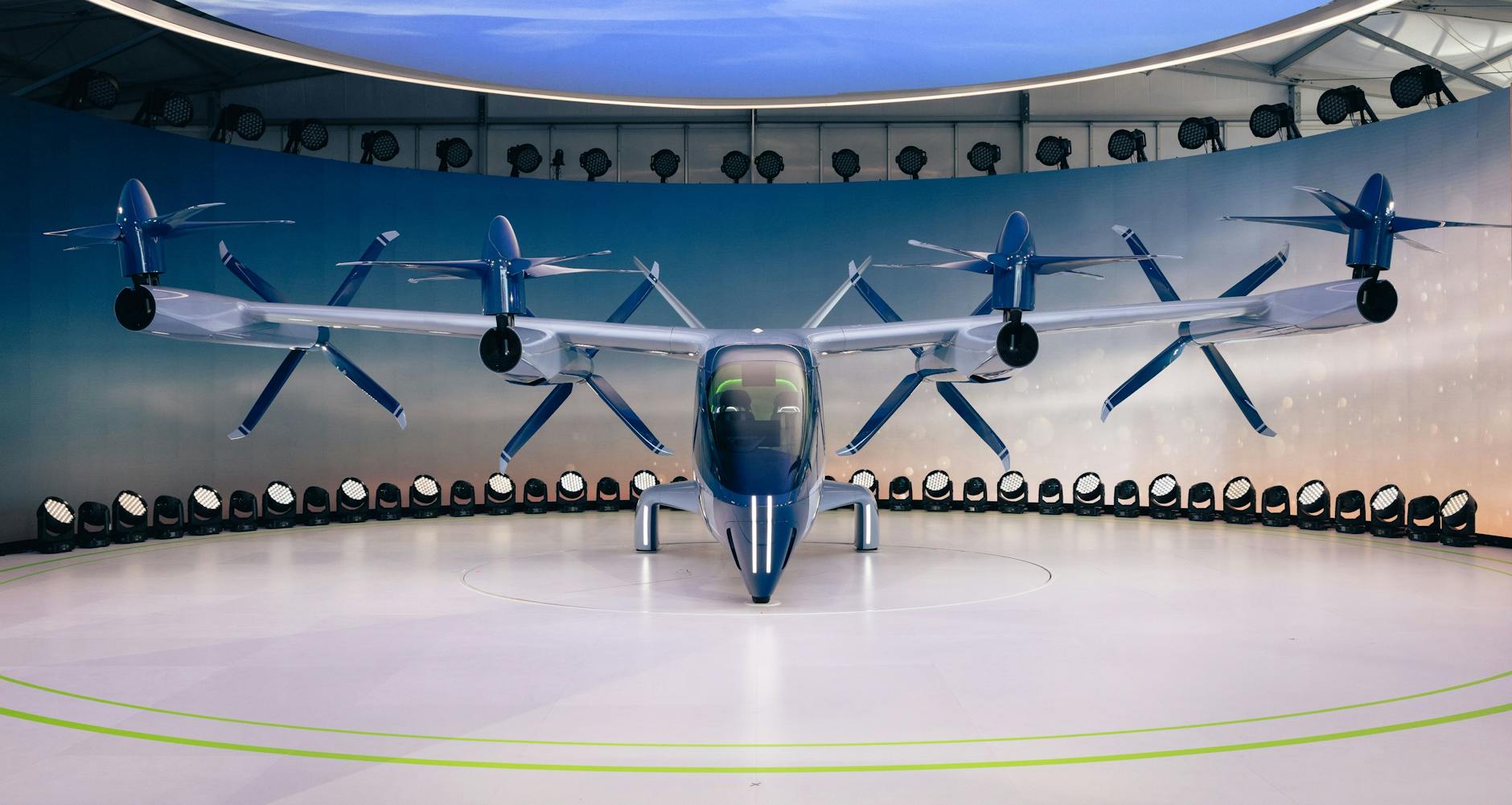
Vertical Aerospace, the UK-based electric vertical take-off and landing (eVTOL) pioneer, appears to be on the cusp of securing a substantial capital injection exceeding $800 million. This reported fundraise arrives at a pivotal moment, aiming to allay persistent balance sheet concerns and propel the company towards the commencement of VX4 aircraft production within the next 12 months. For a company that went public via SPAC at a $2 billion valuation in 2021, only to see its market capitalization plummet to $205.6 million as of March 27, 2026, this funding is nothing short of a critical lifeline.
The news comes as EVTL shares trade at $2.06, a stark contrast to its 52-week high of $7.60 and barely above its 52-week low of $2.01. This deep discount reflects the market's skepticism regarding the company's long-term viability and the immense capital requirements of the Advanced Air Mobility (AAM) sector. While the precise details of the funding structure and timing remain unclear, banking sources suggest it could involve several forms of capital and be announced as early as this week. This follows a previous $175 million raise last year, indicating the continuous need for significant investment to navigate the complex path to commercial operations.
CEO Stuart Simpson highlighted "strong progress across the business," including key piloted flight milestones and renewed order activity, as signs of growing confidence. The company's annual results pointed to "strong capital discipline," with net cash used in operations of approximately $112 million in FY2025, in line with guidance. However, Vertical anticipates net cash outflows of approximately $195 million over the next 12 months, underscoring the ongoing demand for capital to fund increased investment in flight testing, certification, and manufacturing. This $800 million injection, if confirmed, would provide crucial runway, but investors must weigh the potential against the substantial dilution and the inherent risks of this nascent industry.
Navigating the Regulatory Labyrinth: A Flight Plan to Certification
The path to commercial urban air mobility is paved with stringent regulatory requirements, and for Vertical Aerospace, securing certification from the UK Civil Aviation Authority (CAA) and the European Union Aviation Safety Agency (EASA) by 2028 is paramount. This process is not merely a formality; it involves rigorous testing and compliance across multiple fronts, including Type Certification for the aircraft design, Production Organisation Authorisation (POA) for manufacturing, and Air Operator Certificates (AOC) for commercial operations. The complexity is immense, with authorities worldwide, including the US Federal Aviation Administration (FAA) and China's Civil Aviation Administration (CAAC), developing new frameworks for eVTOLs.
For EVTL, operating out of Bristol, UK, alignment with EASA and CAA standards is key. EASA, for instance, has issued ED Decision 2026/001/R, introducing CS-MCSD Issue 2 to support continuing airworthiness requirements for new air mobility aircraft, addressing training for maintenance certifying staff. This highlights the granular level of detail involved in establishing a safe and reliable operational ecosystem. While Joby Aviation and Archer Aviation are making notable progress with the FAA in the US, Vertical Aerospace is focused on its European certification track, aiming for deliveries to airline customers shortly after 2028.
Certification bottlenecks and limited regulator capacity are significant challenges across the industry, potentially slowing progress for some aircraft programs. The regulatory landscape is still evolving, with pilot licensing and training requirements also undergoing significant changes to accommodate powered-lift aircraft. This intricate web of approvals means that even with a technically sound aircraft, the pace of commercialization is heavily dictated by regulatory bodies. Investors need to understand that delays in certification can have cascading effects on production timelines, cash burn, and ultimately, market entry.
The Crowded Skies: How Does Vertical Aerospace Stack Up Against Competitors?
The eVTOL market is a fiercely competitive arena, with numerous players vying for a slice of the future urban air mobility pie. Vertical Aerospace, with its VX4 Valo aircraft, faces formidable rivals, each with distinct strategies and backing. Key competitors include US-based giants like Joby Aviation and Archer Aviation, both making significant strides with FAA certification. Joby, for example, is known for its vertical manufacturing model and partnerships with Toyota, Delta Air Lines, and Uber, having massively outperformed peers in 2025. Archer, on the other hand, focuses on manufacturability and an asset-light approach, leveraging partnerships with Stellantis and United Airlines, and aiming to be the exclusive air taxi provider for the LA28 Olympics.
Beyond the US, the competitive landscape includes Germany's Lilium, which targets longer regional routes with its unique ducted-fan design, though it faced insolvency in 2025. China's EHang holds a significant advantage with Type Certification for pilotless AAVs in its home market, already conducting limited autonomous passenger operations. Other notable players include Wisk Aero, backed by Boeing and focusing on fully autonomous operations, and Beta Technologies, which emphasizes charging infrastructure development alongside its aircraft. Each company is racing against time and capital burn to achieve certification and scale production.
Vertical Aerospace distinguishes itself with its UK base, its Valo aircraft, and an impressive board that includes industry veterans like Domhnal Slattery, a pioneer in aircraft leasing, and Lord Parker, the former director-general of MI5. The company has also secured orders from JetSetGo in India and Heli Air Monaco, targeting specific regional demands. However, the market remains highly speculative, with success hinging on certification speed, manufacturing scalability, and the ability to secure long-term capital. The "Wright Brothers moment" for eVTOLs is here, but the financial performance of many manufacturers remains a concern, highlighting the high-risk, high-reward nature of this emerging sector.
Beyond the Aircraft: Infrastructure, Public Acceptance, and Operational Hurdles
Commercializing urban air mobility extends far beyond simply getting an eVTOL aircraft certified. A robust ecosystem of infrastructure, public acceptance, and efficient operational frameworks must be in place. This includes the development of vertiports – dedicated landing and charging facilities – which are currently in early stages of deployment. Companies like Skyports Infrastructure are making progress on modular vertiport projects in the UK, Dubai, and Singapore, but widespread adoption requires significant investment and integration into existing transport networks. The challenge isn't just building these hubs, but also ensuring grid capacity and charging standardization to support a fleet of electric aircraft.
Public acceptance is another critical hurdle. While eVTOLs promise reduced noise compared to helicopters, the idea of numerous flying vehicles over cities raises concerns about safety perceptions and urban integration. Transparent communication, community engagement, and demonstrable safety records will be crucial to gain public trust. The experience of Volocopter at the 2024 Paris Olympics, where community opposition and regulatory delays reduced planned routes to a brief demonstration, serves as a cautionary tale. Companies must actively educate the public and address concerns about noise, safety, and the overall impact on urban environments.
Operational challenges also abound. The industry needs to establish comprehensive maintenance programs that account for battery aging, component replacement intervals, and software changes, ensuring continued airworthiness throughout an aircraft's service life. Furthermore, the integration of eVTOLs into existing air traffic management systems (UTM/ATM) requires advanced digital tools to support high-density mixed operations. While fully autonomous passenger operations are still years away, supervised autonomy and enhanced pilot-assist technologies will be tested more extensively, laying the groundwork for future pilotless flight. These non-aircraft-specific factors are just as vital as the aircraft itself for the long-term success and scalability of urban air mobility.
Financial Health and Investment Outlook for EVTL
Vertical Aerospace's financial position, even with the prospective $800 million fundraise, remains a key concern for investors. The company's current market cap of $205.6 million and enterprise value (EV) of $276.1 million reflect a highly speculative valuation. The TTM (trailing twelve months) financials paint a picture of a pre-revenue company in heavy R&D, with $0.00 in revenue, negative margins across the board, and a negative book value per share of -$1.19. Its P/B ratio of -1.30 and P/FCF of -1.92 further underscore the early-stage, capital-intensive nature of the business.
Despite these challenging fundamentals, Wall Street analysts maintain a "Buy" consensus rating for EVTL, with a unanimous price target of $11.00. This target implies a staggering upside from the current $2.06 share price, suggesting analysts are betting heavily on the successful execution of the company's certification and commercialization roadmap. However, it's worth noting that analyst coverage for such nascent industries can be volatile, as evidenced by Raymond James' downgrade from Market Perform to Underperform in February 2026. The company's last reported EPS of -$0.39 missed estimates, highlighting the ongoing cash burn.
The reported $800 million capital injection is crucial for Vertical Aerospace to meet its projected $195 million net cash outflows over the next 12 months and to push towards its 2028 certification goal. However, investors should be mindful of potential dilution from this new funding, which could be structured in various forms of capital. While the long-term growth prospects for the eVTOL market are significant – with some projections reaching $1 trillion by 2040 – the journey will be fraught with risks, including further capital raises, regulatory delays, and intense competition. EVTL remains a high-risk, high-reward proposition, suitable only for investors with a strong appetite for speculation and a long-term horizon.
Vertical Aerospace is at a critical inflection point, with the reported $800 million fundraise offering a much-needed boost. While the path to commercialization is long and arduous, marked by regulatory complexities and intense competition, the potential for urban air mobility remains compelling. Investors should monitor certification progress, capital deployment, and the evolving competitive landscape closely, recognizing that EVTL is a speculative bet on a transformative, yet unproven, future.
Want deeper research on any stock? Try Kavout Pro for AI-powered analysis, smart signals, and more. Already a member? Add credits to run more research.
Related Articles
Category
You may also like


Is General Motors' Bank Approval a Game Changer for Funding?

Is Archer Aviation Stock Your Ticket to Becoming a Millionaire?

Zoom's Anthropic Stake and Huge Cash Pile Could Change the Story
Breaking News
View All →Featured Articles
Top Headlines

After Nike's Drop, Here Are the 3 Retail Growth Stocks I'd Buy Today

Prediction: This Will Be Nvidia's Stock Price by the End of the Year

Were You Wrong to Sell Nvidia? Here's What GTC 2026 Revealed About the Next 2 Years.

Prediction: These 5 Stocks Will Be the Best Performers of 2026