MarketLens
KeyBanc's Semiconductor Shift: From Mobile Headwinds to AI Tailwinds in Nvidia and Intel

Key Takeaways
- KeyBanc's recent analyst actions highlight a strategic divergence in the semiconductor industry, favoring AI infrastructure leaders while cautioning against mobile-centric players.
- Skyworks Solutions faces significant headwinds from a declining smartphone market, unfavorable revenue projections, and margin compression, leading to a downgrade.
- Nvidia and Intel are positioned for continued growth, driven by robust AI demand, manufacturing advancements, and strategic partnerships, justifying their raised price targets.
The Shifting Sands of Silicon
The semiconductor sector is undergoing a profound transformation, driven by the insatiable demand for artificial intelligence infrastructure on one side and a maturing, often cyclical, mobile market on the other. This divergence was sharply illustrated by KeyBanc Capital Markets' recent analyst actions, which saw a downgrade for mobile-exposed Skyworks Solutions (SWKS) while simultaneously boosting price targets for AI stalwarts Nvidia (NVDA) and Intel (INTC). This strategic pivot by a major investment firm underscores a critical re-evaluation of where growth and value reside in the chip industry.
As of July 14, 2026, Skyworks Solutions trades at $58.19, with a market capitalization of $8.75 billion. Its 52-week range spans from a low of $51.93 to a high of $90.90, indicating significant volatility. In stark contrast, Nvidia commands a staggering $5.12 trillion market cap, trading at $211.19, having seen its shares fluctuate between $164.07 and $236.54 over the past year. Intel, a legacy chipmaker undergoing a significant transformation, holds a market cap of $536.73 billion and trades at $106.79, well within its 52-week range of $18.97 to $142.35. KeyBanc's differentiated stance on these three bellwethers provides a lens through which to understand the evolving dynamics of the semiconductor landscape.
Skyworks' Mobile Malaise
KeyBanc's downgrade of Skyworks Solutions to Sector Weight from Overweight reflects a cautious outlook on the company's prospects, primarily due to its heavy reliance on the smartphone market. According to a Seeking Alpha report, the downgrade was driven by a "declining smartphone market, overestimated merger synergies in a shrinking TAM, and high dependence on smartphone revenues." This assessment highlights the structural challenges facing companies deeply embedded in the mobile ecosystem, which has seen demand soften and competition intensify.
Adding to the concerns, Wall Street analysts forecast a 1.6% drop in Skyworks' revenue over the next 12 months, according to Intellectia.ai. This unfavorable projection, while an improvement over the two-year trend, still signals weak demand and raises questions about future growth. The company's profitability has also deteriorated, with its operating margin decreasing by 19 percentage points over the last five years, now standing at a lean 9.1%. This indicates rising costs that Skyworks has struggled to pass on to customers, further compressing its financial performance. The ongoing financing and debt-structure steps tied to its pending merger with Qorvo, with exchange offers scheduled to run until early September 2026, introduce additional complexity and market scrutiny.
| Metric | Value (SWKS) |
|---|---|
| Current Price | $58.19 |
| Market Cap | $8.75 billion |
| 52-Week Range | $51.93 – $90.90 |
| Forward P/E (Intellectia) | 13.9x |
| FY27 Revenue Est. | $4.0 billion |
| FY28 Revenue Est. | $4.4 billion |
| Quarterly Dividend | $0.71/share |
| Dividend Yield | 3.40% |
Nvidia's Unstoppable AI Ascent
In stark contrast to Skyworks' struggles, Nvidia continues to ride the powerful wave of artificial intelligence, with KeyBanc expressing renewed optimism and raising its price target for the chip giant. KeyBanc's latest supply chain survey highlighted Nvidia's sustained leadership in the AI chip market, noting that production of its new Blackwell chips is ramping smoothly. Furthermore, the supply of crucial chip-on-a-wafer substrates, a potential bottleneck, appears stable, ensuring Nvidia can meet the surging demand for its advanced GPUs.
The firm projects Nvidia's 2025 GPU shipments to reach between 5 million and 5.5 million units, underscoring the scale of its market penetration. This robust outlook follows a strong financial performance, with Nvidia reporting EPS of $1.87 and revenue of $81.6 billion for Q1 2026 (reported May 20, 2026), both figures surpassing analyst expectations. The company's colossal market capitalization of $5.12 trillion reflects its pivotal role in enabling the global AI revolution, positioning it as a foundational technology provider for data centers and cloud infrastructure worldwide.
Intel's Foundry Comeback Story
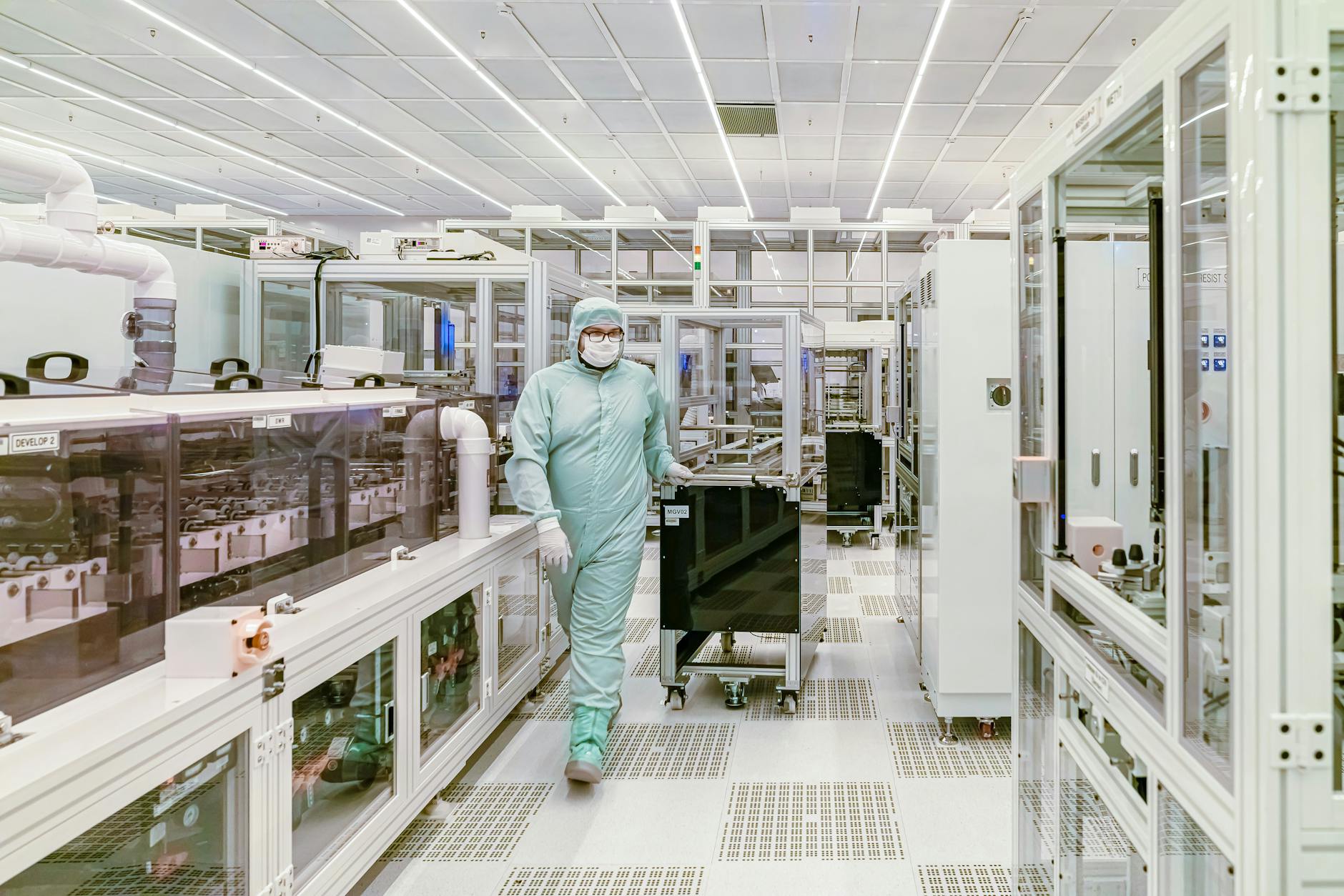
Intel, a semiconductor veteran, is charting a compelling comeback story, particularly in its foundry business, which has garnered significant bullish attention from KeyBanc. On July 14, 2026, KeyBanc analyst John Vinh raised his price target on Intel to $155 from $110, citing "significant progress" in the company's manufacturing arm. This upgrade follows a previous move in January 2026, when KeyBanc upgraded Intel to Overweight from Sector Weight, signaling growing confidence in its turnaround.
A major catalyst for this optimism is Intel's success in onboarding Apple as an 18A-P customer, with Apple set to use Intel's advanced node to produce chips for its low-end Macs and iPads. Vinh lauded this as INTC’s "first big whale design win," and suggested that Intel's upcoming 14A process could eventually be tapped for iPhone chips. Intel's Q1 2026 earnings, reported on April 23, 2026, showed non-GAAP EPS of $0.29 on revenue of $13.6 billion, a 7.18% year-over-year increase. Crucially, its Data Center and AI revenue jumped 22%, with CEO Lip-Bu Tan highlighting a "sixth consecutive quarter of revenue above our expectations." Strategic investments, including a $5 billion equity stake from Nvidia, a U.S. government stake, and $8.9 billion in CHIPS Act funding, further solidify Intel's position and its ambitious foundry strategy.
| Metric | Value (INTC) |
|---|---|
| Current Price | $106.79 |
| Market Cap | $536.73 billion |
| 52-Week Range | $18.97 – $142.35 |
| Q1 2026 Revenue | $13.6 billion |
| Q1 2026 EPS | $0.29 |
| FY29 Revenue Est. | $86.6 billion |
| FY30 Revenue Est. | $114.5 billion |
| Quarterly Dividend | $0.12/share |
| Dividend Yield | 2.63% |
The Bear Case: Cracks in the AI Foundation
While the AI narrative is compelling, each of these semiconductor players faces distinct headwinds that warrant consideration. For Skyworks Solutions, the bear case remains rooted in its handset concentration. A bearish narrative suggests a fair value of $58.00 per share, closely aligning with its current price, driven by assumptions of slower diversification and competitive pressures that could limit revenue growth and compress margins over time. The company's struggle to expand beyond mobile remains a significant risk.
Nvidia, despite its market dominance, is not immune to challenges. A top U.S. trade official stated on July 14, 2026, that "very few" of Nvidia's H200 AI chips have been shipped to China and Hong Kong. This highlights the ongoing geopolitical complexities and export restrictions that could cap growth in a key market. Furthermore, KeyBanc noted that deliveries of Nvidia's next-generation GB200 racks are falling short, with Q1 volumes likely under 1,000 units against a forecast of 2,000, indicating potential initial production hurdles for its most advanced systems.
Intel's ambitious foundry turnaround, while promising, carries substantial execution risk. While KeyBanc is bullish, other firms like 24/7 Wall St. issued a SELL rating for Intel on June 19, 2026, with a $103 price target for 2027, citing the potential for prolonged free cash flow burn if its 14A process faces delays or fails to attract sufficient external customers. Intel also faces fierce competition from Advanced Micro Devices (AMD), which KeyBanc downgraded due to slowing AI-related business in China and rising price competition, a dynamic that could impact Intel's market share gains.
Wall Street's Divergent Outlook
The broader analyst community largely echoes KeyBanc's sentiment, albeit with varying degrees of conviction across the three stocks. For Skyworks Solutions, the consensus rating is "Buy" from 60 analysts, with 36 rating it a Buy, 22 a Hold, and 2 a Sell. The median price target stands at $75.00, implying a 28.89% upside from its current $58.19. RBC Capital, for instance, maintained a Sector Perform rating on June 23, 2026, with a target of $80, reflecting a cautious but not entirely bearish stance.
Nvidia enjoys a strong "Buy" consensus rating from 79 analysts, with 58 Buy, 16 Hold, and 3 Sell recommendations. The median price target is $300.00, suggesting a substantial 42.05% upside from its current $211.19. This widespread bullishness underscores confidence in Nvidia's continued leadership in the AI sector, despite its already massive valuation.
Intel presents a more mixed picture. Its consensus rating is "Hold" from 84 analysts, comprising 31 Buy, 46 Hold, and 7 Sell ratings. The median price target is $100.00, which implies a 6.36% downside from its current $106.79. However, KeyBanc's John Vinh stands out with a significantly higher price target of $155, indicating a 45.14% upside. Other recent bullish moves include UBS raising its target to $121 from $83 on July 13, 2026, and TD Cowen boosting its target to $115 from $75 on the same day, suggesting a growing, albeit not unanimous, shift towards a more positive outlook for Intel's turnaround.
The Verdict: Navigating the AI Divide
KeyBanc's recent analyst actions serve as a potent reminder of the seismic shifts occurring within the semiconductor industry. The era of relying heavily on smartphone cycles for growth is waning, as evidenced by the cautious stance on Skyworks Solutions. Conversely, the relentless demand for AI compute is creating unprecedented opportunities for companies like Nvidia and, increasingly, Intel. Investors must recognize this fundamental divergence and position their portfolios accordingly.
For Skyworks Solutions (SWKS), the path ahead remains challenging. While its dividend yield of 3.40% offers some income, the structural headwinds in the mobile market and declining margins make it a less attractive growth play. Investors should consider an entry only on significant weakness, with a tight risk management strategy.
For Nvidia (NVDA), its leadership in AI is undisputed, but its valuation already reflects much of this promise. While continued growth is expected, the sheer scale of its market cap and emerging geopolitical risks suggest that future gains may be more incremental, requiring careful monitoring of execution and competitive dynamics.
Intel (INTC) represents the most compelling turnaround story among the three. Its strategic pivot into foundry services, coupled with significant design wins like Apple and robust demand for its AI-driven CPUs, positions it for substantial upside if execution remains strong. The market is still largely skeptical, offering an opportunity for investors who believe in its transformation.
Entry Zone:
- SWKS: $50 - $55
- NVDA: $190 - $200
- INTC: $95 - $105
12-Month Target:
- SWKS: $70
- NVDA: $300
- INTC: $140
Invalidation Level:
- SWKS: Below $50
- NVDA: Below $180
- INTC: Below $90
The semiconductor landscape is no longer a rising tide lifting all boats; it's a selective current favoring the architects of the AI future.
Want deeper research on any stock? Try Kavout Pro for AI-powered analysis, smart signals, and more. Already a member? Add credits to run more research.
Related Articles
What's Driving Intel's Recent Volatility
Category
You may also like

How Hardware & Software Show Two Sides of Same AI Growth Story
Semiconductor Sector Review: Top 5 ETFs -- Lining Them Up Before The Next Move

NVIDIA Price Target Lifted to $300 by KeyBanc: Blackwell and Rubin Are Stacking Catalysts
Breaking News
View All →Featured Articles
Top Headlines

Japan's Enterprises and Startups Build Industry-Specialized AI With NVIDIA Nemotron Open Models
My 3 Favorite AI Stocks to Buy on the Continued Chip Sell-Off

Apple Could Buy an AI Chip Company. Its Hot Stock Just Set a Fresh Record High

Why QQQM's 0.15% Fee Crushes QQQ for Long-Term Growth Investors