MarketLens

Log in

Peabody's Centurion Mine: From Flagship to Fraud Allegations

1 hour ago
SHARE THIS ON:

Peabody's Centurion Mine: From Flagship to Fraud Allegations

Key Takeaways

  • Peabody Energy (NYSE: BTU) faces a securities class action lawsuit alleging misrepresentations about its Centurion metallurgical coal mine, which was plagued by undisclosed operational failures.
  • Initial assurances of Centurion's early ramp-up and robust Q1 2026 production were followed by drastic cuts in guidance, leading to a 36% stock price decline between late March and early May 2026.
  • The lawsuit, with a lead plaintiff deadline of August 24, 2026, highlights significant mechanical and electrical issues at Centurion, which caused an $80 million EBITDA impact in Q1 2026 alone.

The Centurion Collapse: A Story of Missed Expectations

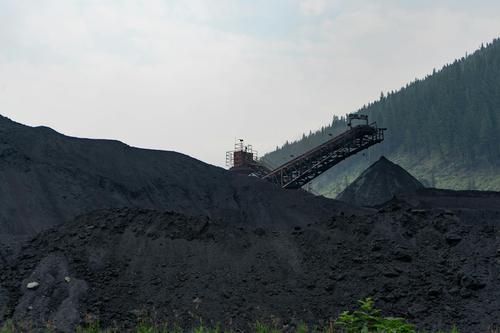
Peabody Energy, a global coal mining giant, finds itself embroiled in a securities class action lawsuit, with investors alleging the company made misleading statements regarding its flagship Centurion metallurgical coal mine in Queensland, Australia. Once touted as a cornerstone for future growth, the Centurion project has instead become a symbol of operational missteps and investor disappointment, leading to a dramatic erosion of shareholder value.

As of July 2, 2026, Peabody Energy shares trade at $22.30, a stark contrast to their 52-week high of $41.14. The company's market capitalization stands at $2.72 billion, reflecting the significant pressure from recent disclosures. The core of the current crisis stems from a series of "surprise Centurion problems" that came to light in early 2026, directly contradicting earlier optimistic projections and triggering substantial stock drops. This unfolding legal and operational saga now defines the immediate outlook for Peabody Energy, transforming a promising asset into a source of considerable uncertainty.

A Mine of Misrepresentation: The Production Disclosures

The narrative surrounding Centurion began with high hopes. In February 2026, Peabody management assured investors that the mine was "putting the finishing touches" and had "started mining some of the best metallurgical coal in the world," projecting a robust 700,000 tons of production in the first quarter of 2026. This optimistic outlook was initially rewarded by the market, with Peabody shares climbing approximately 7.8% the following day.

However, this positive sentiment quickly unraveled. On March 30, 2026, Peabody filed an SEC report abruptly disclosing that Centurion was now expected to deliver only 250,000 tons in Q1 2026—a drastic 64% reduction from its earlier guidance. The company attributed this shortfall to "greater-than-anticipated mine commissioning challenges" but offered little detail. This news sent Peabody's stock tumbling by 9.7%, dropping $3.82 per share from $39.50 on March 27 to $35.68 by March 30.

The situation worsened on May 5, 2026, when Peabody announced additional delays, increased costs, and a significant reduction in its full-year sales outlook for Centurion. The company slashed its 2026 sales forecast for the mine from an original 3.5 million tons to just 2.5 million tons, representing a 28% cut. This second wave of negative news caused another 5.7% decline in the stock, with shares falling $1.52 from $26.52 on May 4 to $25.00 on May 5. In total, between March 27 and May 5, 2026, Peabody investors witnessed a $14.50 per share decline, or a 36% drop, underscoring the severe market reaction to the Centurion revelations.

Centurion Production Guidance (2026)Original (Feb 2026)Revised (March/May 2026)% Change
Q1 Sales Volume700,000 tons250,000 tons-64%
Full-Year Sales Outlook3.5 million tons2.5 million tons-28%

Behind the Veil: Operational Failures at Centurion

The "surprise Centurion problems" that triggered the stock's collapse were far from minor commissioning hiccups. While Peabody management initially painted a picture of a mine "ahead of its original schedule" and "putting the finishing touches" in February 2026, the reality, as later disclosed, was considerably more complex and problematic.

During its Q1 2026 financial results announcement on May 5, 2026, management revealed the true extent of the issues. According to the company, "as part of our commissioning in February, we encountered temporary mechanical and electrical issues" with equipment that had been dormant for eight years. These initial problems cascaded, slowing the longwall's advance and leading to a host of secondary complications, including "localized roof control deterioration, moisture accumulation in roof cavities, and floor softening beneath the shields, leading to shield misalignment." These detailed operational failures directly contradicted earlier assurances and painted a picture of a mine struggling with fundamental engineering and geological challenges.

The financial fallout from these issues was immediate and substantial. The Centurion ramp-up problems caused an $80 million EBITDA impact in the first quarter alone, which included $10 million in additional commissioning costs. This significant hit to profitability underscores the severity of the operational challenges and their direct effect on Peabody's bottom line, far beyond mere production volume adjustments.

The Long-Term Promise vs. Immediate Pain

Despite the current operational turmoil, the Centurion mine has long been presented as a strategic asset with significant long-term potential for Peabody Energy. The company describes Centurion as a premium hard coking coal asset with a projected 25-year-plus mine life, capable of an average annual production of 4.7 million tons. Its estimated costs are a competitive $105 per ton, and the mine benefits from an expanded plan of 140 million tons in the Goonyella Middle Seam. Peabody had valued Centurion's net present value (NPV) at $2.1 billion as of January 1, 2026, assuming long-term pricing of $225 per metric ton for premium hard coking coal.

The original plan targeted 3.5 million tons in 2026, ramping up to its full 4.7 million tons annual run rate by 2028. This long-term vision was meant to significantly enhance Peabody's metallurgical coal platform, improving segment-wide met coal realizations from approximately 70% of benchmark in 2025 to 80% in 2026. Peabody CEO James C. Grech, in March 2026, even stated that Centurion "immediately vaults to the top of Peabody’s coal operations and establishes a multi-decade foundation for shareholder value creation."

However, the immediate reality of Centurion's operational failures stands in stark contrast to these ambitious long-term projections. The drastic reduction in 2026 sales outlook to 2.5 million tons and the substantial Q1 EBITDA impact demonstrate that the mine's current struggles are severely undermining its promised contribution to Peabody's metallurgical coal segment. While the long-term potential remains on paper, the company's ability to execute on that vision is now under intense scrutiny, particularly given the detailed mechanical and electrical issues that have plagued its commissioning.

The Gathering Storm: A Securities Fraud Lawsuit

The series of "surprise Centurion problems" and the subsequent stock price declines have culminated in a securities class action lawsuit against Peabody Energy and certain senior executives. Multiple law firms, including Hagens Berman, Bleichmar Fonti & Auld LLP, and The Schall Law Firm, have announced investigations and filed complaints on behalf of investors who purchased Peabody common stock between October 14, 2024, and May 4, 2026.

The core allegation is that Peabody and its management made materially false and misleading statements about Centurion's operational status and production capabilities. Specifically, the lawsuit claims that defendants assured investors the mine would reach full longwall production by March 2026, while allegedly failing to disclose serious mechanical, electrical, and roof-control problems that were already impacting the project. Reed Kathrein, a partner at Hagens Berman, stated on July 2, 2026, that his firm is "focused on whether Peabody and its management were sufficiently transparent about Centurion's operational capabilities during the Class Period and, if not, whether they violated federal securities laws."

The legal proceedings are now underway, with a lead plaintiff deadline set for August 24, 2026. The outcome of this litigation could have significant financial and reputational consequences for Peabody Energy. Beyond potential monetary damages, the lawsuit casts a shadow over management's credibility and the company's ability to accurately forecast and execute on major projects. The alleged misconduct also brings into focus executive compensation, with CEO James C. Grech receiving over $9 million in total compensation in 2025, including $5 million in stock awards, raising questions about accountability in the face of such significant operational setbacks and alleged misrepresentations.

Analyst Skepticism and a Decimated Valuation

The operational setbacks at Centurion and the ensuing legal challenges have naturally led to increased skepticism from the analyst community and a significant re-rating of Peabody Energy's stock. Following the May 5, 2026, disclosures, analysts at UBS cut their price target for BTU from $32.00 to $30.50, while Jefferies described the results as "significantly weaker-than-expected" and highlighted the substantial $80 million EBITDA impact from Centurion.

The current stock price of $22.30 reflects a market that has largely priced in the negative news and the uncertainty surrounding the Centurion mine and the class action lawsuit. The stock is trading significantly below its 52-week high of $41.14, indicating a substantial loss of investor confidence. While specific consensus price targets are not widely available in the immediate aftermath of the lawsuit filings, the downward revisions from firms like UBS suggest a more cautious outlook. The market is now grappling with the dual impact of operational underperformance at a key asset and the potential liabilities arising from alleged securities fraud.

The Verdict: A Risky Bet on Coal's Comeback

Peabody Energy's Centurion mine, once a beacon of future growth, has become a significant liability, with undisclosed operational failures leading to drastic production cuts, an $80 million Q1 EBITDA hit, and a securities fraud lawsuit. The stock's dramatic decline from its March 2026 highs reflects a fundamental re-evaluation of the company's operational transparency and execution capabilities. While the long-term potential of Centurion's metallurgical coal reserves remains, the immediate future is clouded by litigation and the need to stabilize a critical asset.

For investors considering BTU, the current environment presents a high-risk, high-reward scenario. The stock's current valuation at $22.30 is significantly depressed, but a clear path to recovery is not yet visible.

  • Entry Zone: Investors with a high tolerance for risk might consider an entry in the $18.00 - $20.00 range, anticipating further volatility as the lawsuit progresses and Centurion's operational issues are addressed. This range reflects the 52-week low of $14.02 as a potential floor.
  • 12-Month Target: A realistic 12-month target, assuming some resolution of operational issues and a favorable, albeit uncertain, legal outcome, could be $28.00. This target implies a recovery towards pre-May disclosure levels but remains well below the previous highs, acknowledging the lasting impact of the Centurion saga.
  • Invalidation Level: A decisive break below $17.00 would invalidate this thesis, suggesting deeper operational problems or more severe legal repercussions than currently anticipated.

Peabody Energy is currently a speculative play, heavily reliant on a successful turnaround at Centurion and a resolution to the securities fraud allegations. Until these uncertainties are clarified, the stock remains a risky bet on coal's future.


Want deeper research on any stock? Try Kavout Pro for AI-powered analysis, smart signals, and more. Already a member? Add credits to run more research.

SHARE THIS ON:

Related Articles

Category

You may also like

Stock News2 weeks ago

Peabody Announces New Surety Arrangements in the U.S. and Australia

Peabody (NYSE: BTU) replaced its 2020 surety agreement with standard indemnification for U.S. reclamation and established asset-backed facilities in Australia, freeing cash previously tied to bank gua...
Stock News1 months ago

RPG Investment Advisory Reduces Peabody Energy Stake, According to Recent SEC Filing

RPG Investment Advisory reduced its stake in Peabody Energy, according to a recent SEC filing. The firm's outlook remains tied to the performance of the Centurion mine, which must provide consistent s...
Stock News1 months ago

Peabody Energy Investigation Initiated: Levi & Korsinsky Investigates the Officers and Directors of Peabody Energy (BTU)

Peabody Energy faces a shareholder investigation regarding its 2026 production guidance for the Centurion mine. The probe centers on whether management misled investors by maintaining a 3.5 million to...
Stock News1 months ago

Peabody Energy: A Weak Q1 2026, But There Is Value At This Price (Upgrade)

Peabody Energy reported $83M in Q1 2026 adjusted EBITDA, a material decline driven by operational ramp-up challenges at the Centurion mine. Despite the weak quarterly performance, analysts upgraded th...

Breaking News

View All →

Top Headlines

View More →
Stock News3 hours ago

Microsoft Had Its Worst Month in More Than 25 Years. Should Investors Buy the Crash?

Stock News5 hours ago

Forget Nvidia: This Infrastructure Upstart Is The Real Backdoor AI Winner

Stock News6 hours ago

Prediction: NOK Stock Could Go Parabolic After July 23. Here's Why.

Stock News6 hours ago

Veteran Tech Analyst: The Market Has Wrongly Left Software for Dead in the AI Rotation

Stock News6 hours ago

This Tech ETF Is Quietly Outperforming QQQ in 2026 -- Is There Still Time to Buy?