Key Takeaways
- Phillips 66's (PSX) Q2 2026 adjusted earnings of $9.41 per share were overwhelmingly driven by its refining segment, where realized margins nearly doubled from the prior quarter to $24.08 per barrel, contributing over 80% of total adjusted earnings.
- This extraordinary margin environment, along with a significant portion of Renewable Fuels' earnings, is directly attributable to the Iran-Hormuz crisis, which created a temporary, crisis-driven product supply shortage.
- Despite a strengthened balance sheet and improved operational efficiency, PSX's current valuation and analyst targets imply sustained high margins, failing to fully price the historical speed of margin mean-reversion, leaving the stock vulnerable to earnings compression if geopolitical tensions ease.
A Geopolitical Windfall Fuels Record Earnings
Phillips 66 (PSX) delivered a blockbuster second quarter for fiscal year 2026, reporting adjusted earnings of $3.788 billion, translating to an adjusted diluted EPS of $9.41. These results, released on August 5, 2026, marked a dramatic reversal from Q1 2026 and significantly surpassed analyst expectations. While the headline numbers are impressive, they are deeply entwined with the extraordinary market conditions created by the Iran war and the effective closure of the Strait of Hormuz in March 2026. This disruption choked off critical oil and refined product flows, sparking a surge in global crack spreads and funneling a substantial windfall to refiners like Phillips 66.
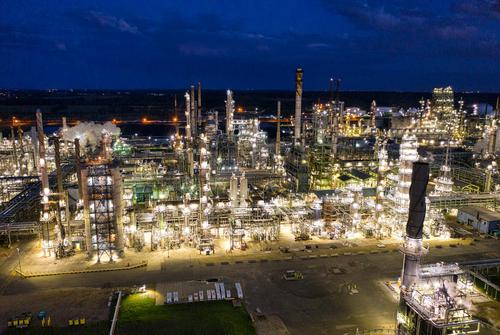
The refining segment emerged as the primary beneficiary, contributing an outsized $3.086 billion in adjusted pre-tax earnings to the quarter's total. This single segment alone accounted for 81.5% of the company's adjusted earnings, underscoring how central the refining environment was to the quarter's performance. The company's realized refining margin more than doubled from $10.11 per barrel in Q1 2026 to an exceptional $24.08 per barrel in Q2, transforming an initial geopolitical headwind into a massive tailwind. This earnings beat, therefore, is less a story of operational transformation and more a narrative of how a global crisis can generate an unprecedented, if temporary, profit surge.
Refining Dominance: The Numbers Speak Volumes
A closer look at PSX's Q2 2026 financials reveals the sheer dominance of its refining operations. The company's total adjusted earnings for Q2 were $3.788 billion, a staggering increase from just $200 million in Q1 2026. This nearly 18-fold sequential increase was overwhelmingly driven by the refining segment, which saw its adjusted pre-tax earnings jump from approximately $208 million in Q1 2026 to $3.086 billion in Q2. This $2.878 billion increase in refining earnings alone accounts for 80.2% of the company's total adjusted earnings uplift quarter-over-quarter.
The primary mechanism behind this surge was a dramatic expansion in realized refining margins. As detailed in the company's Q2 earnings presentation, worldwide realized refining margins soared by $13.97 per barrel, from $10.11 per barrel in Q1 to $24.08 per barrel in Q2. This near-doubling of margins occurred even as crude capacity utilization only ticked up one percentage point, from 95% in Q1 to 96% in Q2, indicating that the profit explosion was fundamentally a function of price, not volume.
| Segment | Q2 2026 Adj. Pre-Tax ($M) | Q1 2026 Adj. Pre-Tax ($M) |
|---|
| Refining | 3,086 | ~208 |
| Midstream | 785 | ~591 |
| Chemicals | 404 | ~85 |
| Marketing & Specialties | 514 | ~320 |
| Renewable Fuels | 544 | -41 |
| Corporate & Other | -407 | -320 |
| Total Adjusted | 3,788 | 200 |
Even the Renewable Fuels segment, which swung from a $41 million loss in Q1 to a $544 million gain in Q2, saw its performance explicitly linked to the "Iranian situation," as management noted that regulatory credits (RINs) roughly doubled versus 2025. This further highlights how intertwined Q2's exceptional profitability was with the unique geopolitical landscape.
The Hormuz Premium: Temporary by Nature?
Phillips 66 management itself has explicitly tied the quarter’s exceptional performance to the ongoing geopolitical tensions. CEO Mark Lashier noted on the Q2 earnings call that "Chemicals saw a surge during the height of the crisis around the Straits of Hormuz. And they've come back down a bit with peace breaking out and that being factored in a bit." This candid assessment underscores the transient nature of a significant portion of the margin expansion. Brian Mandell, EVP of Marketing, Commercial, and Renewable Fuels, further clarified that "Renewable diesel margins in Q2 were aided by regulatory credits and by higher pricing; RINs roughly doubled versus 2025 due to the Iranian situation. We benefited from the Iran-related dynamics in Q2."
The Strait of Hormuz, which carries approximately 20% of the world's total oil supply, saw tanker traffic collapse by 90-95% compared to pre-war levels after its effective closure in March 2026. This massive disruption created an acute global shortage of refined products, especially diesel and jet fuel, driving crack spreads to unprecedented levels. Wood Mackenzie reported jet fuel cracks in Asia and Europe surging to $100 per barrel, about five-fold normal levels, while diesel cracks reached around $70 per barrel.
While management has expressed a belief that "margins will be stronger going forward and have some legs under Refining," they have also acknowledged the underlying fragility. Lashier himself cautioned that "There's still considerable oversupply in the market that will come back into play once things normalize around the Straits." History offers a stark reminder of how quickly these premiums can evaporate. Following the Abqaiq-Khurais attack in September 2019, Brent crude surged nearly 20% but largely retraced its gains within weeks as Saudi production quickly recovered. Any durable de-escalation of the Iran-Hormuz crisis could trigger a similar rapid normalization of crack spreads, unwinding much of PSX's current margin advantage.
The Illusion of Diversification
Phillips 66 is not a pure-play refiner; its integrated portfolio includes significant Midstream, Chemicals, Marketing & Specialties, and Renewable Fuels segments. Management has frequently highlighted these businesses as providing more stable cash flows, offering a counterbalance to refining's inherent cyclicality. Indeed, in Q2 2026, the Midstream segment contributed $785 million in adjusted pre-tax earnings, while Chemicals added $404 million, Marketing & Specialties $514 million, and Renewable Fuels $544 million. These segments combined for $2.247 billion in adjusted pre-tax earnings.
The Midstream business, largely fee-based, achieved record fractionation volumes of 1.02 million barrels per day and record LPG exports in Q2, with management targeting a $4.5 billion run-rate EBITDA by year-end 2027. This consistent performance provides a structural floor to PSX's earnings. However, when viewed against refining's $3.086 billion pre-tax contribution in Q2, the diversification offered by these "reliable cash flows" is substantial but still insufficient to fully offset a significant downturn in refining.
Roughly 65% to 80% of Q2's adjusted earnings were derived from segments highly sensitive to commodity prices and regulatory credits—Refining, Chemicals, and Renewable Fuels. While the integrated model has improved PSX's earnings floor and operational efficiency, as evidenced by higher throughput and yield compared to previous high-margin cycles, it has not eliminated the company's extreme earnings convexity to crack spreads. Should the Hormuz premium fade, the combined strength of the diversified segments, while positive, cannot fully insulate PSX's bottom line from a sharp compression in refining margins.
Echoes of Past Peaks: The Downside Risks
The current market conditions bear a striking resemblance to past periods of extreme refining profitability, which historically proved unsustainable. Phillips 66's Q2 2026 realized margin of $24.08 per barrel, while lower than its Q2 2022 peak of $28.31 per barrel, propelled an adjusted EPS of $9.41, significantly higher than Q2 2022's $6.77. This suggests that while throughput and operational efficiency have improved, the underlying sensitivity to margins remains acute.
The company's own history provides a potent warning. From Q2 2022 to Q4 2022, PSX's realized refining margins fell by approximately 30%, from $28.31 to $19.73 per barrel. Over the same period, adjusted EPS contracted by 41%, from $6.77 to $4.00 per share, demonstrating the high convexity of earnings to margin fluctuations. A similar 30% decline from Q2 2026's $24.08 per barrel margin would bring it to approximately $16.86 per barrel, implying a potential 40% EPS contraction from the current $9.41 baseline, back toward the $5.50–$6.00 range.
Adding to the fragility is the volatility of derivative and mark-to-market (MTM) impacts. In Q1 2026, PSX reported an $839 million MTM loss across its refining, marketing, and renewable fuels segments. This flipped to a $450 million MTM gain in Q2. Such quarter-to-quarter swings, amounting to a $1.289 billion pre-tax impact, introduce significant noise and highlight the potential for adverse MTM effects if geopolitical events cause a rapid price reversal.
Even insider activity hints at caution. In July 2026, CFO Kevin Mitchell exercised options and sold 11,021 shares for approximately $2.1 million, while EVP Vanessa Allen Sutherland sold 3,523 shares for about $743,523. This pattern of net selling by management at elevated share prices, close to the 52-week high of $216.08, is consistent with monetizing during what could be perceived as peak conditions. While PSX's balance sheet has improved with a $6.6 billion debt reduction in Q2 2026, bringing net debt to $16.5 billion and TTM net debt/EBITDA to a comfortable 1.28x, a sharp decline in EBITDA from margin normalization would inevitably pressure these ratios and potentially constrain future capital returns.
Wall Street's Split Verdict
Following PSX's blowout Q2 earnings, Wall Street analysts responded with a flurry of target revisions, albeit with a notable spread in conviction. The consensus among analysts, as of early August 2026, lands around a "Moderate Buy" rating, with an average 12-month price target of $217.28 and a median target of $218.50. This implies an upside of approximately 7.1% from the current share price of $203.91.
However, the individual targets paint a picture of significant disagreement:
The high target of $255 suggests an optimistic view of sustained strong margins, implying over 25% upside. In stark contrast, Piper Sandler's low target of $177 points to potential downside of around 13%, indicating skepticism about the sustainability of current earnings. This wide range of $78 per share underscores the primary debate: whether the present margin environment is a new structural reality or a temporary, crisis-driven peak.
At a trailing 12-month P/E of 11.57x, PSX trades at a modest discount to its own historical average and broadly in line with some integrated peers. However, if one were to naively annualize Q2's $9.41 EPS, the implied P/E would fall to around 5.4x, suggesting the market is not fully pricing current earnings as sustainable. This indicates that while the market acknowledges some cyclicality, the current consensus targets likely embed an expectation of above-mid-cycle margins persisting longer than historical patterns might suggest.
Weighing the Strongest Objection: This Time Is Different?
The most compelling argument against the "peak-margin trap" thesis is that the current high refining margins are driven by more than just temporary geopolitical events; they reflect fundamental, structural changes in global refining capacity. Management commentary repeatedly suggests that this environment of strong margins is "expected to remain strong through 2027," citing factors such as low net capacity additions, high planned turnarounds globally, and Europe-specific structural cost disadvantages. Brian Mandell articulated this view, stating that markets are "short 7M bbl/day of refined products from the Middle East and Asia, and another 1.4M bbl/day from Russia," which "really sets us up for stronger margins through Q3 and perhaps the rest of next year."
While these structural factors are indeed present and contribute to tightness in product markets, the extraordinary magnitude of the Q2 margin expansion—realized margins nearly doubling quarter-over-quarter—argues against a purely structural explanation. Historical precedents, such as the 2022 refining boom or the rapid normalization after the 2019 Abqaiq attack, demonstrate that even significant supply disruptions tend to see crack spreads revert swiftly once physical flows normalize. The "oversupply" Lashier mentions will "come back into play once things normalize around the Straits" further qualifies the bullish structural outlook. Furthermore, the 4-5 times normal levels seen in some crack spreads, while amplified by structural factors, are more indicative of a crisis-driven premium than a sustainable new baseline. PSX's improved operational efficiency and reduced debt will undoubtedly raise its floor for mid-cycle earnings, but the immediate crisis-driven margin premium is still vulnerable to de-escalation.
The key number that would decisively challenge the "peak margin trap" thesis would be if, even after a clear and sustained de-escalation of the Iran-Hormuz crisis, Phillips 66 reports realized refining margins consistently at or above $20 per barrel in Q3 2026 and Q4 2026. Similarly, if Renewable Fuels earnings remain above $400 million per quarter despite any normalization of RIN prices, it would suggest a more permanent, structural shift in profitability.
The Verdict on Phillips 66's Cyclical Peak
Phillips 66 (PSX) has delivered exceptional Q2 2026 results, driven by an extraordinary, geopolitically inflamed refining market. While the company has strengthened its balance sheet and improved operational efficiency, the overwhelming contribution of its refining segment, fueled by margins nearly double their recent historical average, creates a substantial earnings risk. The Iran-Hormuz crisis has provided a temporary windfall that is unlikely to endure at its current scale. As tensions ease and global product flows normalize, a significant portion of these elevated margins, along with mark-to-market gains and boosted renewable fuel credits, stands to unwind.
The market, with analyst targets implying only modest upside and a wide dispersion of opinions, appears to discount some level of normalization but likely underestimates the speed and magnitude of historical mean reversion. Insider selling at these elevated levels offers a subtle but pertinent signal.
Our stance on Phillips 66 is Neutral to Bearish in the near term, shifting to Neutral longer term as the company's diversified assets and stronger balance sheet provide a more resilient foundation post-cycle. We see an Entry Zone for potential investors between $175 and $185 per share, reflecting a more normalized earnings environment and a cautious approach to cyclical peaks. Our 12-month Target Price is $188, aligning with some of the more conservative, fundamental-driven analyst views. This target implies an approximate 8% downside from the current price of $203.91, suggesting the market has yet to fully price in the cyclical risk.
The Invalidation Level for this thesis would be if Phillips 66's realized refining margins remain sustainably above $20 per barrel in Q3 2026 and Q4 2026, even in the event of a clear Iran-Hormuz de-escalation. Should margins hold at these levels, it would indicate a more profound, lasting structural shift in the refining market. Until then, Phillips 66's current record profits remain perched on a geopolitical cliff, vulnerable to a sharp descent.
Want deeper research on any stock? Try Kavout Pro for AI-powered analysis, smart signals, and more. Already a member? Add credits to run more research.